Meaning
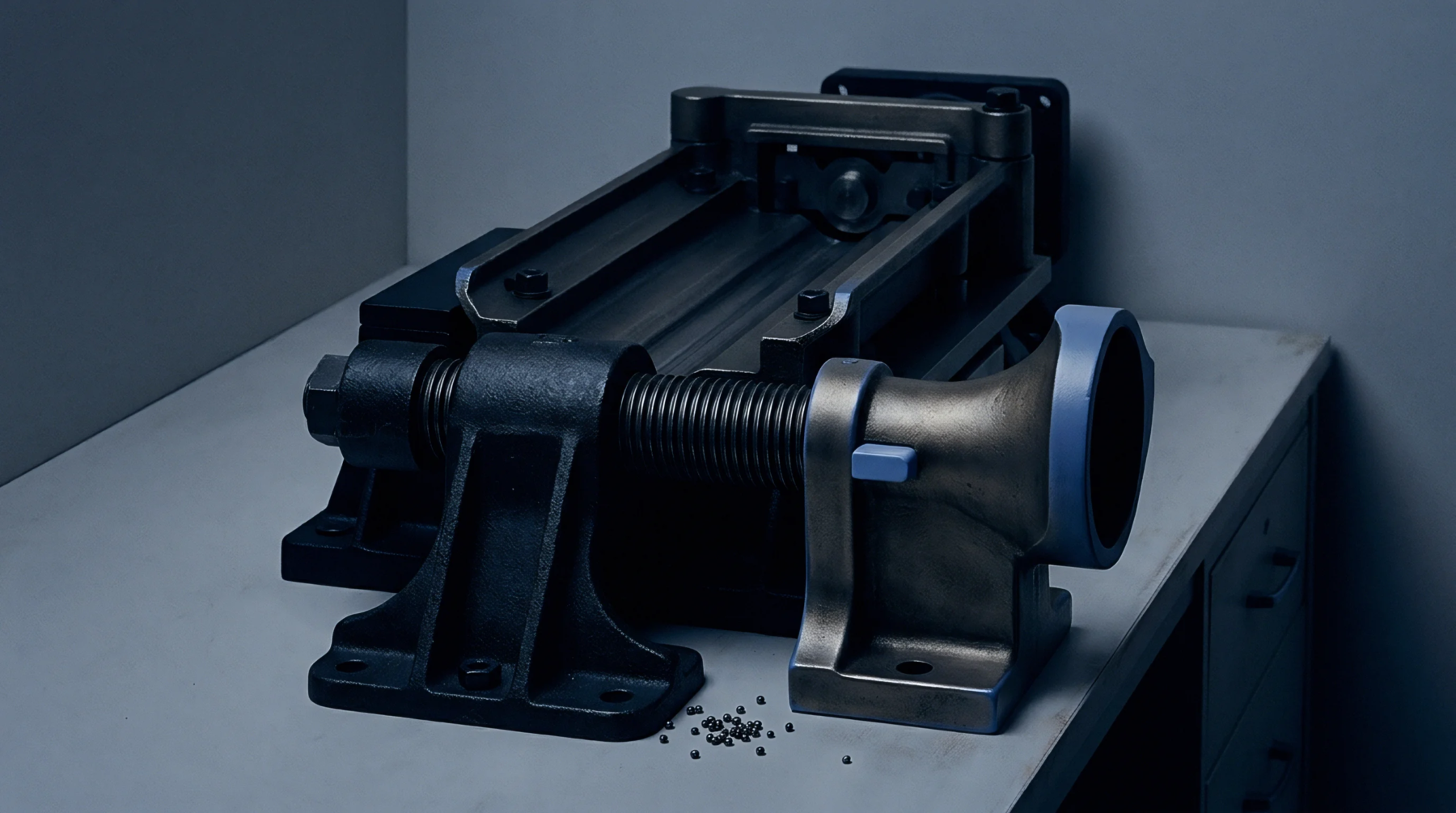
A mechanical testing instrument measures the high strain rate response of materials by deploying momentum transferred through dynamic impact. The split Hopkinson pressure bar evaluates stress and strain fields under loading velocities exceeding one thousand inverse seconds. Metal components and composite structures undergo compression testing inside this apparatus to determine plastic flow curves and failure limits during crash events.
High rate deformation mechanics rely on this device to generate the wave propagation data required for numerical simulation models.
Dynamic Calibration
Strain gages mounted along the transmission and incident rods record elastic wave amplitudes generated by the striker bar impact. Wave dispersion corrections account for geometric attenuation as stress pulses travel toward the specimen interface. Data acquisition systems digitize voltage outputs at megahertz sampling frequencies to capture transient phenomena occurring within microseconds.
Mathematical filtering algorithms separate overlapping incident and reflected signals from the primary waveform records.
Wave Analysis
One dimensional stress wave theory governs the calculation of dynamic stress and strain histories from recorded voltage histories. Force equilibrium across both specimen faces verifies that uniform deformation has been achieved before yielding occurs. Strain gage signals undergo time shifting to synchronize wave fronts arriving at the opposing bar ends.
Displacements derived from reflected wave integration establish the instantaneous length changes experienced by the test piece.
Velocity Limit
Radial inertia effects distort measured axial stresses when specimen diameters exceed the optimum threshold for a given impact speed. Friction constraints between the striker bar and the loading faces introduce shear stresses that require lubrication corrections. High strength alloys demand tungsten carbide bars to maintain elastic behavior within the tooling under extreme impact loads.
Wave reflections from the free boundaries restrict total testing duration before unloading waves terminate the plastic deformation phase.