Meaning
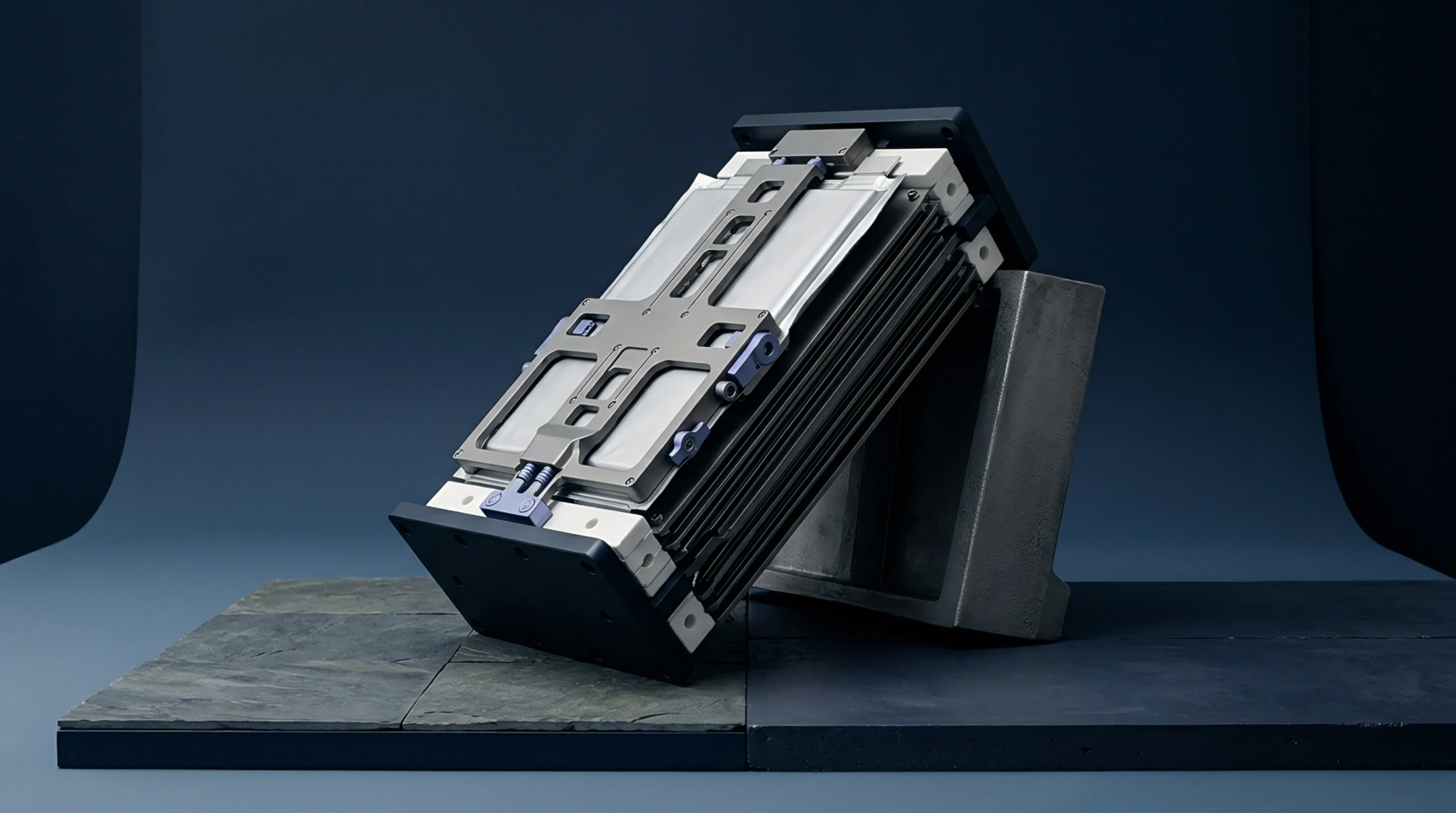
Compressive force applied to a battery cell stack during assembly prevents electrode delamination and maintains consistent electrical contact throughout the service life. Static mechanical preload offsets the expansion of active materials during charge cycles to suppress internal resistance growth and mechanical degradation of the separator. This constraint ensures that the internal architecture remains stable even when the cell stack experiences cyclic volumetric change.
Assembly Requirement
Proper implementation of this force involves the application of a controlled pressure across the cell surface within a rigid housing or module frame. Engineers calibrate the torque settings on fasteners or the stiffness of spring elements to hit the specific pressure window recommended for a chemistry. Cells often sustain damage if the clamping force exceeds the structural threshold of the casing or the internal jellyroll.
Insufficient pressure leads to poor impedance characteristics and shortens the operational lifespan of the unit.
Pressure Distribution
Uniformity of the force across the entire face of the pouch or prismatic cell determines the overall effectiveness of the constraint. High concentrations of stress at the corners of the housing create local defects in the electrolyte distribution. Engineers use pressure sensitive films to verify that the load maps correctly over the active area during the initial test phase.
Cycle Stability
Tight control of these loads mitigates the displacement of electrode layers during high rate discharge events. Continuous contact between the current collector and the active mass keeps the electron pathways short and prevents the formation of dead zones inside the cell. Consistent stack pressure reduces the rate of capacity fade in high silicon content anodes by accommodating particle swelling without loss of particle cohesion.