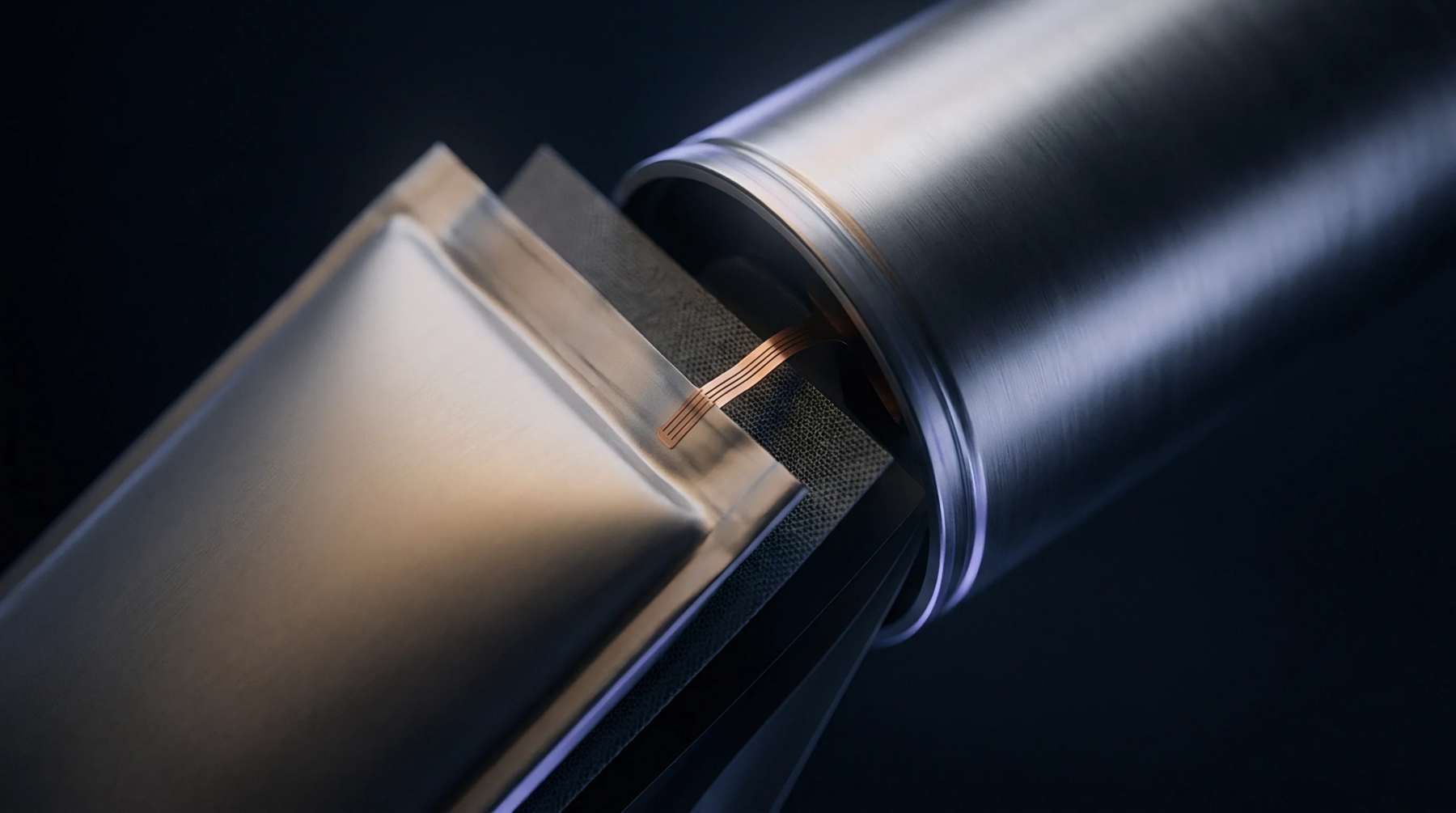
Bonded Cell Stacks against Serviceability Economics
Structurally bonding cell stacks eliminates module mass but transforms minor field defects into complete pack scrap liabilities.
Versatile polymer resins form high strength bonds and provide mechanical reinforcement between modular components in large scale energy storage systems. This structural polyurethane identifies a class of two part adhesives that offer a balance between stiffness and flexibility during battery assembly. It defines the gap filling material used to anchor cells into trays while simultaneously providing thermal and vibration isolation.
The process covers the initial mixing of resin and hardener and extends through the full curing period where the bond achieves its target strength. It applies only to materials formulated for load bearing applications and excludes soft cushioning foams. It is measured by its tensile modulus and overlap shear capability on common substrates.
Exothermic reactions occur as the isocyanate groups link with polyols to create a dense molecular network. Because structural polyurethane remains somewhat flexible compared to brittle epoxies, the joint can absorb impact energy without cracking the cell housing. Every application must occur within the specified open time to ensure the adhesive wets the surface thoroughly.
This logic allows for automated robotic dispensing that matches the high cycle rates of the modern pack assembly floor. Maintenance of the mixing head is essential to ensure the correct ratio of components is delivered every time. Adjustments to the catalyst levels can change how fast the bond achieves a handleable hardness.
These properties are customized to fit specific factory environmental conditions like humidity and ambient heat.
Rigid support helps modules withstand the extreme gravitational forces found in heavy transport vehicles. Utilizing structural polyurethane as a primary fixative reduces the need for heavy mechanical frames and lowers the total mass of the battery pack. When the resin sets, it creates a custom fit interface that distributes forces evenly across all contacted surfaces.
This distribution prevents localized pressure points that could damage thin pouch walls or internal connectors. The high peel strength of these polymers ensures that the assembly remains intact even under vertical loading. Testing logs confirm that bond strength remains stable through hundreds of thermal shock cycles.
Designers rely on these results to reduce the material used in the surrounding metal chassis.
Reliable metering systems monitor the flow of both parts to prevent failures caused by incomplete curing. Using structural polyurethane requires clean substrates to ensure the long chain molecules can anchor properly to the interface. The presence of voids or air bubbles inside the bond line can lead to failure zones where stress accumulates.
Infrared sensors confirm that the chemical reaction is progressing as expected by monitoring the heat signature of the joints. High yield relies on the consistency of the robotic application path and the volume of the dispensed bead. Verification happens through periodic destructive testing of representative production samples.
The resulting bond ensures the mechanical longevity of the entire battery container system over its full operational life.
Structurally bonding cell stacks eliminates module mass but transforms minor field defects into complete pack scrap liabilities.
Expertise is a utility, not a secret. sentiention™ publishes its working knowledge as open reference: intelligence layer covering the materials it sources, the markets it enters, and the reference that serves both.