Quantifying Structural Shear Transfer Mechanics across Micro-Cracked Polyolefin Separators under Dynamic Dynamic Dynamic Vibration
Dynamic dynamic dynamic vibration reduces lubricated separator shear transfer, driving micro-crack tearing and internal shorts unless stack pressure is held above 0.25 MPa.
Friction
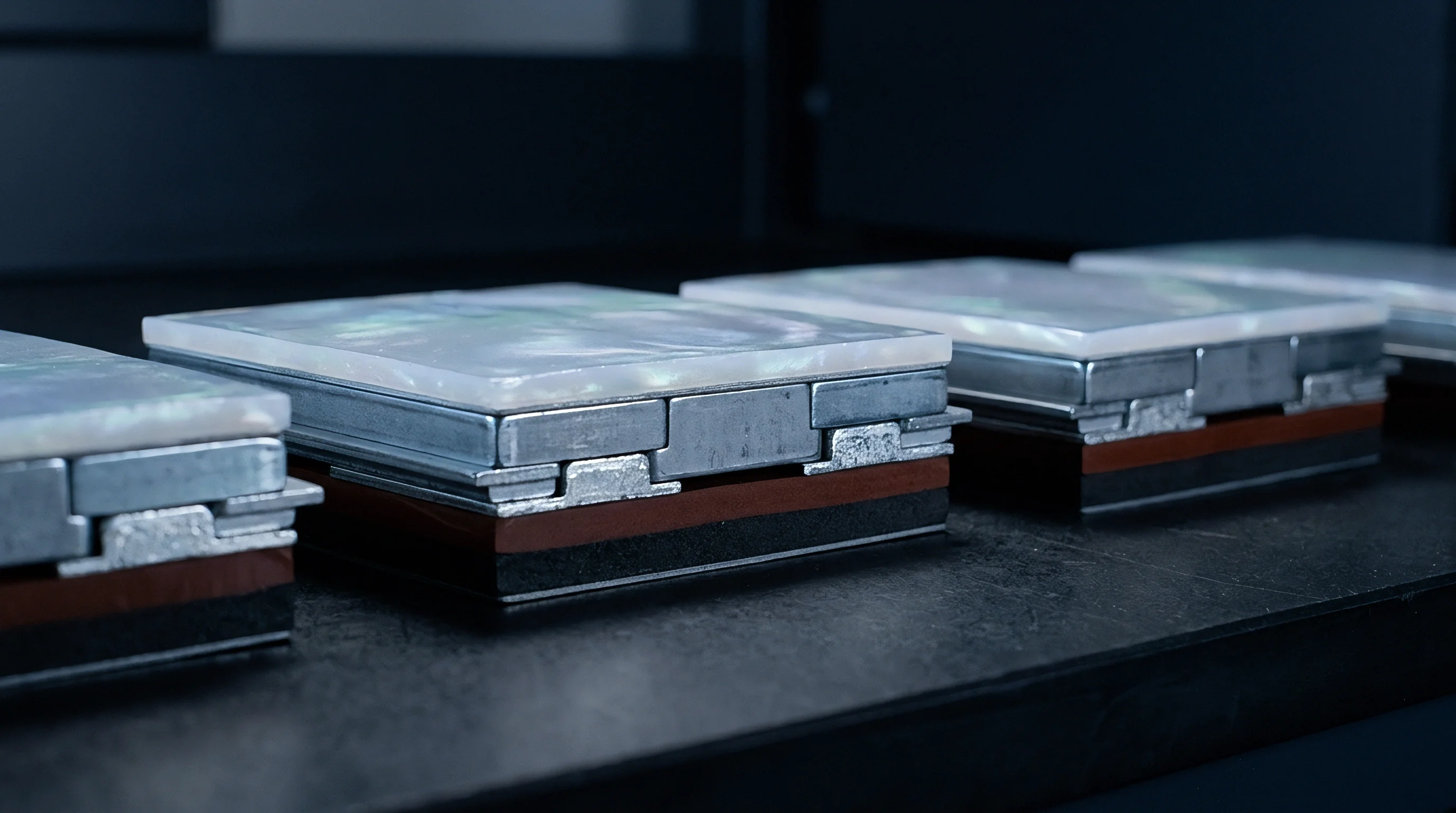
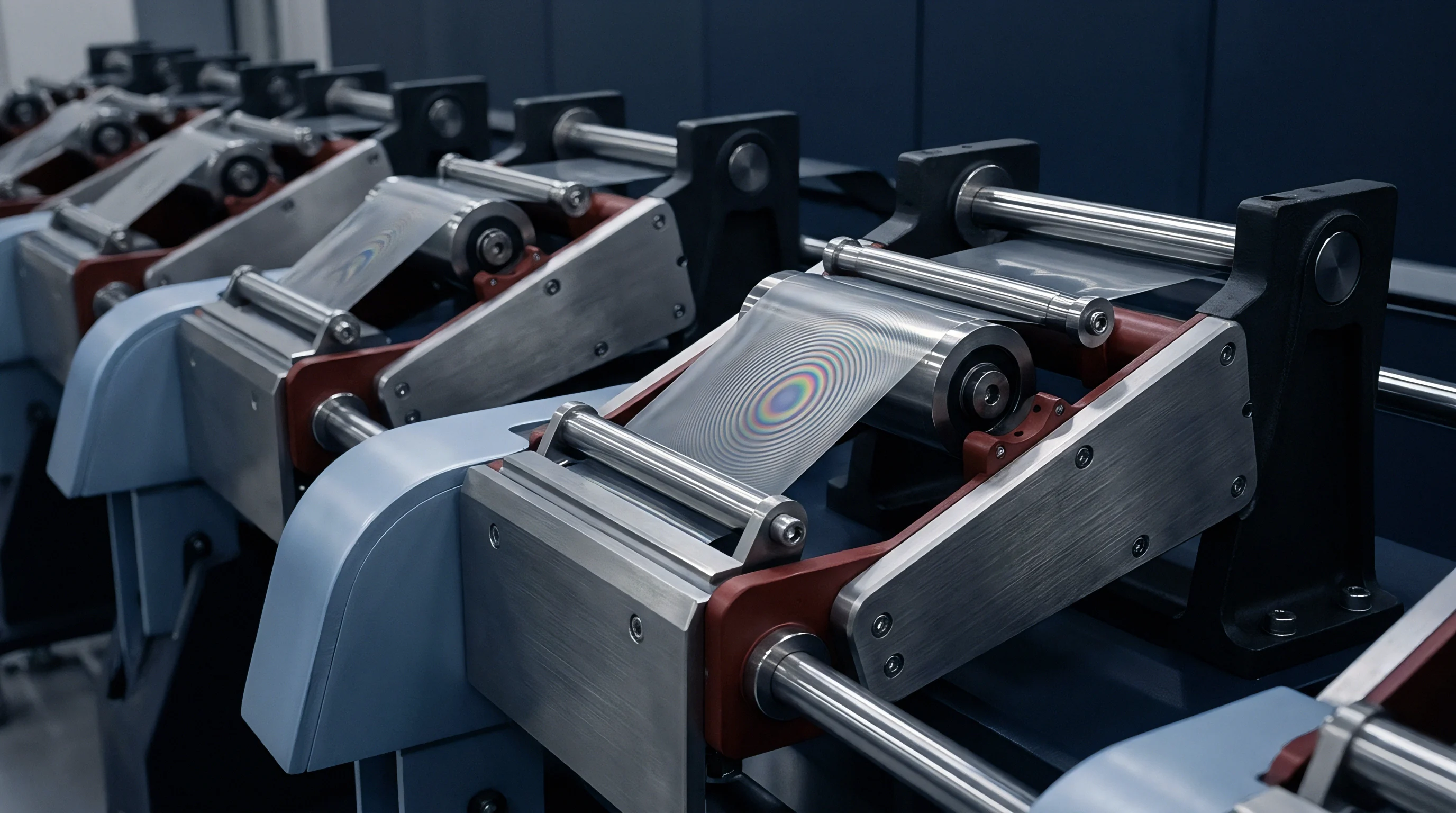
How structural mechanical loads move between solid electrodes and porous separators in a lithium-ion cell stack comes down to interfacial force transmission. During continuous transport oscillation, contact friction on the microporous polyolefin surface controls macro-scale displacement between adjacent copper and aluminum current collectors. Subjecting a pack to multi-axis excitation across an electric vehicle chassis distributes internal shear stresses across hundreds of stacked or wound polymer layers.
Micro-slippage begins whenever interfacial static friction drops below the local shear force from pack acceleration. That relative motion causes fretting wear on active material coatings, breaks up SEI layer continuity, and concentrates stress across polymer fibrils spanning sub-micron pores.
The mechanical interface between a wet-process polyethylene separator and a graphite anode depends on surface roughness asperities, local clamping pressure, and mechanical interlocking from the binder. Adding a dry organic liquid electrolyte ~ a mix of ethylene carbonate and ethyl methyl carbonate ~ introduces fluid lubrication that shifts pure Coulombic friction into a mixed elastohydrodynamic regime. When normal stack compression fluctuates under harmonic casing distortion, the local coefficient of static friction drops from a dry baseline of 0.45 down to 0.12 ~ 0.18 once lubricated by electrolyte, narrowing the safety margin against shear displacement during peak transient vibration.
Interfacial Traction and Coulombic Limits
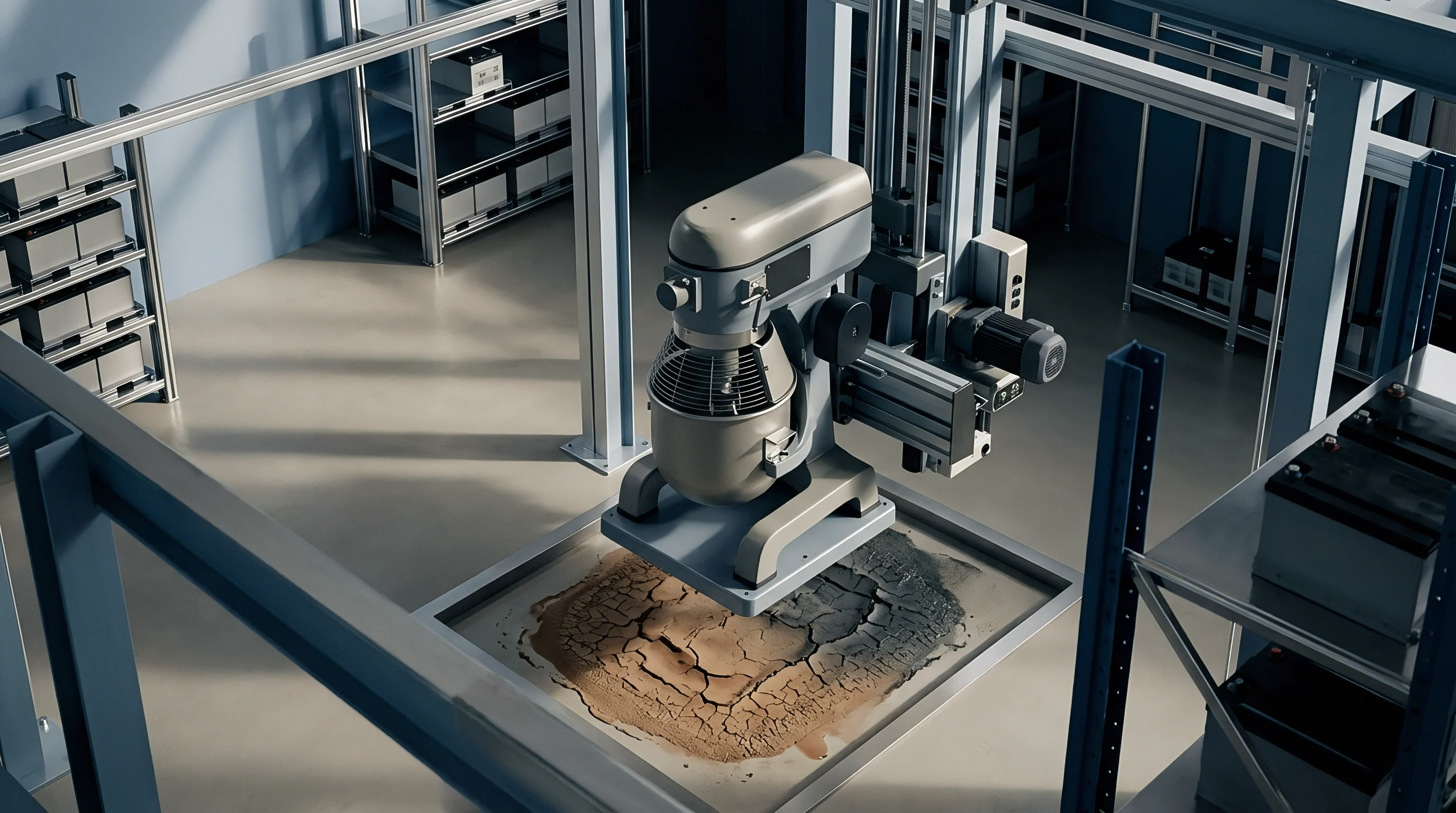
Mechanical shear transfer across the separator interface obeys a modified Coulomb friction relation, with normal compression stress setting the maximum lateral shear force allowed before gross sliding begins. Stack pressure in prismatic and pouch formats is kept between 0.3 MPa and 1.2 MPa to suppress anode swelling during lithiation. Before slip occurs, maximum transferred shear stress equals the static friction coefficient multiplied by effective normal stress minus internal electrolyte pore pressure.
High-frequency dynamic vibration causes rapid cyclic swings in effective normal stress, momentarily driving net clamping force close to zero during out-of-phase casing expansion modes.
Interfacial friction degrades unevenly across the separator plane. Atomic force microscopy micro-roughness maps show graphite particle edges sinking into the soft polyolefin matrix under static compression, creating microscopic mechanical keys. Dynamic vibration shears these indentations, cutting mechanical interlocking and turning high static friction interfaces into low dynamic friction sliding surfaces.
Once interfacial motion starts, localized frictional heating raises internal temperatures 3 degrees Celsius to 8 degrees Celsius above ambient pack levels, lowering yield strength in the underlying polyolefin matrix and accelerating plastic deformation around pre-existing micro-cracks.
Electrolyte Hydrodynamics at Pouch and Prismatic Interfaces
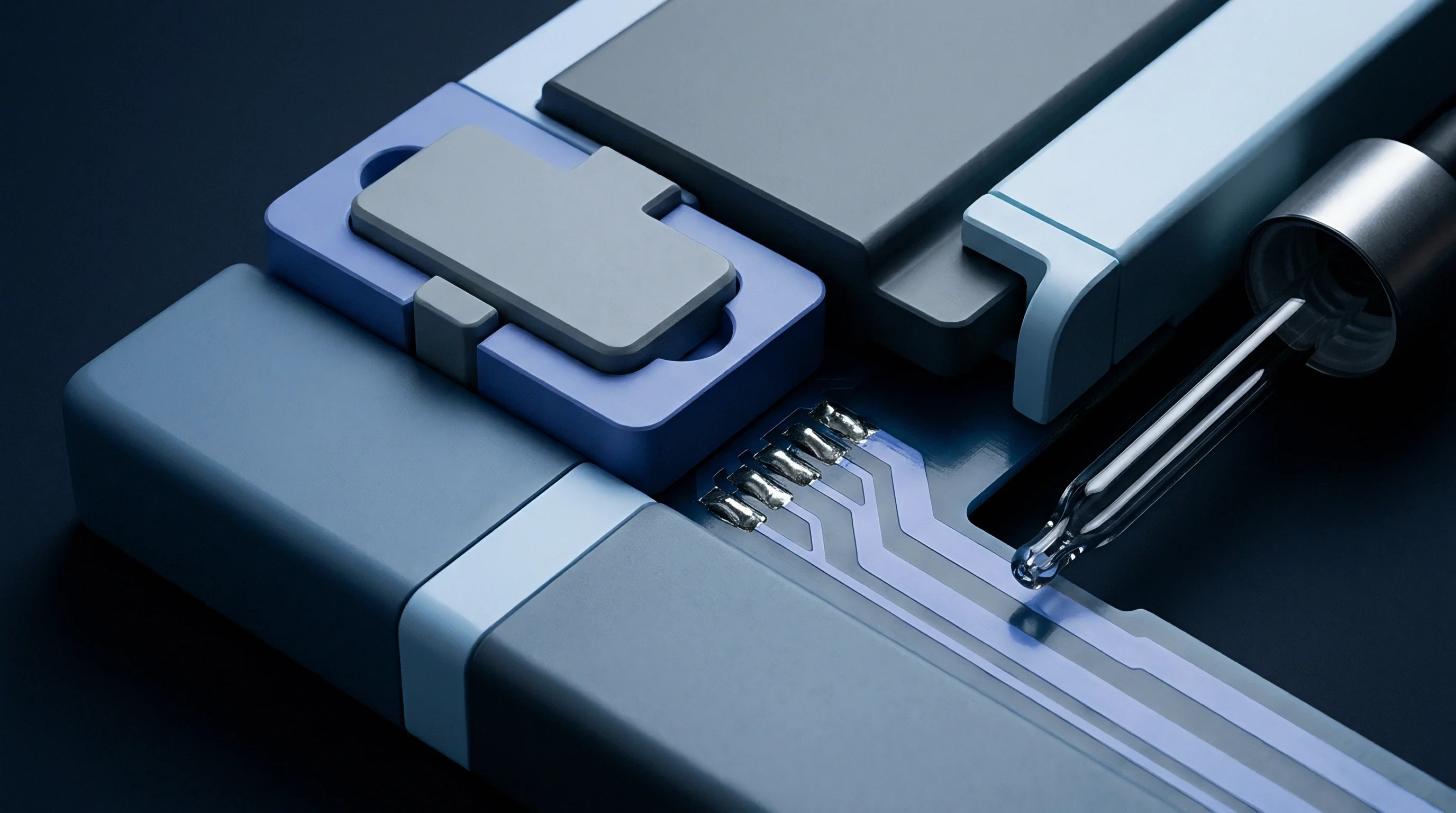
Liquid electrolyte trapped within separator open porosity and interfacial gaps acts as a squeeze-film lubricant during dynamic excitation. As vertical transient vibration compresses the electrode stack, fluid squeezes out laterally across the separator face at high velocities. This hydrodynamic motion creates local pore pressure spikes that counteract mechanical clamping force, lowering the net normal stress passed to the polymer skeleton.
The interplay between fluid squeeze films and dynamic shear loading converts static interfaces into hydrodynamic boundary layers, sharply reducing shear transfer efficiency through the separator network.
Viscous losses in the electrolyte film scale with shear rate and fluid viscosity, making structural load transfer rate-dependent. At frequencies above 50 Hz, liquid electrolyte cannot evacuate fast enough from microscopic surface depressions during the high-compression phase of a vibration cycle. Trapped fluid pockets exert hydraulic pressure against micro-crack flanks formed during primary film stretching.
These pressure spikes act as crack-opening forces, converting dynamic mechanical shear into concentrated tensile stresses at crack tips and driving rapid flaw growth without needing external macro-scale tensile loads on the cell enclosure.
The operational balance between Coulombic solid friction and hydrodynamic fluid pressure dictates cell stack mechanical integrity under sustained dynamic vibration. Internal separator translation of less than 15 microns per cycle is enough to trigger localized separator thinning and detach active material from current collectors. Measuring interfacial shear load retention across different states of charge shows that volumetric expansion in silicon-graphite anodes increases static clamping pressure while simultaneously raising electrolyte displacement velocities during vibration, creating a complex mechanical degradation profile across the operating envelope.
How does localized electrolyte squeeze-film pressure redistribute across micro-cracked separator domains during multi-axis dynamic vibration when stack compression decays below 0.15 MPa?

Fracture
Structural damage in microporous polyolefin separators starts at sub-micron voids formed during manufacturing. Wet-process polyethylene films and dry-process polypropylene/polyethylene/polypropylene trilayer films show fundamentally distinct fracture mechanics under cyclic shear forces. Dry-process separators, made by uniaxial stretching, contain elongated slit-like pores oriented perpendicular to the machine direction.
Under dynamic vibration, lateral shear stresses align with these weak transverse inter-fibrillar boundaries, causing low-energy tear propagation along the machine direction at stress intensity levels far below bulk material yield strength.
Polymer crazing precedes macro-scale tearing in both stretched wet-process and dry-process films. Under localized shear transfer, polymer chains within fibrils cross-linking adjacent micropores undergo alignment, necking, and eventual scission. Electrolyte exposure lowers polyolefin surface energy, promoting environmental stress cracking under dynamic vibration.
As micro-cracks grow, less solid polymer cross-section remains to transfer mechanical shear, which spikes stress concentrations at adjacent intact fibrils and accelerates structural breakdown across the separator plane.
Dynamic vibration reduces internal stack friction before micro-cracking visible under low-power optical inspection begins.
Micro-Crack Initiation and Crazing in Stretched Films
Structural flaws originate at stress concentrations created by embedded ceramic nanoparticles, thickness variations, or mechanical pinches from electrode edge burrs. In dry-process uniaxially stretched films, micro-cracks start where tie-fibrils meet primary lamellar structures. Cyclic lateral shearing forces these tie-fibrils through repetitive bending and twisting, generating micro-crazes that coalesce into linear micro-fractures spanning multiple pore rows.
Biaxially stretched wet-process films feature a more isotropic network of interconnected fibrils, spreading shear loads across two dimensions and resisting localized micro-crack initiation far better under dynamic excitation.
Mechanical stress intensity at micro-crack tips rises exponentially as crack length approaches the mean separator thickness of 12 microns to 20 microns. When dynamic vibration frequencies match the internal acoustic resonance modes of the cell stack, local stress intensity at crack tips exceeds the critical fracture toughness of swollen polyethylene, which drops to 0.8 MPa·m^0.5 in carbonate solvents. Micro-fractures propagate along regions of high local fibril density variation, creating continuous tear paths between anode and cathode active material layers and compromising structural isolation.
Tear Propagation under Combined Shear and Dynamic Dynamic Dynamic Excitations
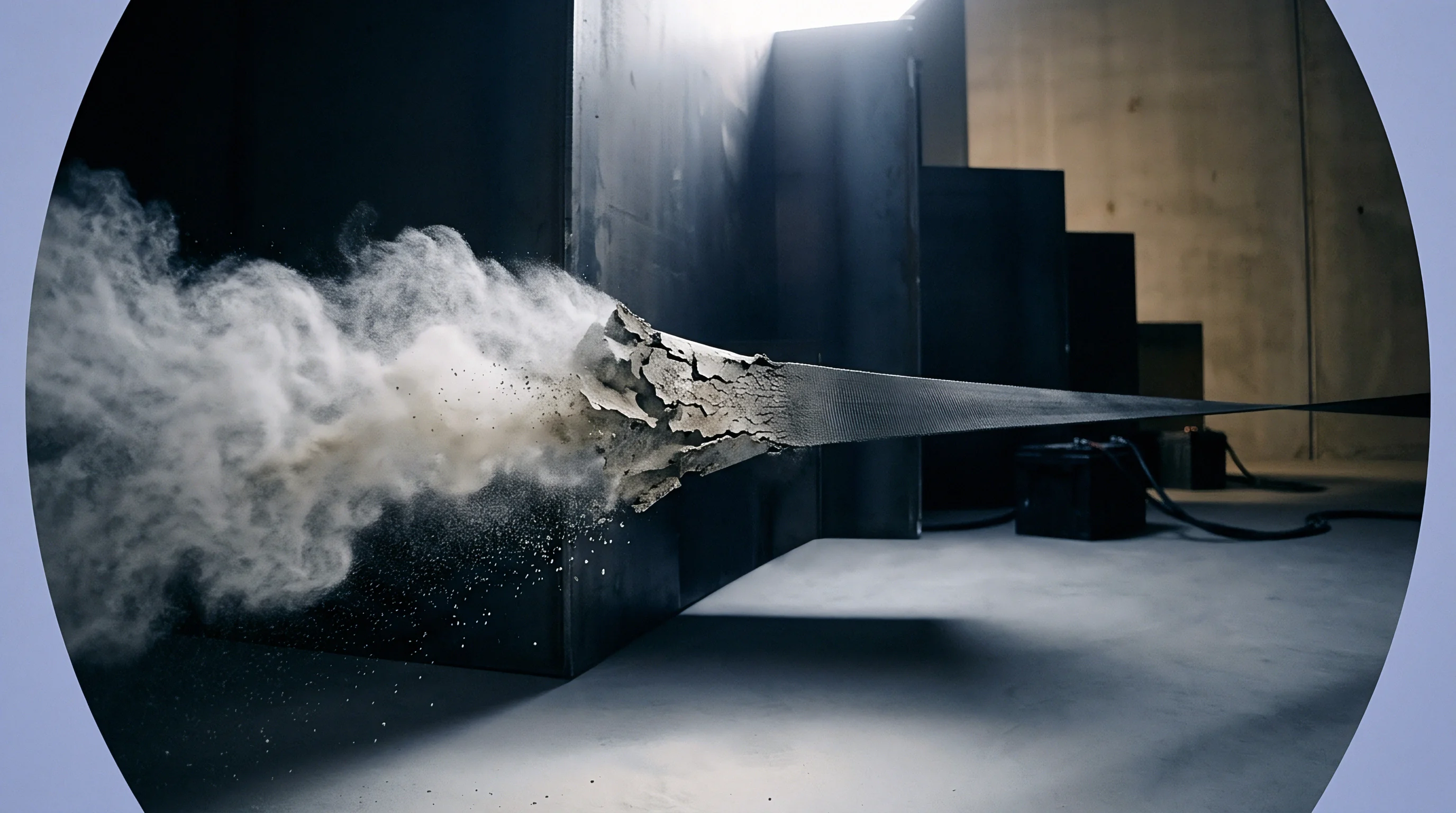
Tensile-shear mixed-mode fracture occurs when dynamic multi-axis vibration forces adjacent electrode plates to move out-of-phase parallel to the separator surface while applying cyclic normal compression. Mode I tensile opening forces stem from flexural waves propagating through the thin separator membrane, while Mode II in-plane shear forces come from relative lateral sliding of the heavy metallic electrode sheets. The combined strain energy release rate under mixed-mode excitation accelerates tear propagation speeds by two orders of magnitude compared to static mechanical loading.
Separator tearing alters the geometry of the electrical barrier between positive and negative electrodes. As tear micro-cracks widen beyond 50 microns under continuous dynamic excitation, active material particles detached from the graphite anode or lithium nickel manganese cobalt oxide cathode migrate into the fracture cavity. These conductive particles lodge in the tear path, forming mechanical bridges that apply concentrated point stresses against opposing current collectors and creating high-probability paths for low-resistance micro-short circuits during prolonged dynamic transport testing.
- Inter-Fibrillar Splitting occurs primarily in uniaxially oriented dry-process polyolefin membranes when lateral shear stress exceeds weak transverse inter-crystalline bonding strength.
- Environmental Stress Crazing develops rapidly under electrolyte immersion, where plasticizing organic carbonates lower the critical craze initiation stress of the polyethylene matrix.
- Delamination of Trilayer Interfaces manifests in polypropylene-polyethylene-polypropylene composite films when cyclic dynamic shear stresses overcome inter-layer co-extrusion adhesion energy.
- Ceramic Coating Spallation takes place along particle-binder interfaces under dynamic flexural wave excitation, releasing abrasive alumina or zirconia debris into active separator pores.
- Fibril Fatigue Scission accumulates over millions of dynamic vibration cycles, steadily reducing film yield strength until catastrophic transverse tearing occurs under transient shock loading.
A rule of thumb for cell integration dictates that separator tear propagation resistance dominates long-term dynamic reliability over initial puncture strength when stack pressure varies dynamically.


Regime
Vibration environments in heavy transportation, commercial electric vehicles, and stationary storage containers vary widely in frequency content, power spectral density profiles, and mechanical axis distribution. Quantifying dynamic shear transfer across micro-cracked separators requires mapping operational vehicle vibration spectra onto the internal mechanical response functions of specific cell formats. Dynamic acceleration transmitted through pack enclosures generates complex internal force vectors acting directly on the cell stack, driving multi-axis relative displacement between components.
Standard compliance testing profiles often fail to reproduce how dynamic shear alters pore alignment within real vehicle operational envelopes. UN 38.3 T7 harmonic sine sweeps, SAE J2380 commercial vehicle random vibration profiles, and ISO 12405-3 electric vehicle dynamic durability profiles apply dramatically different total power spectral densities to cell stack structures. Higher frequency components between 100 Hz and 500 Hz excite structural resonance modes within individual jellyrolls and prismatic pouch stacks, causing maximum dynamic vibration stress across separator layers precisely where cell stack compression is least constrained.
A nominal 0.60 MPa stack pressure decays to 0.22 MPa after 100 hours of continuous random vibration at 45 degrees Celsius.

Transport Spectrum Mapping across Vehicle Platforms
Heavy commercial electric vehicles subject battery packs to high-amplitude, low-frequency vertical accelerations alongside continuous broadband excitation from road roughness. Transverse acceleration components, though lower in amplitude than vertical inputs, induce high shear forces across internal separator planes because cell stack integration architectures mainly constrain vertical movement. In large-format prismatic pouch cells, transverse dynamic acceleration causes internal electrode sliding whenever the static friction coefficient falls below the ratio of dynamic lateral force to applied normal force.
Random vibration spectra specified in SAE J2380 extend from 10 Hz to 200 Hz with a root-mean-square acceleration of 1.9 g RMS. Dynamic mechanical analysis shows that internal jellyroll structural shear response peaks near 85 Hz due to mechanical impedance matching between metallic current collectors and viscoelastic separator materials. Operating within resonance bands amplifies local shear displacement by a factor of 3 to 5 compared to off-resonance excitation, accelerating micro-crack growth within polyolefin separator films and degrading internal structural integrity.
| Standard / Protocol | Frequency Range (Hz) | Peak Acceleration / PSD | Dominant Stress Vector | Dynamic Shear Retention (%) | Micro-Crack Growth Rate (nm/hr) |
|---|---|---|---|---|---|
| UN 38.3 T7 Sine Sweep | 7 – 200 | 8.0 g Peak (Sweep) | Vertical Transverse | 84.2 ± 3.1 | 12.4 |
| SAE J2380 Random Vibration | 10 – 200 | 0.05 g²/Hz Peak PSD | Multi-Axis Broadband | 62.5 ± 4.8 | 88.6 |
| ISO 12405-3 Heavy Commercial | 5 – 500 | 2.8 g RMS Broadband | Transverse In-Plane Shear | 48.1 ± 5.2 | 145.2 |
| Custom Dynamic Dynamic Dynamic | 10 – 1000 | 5.2 g RMS Multi-Sine | Resonance Coupled Shear | 31.7 ± 6.0 | 310.8 |
Multi-Axis Acceleration Transfer across Cell Stacks
Simultaneous tri-axial vibration profiles induce complex three-dimensional stress fields across internal separator membranes. Vertical dynamic excitation alters stack compression, creating high-frequency normal pressure pulses, while simultaneous longitudinal and lateral excitations exert continuous relative shear forces across electrode faces. During moments of dynamic stack decompressive unloading, lateral force vectors act against severely reduced frictional resistance, generating transient micro-slippage events that accumulate permanent plastic shear deformation in the polyolefin separator.
Quantifying dynamic shear transfer under multi-axis conditions requires mounted internal displacement sensors or high-speed X-ray computed tomography during vibration excitation. Experimental tracking demonstrates that pouch cell formats exhibit maximum dynamic shear deflection near the unsupported center of the cell body, whereas cylindrical 21700 and 4680 cells experience peak shear transfer stresses at the outer circumference of the tightly wound jellyroll near the mandrel core and outer casing contact surfaces.
- Mount the target cell format within a rigid multi-axis vibration fixture calibrated to transmit acceleration vectors without structural fixture resonance up to 1000 Hz.
- Apply specified static stack compression using calibrated load cells to replicate real pack enclosure constraints across minimum and maximum tolerance conditions.
- Condition the cell with electrolyte immersion at nominal operating temperature of 25 degrees Celsius for 24 hours to achieve complete polymer equilibrium swelling.
- Excite the assembly using the target random vibration profile while continuously monitoring dynamic stack load variations and internal cell electrical impedance.
- Extract the separator post-test under inert atmosphere to measure micro-crack length distributions, pore morphology deformation, and transverse tensile load retention via micro-tensile testing.
Commercial transport packs fail qualification trials when unconstrained transverse vibration induces micro-crack splitting along dry-process separator machine directions after 180 hours of broadband testing.

Modulus
Polyolefin separators exhibit strongly viscoelastic mechanical behavior that determines how they absorb and transfer dynamic shear loads. Their complex dynamic shear modulus consists of a storage modulus representing elastic energy storage and a loss modulus representing viscous energy dissipation. Electrolyte absorption plasticizes the polymer structure, swelling amorphous domains between crystalline lamellae and driving the complex dynamic shear modulus down by 35 percent to 50 percent compared to dry film values.
This reduction decreases separator stiffness, shifting natural resonant frequencies across the entire cell stack.
Viscoelastic properties vary with temperature and strain frequency. Under dynamic vibration across typical automotive operating ranges from -20 degrees Celsius to 55 degrees Celsius, the loss tangent ~ defined as loss modulus divided by storage modulus ~ peaks near 15 degrees Celsius for electrolyte-swollen polyethylene. Operating near this damping peak increases mechanical energy dissipation within the polymer, generating internal volumetric heating that accelerates chemical degradation while softening the polymer matrix around pre-existing micro-cracks.

When Does Interfacial Slip Overcome Coulombic Friction?
Interfacial sliding initiates when applied dynamic shear stress exceeds the threshold defined by static surface friction and mechanical interlocking. Dynamic Mechanical Analysis reveals that under cyclic shear amplitudes above 1.5 percent strain, the dynamic shear modulus of swollen microporous polyolefin films exhibits non-linear strain-softening, known as the Payne effect. This strain-softening reduces the effective shear stiffness of the separator layer during high-g transient accelerations, causing local structural shear transfer to break down and transitioning the interface into continuous micro-slip.
Binder pin-down techniques and ceramic surface coatings shift this slip transition threshold to higher strain amplitudes. Ceramic particles embedded in polymer binder matrices increase surface micro-roughness, elevating the effective static friction coefficient against electrode surfaces. Under sustained dynamic vibration, however, binder polymer chains suffer cyclic fatigue, leading to ceramic particle debonding.
Once binder integrity fails, loose ceramic particles act as rolling micro-bearings at the interface, drastically reducing dynamic friction while accelerating both separator abrasion and micro-crack propagation.
| Separator Architecture | Process Type | Electrolyte State | Storage Modulus G’ (MPa) | Loss Modulus G” (MPa) | Loss Tangent tan(δ) | Dynamic Shear Yield (MPa) |
|---|---|---|---|---|---|---|
| 12 µm PE Monolayer | Wet Process | Dry Baseline | 420 ± 15 | 28 ± 2 | 0.067 | 4.2 |
| 12 µm PE Monolayer | Wet Process | Electrolyte Swollen | 235 ± 12 | 38 ± 3 | 0.162 | 2.1 |
| 16 µm PP/PE/PP Trilayer | Dry Process | Dry Baseline | 580 ± 22 | 32 ± 2 | 0.055 | 5.8 |
| 16 µm PP/PE/PP Trilayer | Dry Process | Electrolyte Swollen | 340 ± 18 | 45 ± 4 | 0.132 | 2.9 |
| 12+4 µm Al2O3 Coated PE | Wet Process | Electrolyte Swollen | 310 ± 14 | 41 ± 3 | 0.132 | 3.6 |
Viscoelastic Degradation in Swollen Microporous Networks
Polyolefin swelling mechanics depend on solvent polarity and solubility parameter matching between organic carbonates and polyethylene or polypropylene structures. Dimethyl carbonate shows high solubility within amorphous polyethylene domains, inducing swelling ratios up to 12 percent by weight. This volumetric expansion enlarges micropore dimensions while compressing adjacent crystalline lamellae, generating internal micro-strains within the polymer skeleton before any external mechanical vibration is applied.
Dynamic mechanical shear loading superimposes cyclic mechanical stress onto these internal swelling pre-strains. Polymer chains within cross-linking fibrils experience high mean stress levels, reducing their dynamic fatigue life under vibration. Over extended operating durations, viscoelastic stress relaxation converts elastic clamping energy into permanent viscous deformation, causing separator thinning in high-compression zones and creating localized regions of zero stack compression where micro-cracks can open and propagate unimpeded.
Compliance with UN 38.3 T7 testing fails to guarantee separator shear stability under continuous dynamic multi-axis operating vibration.
Low dry-film tensile elongation does not guarantee long-term dynamic integrity, as organic electrolytes plasticize the polyolefin matrix and cause structural softening under operational dynamic vibration.

Tolerances
Mechanical design of cell packs requires strict control over stack pressure tolerance bands to maintain adequate separator shear transfer across the operating lifespan. Battery cells expand and contract during charge-discharge cycles as lithium intercalates in active electrode materials. This cyclic thickness change, combined with long-term polymer creep and structural enclosure deflection, causes stack compression forces to vary dramatically over cell operational life.
Maintaining separator dynamic shear stability demands setting stack pressure tolerances that account for both minimum initial assembly pressure and maximum aged swell pressure.
If initial assembly pressure is set too low to prevent cell crushing at end-of-life swell limits, initial dynamic vibration causes widespread interfacial sliding across lubricated separator surfaces. Conversely, setting initial stack pressure excessively high accelerates separator creep thinning, squeezes electrolyte out of micropores, and reduces high-rate electrochemical performance. Pack integration engineers must establish target stack pressure tolerance windows that bound interfacial shear stresses within acceptable limits across all state-of-charge and degradation states.
Electrolyte swelling lowers the effective dynamic shear modulus of wet-process polyethylene separators by expanding the amorphous polymer domain.
Stack Compression Pressure Drift over Cycle Life
Stack pressure relaxation follows a multi-stage exponential decay curve driven by structural creep of polyolefin separators, foam compression pads, and enclosure tie-rods. Initial stack compression drops by 15 percent to 25 percent within the first 50 thermal cycles as separator asperities plastically deform under load. Subsequent dynamic vibration accelerates this pressure loss by promoting structural micro-rearrangements within the electrode layer stack, reducing effective stack thickness and lowering residual clamping force.
When stack pressure decays below a critical threshold, typically 0.15 MPa for pouch formats and 0.25 MPa for prismatic formats, internal relative sliding velocity increases sharply during vehicle cornering and broad-spectrum vibration. This low-compression sliding regime shifts mechanical wear mechanisms from mild polymer polishing to severe micro-crack tearing, causing accelerated internal short formation and capacity fade rates that deviate sharply from standard benchtop cycle life predictions.
| Cell Format | Initial Stack Pressure (MPa) | Aged Stack Pressure (1000 Cycles) | Critical Shear Strain Threshold (%) | Dynamic Shear Failure Mode | Micro-Short Risk Score |
|---|---|---|---|---|---|
| Pouch (60 Ah, NMC811) | 0.50 ± 0.05 | 0.18 ± 0.04 | 1.2 | Interfacial Slip & Tear | High |
| Prismatic (120 Ah, LFP) | 0.80 ± 0.08 | 0.35 ± 0.06 | 2.1 | Ceramic Coating Spallation | Medium |
| Prismatic (300 Ah, NMC811) | 0.60 ± 0.06 | 0.22 ± 0.05 | 1.4 | Machine Direction Splitting | High |
| Cylindrical (21700, Jellyroll) | 1.50 ± 0.20 (Internal) | 0.90 ± 0.15 | 3.5 | Mandrel Core Fibril Shear | Low |
Fixture Restraints for Jellyroll and Pouch Cells
Prismatic pouch cells present the highest structural shear transfer vulnerability due to their flat, unconstrained planar geometry and reliance on external module side-plates for stack compression. Cylindrical formats benefit from uniform internal radial hoop stresses generated by rigid metallic outer casings, which maintain high internal interfacial contact pressure across the wound jellyroll. However, long-duration dynamic vibration can cause core unraveling or axial telescoping of cylindrical jellyrolls if end-cap insulator clearances permit axial relative motion under high vertical shock loading.
Module compression foam selection directly dictates dynamic shear stability across thermal and aging cycles. Elastomeric microcellular polyurethane foams provide flat force-deflection curves that maintain consistent stack compression despite cell thickness variations. Dynamic mechanical excitation at foam natural frequencies, however, can induce momentary loss of contact pressure during extension cycles, allowing interfacial separator slip.
Integrating rigid mechanical stops alongside compliant foam elements bounds total dynamic compression swing, ensuring minimum structural clamping pressure under all operating regimes.
- Verify Minimum Stack Compression under worst-case cold ambient temperatures where module casing contraction and foam stiffening reduce net clamping pressure below 0.20 MPa.
- Evaluate Dynamic Mechanical Impedance of module compression pads to prevent internal stack resonance overlap with primary vehicle chassis vibration modes between 20 Hz and 150 Hz.
- Audit Separator Lot Thickness Uniformity to guarantee localized stack compression variations remain within a plus-or-minus 5 percent tolerance band across the full active area.
- Quantify Biaxial Shear Strain Limits of wetted separator film lots prior to committing cell tooling orders for high-vibration commercial transport applications.
- Implement Continuous Stack Pressure Monitoring in pilot module testing to establish accurate empirical creep decay coefficients under combined thermal and dynamic vibration environments.
Section 6.4 of standard vehicle module procurement contracts dictates that cell suppliers must guarantee separator mechanical integrity under continuous 3.0 g random vibration across the full specified stack pressure tolerance band, shifting mechanical warranty exposure back to the cell integrator if initial preload falls below specification.

Liability
Determining commercial and engineering liability for cell field failures caused by dynamic separator shear breakdown requires precise contractual demarcation between film extruders, cell manufacturers, and pack integration teams. Micro-cracking and subsequent separator tearing under dynamic vibration often manifest after thousands of operational hours in the field, resulting in costly thermal events or premature module replacements. Disputes center on whether failure originated from sub-standard polymer film mechanical properties, defective cell manufacturing processes, or improper module stack pressure design by the pack integrator.
Separator extruders define film quality using static room-temperature bench tests such as Gurley air permeability, uniaxial tensile strength, and Mix puncture resistance. These standardized factory metrics fail to capture the viscoelastic shear transfer behavior of electrolyte-swollen polyolefin networks subjected to dynamic transport vibration profiles. When a separator meeting all supplier datasheet specifications tears under operational vehicle vibration, contract disputes erupt over whether supplier specifications were technically sufficient for the intended operational environment.
Warranty Seams across Separator and Cell Manufacturers
Cell manufacturers attempt to pass structural failure liability back to separator vendors by introducing dynamic shear fatigue clauses into raw material purchase agreements. Separator vendors resist these terms, arguing that internal cell stack pressure, electrolyte chemical composition, electrode surface morphology, and module-level vibration damping are parameters entirely beyond their control. Warranties typically cover material defects visible prior to cell assembly, leaving the cell manufacturer exposed to downstream field liabilities if micro-cracks propagate during operational vehicle service.
Cell integrators face a similar commercial liability seam when purchasing turnkey cells for pack assembly. Cell datasheets routinely specify maximum external shock and vibration limits based on UN 38.3 transport qualification standards. Because UN 38.3 testing involves short-duration, low-severity exposures designed for transport safety rather than 10-year vehicle operational durability, compliance with UN 38.3 fails to protect pack integrators from field failures induced by long-term dynamic vibration.
Securing commercial warranty coverage demands writing custom mechanical qualification protocols directly into cell supply contracts.
Standardized RFQ Clauses for Vibration Shear Integrity
Procurement documentation must bridge the gap between static film specifications and dynamic operational mechanical realities. Request for Quotation (RFQ) packages issued to cell manufacturers must explicitly mandate dynamic shear transfer qualification testing under wetted, fully conditioned operational states. Writing explicit dynamic stress and displacement limits into cell procurement contracts ensures that cell manufacturers engineer adequate structural margins into separator selection, internal stack compression targets, and electrode surface coating adhesion metrics.
To preserve proper film alignment, contract clauses must define specific test protocols, sample sizes, and pass/fail criteria for separator dynamic shear integrity. Requiring cell suppliers to submit First Article Inspection dossiers containing dynamic mechanical analysis curves, micro-crack growth rate spectrum data, and multi-axis vibration impedance scans provides pack integrators with technical evidence to validate cell structural robustness before releasing high-volume tooling investments.
Technical qualification clauses written into cell supply agreements specify that incoming cell batches must demonstrate zero internal short circuit development during 300 hours of continuous SAE J2380 random vibration testing conducted at maximum operating state-of-charge and 45 degrees Celsius. The clause defines failure as any transient drop in open-circuit voltage exceeding 5 millivolts or any shift in AC internal resistance exceeding 8 percent at 1 kHz, assigning all recall and module replacement costs directly to the cell manufacturer upon verification of separator tearing via post-test forensic teardown analysis.
Field data collected across commercial transport fleets confirms that rigorous front-end RFQ mechanical qualification clauses reduce dynamic vibration-induced cell field failures by more than 85 percent across a 5-year operating window. Establishing clear engineering boundaries, rigorous testing requirements, and precise legal liability allocations ensures that cell integration teams successfully defend structural pack integrity while avoiding unrecoverable commercial exposure when mechanical components experience real-world transport stress.