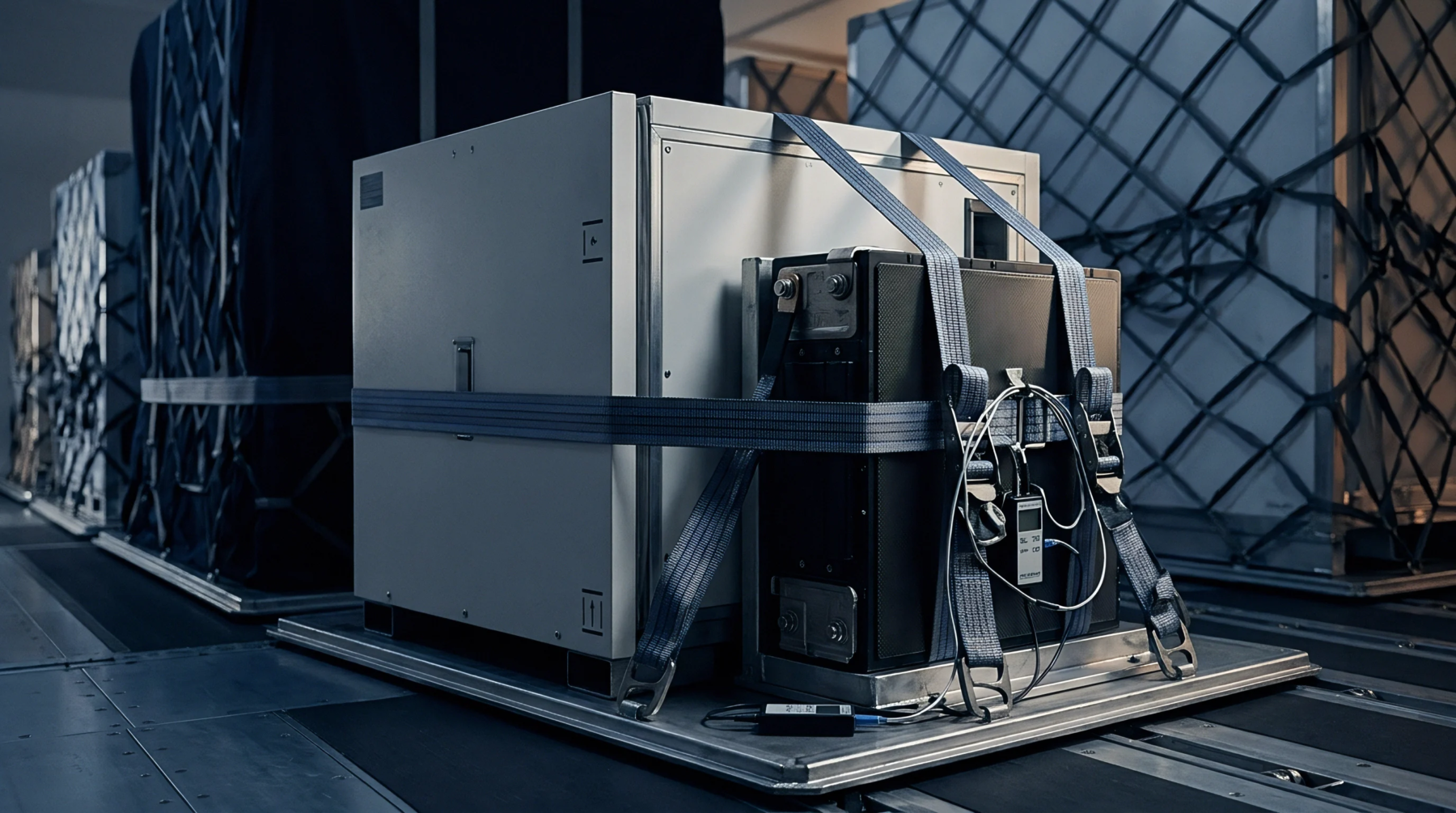
Harmonized Tariff Classification and Dangerous Goods Labeling Alignment for Battery Imports
Aligning HS classification codes with UN dangerous goods labeling prevents customs holds, duty penalties, and carrier rejections for battery imports.
Certified packaging configurations consisting of corrugated fiberboard exterior cartons approved for the domestic and international transport of dangerous goods govern the shipping compliance of small and medium format lithium battery consignments. The designation UN 4g box identifies an outer container that has passed performance-oriented drop, stacking, and water resistance trials in conjunction with designated internal dunnage, cell wrapping, and secure closure methods. Regulatory boundaries of the specification govern the complete combination packaging system as certified, ending where cargo transfers to non-conforming secondary boxes or when unapproved internal packing variations occur.
The rating excludes bulk steel drums, solid wooden crates, and bare freight containers devoid of secondary certification. Sourcing contracts for commercial battery shipments require packaging matching these regulatory marks to satisfy air, maritime, and highway dangerous goods regulations.
Exterior packaging panels display permanent, printed specification codes outlining material type, packaging group capabilities, gross weight allowances, and authorizing state jurisdictions. The standard code string begins with the United Nations circular emblem, followed by the 4G code denoting corrugated fiberboard, and a letter indicating the tested packaging group, such as X for Group I, Y for Group II, or Z for Group III. Numerical figures indicate maximum permitted gross mass in kilograms, followed by a letter indicating whether the box was qualified for solids or combination packagings containing liquids.
Manufacturing year, authorizing state country code, and accredited packaging laboratory registration numbers complete the legal mark. Altering any internal component, such as swapping molded pulp trays for bubble wrap, invalidates the entire UN 4g box certification mark.
Certification testing requires full packaging prototypes to pass rigorous performance tests detailed in Chapter 6.1 of the UN Model Regulations. Drop testing releases loaded test packages from heights up to one point two meters for Packaging Group II battery consignments, evaluating corner, edge, and flat face impacts. Stacking evaluations apply compressive dead loads equivalent to a three meter packaging stack for twenty-four hours to prove warehouse storage crush resistance.
Water absorption testing across outer corrugated surfaces via the standard Cobb method ensures exterior liners do not soften under high humidity or driving rain. Internal cushioning must prevent cell-to-cell contact, isolate terminal posts to prevent short circuits, and contain sufficient absorbent media if liquid electrolyte packages are involved.
Logistics teams in battery manufacturing plants maintain strict packaging operating procedures to ensure factory shipments align precisely with test report specifications. Regulators impose substantial fines and seize cargo when shipments feature counterfeit UN stamps or uncertified tape closure patterns. Tape brands, backing materials, and application widths must replicate the exact conditions documented in official laboratory test reports.
Battery distributors audit packing lines to verify that gross package weights remain below the maximum gross mass stamped on the exterior box panel. UN 4g box compliance establishes the legal baseline for safe, unhindered transit of lithium battery products through international logistics networks.
Aligning HS classification codes with UN dangerous goods labeling prevents customs holds, duty penalties, and carrier rejections for battery imports.
Expertise is a utility, not a secret. sentiention™ publishes its working knowledge as open reference: intelligence layer covering the materials it sources, the markets it enters, and the reference that serves both.