UN 38.3 Test Summary Requirements for Lithium Battery Shipping
UN 38.3 test summaries supply ten mandatory technical data points verifying cell safety across global freight networks under international shipping laws.


Mandate
Under the Seventh Revised Edition of the UN Manual of Tests and Criteria, manufacturers and downstream distributors of lithium ion and lithium metal cells or batteries made after July 1, 2003 must provide a standardized test summary document as of January 1, 2020. This document condenses full laboratory test reports into a publicly accessible one- or two-page sheet confirming that the cells or batteries passed United Nations Sub-section 38.3 safety trials.

Regulatory Genesis under Section 38.3.5
Paragraph 38.3.5 of the UN Manual established the test summary requirement for all cells and batteries produced after July 1, 2003. Before this rule, shippers relied on full lab reports, certificates of conformity, or informal declarations. Because evaluating disparate lab formats created friction for transport authorities, airline inspectors, and port officials during cross-border checks, paragraph 38.3.5 set ten mandatory data elements for every summary.
The resulting sheet moves alongside the physical cargo or resides in a searchable online database maintained by the manufacturer.
Shippers presenting non-compliant paperwork face immediate refusal at air and ocean terminals. The UN Model Regulations form the core standard, which modal dangerous goods authorities adopt directly into international law.
Scope of Distribution and Availability
Manufacturers and distributors must make the test summary available to any entity in the supply chain ~ including freight forwarders, brokers, customs inspectors, flight crews, and buyers ~ without demanding non-disclosure agreements or separate commercial terms. Physical paper copies inside each shipping container are not required; a public web link or an automated QR code on the master outer pack satisfies regulatory requirements. If a carrier or enforcement officer requests the file at the dock, however, the shipper must provide it within a commercially reasonable timeframe.
| Transport Mode | Regulatory Authority | Governing Code / Section | Document Availability Rule | Primary Enforcement Mechanism |
|---|---|---|---|---|
| Air Cargo | ICAO / IATA | DGR Packing Instructions 965-970 | Mandatory at booking and cargo tender | Airline acceptance desk document audit |
| Maritime Freight | IMO | IMDG Code Special Provision 188 / 230 | Required upon demand by port authority or carrier | Container loading security audit and customs inspection |
| Road Transport | UNECE | ADR Special Provision 188 / 230 | Accessible via driver dangerous goods file or digital link | Highway dangerous goods roadside inspections |
| Rail Transport | OTIF | RID Special Provision 188 / 230 | Accessible via consignment paper trail | Intermodal rail yard safety audits |
Commercial supply contracts between cell manufacturers and OEMs routinely treat UN Sub-section 38.3.5 compliance as a mandatory delivery gate. Standard purchase agreements often include liability clauses that assign administrative delays and port demurrage costs back to the factory if shipments are held up at origin ports.

Bench
Lithium cell designs are validated through eight physical and electrical trials, designated as tests T.1 through T.8 in UN Manual Sub-section 38.3. Conducted sequentially or in parallel groups, these trials simulate the environmental, mechanical, and electrical stresses a cell or pack encounters during air, sea, and land transport.

Mechanical and Thermal Stress Regimes
Tests T.1 through T.4 subject samples to low atmospheric pressure, rapid temperature swings, multi-axis vibration, and high-impact acceleration. Passing these sequential trials demonstrates that the cell casing, seals, electrode stack, and safety vents remain mechanically sound under severe transport conditions.
In Test T.1 (Altitude Simulation), fully charged cells remain in a pressure chamber at 11.6 kilopascals or less for at least six hours at 20 degrees Celsius, simulating unpressurized high-altitude cargo holds. Test T.2 (Thermal Test) subjects samples to ten cycles between 72 degrees Celsius and minus 40 degrees Celsius, holding each extreme for six hours. For cells weighing over 5 grams, mass loss across T.1 and T.2 cannot exceed 0.1 percent of total cell mass.
Test T.3 (Vibration) applies logarithmic sinusoidal sweeps from 7 Hertz to 200 Hertz and back over 15 minutes, repeated 12 times across three perpendicular axes. Test T.4 (Shock) applies half-sine shocks ~ 150 gn with a 6-millisecond pulse for small cells, or 50 gn with an 11-millisecond pulse for large cells ~ three times in positive and negative directions across all three axes.
A cell design that passes thermal shock trials often fails external short circuit testing when structural expansion bridges internal terminal clearances.

Electrical Abuse and Cell Safety Thresholds
Tests T.5 through T.8 cover forced short circuits, heavy mechanical crushing, overcharging, and deep forced discharge, recreating the physical damage, electrical faults, or charger failures that can occur during transit.
In Test T.5 (External Short Circuit), a fully charged cell at 55 degrees Celsius is shorted across an external resistance under 0.1 ohms. The short circuit is maintained for at least one hour after the outer case temperature drops back below 55 degrees Celsius. To pass, the internal temperature may rise, but the outer case temperature must not exceed 170 degrees Celsius, and no disassembly, rupture, or fire can occur within six hours.
Test T.6 (Impact or Crush) measures resistance to physical damage. Cylindrical cells 18 millimeters or wider receive an impact from a 9.1 kilogram weight dropped 61 centimeters onto a 15.8 millimeter steel bar placed across the center. Prismatic, pouch, and smaller cylindrical cells are crushed between flat plates at 13 kilonewtons of force.
Test T.7 (Overcharge) subjects rechargeable batteries to twice their rated maximum continuous charge current for 24 hours, followed by a seven-day observation period for fire or disassembly. Test T.8 (Forced Discharge) connects primary or secondary cells in series with a 12 Volt DC power supply to force discharge at their maximum rated rate.
Take a 12-series 4-parallel lithium ion battery pack rated at 44.4 Volts nominal and 20 Ampere-hours, weighing 4.8 kilograms. In T.2 thermal cycling, maximum weight loss for this 4,800 gram pack is 4.8 grams. If thermal expansion during the 72 degree Celsius cycle causes electrolyte vapor loss of 5.2 grams, the pack fails T.2.
In T.5 short-circuit testing, that same 44.4 Volt pack connected across a 0.05 ohm load draws an initial current over 800 Amperes. Internal copper busbars must handle this surge without melting casing materials or causing the outer enclosure to exceed 170 degrees Celsius. Shipping an unverified configuration forfeits cargo access, risks carrier blacklisting, and exposes the shipper to civil penalties.

Record
Paragraph 38.3.5 outlines ten mandatory data fields required on every summary sheet to ensure technical traceability. Omitting even one element makes the document legally invalid and gives carrier acceptance agents cause to reject the freight.

Mandatory Ten Points of Data
Compliance depends on specific entries covering manufacturer details, laboratory accreditations, physical properties, and test manual revisions. The ten required fields are listed below.
| Field # | Mandatory Data Element | Specific Operational Contents Required | Common Verification Failures |
|---|---|---|---|
| 1 | Manufacturer Name | Name of cell, battery, or product manufacturer | Using trade names instead of registered corporate legal name |
| 2 | Manufacturer Contact Information | Address, phone number, email address, and official website | Missing direct phone number or working corporate email |
| 3 | Test Laboratory Information | Name, address, phone number, email, and website of testing facility | Listing internal sales office instead of testing facility |
| 4 | Test Report Identification Number | Unique test report reference number assigned by lab | Truncated reference numbers that do not match primary lab report |
| 5 | Date of Test Report | Exact completion date (day, month, year) of test report | Discrepancy between report date and summary creation date |
| 6 | Product Description | Detailed description: chemistry, mass, Wh rating or Li content, format, model | Omission of exact mass or watt-hour capacity values |
| 7 | List of Tests Conducted | Explicit list of T.1 through T.8 tests and individual Pass/Fail status | Lumping tests together without listing T.1-T.8 individually |
| 8 | Assembled Battery Testing Reference | Reference to UN 38.3.3 (f) and (g) compliance if applicable | Leaving field blank when shipping multi-cell modular packs |
| 9 | Test Manual Revision Number | Reference to revised edition of UN Manual and amendments used | Citing obsolete editions without listing current amendments |
| 10 | Authorized Signature | Name, title, and signature of authorized company representative | Digital signatures lacking verifiable title or typed corporate name |
Structural Discrepancies and Incomplete Dossiers
Missing cell weights, omitted test report numbers, or invalid signatures cause immediate document rejections at cargo docks and customs checkpoints. Friction also arises when suppliers issue blanket certificates for a product family without explicitly listing every part number in the shipment.
Common documentation errors that trigger shipment rejections include:
- Unmatched Model Designations The model name on the summary does not match the battery label, commercial invoice, or dangerous goods declaration.
- Missing Signature Credentials Documents missing an authorized signature, job title, or corporate affiliation fail terminal validation.
- Omitted Mass or Watt Hour Figures Leaving out mass or watt-hour capacity prevents cargo screeners from verifying packing compliance.
- Outdated Test Standard References Citing obsolete editions or amendments of the UN Manual voids regulatory acceptance.
- Missing Lab Contact Information Omitting phone numbers, physical addresses, or official email domains for testing labs delays clearance audits.
Incorporate Section 38.3.5 compliance clauses into supplier contracts to permit immediate purchase order cancellation upon receipt of incomplete summary sheets.
Internal proprietary lab test certificates do not substitute for standard UN 38.3 summary documents, and commercial freight acceptance desks consistently reject unstandardized internal reports.


Chain
Transporting dangerous goods across air, sea, and land requires synchronized documentation handovers between manufacturers, forwarders, and carriers. Verification takes place at every physical node in the transit chain.
Carrier Acceptance and Port Handover Protocols
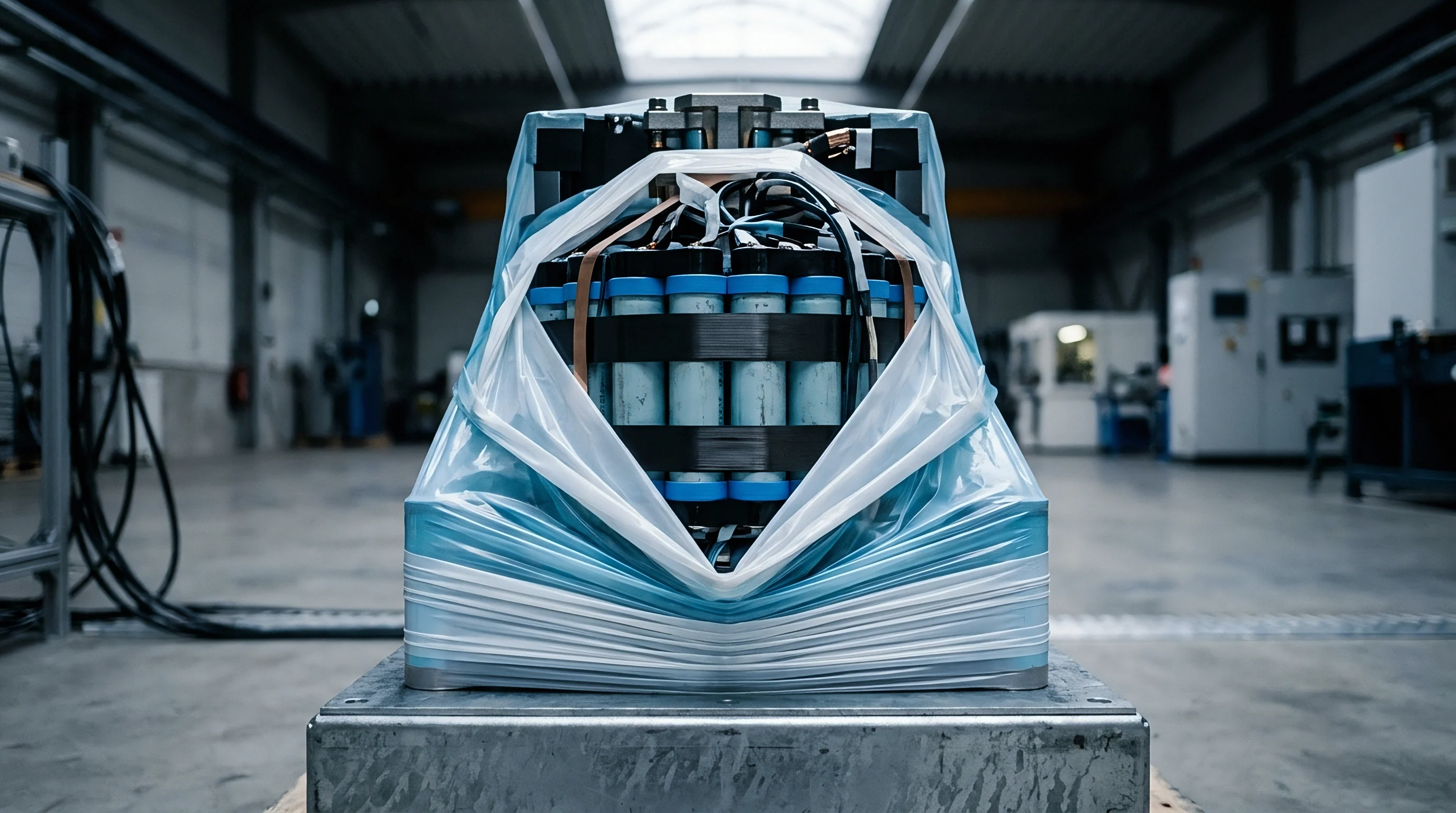
Airlines and ocean carriers inspect documentation packages before loading cargo. Forwarders handling lithium batteries under IATA Packing Instructions 965 through 970 verify that the UN 38.3.5 summary is attached and aligns with the Dangerous Goods Declaration. If the battery weight declared on an air waybill differs from the mass on the summary sheet, cargo loading stops immediately.

Who Bears Responsibility for UN 38.3 Summary Distribution?
Every seller in the distribution chain must provide the document to buyers, forwarders, and inspectors upon request. Liability does not rest solely with the original cell manufacturer; the shipper of record named on the bill of lading guarantees that the shipment is fully certified. When an OEM integrates certified cells into a multi-cell pack and exports the product, the OEM assumes status as the assembly manufacturer and must issue a new test summary for the complete pack.
Receiving agents follow a structured audit procedure when evaluating battery documentation at intake docks:
- Receiving teams verify that the battery model number matches the identifier on the test summary.
- Compliance officers confirm that the testing lab holds valid ISO/IEC 17025 accreditation for lithium safety testing.
- Logistics managers verify that the watt-hour rating printed on the summary falls within IATA Packing Instruction 965 limits.
- Compliance personnel validate the electronic or physical signature of the authorized representative.
- Warehouse staff attach the verified summary to the master dangerous goods transport file before dispatching cargo to terminals.
Supply chain actors carry distinct operational obligations during transit handoffs:
- Cell Manufacturers Factories draft and sign the initial test summary, retaining raw lab data for official audits.
- Pack Assemblers Integrators run secondary testing when combining certified cells into multi-cell packs that exceed individual cell ratings.
- Freight Forwarders Brokers audit documentation before issuing air waybills or ocean bills of lading.
- Distributor Operations Wholesale distributors maintain digital repositories to provide documents electronically upon request.
Standalone lithium ion cells shipped under IATA Packing Instruction 965 Section IA must travel at a state of charge not exceeding 30 percent of rated capacity.
Verifying document authenticity before releasing payment prevents shipments from stranding at transit hubs, where delay fees can quickly wipe out product margins.

Sanction
Non-compliance creates severe legal and financial exposure for importers, dangerous goods signatories, and freight forwarders. Enforcement agencies show zero tolerance for paperwork errors, and impounded shipments lead to expensive delays.

Regulatory Penalties and Operational Seizure
Aviation and customs authorities impound non-compliant shipments and fine the shipper of record. Under US Title 49 CFR and European ADR regulations, civil penalties for offering uncertified dangerous goods exceed tens of thousands of dollars per violation. If uncertified lithium batteries suffer thermal runaway in transit, authorities can bring criminal charges against corporate directors and signatories.
Port authorities order the destruction of impounded battery shipments if shippers fail to present valid UN 38.3 test summaries within statutory notice periods. Hazardous material disposal fees for destroyed lithium battery lots run thousands of dollars per ton and are billed directly to the importer of record.

Commercial Risk Allocation and Contractual Indemnity
Failing to provide valid safety documentation invalidates marine cargo insurance, leaving owners exposed to transit losses and third-party damages. Standard policies exclude illegal or improperly documented dangerous goods. If an uncertified battery triggers a vessel fire, underwriters will deny coverage, leaving the shipper open to general average claims and direct litigation.
A missing test summary converts air freight cargo into unauthorized dangerous goods subject to immediate customs seizure.
Buyers mitigate regulatory risks using strict indemnity terms and mandatory pre-shipment document audits. As custom battery designs adopt solid-state chemistries and new electrolyte formulas, regulatory bodies continue to evaluate whether existing T.1 through T.8 bench protocols adequately measure thermal runaway propagation in high-density packs.