Procurement Criteria for Industrial Lithium Battery Cells
Procuring industrial lithium cells demands precise capacity grading, strict thermal expansion allowances, verified UN 38.3 data, and clear warranty seams.


Grade
Cell manufacturing lines naturally yield variance in discharge capacity and internal resistance across single production lots. High-speed production machinery applies active slurry onto current collector foils with tight precision, yet microscopic variations in coating thickness and material density persist. Standard factory sorting protocols separate continuous output into distinct performance tiers before packaging.
Procurement engineers must evaluate whether a supplier delivers uniform Grade A cells or blends secondary grades within bulk shipments.
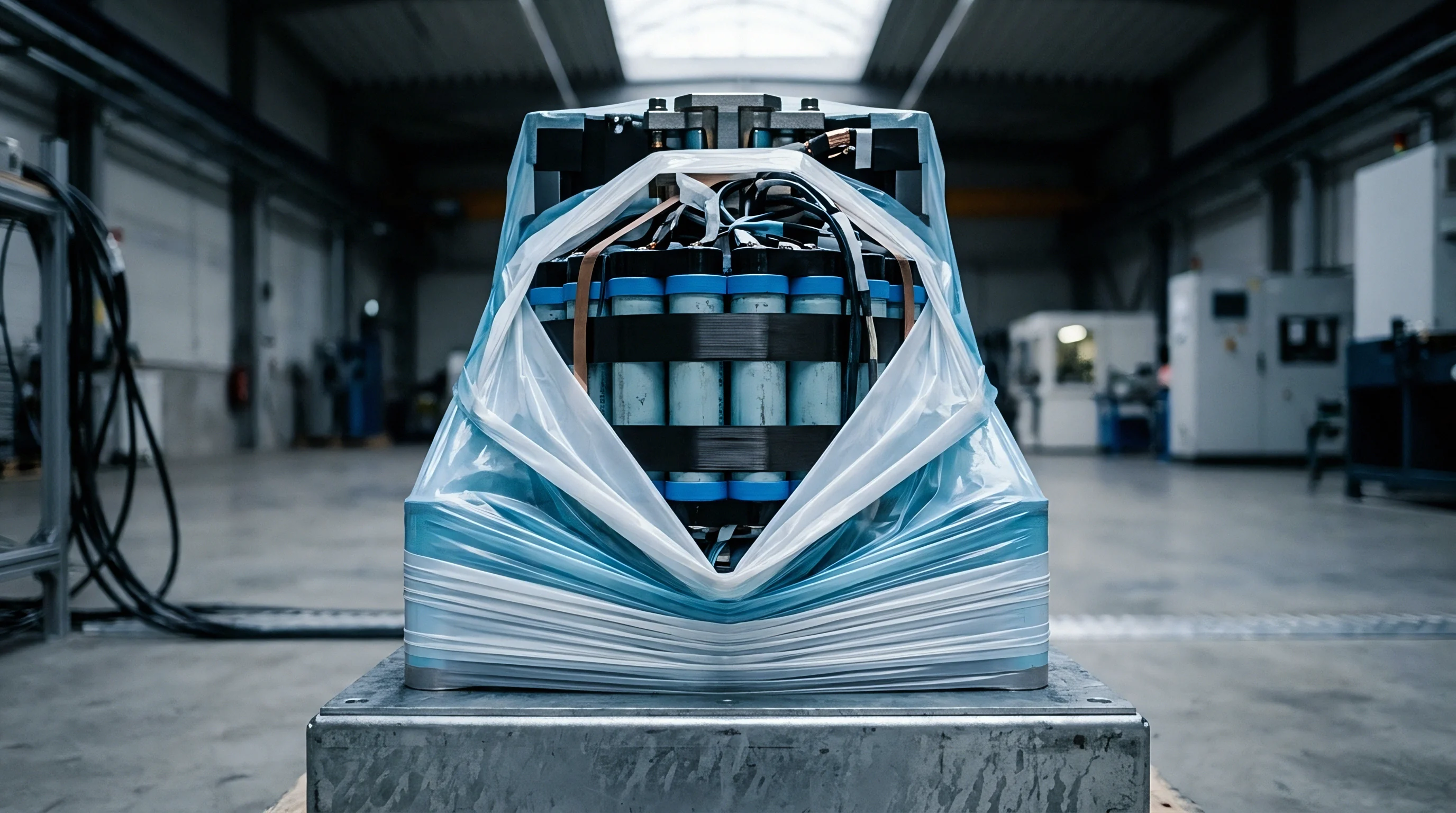
Capacity Sorting Mechanics
Discharge testing at constant current measures total available charge under specified ambient conditions. Standard factory acceptance profiles evaluate cells at a room temperature of twenty-five degrees Celsius using a zero-point-two C discharge rate down to the chemical cutoff voltage. Higher discharge rates mask capacity deficits by generating internal resistive heating that temporarily elevates ion mobility.
Evaluating capacity data requires confirming the exact C-rate and ambient thermal parameters applied during factory grading.
When cells with divergent discharge capacities are connected in series strings, impedance drift alters module balance and the cell with the lowest capacity determines the usable runtime of the entire module. During discharge, this weaker cell reaches its lower voltage threshold first, forcing the battery management system to cut off power while higher-capacity cells retain residual energy. During charge cycles, the same low-capacity cell hits its upper voltage ceiling early, terminating charging before companion cells reach full state of charge.
Procurement agreements should specify a maximum capacity variance threshold of no more than plus or minus one-point-five percent from nominal rating across any single delivered lot.

Direct Current Internal Resistance Benchmarking
Pulsed load profiles reveal voltage drops across electrode tabs and electrolyte interfaces. While alternating current resistance measured at one kilohertz provides a rapid indicator of cell assembly integrity, direct current internal resistance (DCIR) reflects real-world thermal generation under continuous current flow. Measuring DCIR involves applying a high-current discharge pulse for ten seconds and recording the immediate voltage drop.
High DCIR increases resistive losses, converting usable electrical energy into excess heat that accelerates chemical degradation.
| Grade Tier | Capacity Tolerance (Ah) | DCIR Variance (mΩ) | Delta OCV (mV / 28 Days) | Factory Destination |
|---|---|---|---|---|
| Grade A Tier 1 | +1.5% / -0.0% | ±2.5% | < 1.5 | Tier 1 Industrial Automotive & Storage |
| Grade A Tier 2 | +3.0% / -1.0% | ±5.0% | < 3.0 | Standard Commercial & Industrial Packs |
| Grade B | +5.0% / -5.0% | ±12.0% | < 8.0 | Low-Speed Electric Vehicles & Secondary Markets |
| Grade C | Unrated | > ±15.0% | > 10.0 | Material Recycling & Scrap Recovery |
Self-discharge behavior provides a critical secondary diagnostic during incoming quality audits. After formation and initial aging, cells sit in warehouse storage for twenty-eight days to evaluate open-circuit voltage decay. This K-value measurement detects subtle internal micro-shorts caused by separator imperfections or metallic burrs on slit electrode foils.
A rapid voltage drop indicates continuous internal charge leakage, signaling a cell that will cause balancing failures once welded into a pack.
- Electrolyte Volume Deficit Insufficient electrolyte fills cause premature dry-out and rapid DCIR growth during early field cycling.
- Micro-short Self-Discharge Burrs on anode current collector foils pierce the ceramic separator layer, driving rapid OCV decay during room temperature aging.
- Tab Weld Resistance Anomalies Ultrasonic weld defects at collector tabs create local hot spots that flunk high-rate discharge acceptance tests.
- Electrode Coating Thickness Variance Uncontrolled slurry deposition rates introduce mass imbalance between positive and negative active material bands.
Skipping incoming cell screening allows flawed units into module strings, where a single high-resistance cell elevates pack temperatures and triggers early BMS cutoff across the entire battery system.


Swell
Lithium intercalation into graphite anodes forces physical expansion of the electrode stack during charge cycles. As lithium ions move from the cathode host structure into the graphite lattice, the anode structure experiences volumetric changes up to ten percent. In cylindrical formats, this expansion pushes outward against a rigid steel casing.
In pouch and prismatic formats, volumetric expansion exerts massive forces against adjacent cells and enclosure walls.
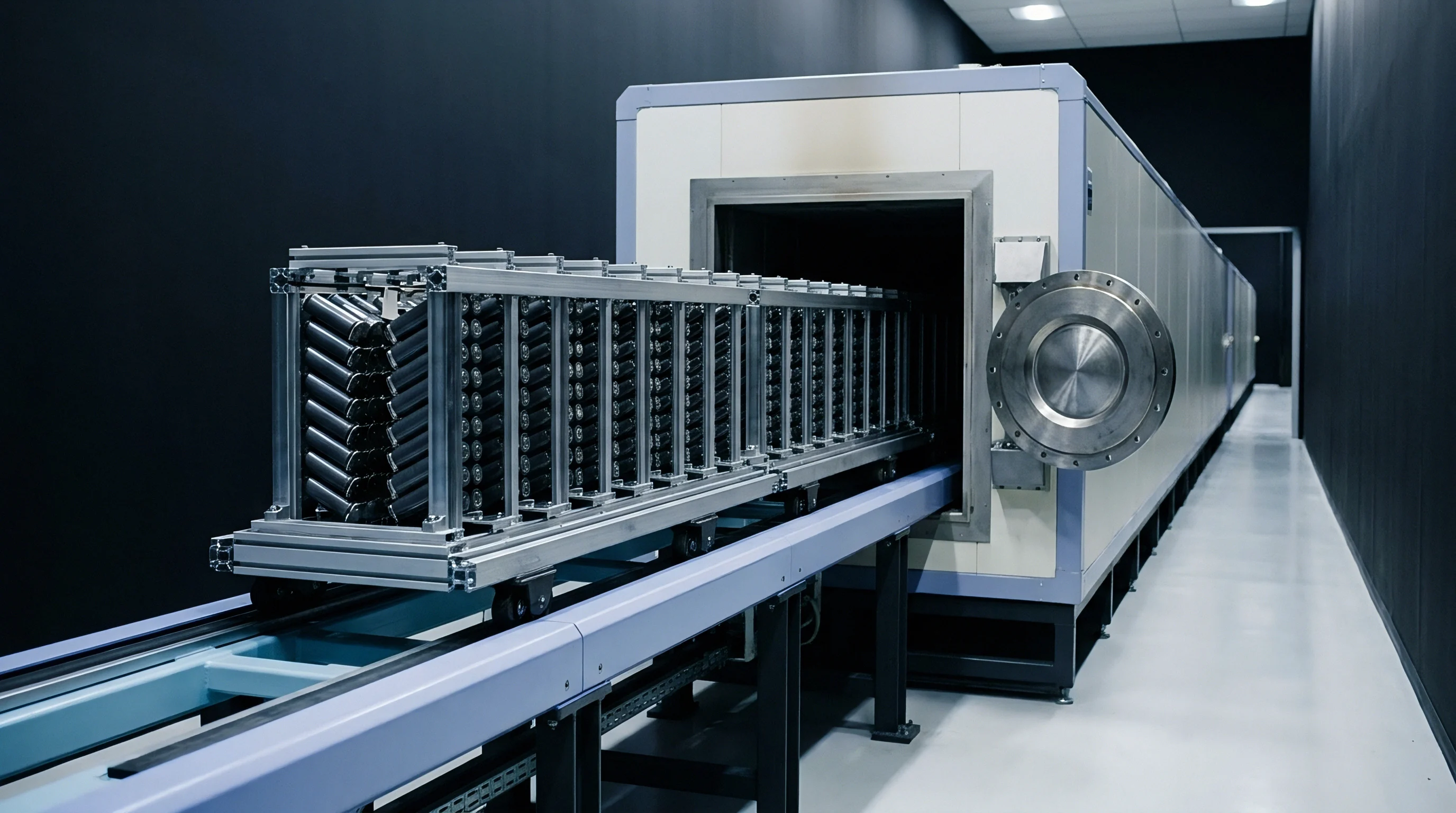
Intercalation Dynamics and Enclosure Clearance
Electrode stacks expand non-linearly across continuous discharge and recharge profiles. Reversible breathing expansion occurs during every charge cycle as ions enter the anode, contracting during discharge. Irreversible expansion accumulates over hundreds of cycles as solid electrolyte interphase layers thicken and metallic lithium deposits on anode surfaces.
Designing enclosures for pouch or prismatic cells demands precise calculation of end-of-life thickness limits. A cell measuring twelve millimeters thick at initial manufacturing expands to over thirteen millimeters near eighty percent state of health. Without adequate structural clearance or compliant cushioning materials, cumulative stack forces deform aluminium module frames, crush cooling channels, and apply shear stress to busbar weld points.
Spring rates inside module frames maintain structural containment while preserving physical ionic transport pathways across active electrode surfaces.

Constraint Springs and Module Compression
Placing elastic foam pads between active pouch surfaces manages mechanical stress in rigid frames. Applying an initial pre-charge clamp pressure between zero-point-one and zero-point-three megapascals prevents delamination of active material layers from current collector foils. Excessive external clamping pressure restricts electrolyte mobility within separator pores, starving electrochemical reactions and accelerating lithium plating during fast-charging events.
Because pouch cells demand uniform clamping, spring selection requires evaluating force displacement curves over the full physical life of the battery pack. Silicone foam and open-cell polyurethane micro-cellular materials provide steady resistance across temperature swings from minus forty to sixty degrees Celsius, ensuring mechanical stability without crushing expanding cells.
Ruptured pouch seals are routinely attributed to customer-side mechanical constraints rather than uncontrolled gassing during formation.


Transit
International maritime and air logistics enforce distinct environmental stress vectors on cell shipments. Cargo holds experience ambient temperature fluctuations, long-term vibration profiles, and pressure drops that test physical sealing integrity. Hazardous goods regulations mandate specific packaging, labeling, and state of charge limits before logistics carriers accept lithium battery inventory.

Where Does Responsibility Shift during Sea Transport?
Commercial trade terms allocate risk between cell manufacturer and buyer at designated freight milestones. Under Delivered Duty Paid terms, the supplier retains risk and shipping liability until cargo arrives at the buyer destination dock. Under Free On Board agreements, ownership and transport risk transfer to the buyer the moment ocean containers cross the ship rail at the port of origin.
Ocean container floors transmit low-frequency vibration continuously over weeks at sea, threatening tab-to-terminal internal welds if master cartons lack vibration isolation dampening.
Lithium iron phosphate cells held at thirty percent state of charge retain ninety-nine percent nominal capacity after twelve months in tropical storage conditions.

State of Charge Limitations for Freight
Global safety authorities limit energy levels inside transport containers to mitigate thermal runaway hazards. UN dangerous goods regulations enforce a strict maximum state of charge ceiling of thirty percent for standalone lithium cell shipments moving by commercial air freight. Lower energy states reduce thermal runaway energy release, preventing chain-reaction propagation across master packaging crates if an isolated cell suffers an internal short circuit.
| Transport Mode | Temperature Range (°C) | Vibration Spectrum | State of Charge Limit | Regulatory Requirement |
|---|---|---|---|---|
| Air Freight Cargo | -20 to +55 | 10 Hz to 2000 Hz Random | 30% Maximum | UN 38.3, ICAO/IATA PI 965 Section IA |
| Ocean Freight Container | -10 to +65 | 2 Hz to 100 Hz Harmonic | 30% Recommended | IMDG Code Class 9, UN 3480 |
| Overland Trucking | -30 to +60 | 5 Hz to 500 Hz Broadband | 50% Maximum | ADR / DOT Title 49 CFR |
Shipping containers parked on tropical docks reach internal temperatures exceeding sixty degrees Celsius, accelerating capacity self-discharge and driving parasitic side reactions that thin electrolyte volume. Temperature recording logs inside master shipping pallets verify environmental compliance throughout the transit chain.
Inserting section 5.2 of UN 38.3 testing criteria into the master purchase agreement transfers financial liability for thermal runaway transport failures directly back to the cell manufacturer.

Paperwork
Compliance documentation dictates whether a custom battery pack gains market entry across international jurisdictions. Regulatory agencies stop shipments at import ports when underlying cell certification records show discrepancies in test standards, facility credentials, or factory address listings. Procurement plans must prioritize verifying compliance dossiers before releasing production tooling funds.

Mandatory Regulatory Dossiers
Testing standards demand structural proof before series assembly begins. Primary safety certifications include UL 1642 for industrial cells, IEC 62133-2 for portable industrial systems, and UN 38.3 for dangerous goods transport. Global markets increasingly demand comprehensive supply chain due diligence documentation, including carbon footprint declarations and material source tracking certificates compliant with new regional battery regulations.
Omission of valid UN 38.3 test summaries at customs clearance results in immediate shipment seizure and mandatory warehouse storage penalties.

Traceability and Batch Certificates
Factory origin logs link physical serial numbers back to raw chemical refine lots. A complete quality dossier verifies cathode material lot numbers, electrolyte purity profiles, separator roll batch codes, and formation environmental room conditions. When field failures occur, full traceability isolates affected production lots, converting broad market recall actions into targeted quarantine actions.
- Verify factory lot acceptance test reports match cell serial barcodes.
- Cross-reference UN 38.3 test summary documents against active product revisions.
- Confirm electrolyte moisture analysis figures remain under twenty parts per million.
- Inspect self-discharge logs for open-circuit voltage drop over twenty-eight storage days.
Industry stakeholders continue to debate whether third-party lab verification or manufacturer self-declaration provides sufficient legal insulation against regional compliance enforcement.


Arithmetic
Evaluating total financial exposure demands rigorous calculation beyond the base quote. Sourcing decisions relying solely on initial cell cost per ampere-hour frequently stumble on hidden logistics fees, customs duties, scrap allowances, and custom tooling amortizations. Complete financial analysis evaluates the total cost per delivered kilowatt-hour over the total expected operational cycle life of the battery system.

Landed Cost Modeling and Non-Recurring Engineering
Custom tooling expenses and import duties modify effective economics during volume production. Cell prices quoted FOB overseas factory gates exclude international maritime freight rates, insurance coverage, customs clearing charges, and import tariffs classified under HTS code 8507.60. Custom cell terminal geometric modifications or specialized silicone sealing top-caps generate non-recurring engineering fees that require amortization over initial order volumes.
| Format Type | Base Cell Price (/kWh) | NRE Amortization (/kWh) | Tariff & Freight (/kWh) | Levelized Cost (/kWh Delivered) |
|---|---|---|---|---|
| Cylindrical 21700 LFP | 68.00 | 1.20 | 8.50 | 0.048 |
| Prismatic 280Ah LFP | 54.00 | 3.50 | 6.20 | 0.039 |
| High-Power NMC Pouch | 92.00 | 12.00 | 11.40 | 0.082 |
| Levelized cost calculated assuming 80% DOD cycling, 4,000 baseline cycles, and 92% round-trip efficiency. | ||||

Cycle Life Energy Cost Calculations
Levelized storage cost formulas evaluate expenses per delivered kilowatt-hour over full lifespan. A cell quoted at ninety dollars per kilowatt-hour delivering two thousand cycles before reaching eighty percent capacity presents higher long-term energy costs than a cell quoted at one hundred twenty dollars delivering six thousand cycles.
Front-end savings on cell quotes routinely disappear when custom pack enclosure tooling requires unexpected revision rounds.
- Capacity Retention Guarantee Define explicit end-of-life cycle limits linked directly to C-rate and ambient temperature bounds.
- Scrap Rate Amortization Allowance Cap acceptable factory yield loss percentages in contract clauses before unit cost penalties take effect.
- Non-Recurring Engineering Rebate Floor Establish volume threshold milestones that trigger partial repayment of initial tooling investments.
- Raw Material Indexation Clause Tie cell pricing to published spot market indexes for battery-grade lithium carbonate and nickel hydroxide.
Budgeting calculations that incorporate freight, tooling, and scrap allowances yield realistic financial projections for industrial battery integration.


Warranty
Contractual boundaries define where responsibility transfers between cell vendors, pack builders, and system operators. Disputes over battery failures center on establishing whether a defect originated in cell manufacturing or resulted from improper integration and operational abuse. Clear legal scope definitions protect pack integrators from absorbing primary cell chemistry liabilities.

Defining Liability at Format Boundaries
Integrating loose cells into proprietary housing changes original equipment manufacturer obligations. Cell manufacturers warrant individual cell performance according to rigorous testing standards and datasheet limits. Once cells undergo terminal ultrasonic welding, mechanical stacking, or custom module potting, cell vendors routinely reject liability claims unless incoming lot defects were logged prior to pack assembly.

Operating Envelope Bounds and Data Logging
Battery management records furnish empirical proof of operational history during contract disputes. Warranties require strict adherence to specified voltage windows, maximum charge current pulses, continuous discharge limits, and thermal boundaries. System owners maintain immutable logs of peak current, operating voltage, and thermal history to establish compliance with factory operational envelopes.