Quantifying Contractual Indemnity Liabilities Arising from Unapproved Firmware Modifications in Grid Storage Systems
Unapproved BESS firmware changes void OEM cell warranties, shifting full indemnity liability for capacity degradation, fines, and recertification to the modifier.


Infraction
Field telemetry confirms that a four-millivolt shift in upper cut-off voltage doubles the rate of transition-metal dissolution at the cathode interface. When an asset manager or engineering, procurement, and construction contractor pushes over-the-air firmware updates to an operating utility-scale battery system without cell manufacturer sign-off, that control modification breaches the core operating envelope defined in the supply agreement. Most energy storage procurement agreements anchor cell performance warranties, degradation curves, and round-trip efficiency commitments to strict operating parameter sets registered in an approved baseline configuration file.
Unapproved modifications routinely alter charge acceptance limits, aggressive inverter ramping rates, low-temperature charging allowances, or thermal management chiller trigger points to capture fleeting ancillary service revenues. If dispatchers chase wholesale frequency response pricing by expanding the operational state-of-charge band from the contracted 10 to 90 percent range out to 5 to 97 percent, cell degradation accelerates exponentially. The original equipment manufacturer responds to warranty claims by pulling non-volatile memory logs from the battery management system.
Once a checksum mismatch reveals unauthorized parameter flashing, the manufacturer repudiates all downstream capacity retention obligations.
A parameter adjustment outside the baseline register terminates cell degradation coverage instantly.
The resulting commercial exposure lands directly on the modifying party through standard contractual indemnity clauses. These provisions obligate the party making unauthorized alterations to defend, indemnify, and hold harmless the project owner against lost capacity revenue, liquidated damages assessed by off-takers, and premature cell replacement costs. Establishing liability begins with isolating the precise delta between the warranted parameter schedule and the actual compiled binary executed by the local controller.
Contractual cross-indemnification language typically governs three distinct operational tiers across grid-scale storage assets:
- Battery management system control code dictates individual cell-level safety constraints, overvoltage protection ceilings, balance current routines, and analog-to-digital measurement sampling rates.
- Power conversion software manages inverter thermal tracking, four-quadrant reactive power delivery, harmonic suppression, and high-voltage direct-current bus ripple targets.
- Energy management supervisory logic governs market dispatch instructions, state-of-charge rebalancing targets, external chiller schedules, and revenue optimization algorithms.
Modifications applied to any of these three tiers alter the mechanical and electrochemical fatigue profile of the cells. The party executing unauthorized firmware changes assumes strict liability for the subsequent collapse of collateral performance guarantees.
A downstream contractor altering system control logic assumes the technical risk profile of a system designer without possessing the designer’s protective warranties.

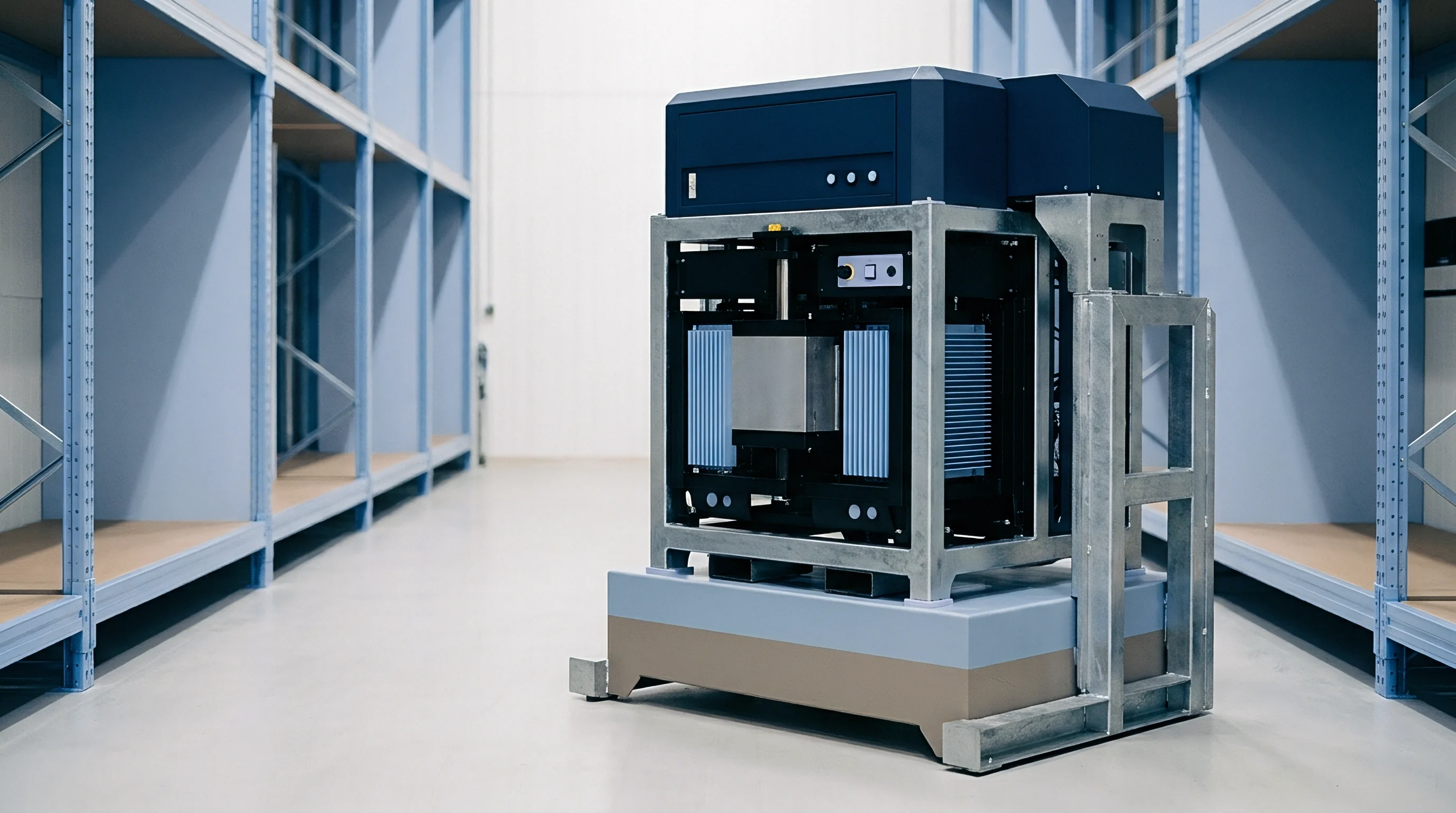
Swell
Prismatic lithium iron phosphate cells experience cyclic mechanical expansion during continuous lithiation and delithiation. Standard module engineering accommodates this breathing through compliant foam pads calibrated to maintain stack pressures between 20 and 50 kilopascals across a 10-year design life. Altering the charge current limits via unauthorized firmware updates during low-temperature operation forces metallic lithium to deposit directly onto the graphite anode instead of intercalating cleanly into the host lattice.

Could Altered Firmware Accelerate Mechanical Fatigue?
Anomalous lithium plating causes irreversible structural swelling that crushes internal module separators and deforms structural endplates. Measurements on degraded 280-Ah and 314-Ah prismatic cells demonstrate that unauthorized operational profiles pushing C-rates above 0.7C at core temperatures below 15 degrees Celsius induce permanent volumetric growth exceeding 7.2 percent, compared to the expected 2.5 percent baseline aging expansion. When internal pack clearance limits vanish, localized mechanical stress concentrations pierce the 15-micrometer polyethylene separator films, triggering internal micro-shorts.
| Operating Parameter | Factory Baseline Setting | Modified Field Override | Impact on Degradation | Endplate Pressure Drift |
|---|---|---|---|---|
| Upper Cut-off Voltage | 3.65 V per cell | 3.80 V per cell | Electrolyte oxidation triples | +38 kPa over baseline |
| Low-Temp Charge Floor | 10 degrees Celsius | 0 degrees Celsius | Lithium plating on anode | +95 kPa over baseline |
| Thermal Chiller Setpoint | 28 degrees Celsius | 35 degrees Celsius | SEI layer decomposition | +22 kPa over baseline |
| Maximum Continuous Current | 0.50 C-rate | 0.85 C-rate | Current collector fatigue | +61 kPa over baseline |
The mechanical manifestation of unapproved firmware is visible inside the pack. Module tie-rods yield, aluminum busbars shear at laser-welded terminal lugs, and cell-to-cell thermal interfaces lose planar contact, driving internal thermal gradients across a single string past 8 degrees Celsius. This physical failure voids safety certifications governed by UL 1973 and UL 9540.
A system operating under voided safety listings exposes the asset owner to mandatory shut-down orders issued by local fire authorities and the total cancellation of operational property insurance.
Excessive mechanical strain on enclosure tie-rods indicates non-compliant external cycling profiles rather than manufacturing defects, routinely invalidating field warranty submissions.

Toll
Financial exposure resulting from unapproved firmware changes extends far beyond the physical price of replacement battery modules. Grid-tied assets operate under bilateral power purchase agreements, capacity supply obligations, and strict grid interconnection codes. When firmware-induced degradation drops storage capacity below contractual minimum availability thresholds, penalty mechanisms engage automatically.
Breaching the contracted 96 percent availability floor triggers commercial liquidated damages calculated against hourly regional capacity market clearing prices.
Quantifying indemnity begins with lost revenue assessment under utility tolling contracts. If unapproved control updates burn through three equivalent full cycles per day instead of the contracted 1.15 cycles, the asset hits its ten-year degradation warranty floor inside thirty-six months. The project owner faces immediate capacity shortfall penalties levied by the regional transmission organization, loss of capacity payments, and the capital expenditure needed to augment the battery array years ahead of the planned financial pro forma.
| Liability Class | Underlying Causation | Direct Measurement Source | Quantification Formula Basis |
|---|---|---|---|
| Capacity Degradation | Accelerated cell aging | Annual capacity test log | Replacement cell pack landed cost plus installation labor |
| Off-take Liquidated Damages | Availability below 98 percent | SCADA uptime records | Contractual daily penalty rate multiplied by outage duration |
| Certification Invalidation | Safety boundary breach | UL 9540 field audit report | Third-party re-testing, field inspection, and re-listing fees |
| Insurance Cancellation | Elevated thermal runaway risk | Underwriter hazard notice | Surplus-line reinsurance premium delta and collateral deposits |
| Interconnection Fines | Frequency tracking failures | Interconnection meter data | Grid operator tariff penalty schedules per megawatt-hour error |
Secondary indemnities cover the site remediation and recertification toll. When safety parameters are flashed without factory authorization, engineers must recertify the entire high-voltage DC distribution line. Field engineering teams must execute comprehensive insulation resistance verification, pull full battery management telemetry extracts, and run baseline electrochemical impedance spectroscopy across every individual rack before underwriters restore coverage.
Neglecting formal parameter provenance tracking leads to complete financial liability for all lost generation revenues and project debt acceleration clauses when off-takers terminate default-laden tolling agreements.


Computation
Calculating the exact indemnity value demands a rigorous forensic allocation between natural baseline calendar degradation and accelerated firmware-induced cycling fatigue. Forensic battery engineers apply semi-empirical capacity loss equations combining Arrhenius temperature dependency and power-law cycle count relationships to isolate the unauthorized loss component.

Whose Telemetry Arbitrates the Final Indemnity Sum?
The calculation model establishes an analytical split between permitted operational wear and unauthorized capacity destruction. Consider an actual utility-scale installation: take a 100-megawatt, 400-megawatt-hour grid storage installation utilizing 3.2-volt, 280-Ah lithium iron phosphate prismatic cells, procured under a baseline contract permitting a maximum degradation of 2.1 percent per year under an operational limit of 365 equivalent full cycles annually at temperatures between 20 and 30 degrees Celsius.
Assume an unauthorized energy management firmware update runs on day 180 of year two, adjusting inverter reactive power response and raising cell charging current ceilings. The update increases operational throughput to 2.4 equivalent full cycles per day while elevating cell operating temperatures to an average of 38 degrees Celsius due to delayed chiller activation. At the end of year three, actual field capacity measures 312 megawatt-hours, representing a total capacity loss of 88 megawatt-hours (22 percent loss) against the warranted degradation path limit of 25.2 megawatt-hours (6.3 percent warranted cumulative loss).
The forensic degradation split proceeds through the following computational steps:
- Baseline capacity consumption calculation establishes that legitimate operation across the three-year window accounts for 25.2 megawatt-hours of normal wear based on the warranted 2.1 percent annual allowance.
- Permitted cycle tracking computes that authorized operation accounts for 1,095 equivalent full cycles of energy transfer.
- Excess throughput determination reveals that actual field dispatch registered 2,058 equivalent full cycles, creating an unauthorized excess of 963 equivalent full cycles directly driven by the altered logic.
- Attributable capacity destruction quantification subtracts baseline allowable loss from total measured loss, isolating exactly 62.8 megawatt-hours of unapproved capacity destruction.
- Capital restoration assessment multiplies the destroyed 62.8 megawatt-hours by the current landed battery module replacement and installation cost of 128,000 dollars per megawatt-hour, yielding an equipment indemnity baseline of 8,038,400 dollars.
To this equipment baseline, the model adds off-taker liquidated damages. If the power purchase agreement assesses 140 dollars per megawatt-hour per day for capacity shortfalls below the contracted 95 percent availability ceiling, an unmitigated 25-megawatt-hour deficit continuing across 180 days until replacement modules arrive imposes 630,000 dollars in pure off-take penalties.
Section 14.3 of standard EPC agreements excludes unauthorized software changes from the contractual liability cap.
Engineering labor, firmware rollback verification, UL recertification, and emergency balance-of-plant testing add 420,000 dollars. The total quantified indemnity claim totals 9,088,400 dollars, demonstrating how minor software optimizations trigger liabilities that dwarf the software developer’s entire contract value.
Commercial energy storage procurement contracts include explicit carve-outs stating that liability limitations, aggregate caps, and consequential damage waivers do not apply to losses caused by intentional, unauthorized modifications to safety-critical firmware or control parameters.
Recourse
Securing compensation through contractual indemnity requires absolute evidentiary provenance of the unauthorized firmware payload. When an engineering team modifies code without consent, proving causation demands an uninterrupted audit trail that links the flashed binary directly to cell electrochemical decay. Defense counsels routinely argue that ambient heat waves, factory manufacturing batch variability, or poor balance-of-plant maintenance caused the accelerated cell failure.
Overcoming these defenses depends on tamper-proof instrumentation. Modern utility racks incorporate cryptographic security modules where every firmware update generates a public-key signed hash logged to an air-gapped non-volatile register. If a remote management platform pushes an unsigned patch or overrides safety thresholds via an undocumented Modbus register write, the internal hardware security module records the event with an immutable timestamp.
The legal team matches these timestamp records with high-frequency telemetry pulled from rack-level battery management units. A sudden step-change in charge-discharge delta voltage, elevated rack direct-current resistance, or abnormal cell-balancing runtimes commencing within minutes of the logged firmware upload establishes direct legal causation.
Subrogation actions then proceed down the contractual hierarchy. The asset owner tenders an indemnity claim to the primary EPC contractor, who immediately files cross-claims against the energy management software subcontractor or third-party optimization vendor responsible for flashing the code. If the modifying entity lacks balance-sheet capacity to satisfy an eight-figure recovery, claimants seek coverage under professional liability and technology errors-and-omissions insurance policies.
Coverage disputes arise because insurers frequently invoke contractual liability exclusions, which bar claims arising from assumptions of liability that exceed common-law negligence standards. Whether an asset owner can enforce indemnity awards across complex multi-tiered software integration boundaries when automated cloud-based energy arbitrage algorithms push continuous dynamic setpoint updates without human intervention remains an unresolved commercial challenge.