ISO 17025 Accreditation Scope Limits in Subcontracted Cell Testing Systems
Subcontracted cell testing outside explicit ISO 17025 accredited scope limits invalidates ILAC marks, UN 38.3 summaries, and carrier transport clearances.


Boundary
Primary testing facilities routinely issue certification dossiers for lithium-ion cells while delegating specific abusive, environmental, or high-rate electrical evaluations to third-party facilities. Operational competency under ISO/IEC 17025:2017 Clause 6.6 mandates that an accredited laboratory evaluates, approves, and monitors external service providers. The legal and technical validity of the resulting test report depends entirely on whether the external provider maintains an active accreditation schedule covering the exact test method, cell chemistry, parameter range, and operating conditions requested.
When a primary facility delegates cell testing to an unaccredited lab or to a facility whose accredited scope excludes the specific voltage, current, or force parameters applied, the primary laboratory cannot apply its accreditation mark to those subcontracted parameters.
Cell impedance shifts under thermal stress. Data loggers drop uncalibrated voltage spikes. When test execution occurs beyond documented scope parameters, the entire data chain becomes unverified test observations rather than accredited evidence.
International Laboratory Accreditation Cooperation provisions under ILAC P14 and ILAC P8 prohibit primary labs from masking non-accredited subcontracted work behind a umbrella laboratory report stamp. The primary test report identifies every external test item, the identity of the executing facility, and the explicit accreditation status of each subcontracted measurement parameter.
- Unaccredited Parameter Delegation occurs when a primary facility assigns specialized evaluations like forced internal short circuit under IEC 62133-2 Clause 7.3.8.2 to an outside laboratory holding general ISO 17025 standing without that specific standard listed on its formal scope schedule.
- Parameter Exceedance Transgression takes place when a subcontracted facility holds accreditation for UN 38.3 shock testing up to 150 g acceleration, but executes testing on high-mass traction cells that demand custom pulse durations outside calibrated instrumentation boundaries.
- Environmental Chamber Truncation emerges when ambient thermal abuse profiles specified at 130°C ± 2°C are executed inside external chambers whose accredited calibration matrix covers temperature ranges only up to 100°C.
- Omission of External Lab Identification manifests when a primary testing facility incorporates external force-discharge data into a final report without disclosing the legal identity and accreditation status of the executing sub-tier facility.
System integrators and cell buyers assuming that a primary laboratory stamp covers all enclosed data risk sudden regulatory invalidation during customs audits or compliance reviews. Subcontracted test items executed outside verified laboratory scopes invalidate dangerous goods shipping declarations, leading directly to freight impoundment, carrier contract termination, and complete forfeiture of import compliance bonds.
Rig
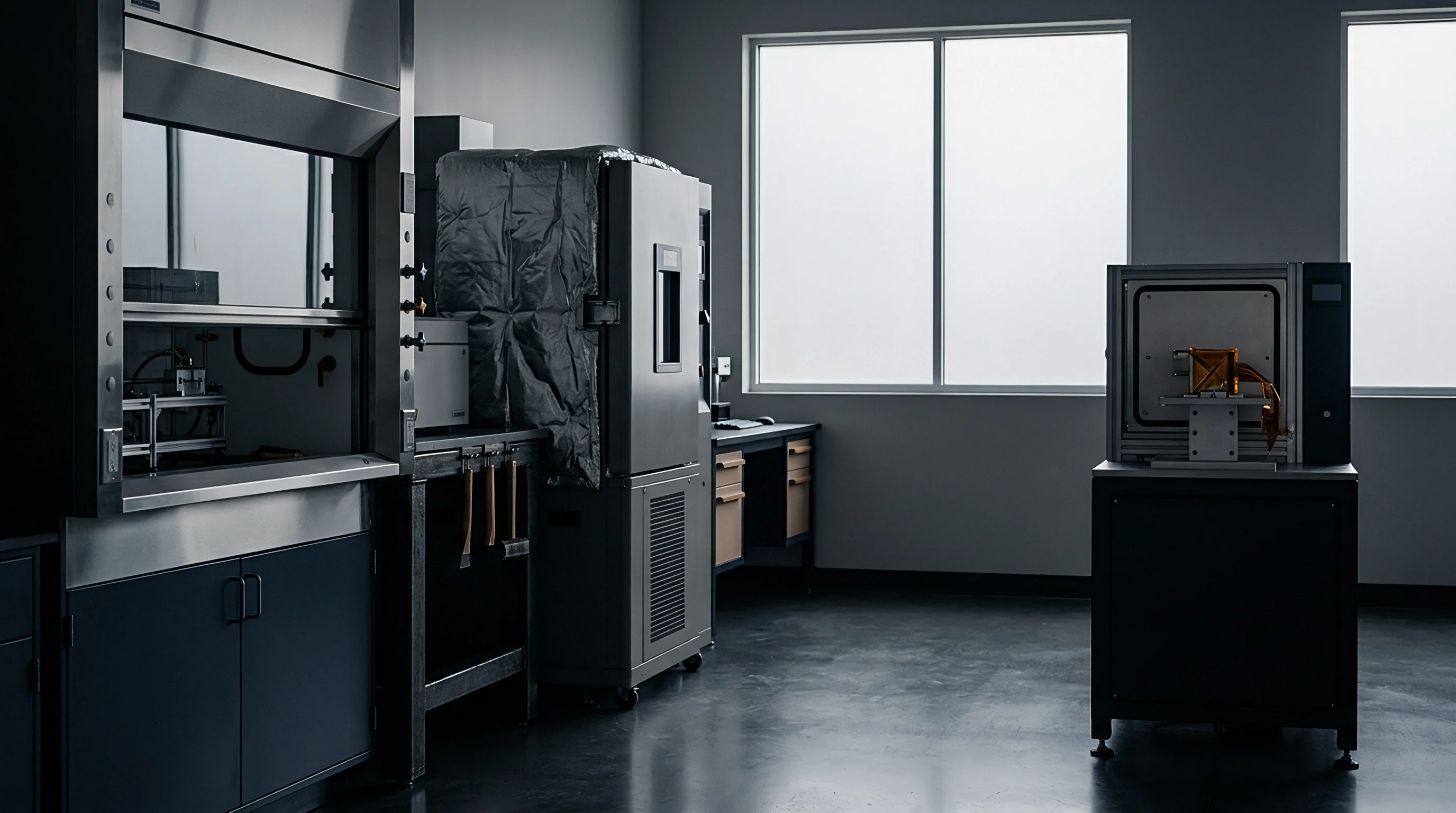
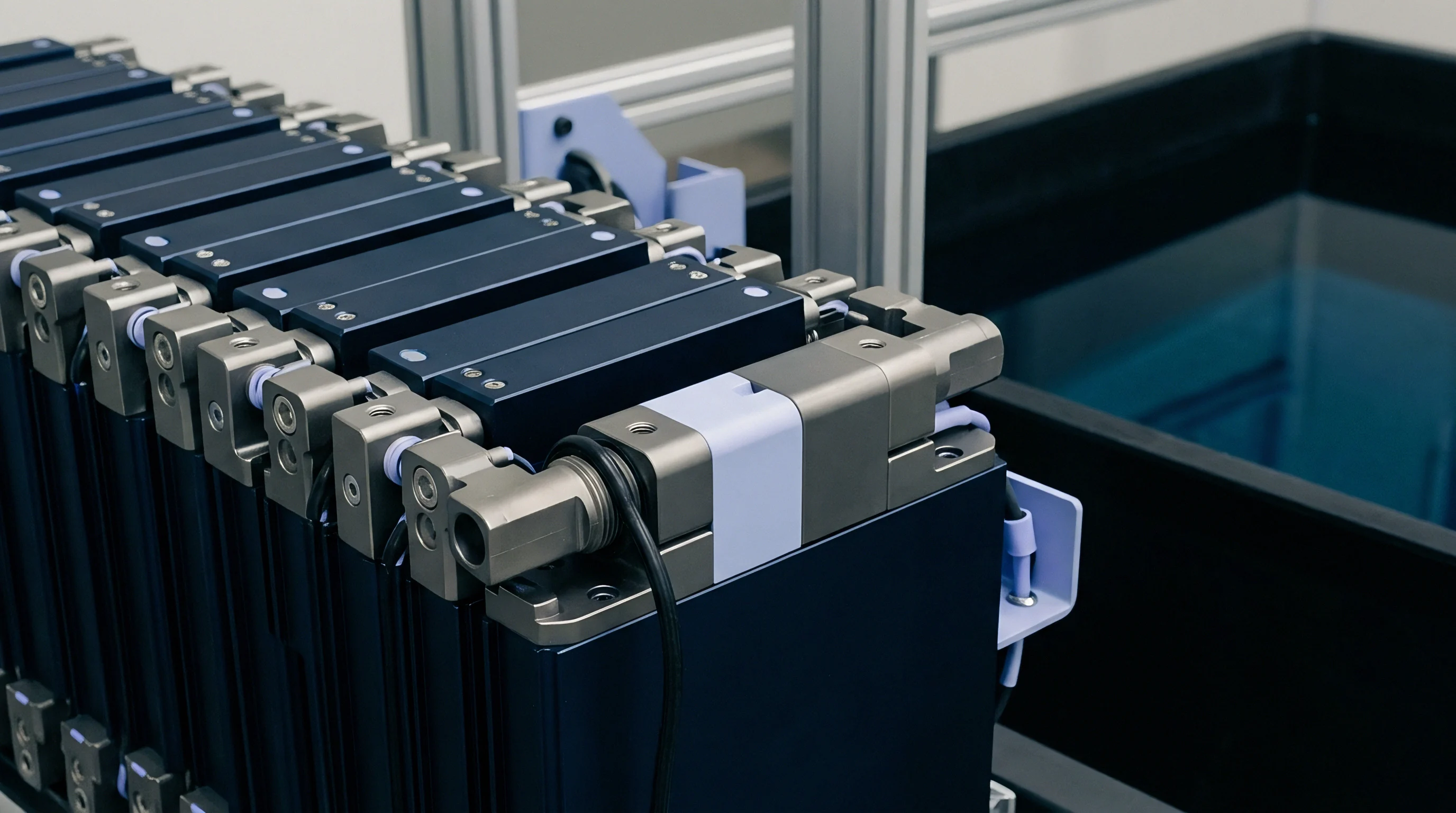
Physical test channels, blast-proof environmental chambers, mechanical shock tables, and automated nail penetration drives define the physical limits of accredited testing. High-energy NMC 811 and high-capacity LFP prismatic cells store sufficient energy to destabilize bench hardware during thermal runaway or external short-circuit evaluations. Primary testing facilities subcontract heavy abuse testing to remote sites with reinforced containment vaults and high-capacity exhaust scrubbers.
Test channels must log voltage, current, surface temperature, and internal pressure at sample rates sufficient to capture transient thermal events. High current demands precise sensor logging.
A thermal runaway event logged at 10 Hz misses transient temperature spikes exceeding 800°C that a 1 kHz acquisition channel captures.
Equipment calibration ranges set the boundaries of ISO 17025 accreditation scopes. Standard load banks calibrated up to 500 A continuous discharge cannot generate accredited test data when testing 200 Ah cells requiring UN 38.3 T.5 short-circuit conditions under 5 mΩ total circuit resistance, where peak current exceeds 1200 A. Subcontracted chambers introduce unexpected heat gradients if airflow rates inside containment structures fail to match specification limits mandated by IEC 62133-2.
Bench Hardware Parameter Compliance
| Test Type | Standard Reference | Mandated Benchmark Parameter | Common Subcontract Rig Deficit |
|---|---|---|---|
| External Short Circuit | UN 38.3 T.5 / IEC 62133-2 7.3.7 | Circuit resistance under 80 mΩ at 55°C ± 2°C | High internal lead impedance driving total loop resistance above 100 mΩ |
| Forced Internal Short | IEC 62133-2 Clause 7.3.8.2 | 10 mm x 10 mm nickel particle, 800 N applied force | Load cell deceleration error under rapid cell deformation |
| Thermal Abuse | UL 1642 Clause 17 / IEC 62133-2 | 130°C ± 2°C dwell for 10 min to 60 min | Chamber recovery time exceeding 5 minutes following door closure |
| Impact / Crush | UN 38.3 T.6 / UL 1642 Clause 14 | 13 kN force application or 9.1 kg drop from 61 cm | Hydraulic ram speed variation outside 0.1 mm/s tolerance window |
Verifying bench hardware boundaries before placing cell samples with external facilities prevents testing delays and rejected compliance filings. Evaluation teams follow systematic steps when auditing third-party test hardware setups.
- Review the external facility calibration certificates for all load banks, force sensors, and thermocouple channels intended for sample exposure.
- Compare maximum planned cell short-circuit current outputs against the certified measurement range of the subcontracted facility current transducers.
- Verify chamber thermal distribution maps to confirm that target temperatures hold across all sample positions during full load operation.
- Audit data acquisition system sample rates to ensure voltage and temperature channels capture dynamic thermal runaway onset phenomena.
- Inspect blast containment exhaust systems to confirm gaseous combustion products vent without back-pressuring internal sensor ports.
Subcontracted testing vendors frequently claim that high-capacity cell testing was completed strictly within standard guidelines because the average applied load matched target specifications despite transient sensor saturation during peak current discharge.

Schedule
Accreditation bodies issue formal documentation defining exact testing methods, materials, and measurement limits authorized for an accredited laboratory. ISO/IEC 17025 scope documents published by agencies such as A2LA, NVLAP, UKAS, or DAkkS specify individual test standards down to specific publication dates and section numbers. A facility holding accreditation for UN 38.3 Revision 6 does not automatically hold accreditation for UN 38.3 Revision 7 or Revision 8 changes unless explicitly audited and updated on its schedule.

Which Subcontracted Parameters Void an ILAC Stamp?
Unaccredited parameter execution occurs most frequently when primary laboratories subcontract testing without verifying standard revision updates or chemical mass limits on the sub-tier lab schedule. Short circuit currents exceed standard load switches. Primary laboratories retain ultimate reporting liability.
When an external laboratory executes tests outside its written scope matrix, the resulting data drops out of ILAC Mutual Recognition Arrangement coverage.
| Evaluation Domain | Primary Laboratory Scope | Subcontractor Scope | ILAC Stamp Status on Joint File |
|---|---|---|---|
| UN 38.3 T.1 – T.4 Mechanical | Accredited (Cells up to 12 kg) | Not Accredited | Primary Stamp Valid |
| UN 38.3 T.5 Short Circuit | Not Accredited | Accredited (Current up to 500 A) | Subcontractor Stamp Valid if fully identified |
| IEC 62133-2 Forced Short | Not Accredited | Accredited (Cells up to 50 Ah) | Invalid if tested cell exceeds 50 Ah limit |
| UL 9540A Cell Level Runaway | Not Accredited | Accredited (Gas Analysis Included) | Valid only if gas sampling rig matches schedule |
Under ISO/IEC 17025:2017 Clause 7.1.1, contracting laboratories inform clients whenever proposed test methods fall outside active accreditation scope schedules.
Reviewing subcontracted scope parameters demands detailed cross-checking of target test specifications against published accreditation documents. Purchasing teams and technical leads use a decision framework prior to approving external test orders.
- Scope Date Verification checks whether the subcontracted facility accreditation document covers current versions of standard specifications including active amendments.
- Mass and Energy Limit Checks confirm that physical cell mass and amp-hour ratings sit inside the evaluated limits registered on the subcontracted schedule.
- Uncertainty Budget Audits examine the facility expanded measurement uncertainty reports to ensure voltage and temperature sensor tolerances comply with target standards.
- ILAC Signatory Status Confirmation verifies that the accreditation body granting scope approval holds full signatory standing under the ILAC Mutual Recognition Arrangement.
Subcontracting agreements incorporating Clause 6.6 compliance provisions state: “The primary testing facility remains fully responsible for verifying that external service providers maintain active ISO/IEC 17025 accreditation for every specific parameter, standard version, and measurement range delegated, and assumes all reporting liabilities associated with scope exclusions.”

Paperwork
Documenting subcontracted cell test results demands absolute transparency within final compliance dossiers, UN 38.3 Test Summaries, and regulatory certificate applications. Standard test reports under ISO/IEC 17025:2017 Clause 7.8.2.1 mandate clear identification of all test results produced by external subcontractors. Test summaries require valid accreditation numbers.
Certificates issuing general battery safety compliance cannot combine accredited and unaccredited data into a single unsegregated tableset without explicitly marking non-accredited items.
Dangerous goods transport regulations under UN Model Regulations Clause 2.9.4(g) demand that cell manufacturers make UN 38.3 Test Summaries available throughout the supply chain. Shippers sign legally binding safety declarations. Customs clearance halts without certified paperwork.
Unaccredited testing invalidates dangerous goods approvals. Port authorities impound non-certified lithium cargo. When a primary laboratory incorporates subcontracted UN 38.3 T.6 impact data into a test summary, the document carries the explicit accreditation identity of the performing facility.
UN 38.3 Clause 2.9.4(g) mandates that cell test summaries contain explicit identification of the accredited laboratory conducting the evaluations.
Cell test files submitted to certification agencies or transport authorities contain specific mandatory documentation elements to maintain accredited validity across international borders.
- Primary Laboratory ISO 17025 Registration specifying overall certificate scope, issuing body, and active accreditation expiration dates.
- Subcontractor ISO 17025 Scope Schedule providing explicit evidence that delegated test methods sit within accredited laboratory capabilities.
- Segregated Subcontracted Test Data Section clearly highlighting external laboratory inputs, calibrated hardware serial numbers, and observed thermal data.
- Signed Subcontractor Authorization Statement confirming that external testing complied strictly with standard protocol parameters and local quality oversight.
What specific regulatory review mechanism prevents a primary laboratory from issuing a unified ILAC-marked test summary when two out of eight UN 38.3 thermal and mechanical tests were completed by an unaccredited regional subcontractor?

Ledger
Unaccredited cell testing data creates severe commercial and financial liabilities across the battery lifecycle. When compliance audits reveal that cell safety certifications rely on out-of-scope subcontracted testing, enforcement authorities cancel product safety registrations, order market withdrawals, and block customs entries. Regulatory bodies operating under EU Battery Regulation 2023/1542 enforce strict economic operator penalties when technical dossiers fail conformity assessment standards.
Commercial Risk Allocation for Scope Failures
| Failure Trigger | Regulatory Impact | Commercial Exposure Area | Direct Landed Cost Consequence |
|---|---|---|---|
| Unaccredited Subcontracted Shock Data | UN 38.3 Test Summary Invalidated | Air and Ocean Cargo Transport Block | Demurrage fees, re-testing costs, air freight delays |
| Exceeded Rig Calibration Current Range | IEC 62133-2 Certificate Revocation | System Integrator Recalls | Complete inventory quarantine, warranty denial |
| Missing Subcontractor Disclosure | ISO 17025 Audit Non-Conformity | Laboratory Accreditation Suspension | Re-certification expense across all product lines |
| Out-of-Date Standard Revision Scope | EU CE Mark Conformity Challenge | Importer Responsibility Enforcement | Regulatory fines, mandatory product recall programs |
Non-compliant cell safety paperwork transforms standard shipping transit into uninsurable legal exposure across international commercial routes.
Uncovering invalid test scope credentials after volume manufacturing begins leaves buyers facing severe landed-cost losses, expensive quarantine delays, and immediate product line shutdowns. Insurance policies covering battery transportation and product liability routinely exclude damage claims if underlying safety certificates rely on invalid, unaccredited, or out-of-scope laboratory test data.
Testing scope validity forms the underlying foundation of all battery compliance paperwork; when the laboratory accreditation scope breaks, every downstream certificate, transport authorization, and warranty guarantee crumbles along with it.