Verifying ISO 17025 Annex Scope Boundaries for Battery Safety Certification
Verify ISO 17025 accreditation schedules directly against test report parameters to ensure cell safety certification remains legally valid across borders.


Annex
Accreditation schedules issued by national bodies establish the precise technical boundaries within which a testing laboratory operates under ISO/IEC 17025. A laboratory holding ISO/IEC 17025 accreditation is not certified for all battery safety testing by default. Accreditation bodies issue a formal Scope of Accreditation document, often structured as an annex or schedule to the certificate, specifying the exact test methods, standard revisions, cell chemistries, and physical parameter limits the laboratory is competent to perform.
When a laboratory issues a test report for lithium-ion cell safety certification, every single test result must fall strictly within the limits declared on that schedule at the time the test was conducted.
Discrepancies arise when buyers or regulatory compliance managers review a test report title and assume full regulatory coverage. A laboratory may hold accreditation for IEC 62133-2 or UN 38.3, yet its scope annex may restrict testing to specific cell dimensions, maximum nominal capacities, or limited charge and discharge current rates. If a laboratory tests a 300 Ah prismatic LFP cell against UN 38.3 requirements while its scope annex caps cell capacity at 100 Ah or restricts current parameters to 200 A, the resulting test report sits outside accredited boundaries.
Transport authorities, notified bodies, and dangerous goods inspectors treat such reports as unaccredited documentation.
Structure of Accreditation Schedules
National evaluation bodies define testing competence through explicit matrices detailing standard methods, physical parameters, and measurement uncertainties. Standard bodies such as A2LA, NVLAP, UKAS, DAkkS, and CNAS format scope annexes to align with ILAC G18 guidelines. Each scope entry explicitly states the standard designation, the specific edition or amendment year, the range of measurement, and the Best Measurement Capability or expanded measurement uncertainty compliant with ILAC P14.
Evaluating an accreditation schedule requires matching cell specifications against five distinct boundaries listed in the document: voltage ratings, continuous discharge current, physical mass, cell chemistry, and environmental chamber operational ranges. Testing facilities operating beyond these explicit numeric windows generate test data without ISO/IEC 17025 endorsement, even if the laboratory logo and accreditation badge appear on the report cover page.
Thermal abuse testing under IEC 62133-2 Clause 7.3.5 specifies uniform temperature stabilization within a tolerance of plus or minus 2 degrees Celsius across the entire chamber volume.
Scope boundaries extend to specific standard editions. A laboratory accredited solely for IEC 62133:2012 cannot claim ISO/IEC 17025 accredited results for IEC 62133-2:2017 unless its scope annex has been formally updated through audit and re-issuance. Regulatory bodies governing European CE marking or UN dangerous goods transport refuse test reports citing superseded or unaccredited standard revisions.
Fixed versus Flexible Scope Boundaries
Testing facilities maintain either rigid parameter limits or defined authorization frameworks for updating standards. Under a fixed scope of accreditation, a laboratory can only issue accredited reports for standard revisions explicitly named on its scope annex. Any update to a test standard or expansion of parameter ranges requires a formal audit and revision of the scope annex by the accreditation body, a process that typically takes three to six months.
Flexible scope accreditation, granted under strict compliance with EA-2/15 or ILAC guidelines, permits qualified laboratories to update standard revisions or extend parameter ranges within defined boundaries without prior approval from the accreditation body. The laboratory maintains an internal Master List of Accredited Scope, which must be made publicly available and updated immediately upon internal validation of new capabilities. Verifying a flexible scope requires requesting both the official scope annex and the laboratory internal scope management record for the exact date of testing.
| Standard Designation | Typical Scope Boundary Parameters | Physical Equipment Limit | Scope Boundary Failure Scenario |
|---|---|---|---|
| UN 38.3 T.4 (Shock) | Half-sine shock acceleration: 150 gn / 6 ms or 50 gn / 11 ms | Shaker table max payload weight: 50 kg | Module weight exceeds 50 kg; physical pulse profile degrades outside standard tolerance windows. |
| UN 38.3 T.5 (External Short Circuit) | External resistance: less than 100 mOhm at 55 degrees Celsius | Short circuit switch current rating: 2000 A continuous | High-capacity cell short-circuit current exceeds 5000 A; contactor welding skews voltage drop data. |
| IEC 62133-2 Clause 7.3.5 (Thermal Abuse) | Temperature: 130 degrees Celsius plus or minus 2 degrees Celsius | Thermal chamber heating rate and airflow uniformity limit | Large format pouch cell thermal mass slows chamber recovery time beyond the 10-minute threshold. |
| UL 1642 Clause 14 (Crush Test) | Applied crush force: 13 kN plus or minus 0.78 kN | Hydraulic actuator max calibrated force: 10 kN | Hydraulic force caps below mandatory 13 kN threshold, yielding non-compliant pass result. |
| Data reflects typical parameters from national accreditation body schedules and standard testing limitations under ILAC P14 measurement uncertainty guidelines. | |||
- Parameter Overextension occurs when a laboratory performs testing on cells whose voltage, capacity, or physical dimensions exceed the maximum numerical limits written on the accreditation schedule.
- Outdated Standard Versions develop when certificates cite superseded test methods that have been removed from or not yet added to the formal scope annex.
- Subcontracted Unaccredited Operations surface when a primary laboratory outsources physical sub-tests to an unaccredited third-party facility without declaring the subcontracted status on the final report.
- Unlisted Chemistry Variants emerge when testing facilities evaluate novel cell formulations such as sodium-ion or solid-state cells using accreditation scopes restricted strictly to conventional lithium-ion chemistries.
ISO/IEC 17025:2017 Clause 7.8.2.1 specifies that reports identify results derived from non-accredited parameters, invalidating general compliance claims when unlisted sub-tests enter the technical file.

Bench
Physical testing apparatus defines the outer operating limits of battery safety evaluation regardless of written certificates. The presence of an ISO/IEC 17025 scope annex naming UN 38.3 or IEC 62133-2 does not guarantee that the physical test bench on the factory floor possessed the calibrated range or physical capacity to execute the procedure on a specific cell model.
High-current short circuit testing exposes direct conflicts between scope annexes and physical bench realities. High-capacity cell designs can discharge short-circuit currents exceeding 8,000 Amperes within milliseconds. If a laboratory holds scope accreditation for UN 38.3 T.5 but uses a short-circuit contactor rated for a maximum of 2,000 Amperes, or if the total circuit loop resistance exceeds 100 milliohms due to undersized copper busbars, the test fails to meet standard requirements, and the resulting data understates peak cell temperature rises and internal pressure accumulation.
Equipment Capacity Limits and Parameter Drift
High-capacity cells demand physical force, electrical current, and thermal controls that frequently strain standard testing hardware. Mechanical crush testing under UL 1642, UL 2580, and UN 38.3 T.6 requires applying a force of 13 kN ± 0.78 kN across specified contact surfaces. Applying this force to large-format prismatic cells requires heavy hydraulic actuators mounted in reinforced containment cells.
Chambers used for IEC 62133-2 thermal abuse testing must maintain 130°C ± 2°C for thirty minutes or ten minutes depending on cell size. When testing large prismatic cells, the physical bulk of the cell acts as a significant thermal sink. If the chamber heater capacity or air recirculation rate is insufficient, introducing multiple large cells causes the ambient chamber temperature to drop below the required 128°C minimum threshold for extended periods.
The test report may record a passing result, but raw temperature logs show that thermal stress was never delivered within standard tolerances.
UN 38.3 Clause 38.3.4.5 mandates an external short circuit resistance below 100 milliohms at 55 degrees Celsius, rendering tests invalid if switch impedance exceeds calibration limits.
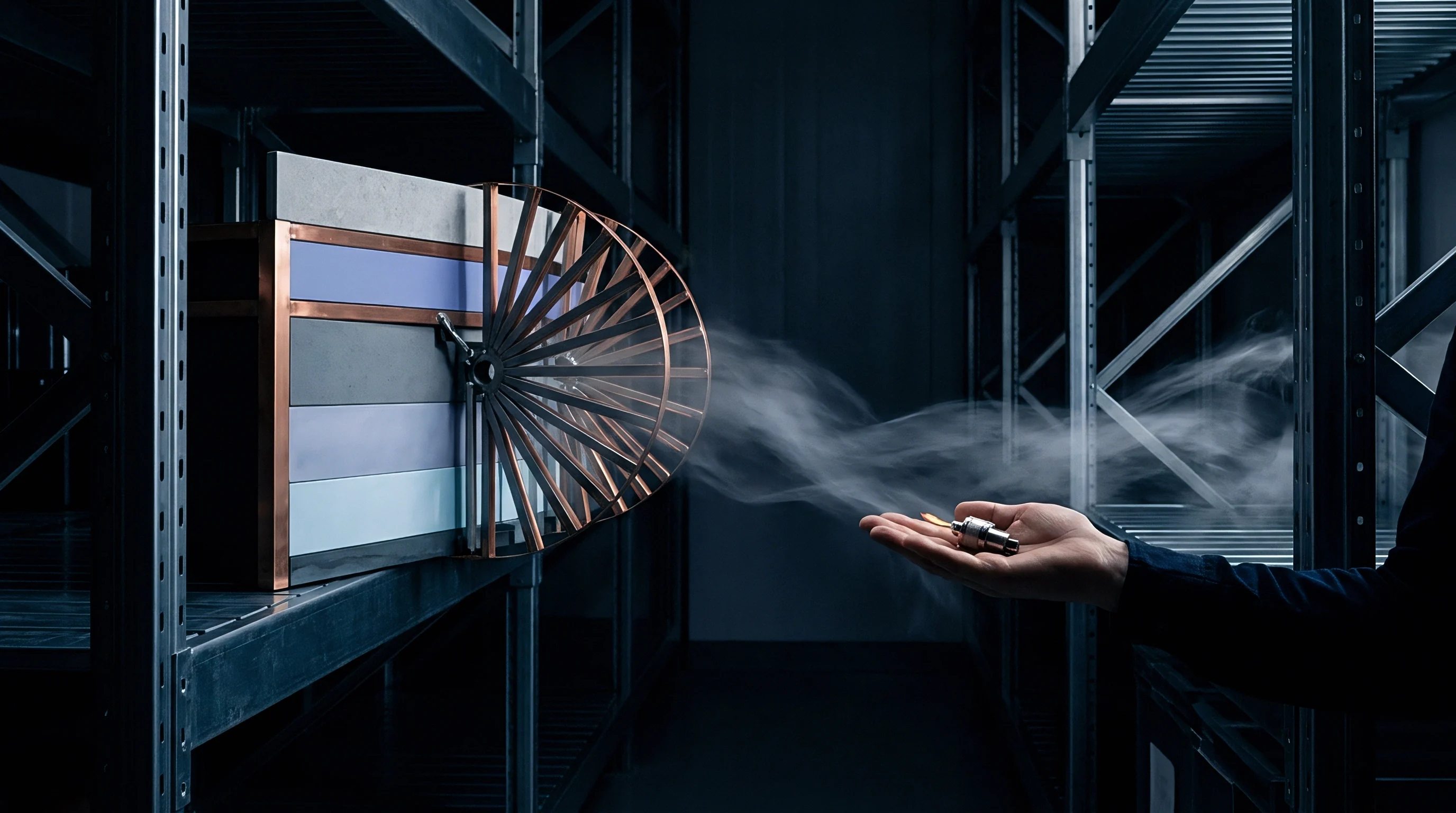
Auditing Laboratory Hardware against Scope Documentation
Technical verification involves cross-referencing floor calibration logs directly against formal qualification certificates. Sourcing practice engineers perform direct hardware scope audits by evaluating four specific elements during factory or laboratory qualifications.
- Extract physical test specifications from the cell engineering datasheet.
- Download the testing facility’s official accreditation schedule directly from the accreditation body.
- Cross-reference recorded test parameters against the published measurement ranges and physical equipment ratings.
- Verify that calibration certificates for active test channels cover the exact operating conditions.
Calibration certificates for load cells, temperature sensors, and current shunts must confirm traceable calibration to ISO/IEC 17025 standards across the full operational envelope used during the cell test. Internal equipment calibration cannot substitute for operational limits published on official public schedules.
Transit
Dangerous goods logistics operators rely on standardized test summaries to confirm regulatory approval before accepting cell shipments. Lithium cells cannot enter commercial transport channels without a valid UN 38.3 Test Summary document that links back to a compliant ISO/IEC 17025 test report. Freight forwarders, airline acceptance desks, and maritime carriers inspect these documents to enforce compliance with IATA Packing Instructions 965 through 970 and the IMDG Code.
Carriers reject cargo when the UN 38.3 test report cited on the test summary was issued by a laboratory operating outside its accredited scope annex boundaries. The UN Manual of Tests and Criteria, Part III, subsection 38.3, mandates specific physical tests including altitude simulation (T.1), thermal test (T.2), vibration (T.3), shock (T.4), external short circuit (T.5), impact/crush (T.6), overcharge (T.7), and forced discharge (T.8). If the testing laboratory lacks accredited scope for even a single sub-test, such as the T.4 shock test for modules weighing over 12 kg, the transport file is compromised.
UN 38.3 Section 38.3.5 Test Summary Mechanics
International transport regulations force battery manufacturers and subsequent distributors to make compliance documentation publicly available throughout commercial channels. UN 38.3.5 specifies ten explicit elements that every UN 38.3 Test Summary must contain. Missing or inaccurate data in these fields flags the shipment for detention.
The test summary must explicitly list the name, address, telephone number, email address, and website of the accredited testing laboratory. It must list the unique test report identification number and the date of report issuance. Dangerous goods safety inspectors cross-check this unique report number against accreditation body databases.
If the report number corresponds to a test conducted during a period when the laboratory’s ISO/IEC 17025 scope was suspended or restricted, the cargo is detained at the port of entry.
A test summary signed by an unaccredited facility halts air cargo acceptance at the airport counter regardless of underlying cell safety performance.
ILAC Mutual Recognition Arrangements across Regional Borders
Cross-border acceptance depends on signatory status under international laboratory accreditation agreements. National accreditation bodies operate under the International Laboratory Accreditation Cooperation (ILAC) Mutual Recognition Arrangement (MRA). An ISO/IEC 17025 test report issued by a CNAS-accredited laboratory in China or an A2LA-accredited laboratory in the United States carries global validity only if the accreditation body remains an active ILAC MRA signatory and the specific test method sits squarely inside the scope annex.
| Regulatory Standard | Governing Framework | Accreditation Mandate | Transport Acceptance Key Document |
|---|---|---|---|
| UN 38.3 (T.1 to T.8) | UN Dangerous Goods / IATA / IMDG | ISO/IEC 17025 accredited scope for all sub-tests | UN 38.3.5 Test Summary signed by manufacturer |
| IEC 62133-2 | IECEE CB Scheme / National Regulations | ISO/IEC 17025 CBTL status under IECEE rules | CB Test Certificate and associated TRF report |
| UL 1642 / UL 2580 | NRTL Scheme / OSHA / ANSI | ISO/IEC 17025 plus NRTL scope listing | NRTL Certificate of Compliance and Mark |
| ECE R100.03 | UNECE Automotive Type Approval | ISO/IEC 17025 Technical Service designation | E-mark Type Approval Certificate from Authority |
- Name and Address of the cell manufacturer matches formal corporate filings.
- Laboratory Verification Details contain full contact information, ISO 17025 accreditation numbers, and issuing body details.
- Unique Test Report Number connects directly to an unedited complete laboratory dossier available upon official demand.
- Physical Cell Parameters state exact mass, watt-hour rating, chemistry, and structural format without ambiguous ranges.
Shipping documentation derived from laboratories operating outside accredited scope bounds creates systemic customs detentions that no commercial expedited fee can resolve.
Paperwork
Auditing technical documentation requires systematic examination of test report certificates, CB scheme Test Report Forms, and raw data attachments. A complete test report contains operational indicators that reveal whether testing remained inside accredited scope boundaries. Compliance auditors must review full test reports rather than single-page summary certificates issued by third-party sales brokers.
Test report headers and footers contain specific accreditation symbols and registration numbers. Under ISO/IEC 17025 rules, a laboratory can only apply the official accreditation symbol (such as the ILAC MRA mark combined with the national accreditation logo) to a report if all test results contained within that report fall inside the formal scope annex. If a report contains a mix of accredited and unaccredited test parameters, ISO/IEC 17025 Clause 7.8.2.1 mandates that unaccredited results be clearly and unambiguously identified with explicit disclaimers.
CB Scheme Test Report Form Integrity
International certification relies on standardized evaluation documents issued by recognized National Certification Bodies. Under the IECEE CB Scheme, cell safety testing against IEC 62133-2 produces a standardized Test Report Form (TRF) accompanied by a CB Test Certificate. The testing facility must hold formal CB Testing Laboratory (CBTL) status under an accredited National Certification Body (NCB) for the specific IEC standard applied.
Scope gaps appear in CB reports when local laboratory branches execute testing under the parent company CBTL designation without holding local scope accreditation for specific high-power cell parameters. The IECEE On-Line System allows buyers to verify the exact CBTL scope status for every laboratory location. A CB certificate issued on the basis of a TRF generated by a branch laboratory operating outside its accredited parameter bounds is subject to immediate cancellation upon audit by the NCB scheme secretariat.
Footnotes in test reports marking specific parameters as unaccredited frequently undermine the commercial validity of the entire compliance file.
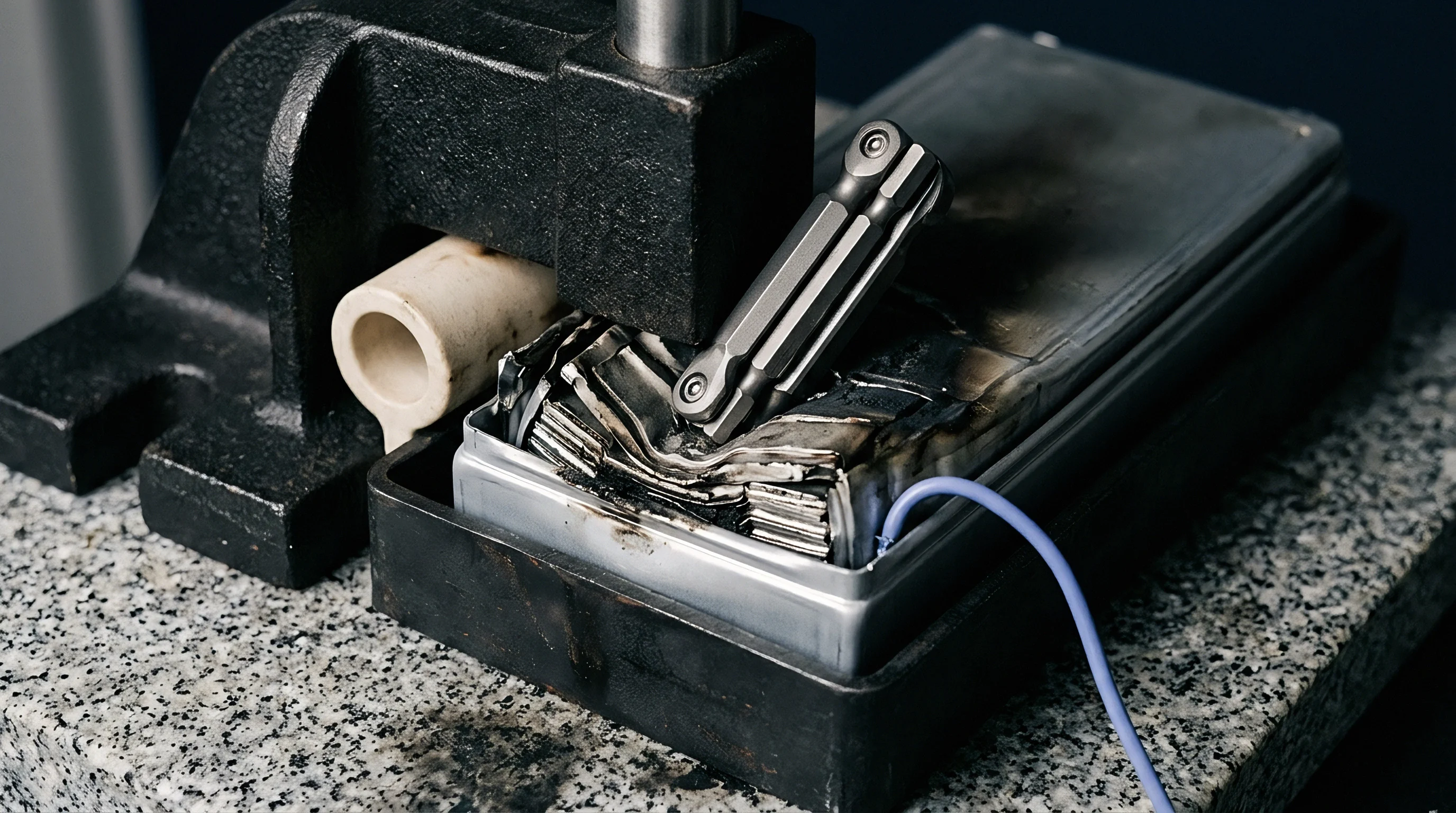
When Does a Partial Test Subcontract Break Certification Integrity?
Third-party allocation of specialized physical evaluations introduces administrative gaps if sub-tier facilities lack equivalent scope coverage. ISO/IEC 17025 Clause 7.1.1 and Clause 7.8.1.1 govern subcontracting of testing activities. A laboratory cannot subcontract testing to an unaccredited facility and present those results under its own accredited umbrella.
| Document Red Flag | Audit Examination Point | ISO 17025 Standard Violation | Regulatory Consequence |
|---|---|---|---|
| Asterisk beside specific test result tables | Check report footnotes for text declaring “Test not included in ISO 17025 scope” | Clause 7.8.2.1 failure to maintain full report accreditation integrity | Rejection of technical file by EU Notified Body or NRTL certification agency |
| Discrepancy in lab address on test summary vs scope annex | Compare physical address of testing site against accredited location list | Clause 7.8.1.1 unaccredited facility usage without explicit disclosure | Invalidation of UN 38.3 transport file; detention at dangerous goods port checkpoint |
| Test date precedes official scope annex issuance date | Cross-reference test execution dates against historical accreditation scope records | Clause 7.8.1.2 retroactive application of scope additions to prior test data | Complete voiding of compliance certificate; re-testing required at buyer expense |
| Subcontracted shaker table data attached without lab logo | Inspect raw temperature and force logs for third-party facility stamps | Clause 7.1.1 failure to notify customer of unaccredited subcontracted work | Product liability insurance coverage exclusions triggered upon thermal event |
When a primary laboratory subcontracts specialized evaluations, such as CT scanning or high-altitude simulation chambers, it must inform the client in writing and obtain explicit written approval. The final report must clearly distinguish subcontracted test results from primary accredited results. If the subcontractor lacks ISO/IEC 17025 scope for the specific parameter, those results enter the technical dossier as unaccredited data, breaking the chain of compliance for CE conformity declarations under the EU Battery Regulation 2023/1542.
Relying on test reports with unaccredited parameter extensions results in immediate invalidation of import clearance and compulsory product withdrawals across regulated jurisdictions.

Exposure
Commercial contracts and legal liability structures place the entire financial risk of regulatory non-compliance on the importer of record. When imported lithium-ion cells arrive at regional borders backed by test reports containing scope boundary violations, customs authorities hold the importer, not the foreign testing facility, legally liable for dangerous goods infractions and false regulatory declarations.
Consider a practical sourcing scenario. An OEM imports a shipment of 100,000 units of 3.2 V 280 Ah LFP prismatic cells (89.6 MWh total volume) valued at $5,376,000 ($60/kWh landed cost target). The cell manufacturer provides a UN 38.3 test summary and an IEC 62133-2 certificate issued by a third-party laboratory.
Port customs authorities audit the technical dossier and identify that the testing laboratory’s ISO/IEC 17025 scope annex capped cell capacity at 100 Ah for UN 38.3 T.6 crush and T.5 short-circuit testing.
The financial consequences escalate rapidly through four distinct cost streams.
Port detention fees: Five 40-foot shipping containers incur demurrage and port storage fees averaging $2,500 per day combined. A twenty-day customs hold adds $50,000 in direct cash fees.
Emergency re-testing expenses: Air-freighting a sample lot of 280 Ah cells to an accredited facility with verified 300 Ah scope capacity for accelerated UN 38.3 and IEC 62133-2 re-testing costs $65,000, including testing fees and dangerous goods air transit charges.
Contractual liquidated damages: Delivery delays trigger contractual penalties of 0.5% per week on the total energy storage system project value ($12,000,000 project contract), accruing $60,000 per week across a four-week re-testing delay ($240,000 total penalty).
Administrative and legal costs: Regulatory legal counsel and customs broker intervention fees to prevent lot seizure add $35,000.
The total non-compliance exposure reaches $390,000 on a $5.37M cell purchase, representing a direct 7.25% margin loss resulting entirely from a failure to verify the laboratory scope annex prior to signing the purchase order.
Importer of Record Liability under EU Battery Regulation
European legislative frameworks explicitly assign product conformity obligations to legal entities placing energy storage systems on the market. Under EU Battery Regulation (EU) 2023/1542, importers and distributors must verify that manufacturers have carried out appropriate conformity assessment procedures before placing batteries on the market.
If an importer relies on a test report that falls outside the laboratory’s ISO/IEC 17025 scope annex, the CE mark applied to the battery system becomes legally void. National market surveillance authorities possess statutory powers to issue compulsory recall orders, prohibit sales, and enforce administrative fines reaching up to 10% of global corporate turnover for regulatory non-compliance.
Drafting Scope Integrity Clauses in Supply Agreements
Sourcing contracts establish explicit warranty conditions linked to verified qualification schedules. Buyer legal counsel must integrate explicit scope verification clauses into standard cell supply agreements rather than relying on boilerplate regulatory compliance language.
- Scope Verification Precondition links contractual milestone payments directly to verified laboratory accreditation schedules.
- Indemnification for Scope Deficiencies forces cell suppliers to absorb all demurrage, re-testing, and legal fees.
- Mandatory Regulatory Disclosure obligates suppliers to report accreditation suspensions within forty-eight hours.
- Warranty Protection Extensions preserve financial recourse for hidden accreditation defects throughout the battery operational lifespan.
The industry continues to debate whether global accreditation bodies can realistically establish real-time digital databases capable of preventing parameter overextension before non-compliant cells enter international supply chains.