Meaning
Non-destructive evaluation of materials relies on analyzing the heat flow following an external thermal disturbance to identify sub-surface anomalies. In battery manufacturing, active transient thermography applies a controlled pulse of energy to the cell surface and monitors the subsequent temperature decay using an infrared camera. This approach allows manufacturers to map internal variations without physical contact.
The measurement captures the rate of heat dissipation, which changes when it encounters internal voids, delamination, or electrolyte distribution imbalances.
Thermal Stimulus
Energy delivery to the target requires brief, high-power excitation sources such as flash lamps, lasers, or induction coils. During a typical inspection, active transient thermography utilizes these sources to generate a transient thermal wave that propagates through the electrode stack. Heat moves differently through conductive metallic foils than through porous separators.
If a gap exists between layers, the thermal wave is delayed, creating a localized warm zone on the surface. High-speed infrared detectors record these surface temperature variations over milliseconds, yielding rich spatial datasets.
Defect Characterisation
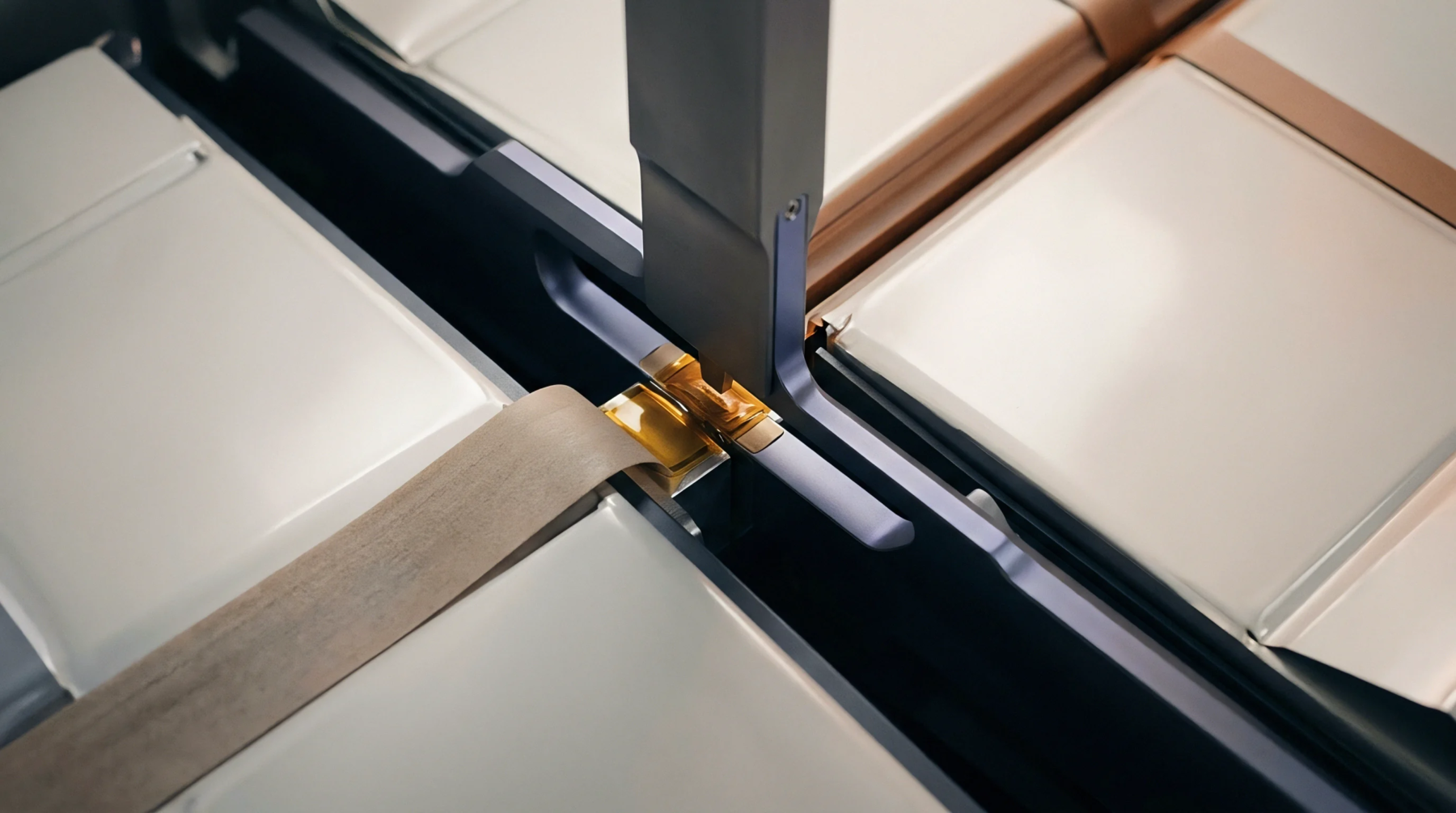
Thermal signatures provide clear indicators of internal joint quality and weld integrity. By observing the cooling curves of laser-welded tabs, active transient thermography determines the thickness of the weld nugget and the presence of interfacial gaps. Thin welds cool slowly because they offer narrower pathways for heat conduction.
Conversely, a strong joint dissipates heat quickly. Software algorithms process these temporal temperature profiles to calculate the depth and size of the defect.
Production Integration
Inline automated inspection stations use this optical technique to verify assembly quality. Automated test lines integrate active transient thermography because it operates within cycle times of less than three seconds. The high speed makes it suitable for high-throughput pouch cell production.