Dynamic Core Temperature Reconstruction for Transient Swelling Deconvolution in Prismatic Modules
Deconvoluting swelling requires dynamic internal thermal reconstruction to separate reversible expansion from heat driven volume growth.


Foil
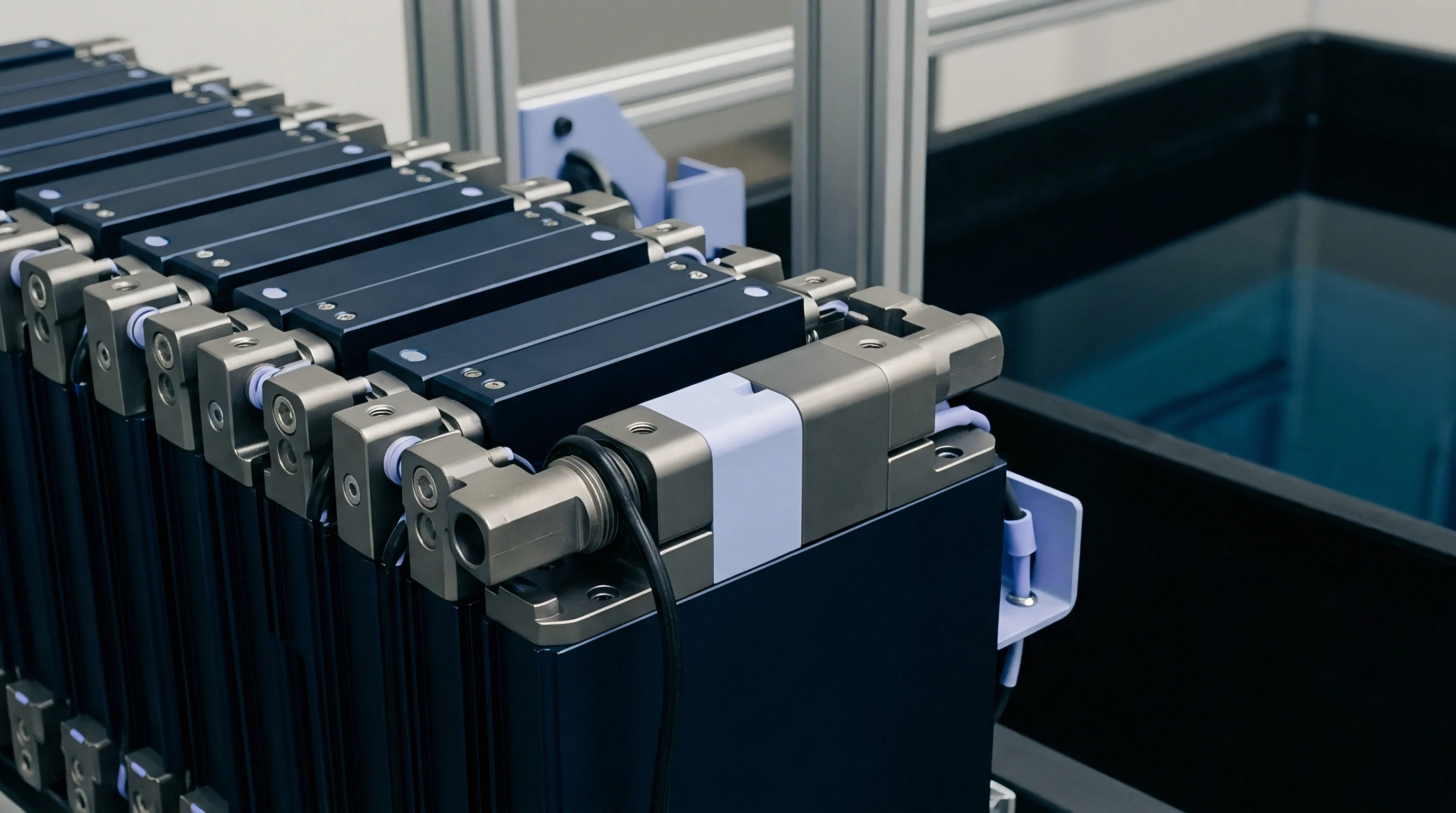
Internal Thermal Transients and Volumetric Strain Mechanics
High current charging creates sharp thermal gradients between the internal core and the outer aluminum enclosure. During a 3C pulse in a 100 Ah prismatic cell, core temperatures can climb to 62 °C while surface thermistors show only 41 °C. Because mechanical strain scales with current density, this thermal delta produces differential volumetric strain that directly skews module load cell readings. On the electrochemical side, lithium intercalation changes the graphite anode crystallite interlayer spacing, expanding the d002 lattice during the phase transition from LiC12 to LiC6 and driving an electrode-level thickness increase of 8 percent to 10 percent.
At the same time, volumetric thermal expansion imposes an isotropic strain dictated by the composite electrode stack’s linear thermal expansion coefficient (αL ≈ 4.0 × 10⁻⁵ K-1).
During rapid C-rate steps, internal heat buildup outpaces surface thermal tracking by several minutes because transverse thermal conductivity through the stacked layers is low (kperp ≈ 0.8 W/m·K). Surface sensors pick up a delayed and heavily damped profile while the internal winding has already expanded. Module endplate load cells capture the combined force of both active intercalation breathing and bulk thermal expansion; without dynamic internal temperature tracking, BMS algorithms tend to mistake this thermal strain for lithium plating or irreversible capacity loss.
Internal temperature rises precede surface pressure peaks during high current discharge pulses.

Reversible Intercalation Expansion versus Heat Driven Volume Growth
Phase transitions in graphite anodes alter mechanical pressure across cell constraints along distinct stoichiometric stages, producing stepped force responses during charge. Transitions from Stage 2L to Stage 1 introduce rapid, discrete dimensional shifts, whereas thermal expansion rises smoothly with the core temperature. Differentiating between the two requires isolating the fast thermal time constant from the state-of-charge-dependent intercalation curve.
Silicon-graphite blends widen this divergence, reaching up to 30 percent electrochemical strain at higher silicon ratios. When these blended prismatic cells undergo steep thermal transients, the superimposed thermal expansion can generate severe compressive spikes against neighboring cells in the pack array.
| Cell Chemistry | Anode Composition | Intercalation Strain (%) | Thermal Strain Coefficient (K⁻¹) | Peak Module Swelling Force (kN) |
|---|---|---|---|---|
| LFP (100 Ah) | Graphite | 4.2 | 3.8 × 10⁻⁵ | 8.5 |
| NMC811 (120 Ah) | Graphite / 5% SiOx | 8.6 | 4.1 × 10⁻⁵ | 14.2 |
| NMC622 (150 Ah) | Graphite | 5.1 | 3.9 × 10⁻⁵ | 10.1 |
Misinterpreting thermal volume expansion as pure anode swelling leads to incorrect mechanical compression pad sizing, causing endplate fracture or cell pouch rupture during fast charging.
Coupling
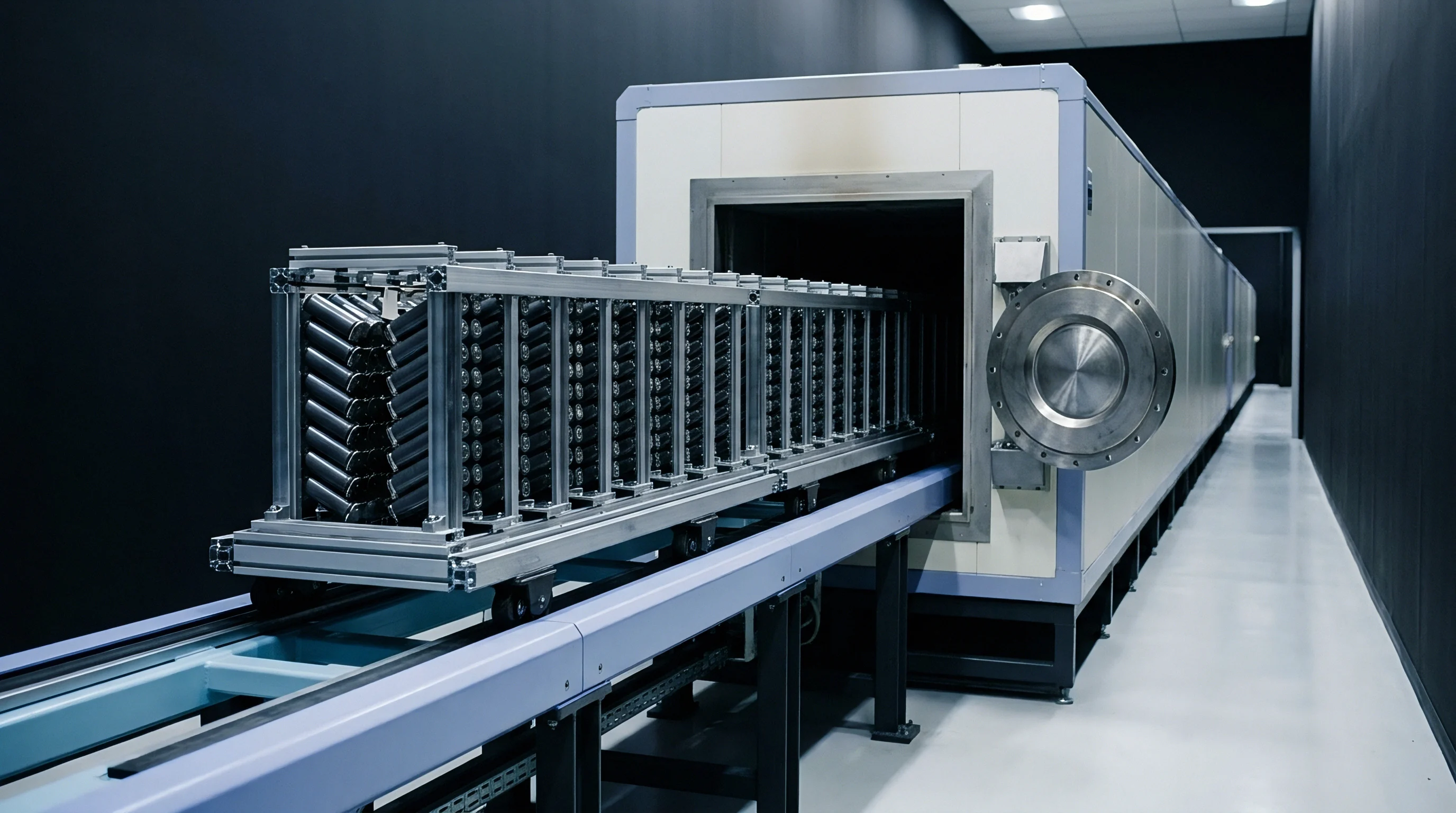
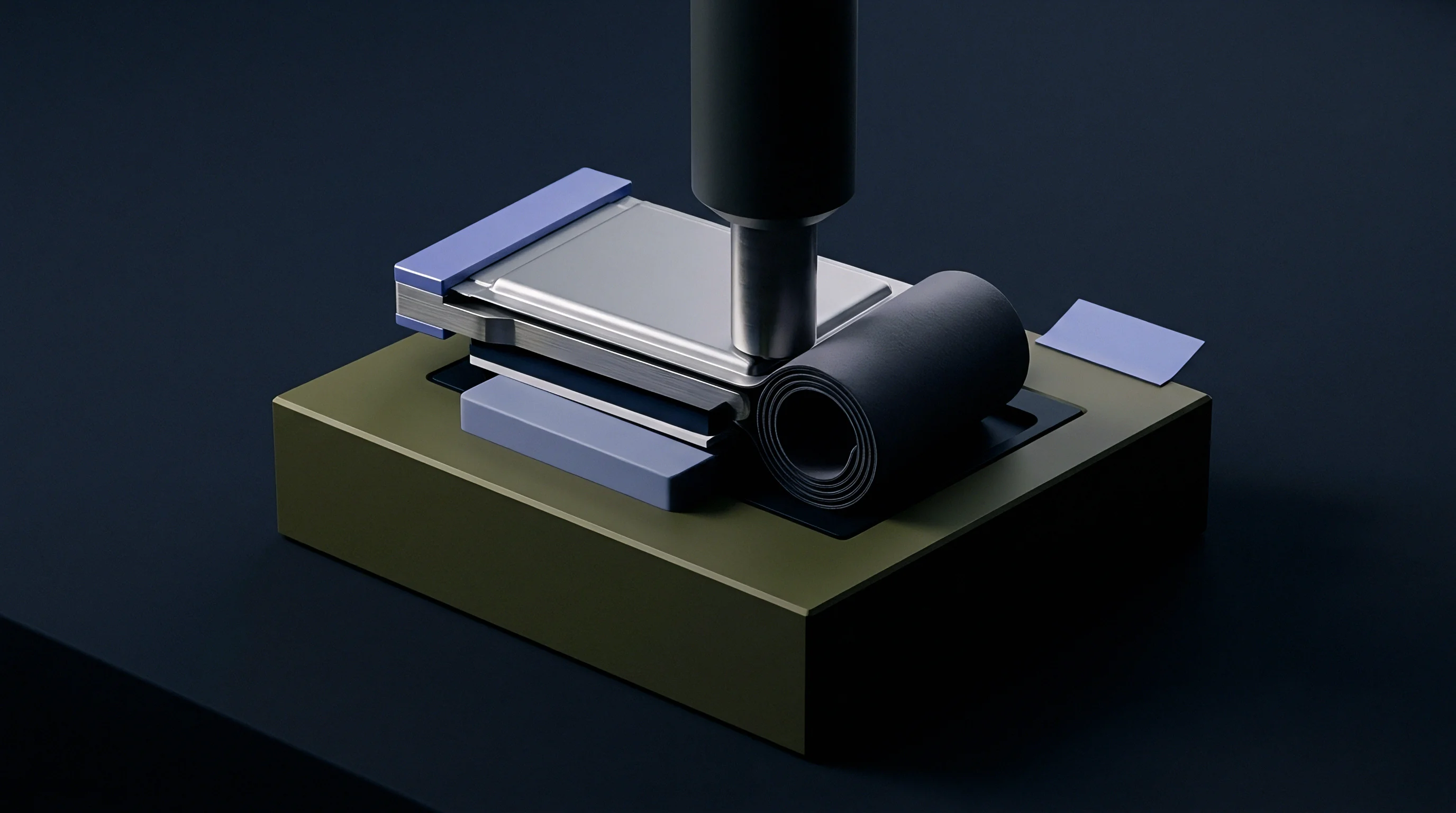
Endplate load sensors measure a composite signal. The observed force bundles structural foam compression, active material phase transitions, and thermal expansion of the aluminum module casing. Separating these inputs demands a coupled model that accounts for temperature-dependent structural stiffness across the stack.

Thermomechanical Matrix Formulations for Module Load Cells
Structural stiffness equations convert dimensional shifts into measurable force steps. The overall displacement (δtotal) recorded by external sensors or load cells follows a multi-variable formulation:
δtotal(t) = Ncells · left + Cfoam · F(t)
In this equation, Ncells denotes the cell count in series, Δ tchem represents the electrochemical thickness change per cell as a function of state of charge, αcell is the bulk thermal expansion coefficient, Δ Twind is the internal winding thermal delta, Cfoam represents the compression pad compliance matrix, and F(t) is the endplate reaction force. Resolving Δ Twind(x, t) isolates the chemical expansion term Δ tchem(SOC), preventing raw, uncorrected force measurements from distorting state estimates.
Transfer Function Derivation for Non Isothermal Cell Expansion
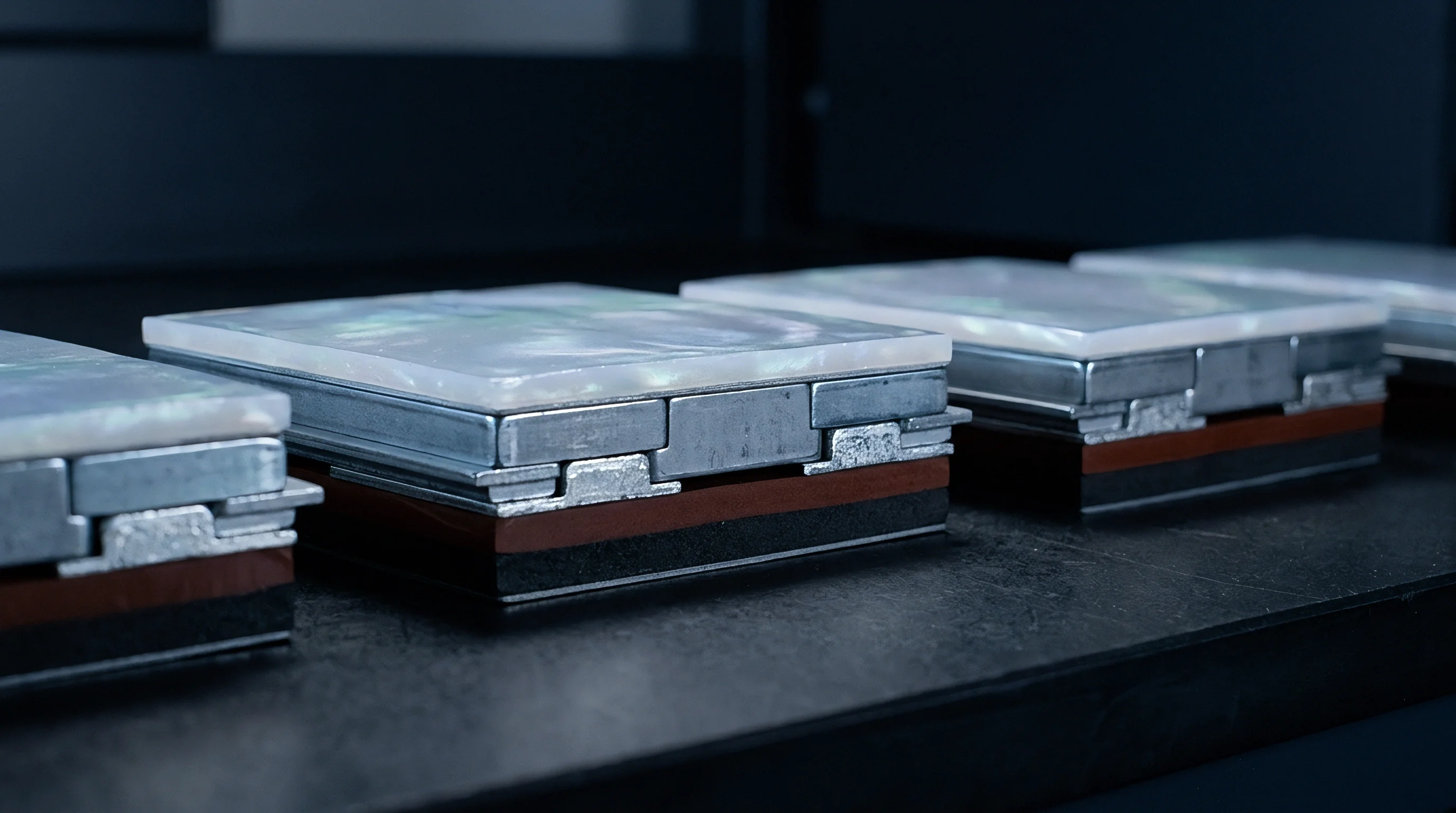
Mathematical decomposition isolates fast thermal response from slow chemical diffusion. In the frequency domain, the thermomechanical transfer function H(s) maps current input I(s) to mechanical force output F(s). The fast thermal time constant (τth ≈ 30 s to 60 s) creates high-frequency force responses during current steps.
The slow mass diffusion time constant (τdiff ≈ 200 s to 500 s) governs solid-state lithium diffusion in graphite particles.
- Uncalibrated Thermal Latency causes misinterpretation of thermal swelling as accelerated lithium plating during cold fast-charge regimes.
- Overconstrained Module Endplates force transverse mechanical yield in adjacent prismatic aluminum cans, creating internal short circuits across the separator edges.
- Nonlinear Compression Pad Stiffness shifts the mechanical transfer function baseline during low-temperature discharge cycles.
- Phase Lag in Surface Sensing leads to false execution of state-of-charge limits by underestimating internal mechanical stress.
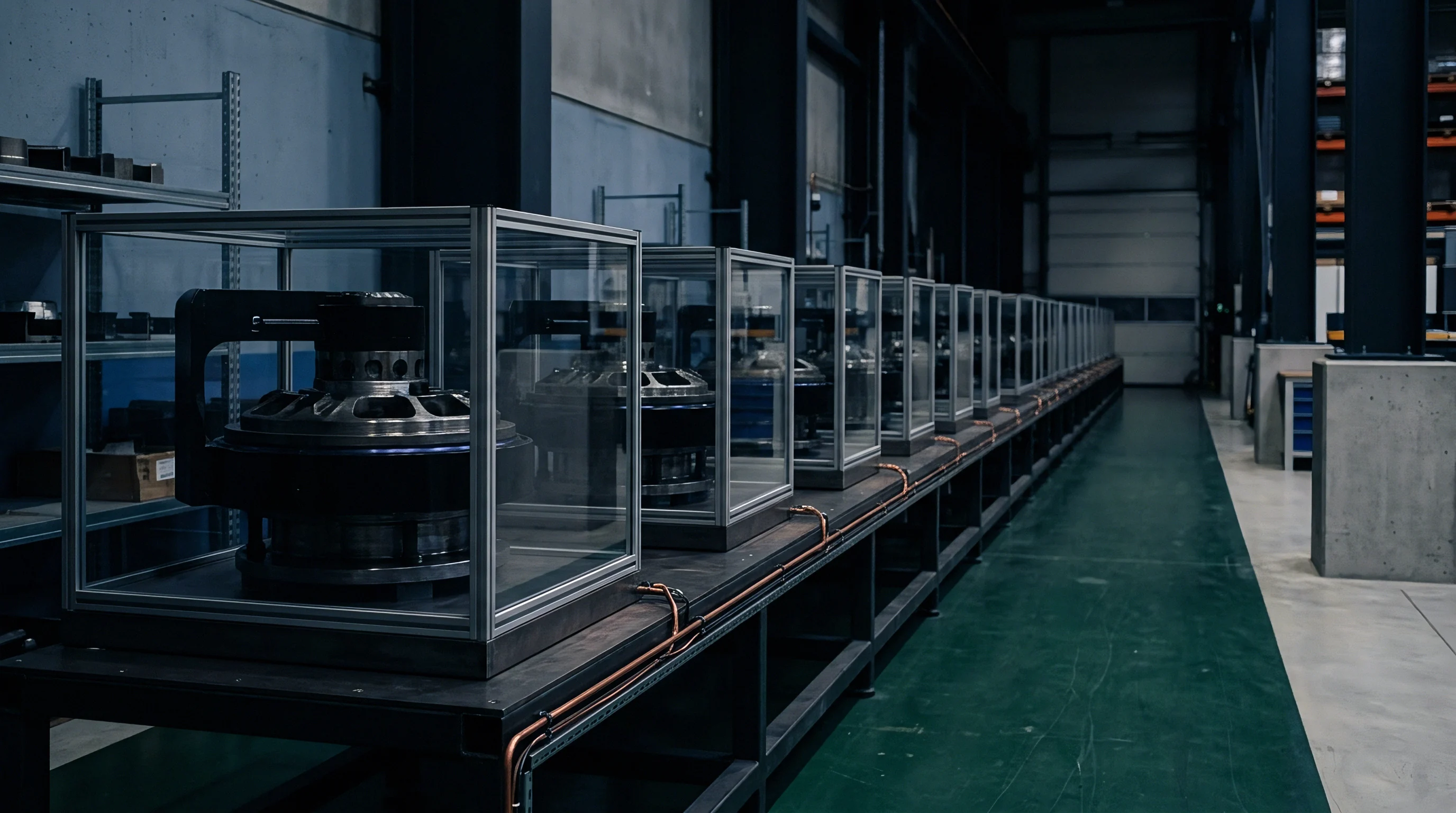
Surface thermistor readings are often treated as sufficient proxies for cell expansion, despite the thirty-second thermal propagation delay between the inner winding and the external aluminum casing.

Filter
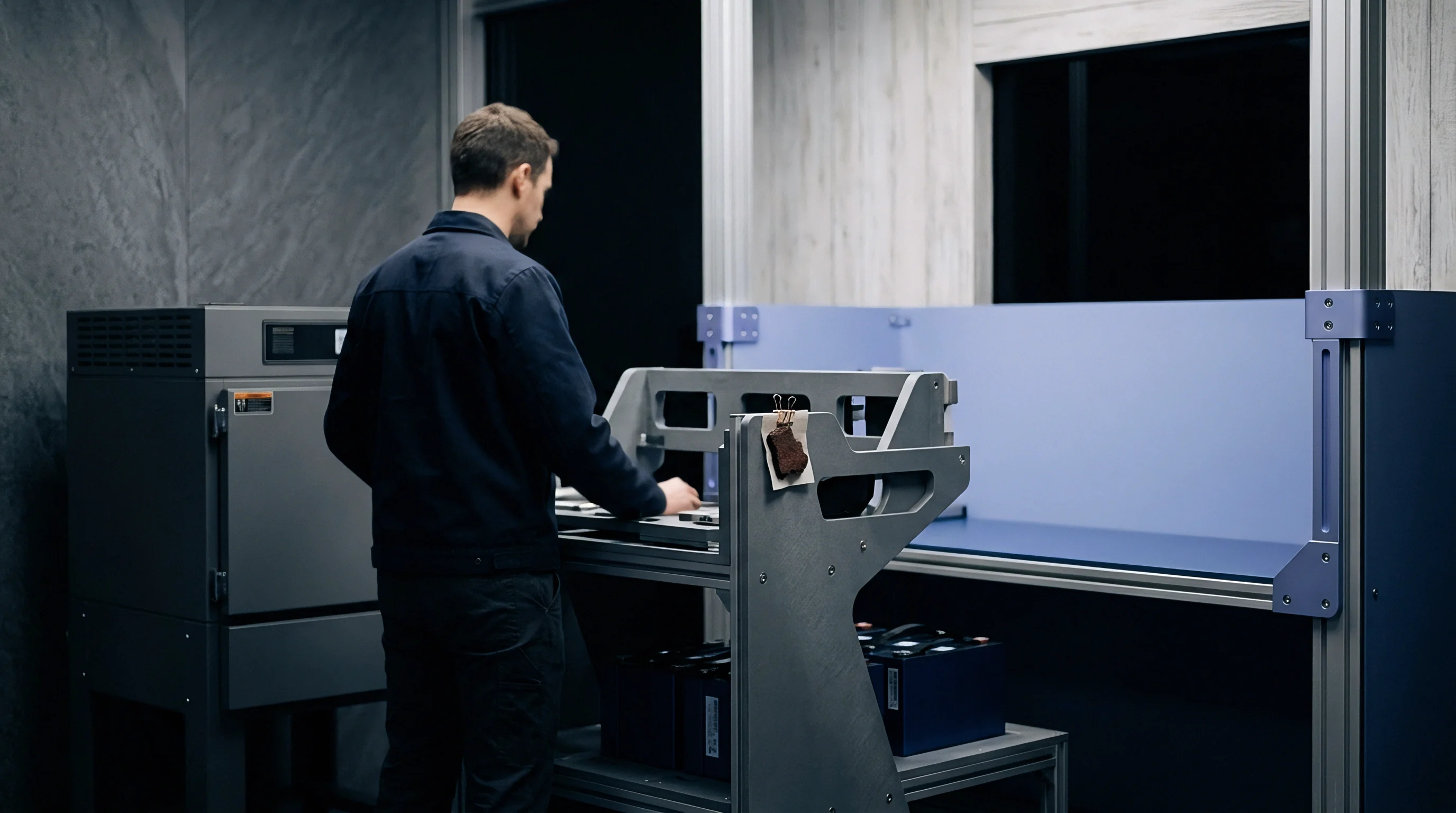
Internal thermal estimation without embedded cell sensors depends on state observers running on external telemetry. Extended Kalman Filters and Luenberger observers reconstruct core node temperatures by coupling surface temperature readings with real-time current and terminal voltage data.

Extended State Observers for Winding Temperature Estimation
Lumped-parameter thermal models split the prismatic cell into distinct thermal resistances, using a dual-node network to represent the internal core (Tc) and the external aluminum casing (Ts). The governing state equations take the following form:
Cc fracdTcdt = I2 Rohm + I · Tc · fracdUocvdT – fracTc – TsRc
Cs fracdTsdt = fracTc – TsRc – fracTs – TambRu
Here, Cc and Cs represent thermal capacities of the winding and casing, Rohm is equivalent internal resistance, fracdUocvdT is the entropic coefficient, Rc is internal conductive thermal resistance, and Ru is convection resistance to ambient. The state observer updates Tc dynamically, providing the temperature field required to calculate bulk thermal strain in real time.
An initial clamping preload of 85 kilopascals at 25 degrees Celsius yields a dynamic thermal expansion offset of 0.14 millimeters per hundred amperes in nickel-rich chemistry.

How Does Observer Gain Affect Dynamic Winding Temperature Estimation?
Matrix feedback values govern how rapidly the state estimates track transient current steps. High observer gain accelerates convergence during rapid 4C discharge events but increases sensitivity to voltage sensor noise. Tuning the covariance matrices Q and R balances noise attenuation against rapid thermal state tracking during aggressive drive cycles.
| Observer Topology | Execution Memory (kB) | Winding Temp Error RMS (°C) | Swelling Deconvolution Error (%) |
|---|---|---|---|
| Dual-Node Extended Kalman Filter | 14.2 | 0.85 | 2.1 |
| Unscented Kalman Filter | 38.6 | 0.42 | 1.1 |
| Luenberger Observer | 4.8 | 2.10 | 5.8 |
| Sliding Mode Observer | 9.1 | 1.30 | 3.4 |
Whether non-linear mechanical hysteresis in aging compression foams degrades observer accuracy over thousands of shallow micro-cycles remains an open question for module designers.

Compliance
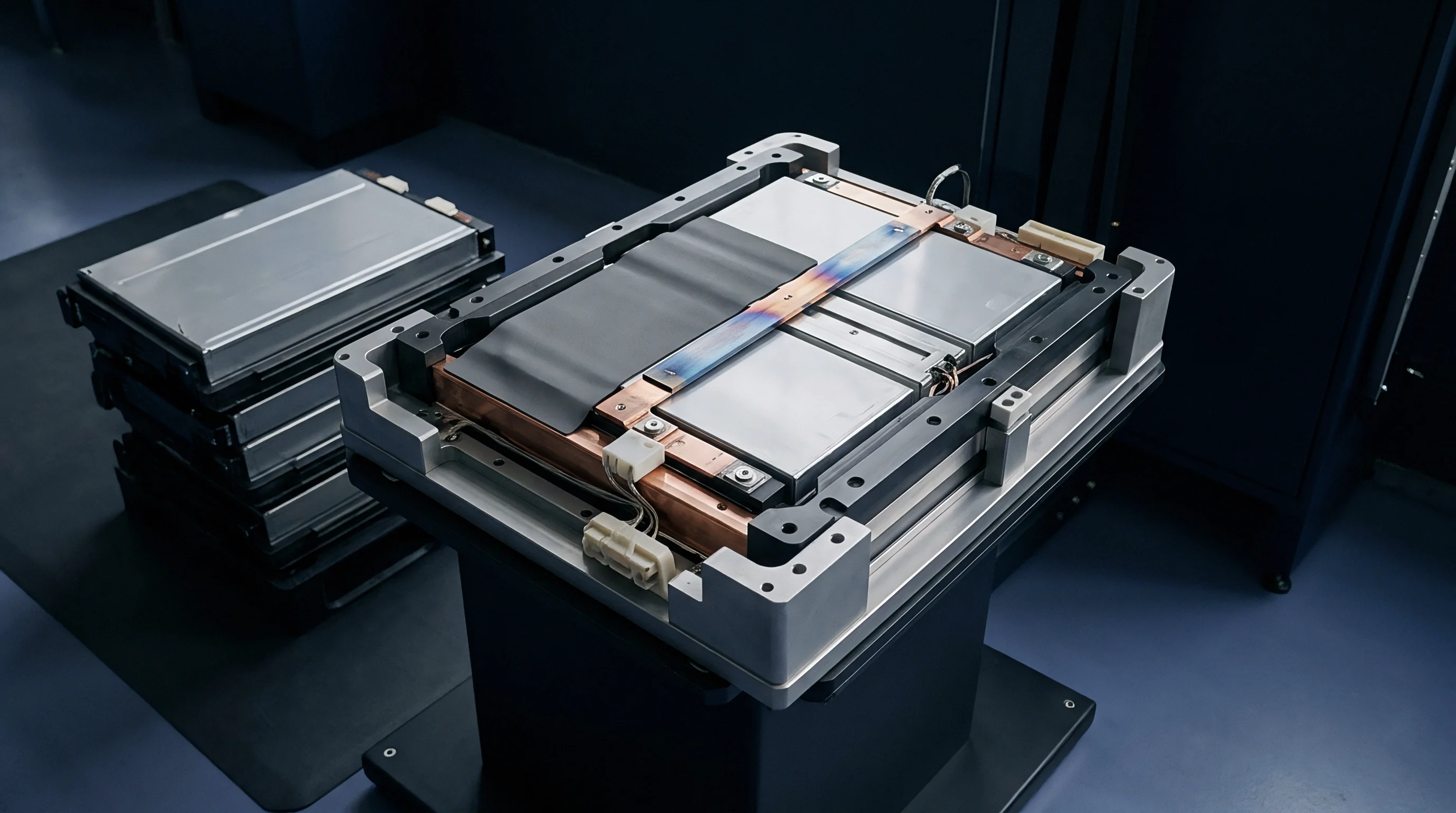
Module enclosure geometry determines how cyclic cell breathing influences overall pack life. Incorporating compressible foam pads absorbs reversible expansion while preserving the minimum contact pressure needed to prevent interfacial delamination. Allowable dynamic loads are primarily constrained by endplate deflection limits.
Module Compression Foam Dynamics under Thermal Cycling
Polyurethane elastomeric sheets handle cyclic expansion across charge-discharge cycles. Under compression, the foam exhibits pronounced non-linear behavior: at low strain, it remains compliant enough to yield to thermal growth without generating excessive back-pressure, but once breathing pushes past the stress knee point, load spikes rapidly.
Sustained preload causes mechanical creep, thinning the pads over five to ten years of field operation. That loss in thickness reduces baseline clamping force, raising the risk of delamination at the graphite-separator interface during high-rate discharge.

Integration Steps for End Plate Pretensioning
Mechanical assembly procedures fix baseline stack pressure across cell arrays.
- Apply an initial baseline mechanical load of 50 kilopascals using a calibrated hydraulic press fixture at 22 degrees Celsius ambient temperature.
- Install spring-loaded tension rods tightened to specified torque values while tracking endplate deflection with laser sensors.
- Perform a three-cycle electrical charge sequence to baseline the initial mechanical hysteresis loop of the module stack.
- Verify that load cell transducers return within two percent of baseline pressure after thermal stabilization at zero current.
ISO 12405-4 thermal stress compliance drops when transient mechanical load steps are improperly filtered from cell breathing metrics.
Section 4.2 of the UN 38.3 mechanical testing specification enforces structural integrity boundaries, meaning that unfiltered swelling forces that deform endplates by more than 0.5 millimeters invalidate the transport safety file.


Valuation
Accurate diagnostic separation of mechanical and thermal expansion directly affects commercial risk. Distinguishing temporary thermal growth from permanent mechanical deformation prevents premature pack retirement and avoids disputed warranty claims between cell manufacturers and battery integrators.
Warranty Liability Seams in Module Degradation Tracking
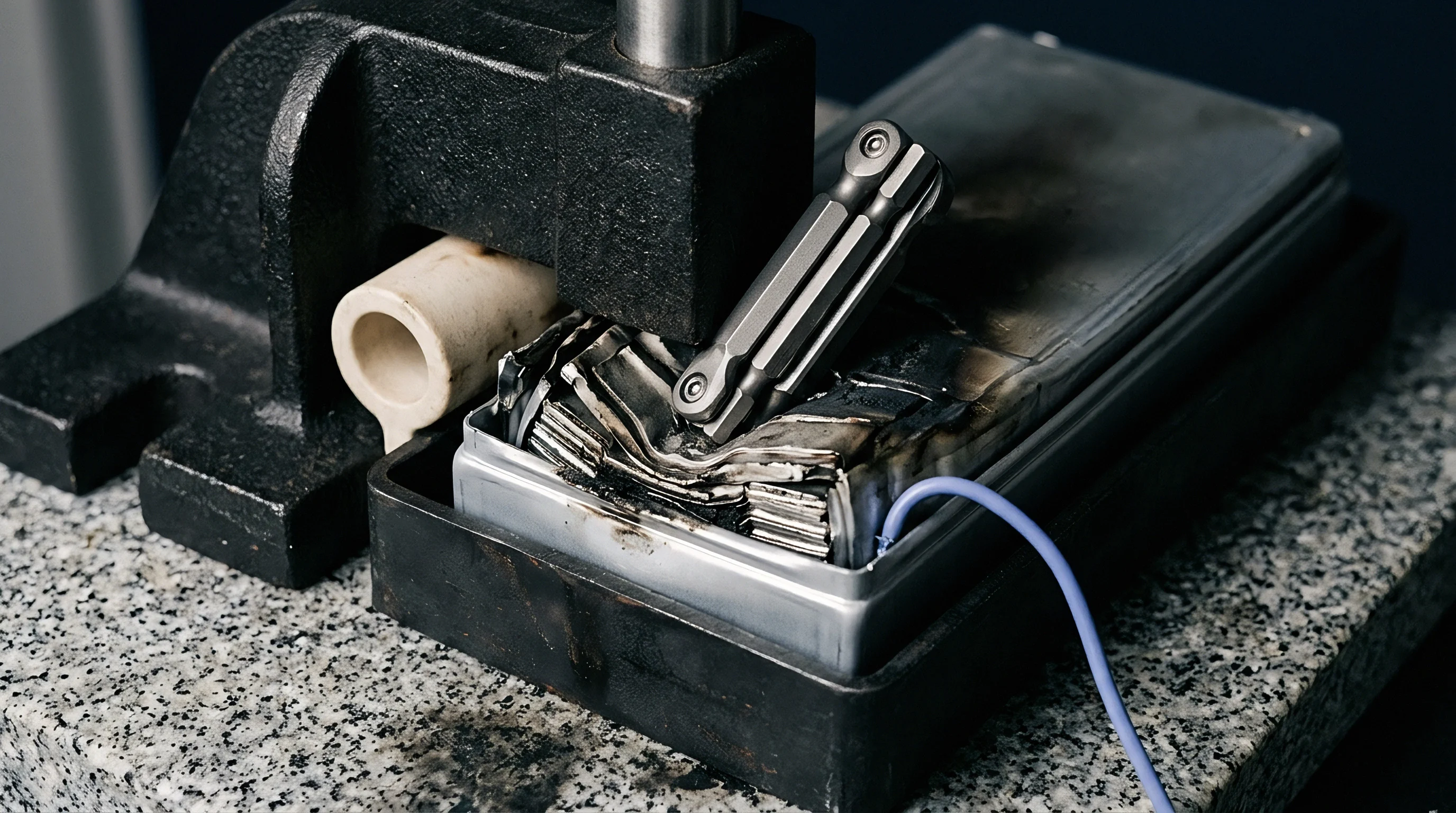
Supply agreements draw fine distinctions over who pays for structural deformation. When a cell swells beyond specified physical dimensions, attributing the deformation typically splits between pack-level thermal management failure and material defects or accelerated anode degradation. Real-time dynamic thermal reconstruction supplies the operating record required to resolve financial liability.
Landed Cost Metrics for Advanced Module Sensing
Commercial feasibility hinges on balancing added sensor hardware against algorithm development overhead. Integrating dedicated displacement transducers or strain gauges into every prismatic module adds $45 to $120 per vehicle in bill-of-materials costs. By contrast, deploying model-based observers directly to the BMS microcontroller requires upfront engineering development without increasing per-unit hardware expense.
- Firmware NRE Amortization requires allocating software development costs across at least fifty thousand module units to lower per-pack expenditure.
- Warranty Split Demarcation fixes cell vendor financial liability to cases where structural force exceeds 300 kilopascals under thermally corrected conditions.
- Incoming Cell Sorting Limits restrict capacity imbalance to less than 0.5 percent to prevent uneven mechanical breathing across the module stack.
Consider a 100 kWh electric vehicle battery pack containing 96 prismatic cells in series, produced at a volume of 25,000 packs per year. Assume a baseline annual warranty reserve of $850 per pack to cover battery swelling and degradation claims. Without dynamic thermal dynamic deconvolution, false-positive diagnostic flags cause unnecessary pack replacements for benign thermal expansion events, accounting for 22 percent of total warranty claims.
Implementing dynamic thermal reconstruction in BMS firmware involves a one-time software NRE expenditure of $180,000 ($7.20 per pack in year one). Deconvolution algorithms eliminate 40 percent of these false replacement claims, yielding an annual warranty savings of $74,800 per year ($2.99 per pack). Amortized over three production years, net savings total $44,400 after software costs while improving State-of-Health monitoring precision by 3.2 percent.
Accurate internal thermal state estimates prevent premature module replacement by distinguishing temporary thermal expansion from permanent lithium plating damage.