Meaning
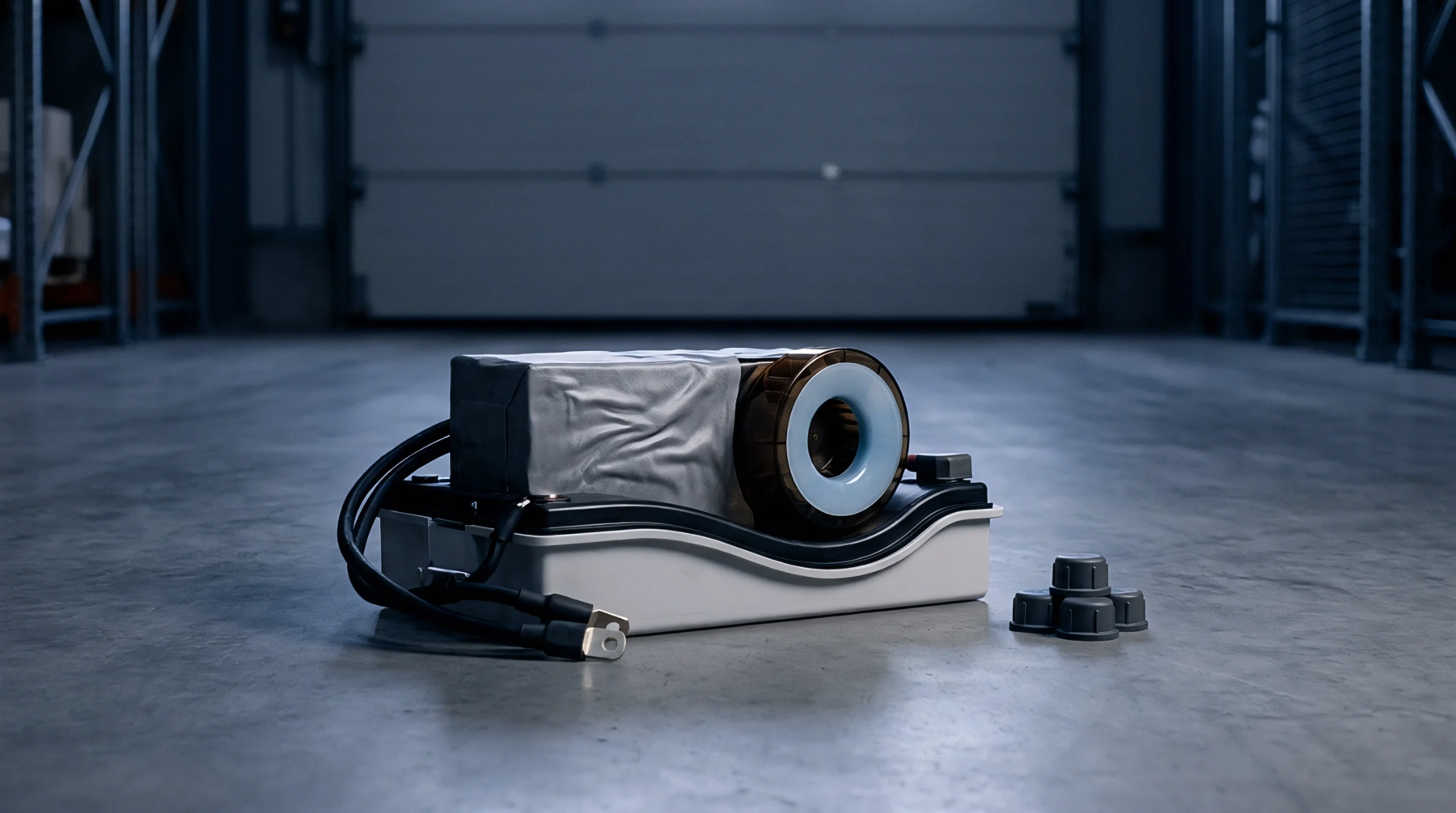
Liquid resin encapsulation applied around cell assemblies to manage thermal dissipation and structural fixation is battery module potting. Polymer matrices protect internal connections from moisture and vibration during vehicle operation. This manufacturing step establishes a rigid boundary between electrical components and external contaminants within energy storage enclosures.
Resin Viscosity
Fluid resistance during dispensing determines the penetration depth into narrow gaps between cylindrical or prismatic cells. Low dynamic viscosity allows rapid flow around wiring harnesses without creating air pockets that hinder heat transfer. Dispensing heads maintain precise temperatures because material thickness varies with ambient fluctuations.
Chemical curing begins immediately after mixing dual component polyurethanes or epoxies inside automated mixing chambers.
Thermal Conductivity
Filler particles such as alumina or silica embedded in the polymer matrix dictate the rate of heat rejection from active cells. Higher thermal transfer coefficients prevent localized hot spots during high discharge cycles. Procurement teams evaluate material data sheets to verify that raw compound values match final cured performance figures.
Poorly formulated mixtures trap internal energy and accelerate capacity fade across the entire assembly.
Mechanical Retention
Cured polymer blocks absorb physical shock and prevent relative movement between individual cells during prolonged vibration testing. Compressive strength parameters ensure the housing withstands mechanical stress without cracking the internal busbars. Procurement contracts specify hardness metrics and elongation limits to guarantee structural integrity over the design life of the system.
Environmental aging tests validate that exposure to road salts and temperature extremes does not degrade the protective matrix.