Meaning
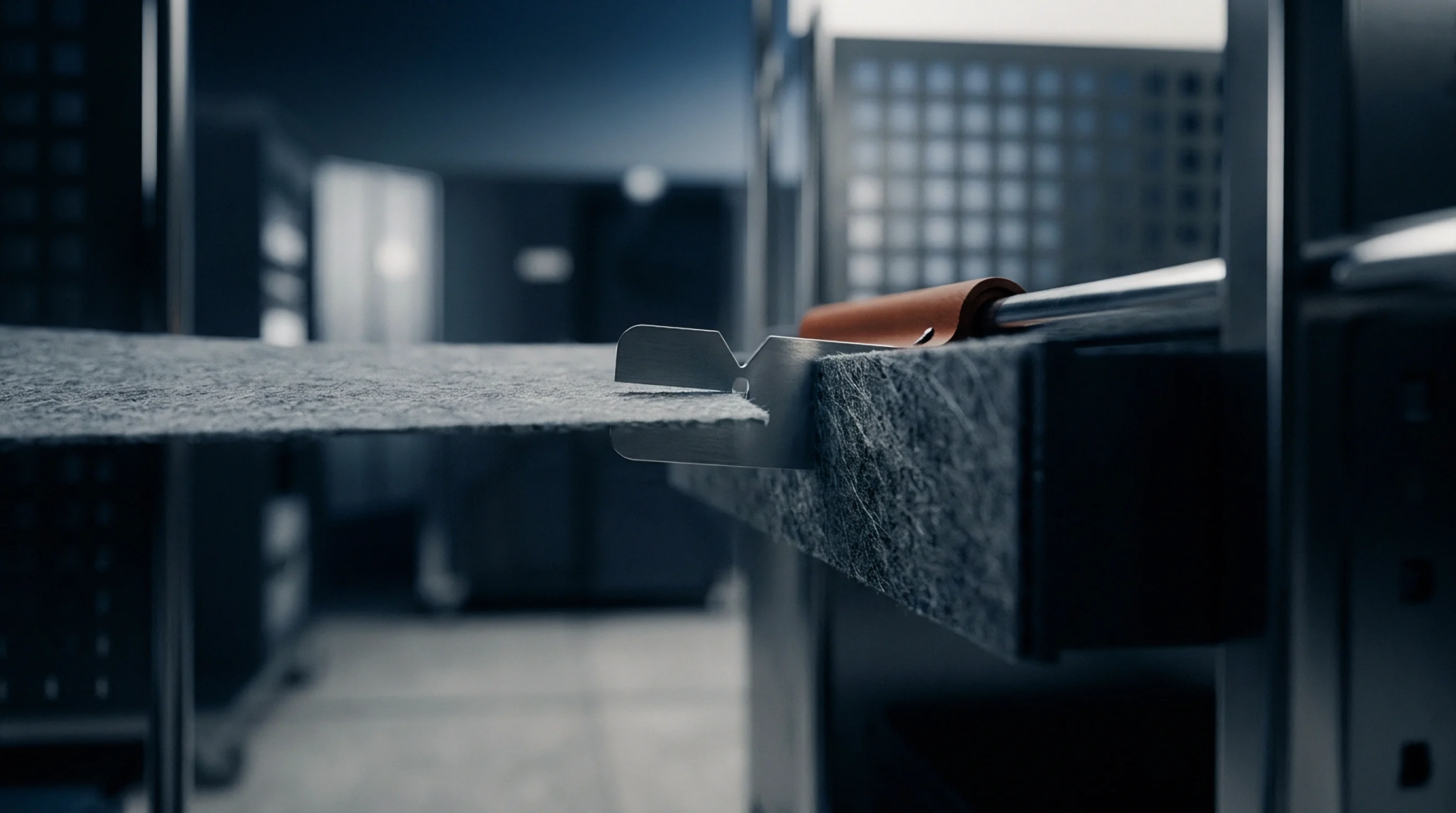
Mechanical separation force applied to coated aluminum foil during the cutting of battery positive electrodes is known as cathode foil shear. Production engineers measure cathode foil shear in newtons per millimeter of cut length to predict burr formation and active material delamination along slitting edges. This metric governs clearance tolerances between rotating rotary knives and sets baseline boundaries for acceptable edge quality in high speed cell manufacturing plants.
Slitting degradation occurs when mechanical resistance exceeds adhesion strength between the transition metal oxide coating and the metallic current collector.
Mechanical Stress
Edges experience severe plastic deformation when upper and lower blades compress the composite strip before the fracture propagation phase begins. Excessive blade wear increases dull contact area, which elevates local tensile stress and leaves torn burrs that pierce separator membranes during winding. Plant operators adjust axial overlap distances to control the fracture path through the aluminum substrate and the lithium iron phosphate or nickel manganese cobalt layer simultaneously.
Small clearance adjustments alter the proportion of clean cut zone relative to the torn zone, directly changing subsequent particle shedding rates.
Material Adhesion
Coating formulation parameters dictate how well active layers withstand mechanical tearing forces without debonding from the metal substrate during longitudinal division. High binder concentrations in slurry mixtures improve cohesive strength, allowing the coated strip to tolerate aggressive blade contact without edge flaking or powder release. Drying temperature profiles also influence internal film elasticity, creating brittle zones that crack unpredictably when subjected to high compressive loads.
Sourcing teams evaluate foil adhesion data sheets alongside supplier slitting specifications to minimize scrap rates before electrodes enter calendering stages.
Commercial Impact
Edge defect rates dictate final pack assembly yield, transforming mechanical slitting precision into a primary driver of cell manufacturing cost. Buyers reject coil shipments exhibiting micro cracks or excessive burr heights because microscopic debris causes internal electrical shorts during final charge cycles. Equipment vendors guarantee specific knife life spans based on hours of operation before regrinding becomes necessary to maintain acceptable cut quality standards.
Tooling maintenance schedules directly govern factory throughput by preventing unexpected line stoppages caused by foil jamming and edge tearing during continuous production runs.