Meaning
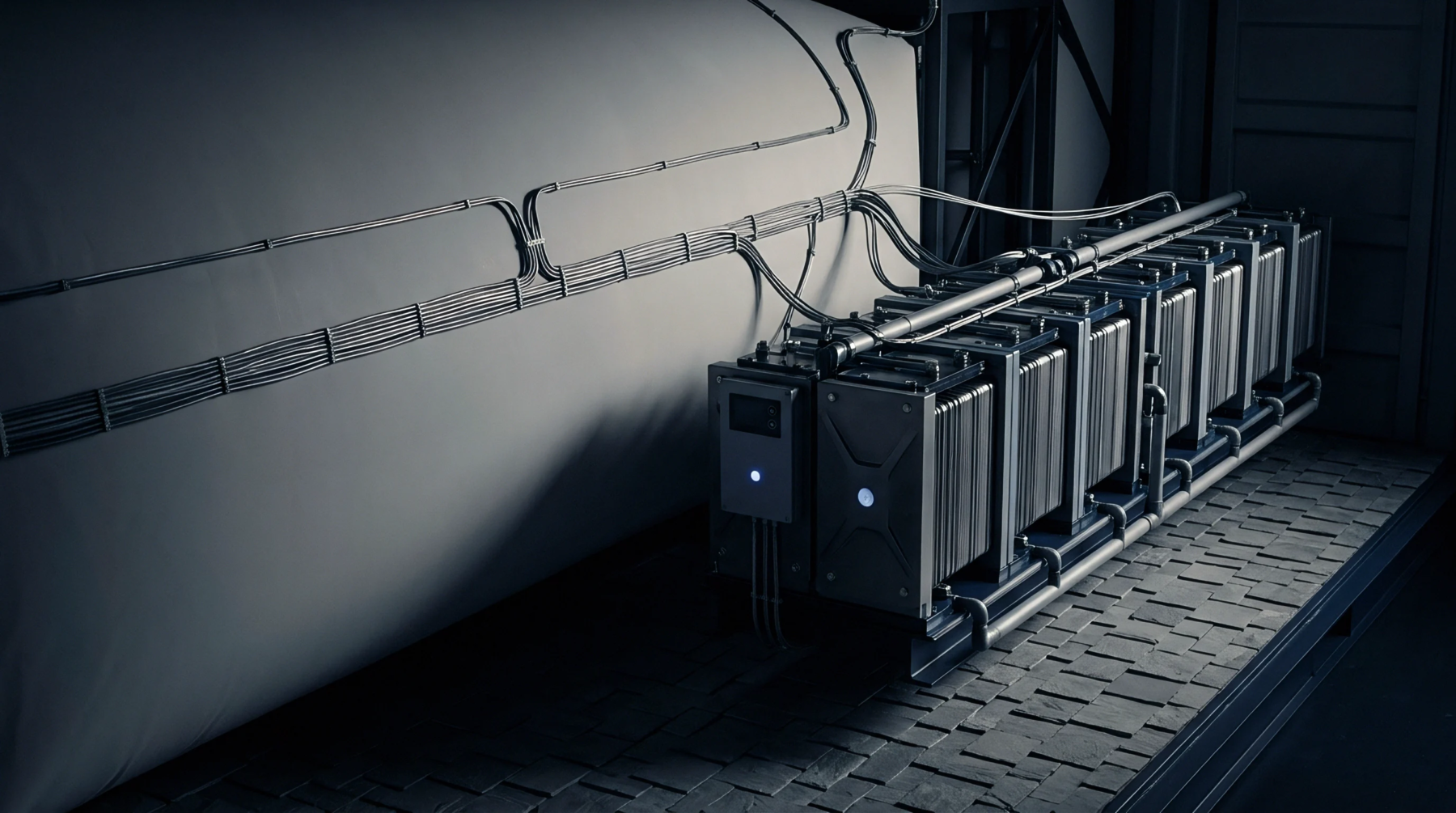
Mechanical stress generated by the active material within a battery pouch or prismatic geometry creates internal pressure as lithium ions insert into the graphite or silicon lattice during charge cycles. cell swelling forces represent the magnitude of physical expansion exerted against the rigid constraints of the containment housing or modular frame during electrochemical conversion. Measurements track the cumulative outward push in newtons or pascals to ensure the outer module maintains structural integrity throughout the operational lifespan of the energy storage unit. High values indicate significant volume changes that threaten to compromise the seal of a pouch or induce short circuits by deforming the separator layers between electrodes.
Boundary conditions for these data points stop at the point where the housing yield strength prevents further movement of the internal stack.
Restraint Mechanism
Engineers manage the buildup of cell swelling forces by applying external compression plates that limit the degree of physical expansion allowed during full state of charge conditions. Constant pressure stabilizes the electrode interface to maintain consistent electrical contact between the current collectors and the active materials. Variable stiffness materials placed between units allow for controlled expansion while preventing the uncontrolled growth that damages nearby cooling channels.
Thermal management systems rely on these predictable physical boundaries to maintain optimal heat transfer paths throughout the charging process. Correct control of these interactions prevents the premature degradation of the contact surface which increases internal resistance over many thousands of cycles.
Cycle Data
Data sets derived from these observations help procurement departments verify the long term stability of a specific cell chemistry before mass integration into a pack design. Information provided by suppliers details the peak load expected at the end of life when electrode degradation causes more pronounced particle fracture and volume expansion. Technicians compare these values against the tensile limits of the aluminum casing to predict the potential for rupture or thermal events.
Documentation requires these figures to validate the safety margins of the battery management system and the structural frame assembly.
Housing Integrity
Rigid enclosures accommodate the volumetric shift by using reinforced polymers or steel ribs that resist the outward push of the cell swelling forces. Failure to align the housing specification with the projected growth leads to cracks in the weld lines of the battery enclosure. Design teams calculate the force required to keep the internal stack under sufficient preload to avoid electrode delamination.
Proper sizing of the compression hardware prevents the mechanical fatigue that leads to reduced capacity and safety risks in high energy density systems. These constraints govern the total volume occupied by the battery pack within the vehicle chassis or industrial storage cabinet. A pack with insufficient internal space to manage these physical outputs suffers from rapid mechanical degradation and potential electrical instability under standard operating temperatures.