Meaning
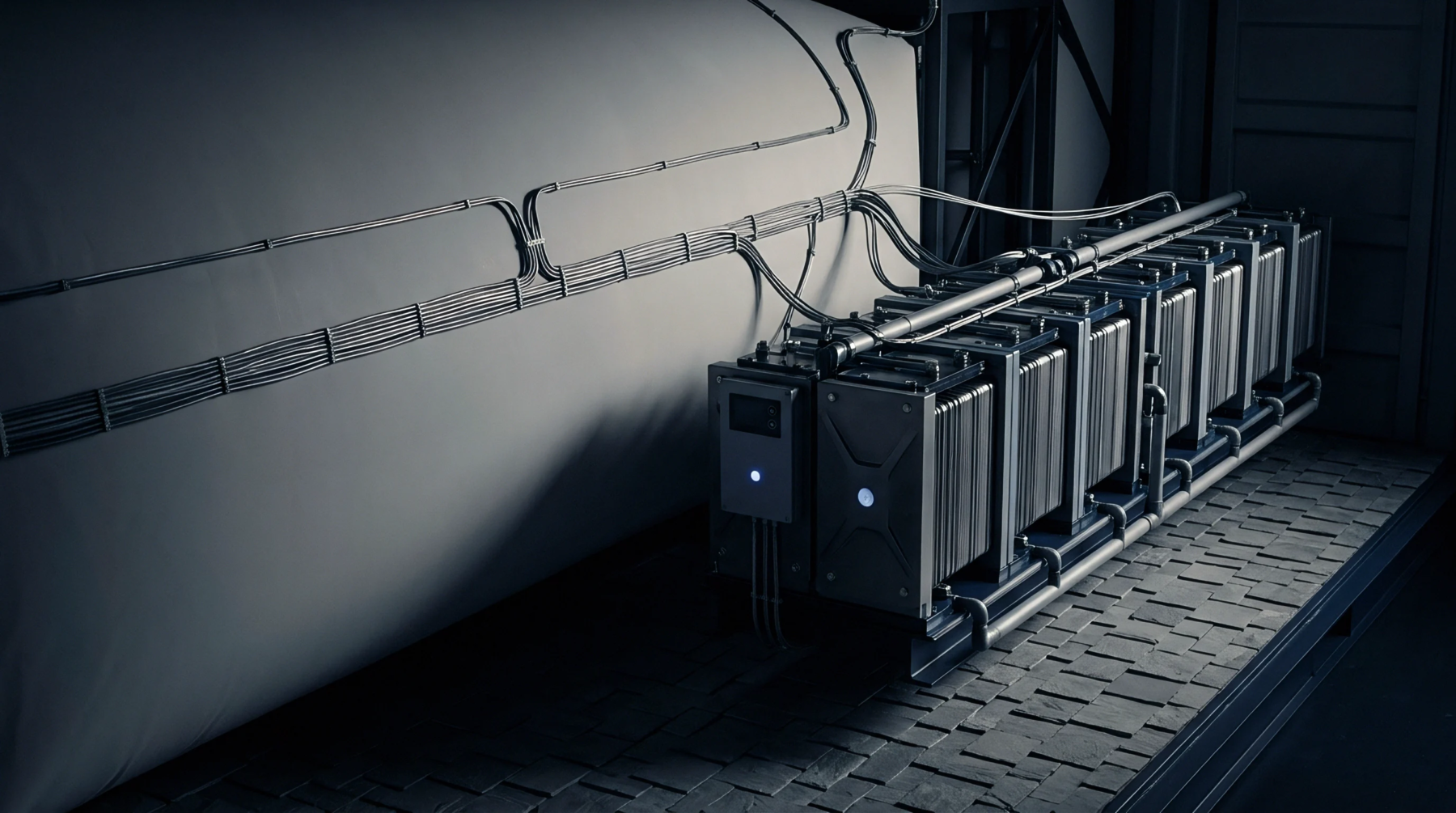
An electrochemical measurement of physical expansion forces describes battery pouch cell strain which quantifies how much internal pressure builds against restraining walls during charge and discharge cycles. This metric captures the force exerted by electrode stacks as lithium ions migrate into the graphite or silicon lattice and drive volumetric changes. Battery pouch cell strain defines the mechanical boundary conditions that a module housing must withstand to maintain contact pressure across the separator.
It excludes gas accumulation from electrolyte decomposition since that phenomenon presents as a distinct mode of structural deformation. Engineers verify this value to prevent internal delamination or shorts within the cell body.
Mechanical Constraint
Designers determine the preload requirements for battery pouch cell strain by evaluating the elastic limit of the aluminum laminate foil. High pressure values during cycling indicate poor electrolyte wetting or improper porosity in the anode particles. Low values suggest inadequate contact which increases the electrical resistance of the stack.
A cell operates safely when the external clamping fixture keeps this force within a predefined linear range throughout the depth of discharge. Manufacturers calibrate these fixtures to ensure that the pouch maintains its integrity without piercing the soft outer skin. Proper regulation of this physical force prevents the early degradation of the internal chemical interface.
Thermal Interaction
Temperature variations influence the magnitude of battery pouch cell strain as components expand at different rates under thermal load. Higher heat levels alter the viscosity of the electrolyte which changes how efficiently ions move between electrodes and affects the local swelling behavior. A cell subjected to fast charging regimes generates heat that intensifies the physical tension against the module walls.
Cooling systems must dissipate this energy to stabilize the mechanical output of the pouch. Data from sensors on the surface of the cell allow the controller to adjust the current based on the observed force.
Sourcing Verification
Procurement departments request validation reports of battery pouch cell strain to ensure vendor consistency across different production lots. A batch that shows significant deviation in expansion forces indicates variability in the manufacturing of the separator or the coating of the electrode substrate. This information serves as a proxy for the quality of the raw material supply chain.
Purchasers assess the test protocol used to generate these figures to confirm it matches the operating environment of the final application. Consistent mechanical performance indicates a stable chemical architecture inside the pouch. High deviation in this force predicts a shorter service life for the finished energy storage system.