Meaning
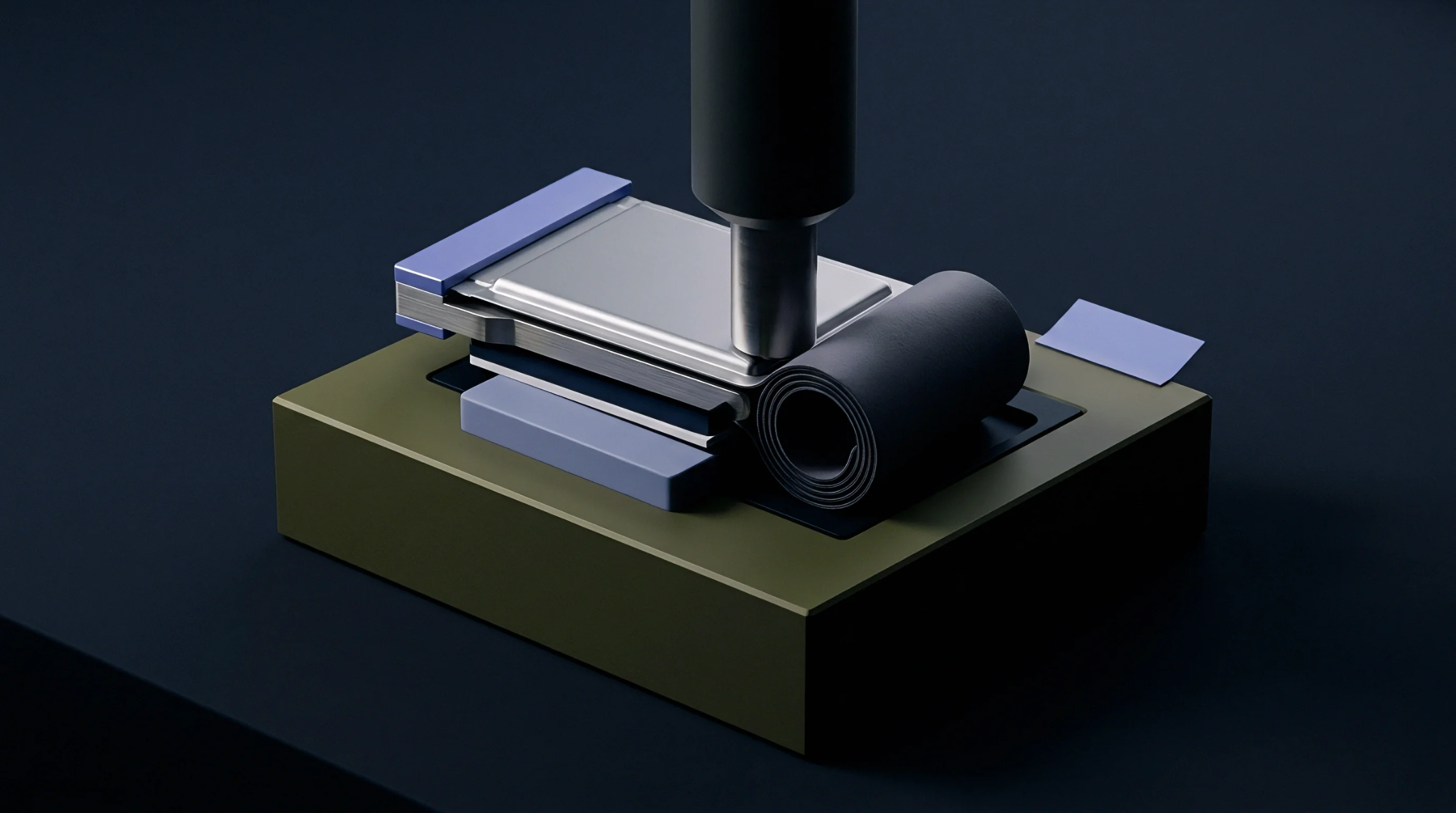
Stereological rules state that the area fraction of a phase measured on a random cross section is directly equal to its volume fraction within the whole specimen. This relationship allows researchers to calculate three dimensional data from two dimensional images without needing to slice the entire sample into thin pieces. Within the field of battery science, the delesse principle provides the basis for measuring how much space the active material occupies compared to the binder.
It assumes that the microstructure is homogeneous on a scale that is larger than the individual features. This geometric truth holds regardless of the specific shapes of the grains or inclusions.
Measurement Logic
Application of this concept requires only a single high quality micrograph of a representative plane. By summing the total area covered by dark pixels representing pores or light pixels representing carbides, the analyst finds the ratio. If the total image area is one hundred units and twenty units are occupied by a certain phase, then twenty percent of the volume is assigned to that phase.
Efficiency increases when using modern automated image analysis software to perform the calculation. The accuracy relies entirely on how well the chosen section represents the average bulk material.
Statistical Validity
Error occurs if the features align in a single direction like the fibers in a composite. To satisfy the requirements of the delesse principle, multiple slices should ideally be examined to ensure no bias exists from local variations. Many analysts use five or ten separate planes to get a defensible average.
Because volume is a spatial property, the two dimensional measure must come from a truly random plane inside the volume. In many industrial materials, this consistency is achieved during the initial manufacturing or mixing stage.
Practical Boundary
Geometric limitations occur when the slice is too thin relative to the features being measured. If a feature has a complex branched shape, a single area measurement might miss the internal connectivity. This rule remains the fundamental mathematical check for all quantitative metallography and petrography tasks.
Engineers use it to confirm that the porosity of a battery electrode matches the specified design values. Reliability depends on having high image contrast so each phase boundaries are identified with high precision.