Meaning
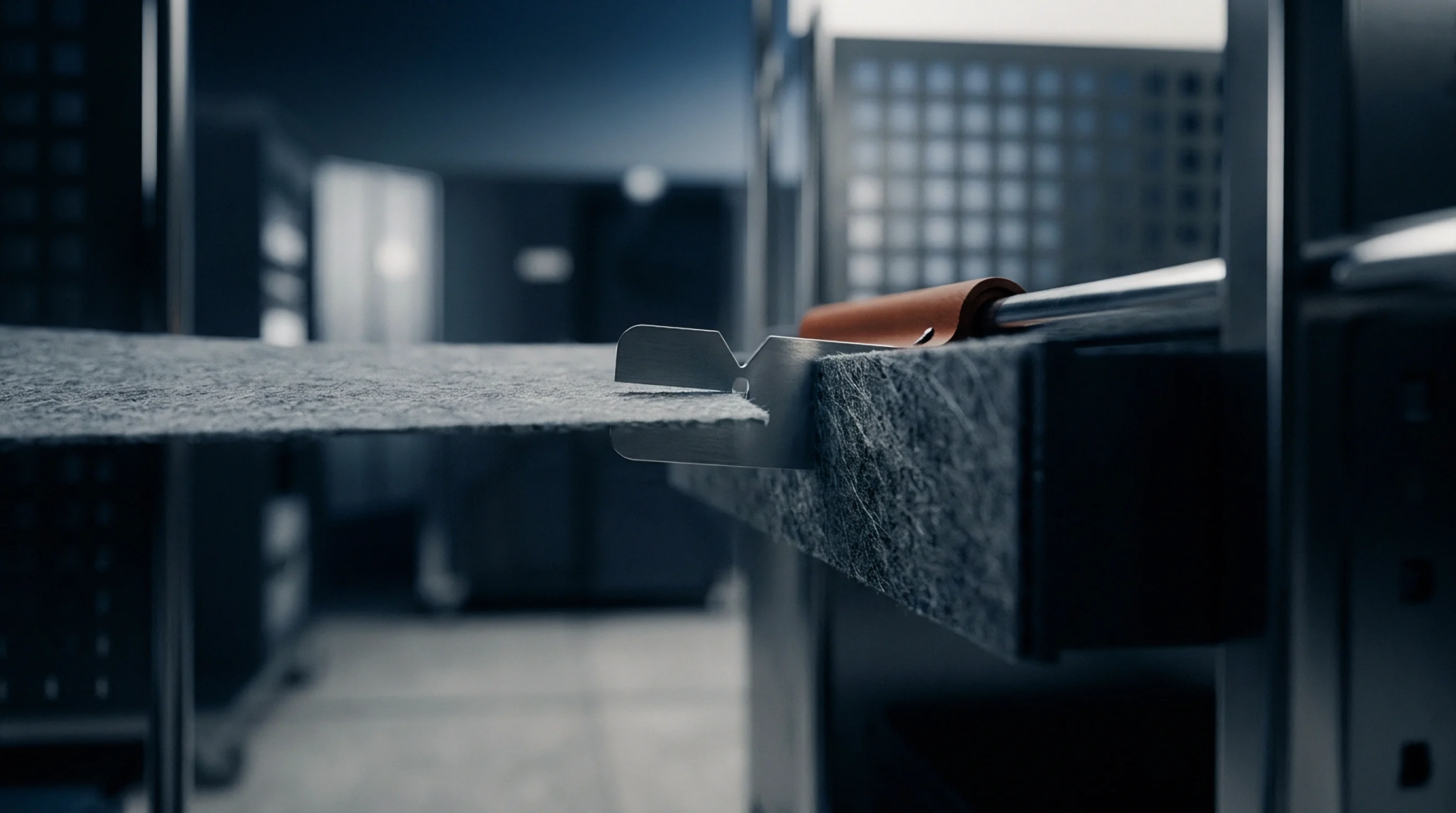
Precision rotary shearing assemblies in lithium battery production lines incorporate ultra-hard circular blades to slice continuous coated metallic foils. An electrode slitting knife operates in pairs with zero lateral clearance to shear thin aluminum and copper current collectors coated with active materials. Maintaining defined edge sharpness and side-face parallelism prevents edge deformation, coating flaking, or foil tearing during high-speed web conversion.
Edge quality parameters governed by the tool include burr height, cut line straightness, and particle generation across cathode and anode production lines. Operational boundaries stop at mechanical shearing, where laser cutting or ultrasonic die punching take over for complex tab geometries.
Tool Geometry
Rotary shear cutting relies on precise dimensional tolerances on the outer diameter, bore, and side faces of the circular blade. Side face runout exceeding one micrometer induces lateral wobble, which causes clearance fluctuations during web passage. Edge chamfer angles between forty-five and sixty degrees balance edge strength against cutting force requirements.
Knife overlap and axial clearance must remain constant across the width of the slitting arbor to ensure uniform shear action.
Material Selection
Tungsten carbide grades containing sub-micron grain structures form the standard substrate for high-durability slitting tools. Cobalt binder content between six and ten percent provides the fracture toughness required to resist shock loads from slurry aggregates. Ultrafine carbide grains prevent micro-chipping along the cutting edge when shearing tough aluminum current collectors.
Steel knives lack the hardness required to maintain edge stability over millions of linear meters of abrasive electrode foil.
Burr Formation
Burrs generated during foil slitting pose structural hazards inside wound or stacked battery cells. Excessive clearance or blunted blade edges stretch the metallic foil before fracture occurs, leaving a raised edge along the cut line. Raised metal burrs penetrate the thin polyolefin separator during cell cycling, causing micro-short circuits between positive and negative plates.
Inspection systems monitor burr height continuously, triggering tool replacement when burrs exceed eight micrometers. Edge quality standards require razor-sharp tool profiles to maintain clean shear failure without excessive plastic deformation. Downstream cell safety depends directly on maintaining burr heights below critical separator thickness thresholds.