Meaning
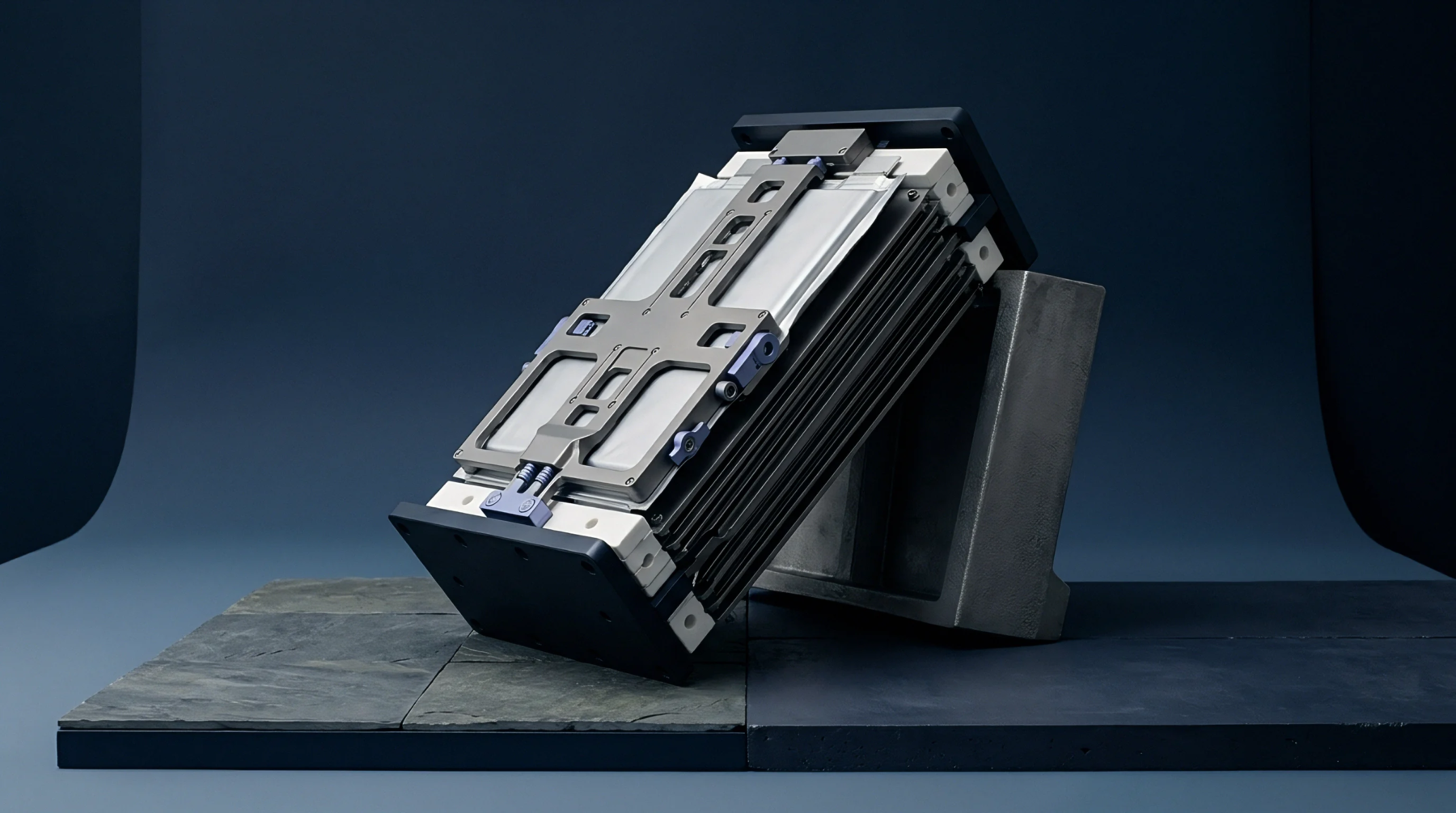
Mechanical evaluation of confined electrochemical cells under rigid boundary displacement defines the structural resistance and expansion characteristics of cycling active materials. Fixed gap testing restrains a cell between unyielding planar plates set to a predetermined dimensional clearance, preventing macroscopic volume change as electrodes lithiate and delithiate. This protocol measures internal mechanical stress evolution, differing fundamentally from constant-pressure regimes that permit continuous dimensional breathing.
Data captured from this method establish baseline internal expansion limits for solid-state batteries, pouch cells, and constrained module arrays. The operational scope terminates when displacement limits yield to mechanical fixture compliance or when unconstrained volumetric swelling is the stated test objective.
Fixture Rigidity
Unyielding mechanical enclosures demand extreme plate stiffness to ensure zero relative displacement across thousands of operational cycles. Tooling frameworks employ hardened tool steel, load cells, and precision micrometric shims to lock the initial cell dimension at a predetermined assembly clearance. Fixed gap testing transforms volume expansion into direct force data, registering continuous stress spikes during lithiation phases.
Deflections within the containment fixture above two micrometres distort mechanical readings, invalidating force-displacement correlations. Load cells mounted inline with the compression plates monitor these dynamic mechanical loads without relaxing the imposed physical perimeter.
Interfacial Degradation
Absolute volumetric containment accelerates mechanical degradation within brittle electrode matrices and porous separator membranes. High compressive loads generated during phase transitions crush separator pores, which curtails electrolyte conductivity and triggers premature capacity fade. Fixed gap testing isolates this degradation mode by preventing the electrode assembly from expanding into compliant cushioning pads.
Elevated stress regimes also fracture active material particles, exposing fresh interfaces to electrolyte consumption and solid electrolyte interphase reconstruction. An uncontrolled rise in mechanical confinement force frequently correlates with rapid internal resistance escalation during extended duty cycles.
Module Specification
Pack mechanical architectures require precise boundary expansion limits to design structural retention frames and thermal management plates. Data derived from fixed gap testing define maximum static and dynamic mechanical pressures that cell enclosures exert against battery pack enclosures. Procurement agreements for high-silicon anodes specify peak containment loads measured under rigid mechanical constraints to prevent structural rupture of pack enclosures.
Thermal interface materials must also withstand these cyclic mechanical pressures without suffering permanent plastic thinning or void formation. Designers rely on these pressure curves to select retention bolt tensile ratings and side-plate yield parameters.