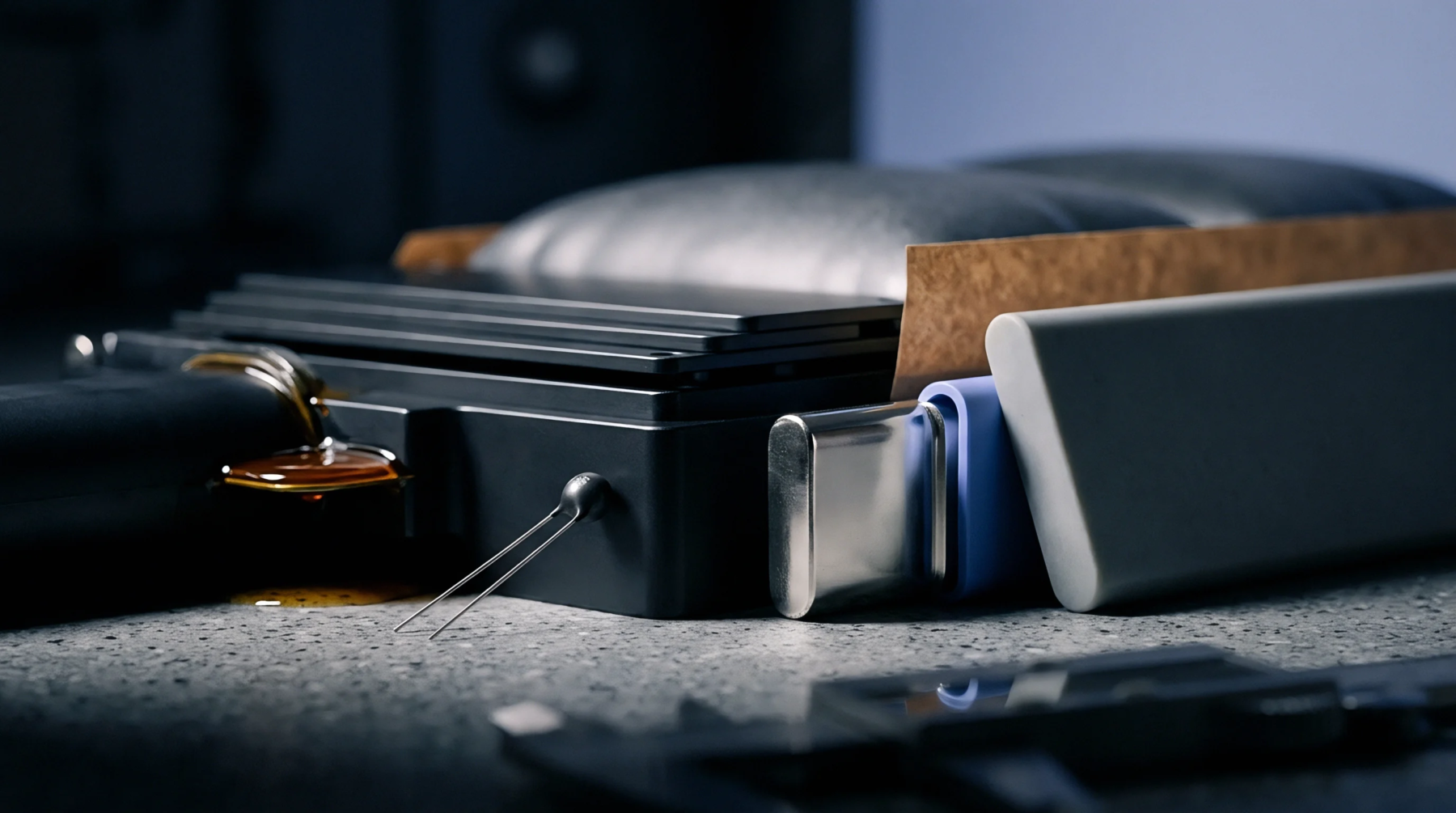
Meaning
High chemical inertness and resistance to aggressive battery electrolytes characterize the primary sealing materials used in industrial cell assembly. Utilizing a fluoroelastomer seal prevents the degradation that commonly occurs when standard rubbers are exposed to carbonate solvents and trace hydrofluoric acid. This material choice is standard for pouch cell gaskets and cylindrical cap seals because of its high resistance to gas permeation.
It secures the internal environment from external degradation factors.
Chemical Resistance
Organic carbonates used in modern lithium battery electrolytes readily swell and weaken standard sealants. The fluoroelastomer seal resists this solvent action because its carbon-fluorine bonds are exceptionally strong and stable. This prevents mechanical breakdown during cycles of charge and discharge.
Thermal Limit
Operation at elevated temperatures accelerates the decomposition of the electrolyte and increases pressure within the housing. Under these conditions, the fluoroelastomer seal maintains its structural integrity and does not soften or melt. It remains stable at temperatures exceeding one hundred and fifty degrees Celsius.
Elastic Recovery
Mechanical pressure applied during cell crimping or bolted assembly relies on the elastic memory of the compound. Over long periods, the fluoroelastomer seal must retain its sealing force and resist compression set. This retention ensures that no pathway opens for moisture ingress during the lifespan of the battery.