Meaning
Electrical testing configuration employs separate pairs of conductors for current delivery and voltage sensing to eliminate lead resistance errors. Four-wire measurement provides the accuracy necessary for evaluating the low impedance of high-performance battery cells. By separating the sensing circuit, the system measures the potential drop exactly at the terminal.
Lead Compensation
Resistance in the power cables is ignored because no current flows through the voltage sensing leads. This arrangement ensures that four-wire measurement captures only the resistance of the cell and the immediate contact points. High-current systems benefit most from this exclusion of parasitic losses.
Sensing Accuracy
Digital voltmeters in this setup have high input impedance to prevent signal distortion. When four-wire measurement is used, the resulting data reflects the true electrochemical state of the battery rather than the limitations of the test harness. Accurate state of charge estimations depend on this precision.
Technical Implementation
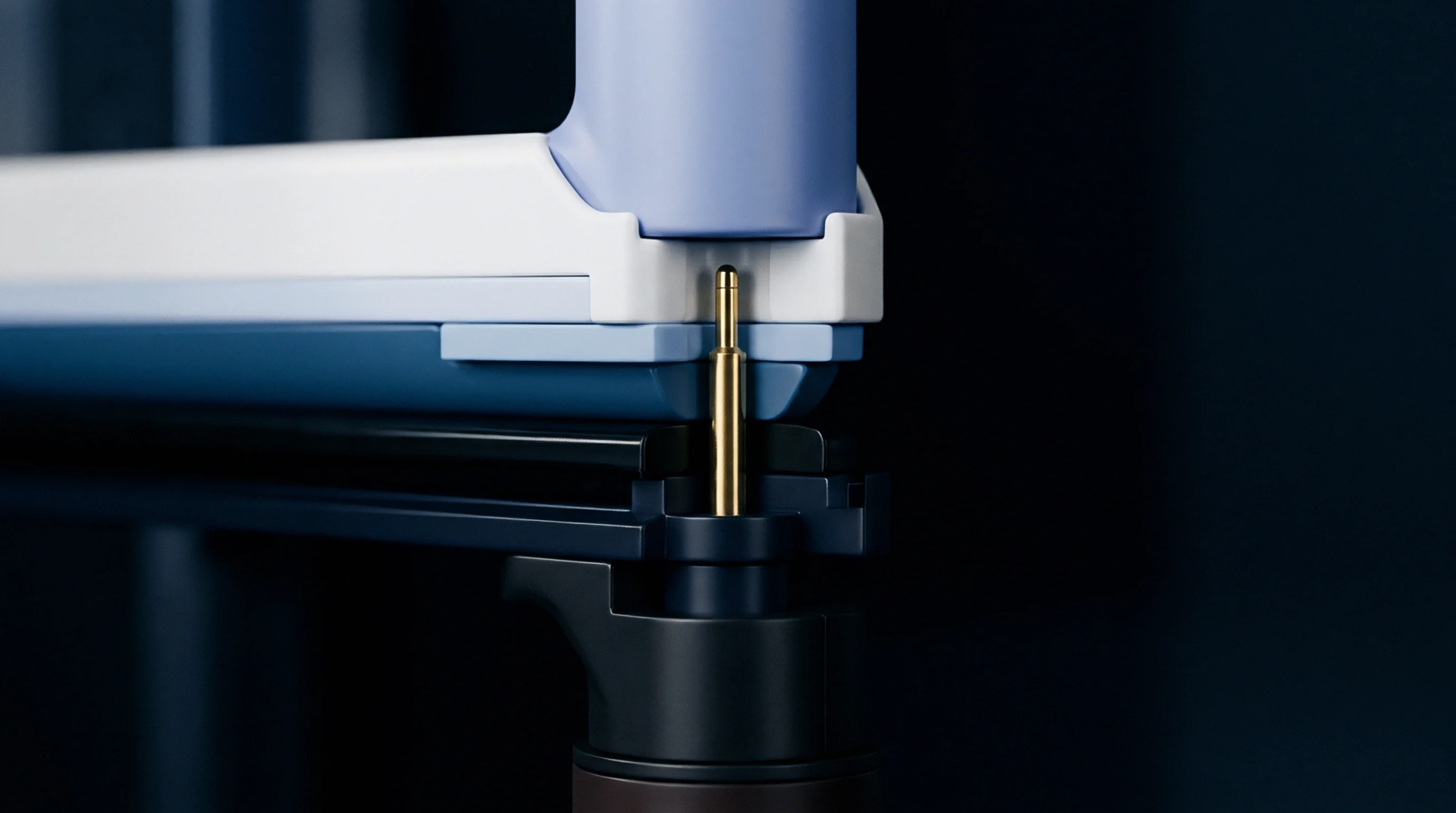
Special probe pins known as Kelvin clips or coaxial pins allow both circuits to touch the same terminal simultaneously. Because four-wire measurement requires more complex wiring and expensive hardware, its use is prioritized for end-of-line testing and research laboratories where milliohm precision is mandatory. Standard two-wire setups are often relegated to basic voltage checks where high accuracy is not a priority.
Most high-volume battery production facilities integrate these four-point probes into every channel of their formation and grading equipment to ensure uniformity across the entire batch.