Meaning
Quantification of the maximum allowable gas escape through a hermetic seal establishes the quality standard for battery enclosures. A helium leak rate threshold defines the boundary between an acceptable seal and a defective unit during mass spectrometry testing. Helium acts as the tracer gas because its small molecular size allows it to penetrate microscopic fissures that liquid electrolyte might not immediately pass.
Detection Sensitivity
Mass spectrometers tuned to the mass of helium isotopes can detect flow rates as low as ten to the power of minus ten cubic centimeters per second. Setting the helium leak rate threshold involves balancing the need for long term shelf life against the speed of the production line. Higher sensitivity requirements increase the rejection rate but ensure higher reliability in aerospace or medical applications.
Seal Integrity
Mechanical crimps and laser welds are the primary locations where gas bypass occurs. The helium leak rate threshold acts as a proxy for the ability of the cell to prevent moisture ingress over several years of service. If the rate exceeds the limit, the cell is at risk of electrolyte dry out or internal pressure buildup from atmospheric contamination.
This metric is particularly essential for prismatic cells where the long weld paths provide more opportunities for tiny pinholes or start-stop defects in the laser path.
Testing Protocol
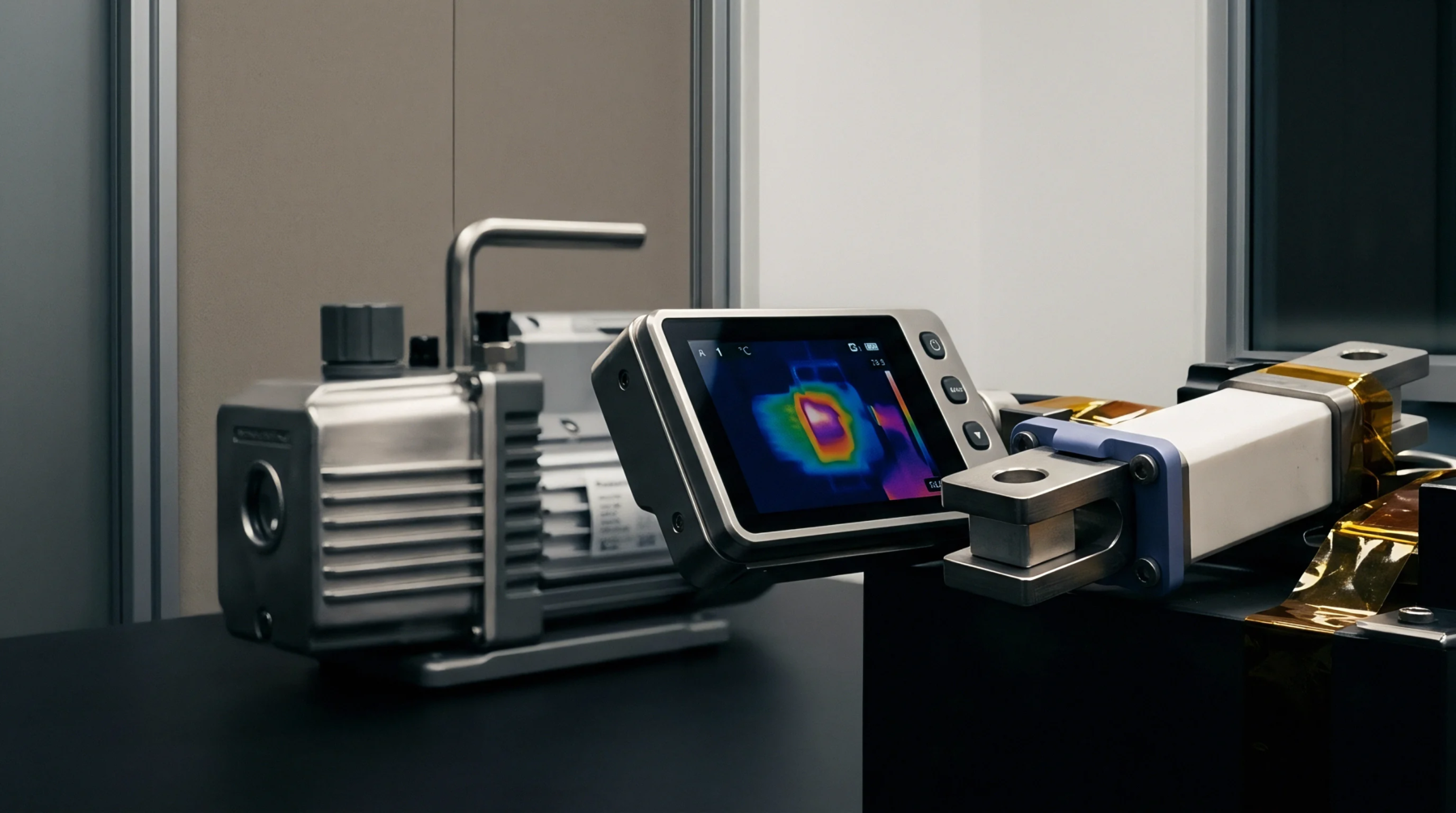
Vacuum chambers draw the tracer gas through the seal and into the sensor for measurement.