Meaning
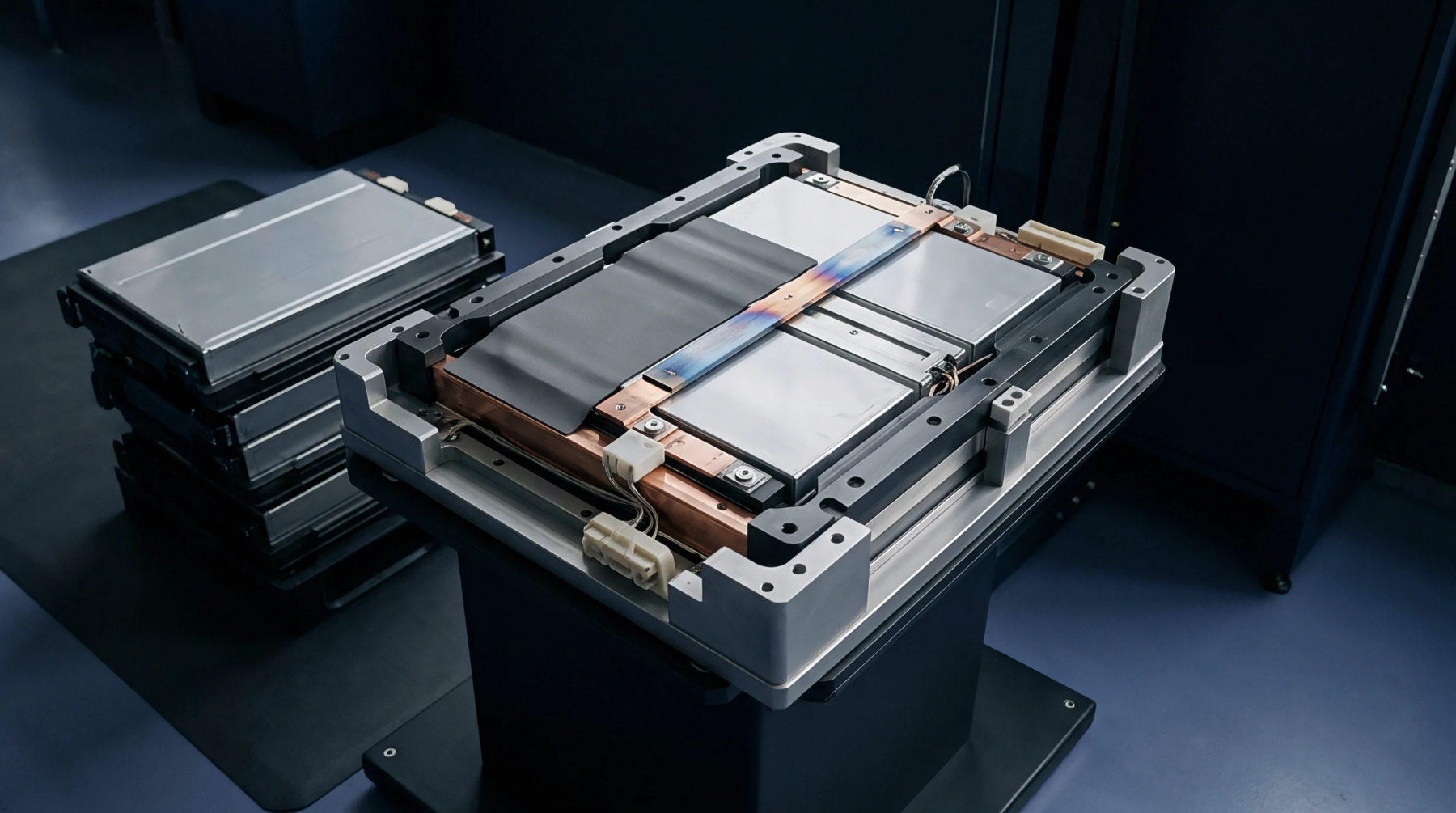
Sealed electrochemical storage units delivering substantial total charge quantities per single containment vessel classify as large-format building blocks within utility and transport sectors. Common commercial applications define high-capacity cells as enclosed devices yielding nominal ratings typically surpassing one hundred ampere-hours, manufactured primarily in prismatic or pouch geometries. This class stops short of modular battery packs, applying strictly to individual factory-sealed cells housing interconnected or continuous electrode groups.
Cell selection parameters emphasize their volumetric integration advantages while managing elevated internal heat release during continuous cycling.
Mechanical Packaging
Large mechanical envelopes reduce the overhead burden of non-active packaging hardware. By enclosing extensive active electrode areas within single rigid aluminium cans or laminated polymer pouches, high-capacity cells minimize peripheral casing seals, busbar interconnects and individual monitoring sensors across a complete system. Internal construction requires multiple parallel-wound jelly rolls or extensive flat-plate electrode stacks to house the required active mass.
Maintaining homogeneous mechanical pressure across large outer prismatic faces requires external compression bracing within module assemblies, preventing internal delamination caused by cyclic lithium intercalation stresses. Thick cell geometries complicate automated winding tension control and demand exceptional precision during separator interleaving.
Heat Dissipation
Heat extraction challenges scale nonlinearly as internal cell volumes expand. The ratio of external heat-dissipation surface area to internal active volume declines significantly in high-capacity cells, creating steep core-to-surface thermal gradients. Long conduction paths through layered metallic foils and porous separator membranes limit effective heat transfer to exterior cooling plates.
High continuous discharge currents generate substantial core temperatures, requiring liquid chillers and advanced thermal interface materials to avoid thermal runaway thresholds. Local thermal imbalances inside large cells lead to uneven aging rates, accelerating electrolyte drying across central regions while exterior electrode zones remain functionally viable.
Warranty Valuation
Sourcing agreements balance the total energy integration gains against catastrophic pack-level risk. A single internal short-circuit defect in these dense units releases massive chemical energy, necessitating stringent module-level containment and fire suppression certifications. Purchase orders mandate extensive factory batch testing, evaluating initial cell-to-cell capacity variance within tightly bound bounds of less than one percent.
Extended warranty terms establish throughput guarantees contingent on operating temperatures remaining within verified operational envelopes, penalizing capacity fade driven by localized over-discharge or thermal stress.