Meaning
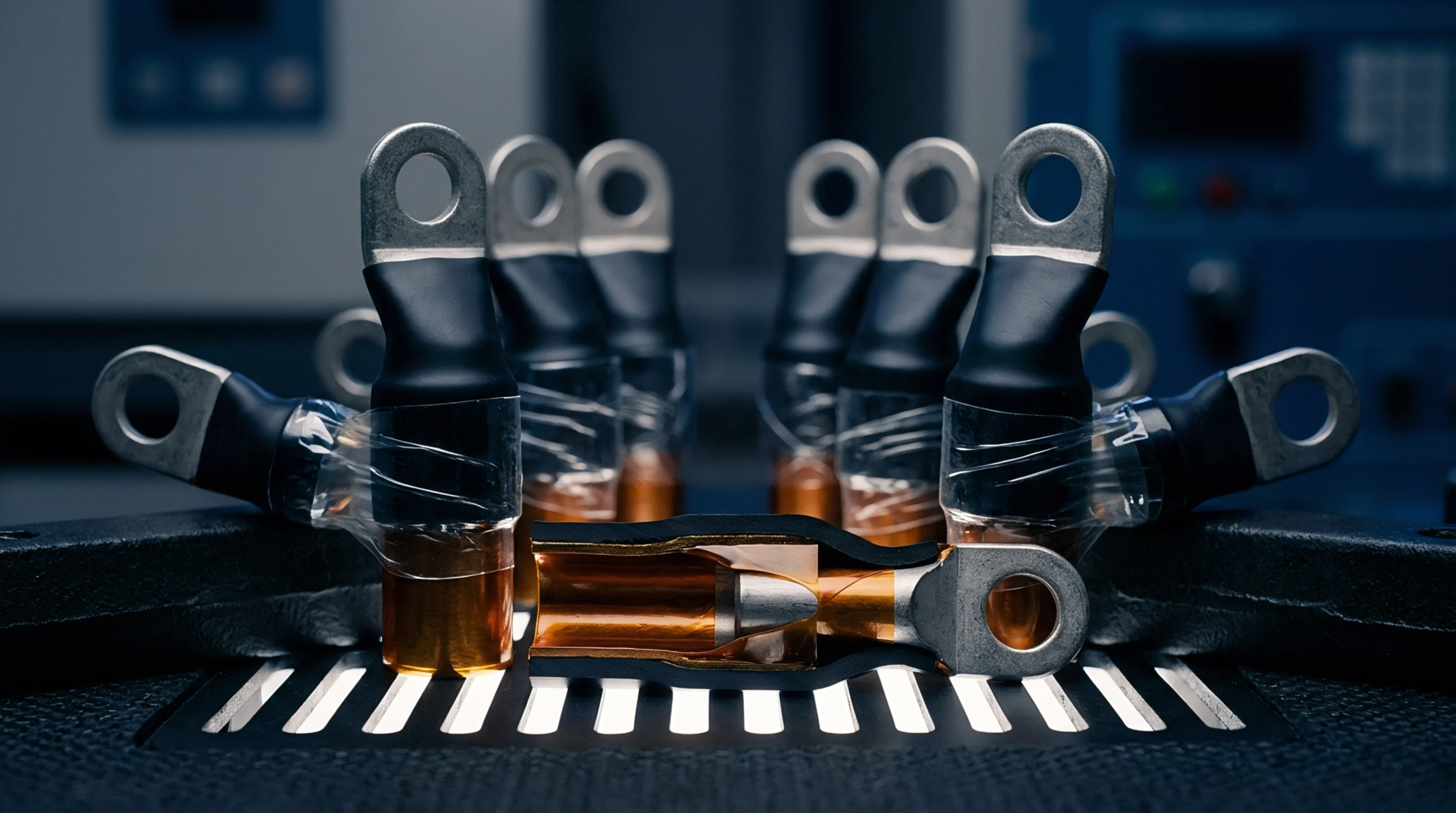
Cooling the electrical contact points of a battery allows for the regulation of internal heat without cooling the entire cell surface. Implementing isothermal terminal control involves the use of specialized heat sinks or liquid cooled connectors at the positive and negative poles. Terminal cooling has a direct impact on the internal thermal gradient because terminals are the primary path for heat to escape the internal jelly roll.
This method reduces the peak internal temperature during high power operation.
Heat Extraction
Thermal conduction through the metal tabs provides an efficient pathway for removing waste heat from the center of the electrode stack. By using isothermal terminal control, engineers can draw heat away from the most sensitive parts of the cell during high power pulses. This localized approach is often more energy efficient than cooling the entire battery casing with a fan or a refrigerant plate.
Temperature Uniformity
Internal stress is minimized when the temperature difference between the center and the edges of the cell is reduced. When isothermal terminal control is active, the heat flux is directed toward the terminals, which helps to maintain a more even temperature distribution across the active material. This prevents localized hotspots that could cause uneven aging of the lithium ions.
Maintaining a consistent temperature at the contacts also ensures that the electrical resistance of the connection remains stable throughout the discharge cycle.
Engineering Design
Specialized busbars with integrated cooling channels are required to achieve this level of thermal precision. The complexity of the assembly increases because the electrical insulation must also act as a thermal conductor.