Meaning
Electrochemical thickness variation occurs in solid-state and high-energy-density cells as metallic lithium plates and strips during each charge and discharge cycle. This lithium metal anode expansion can result in massive volume changes that exert severe mechanical forces on the surrounding cell structure. Managing this swelling is necessary to prevent separator rupture and subsequent internal short circuits.
Volume Change
Battery designs utilizing pure metal anodes must accommodate large variations in electrode thickness as lithium moves between the electrodes. During charging, lithium ions compile into a solid metal layer on the anode current collector, increasing the thickness of the cell. This lithium metal anode expansion represents a major engineering hurdle for cell packaging.
If the expansion is not uniformly constrained, the metallic deposit forms uneven structures that accelerate dendrite growth.
Mechanical Strain
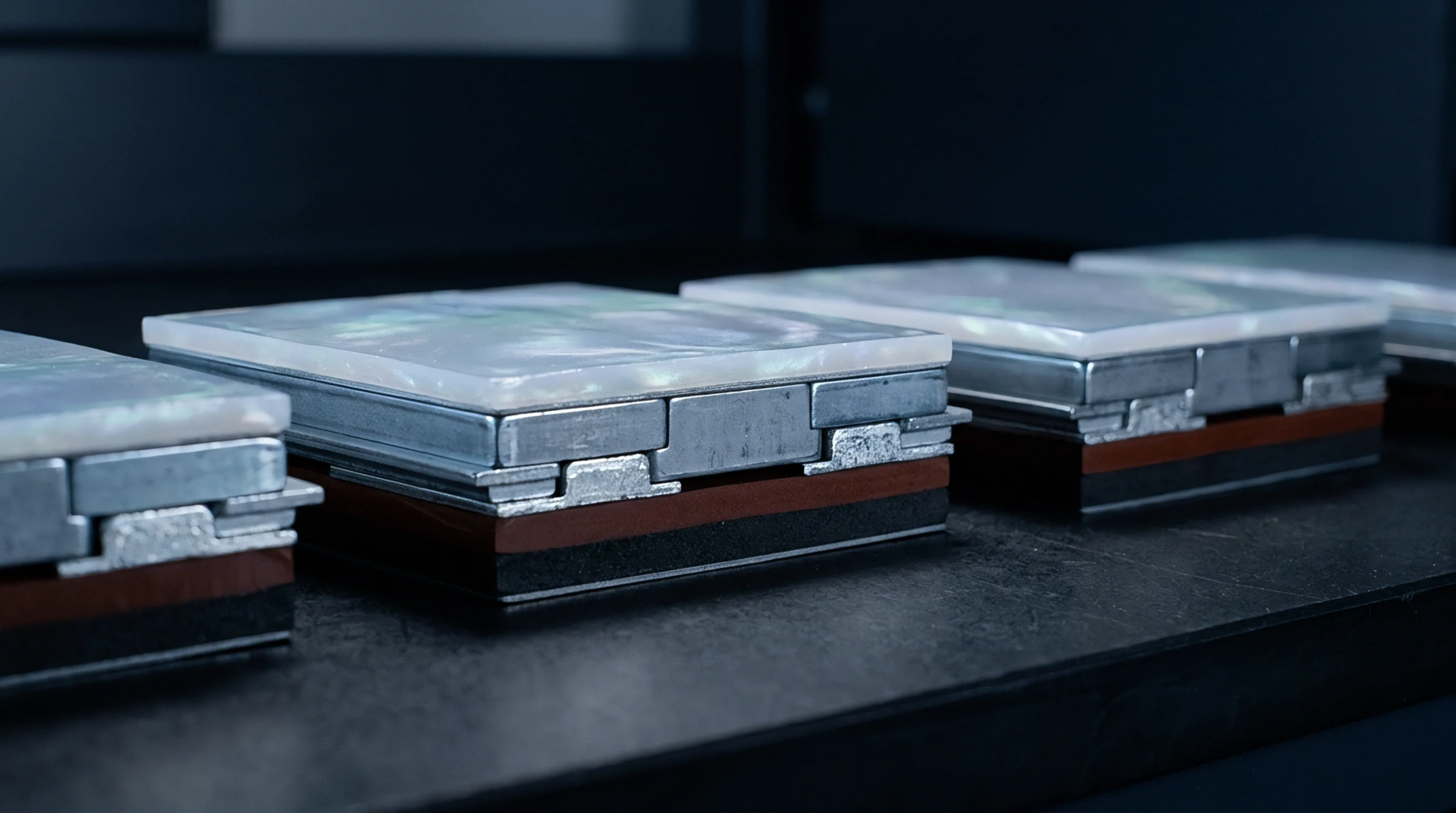
External compression fixtures are employed to apply constant pressure to the cell, which helps maintain a flat interface and suppresses non-uniform growth. High local forces generated during expansion compress the active material and the separator. This physical interaction must be balanced to prevent cell degradation while maintaining ionic conductivity.
Cell Optimization
Sourcing engineers look for cell technologies that utilize advanced solid-state separators capable of withstanding these pressures. Minimizing the effects of lithium metal anode expansion involves using flexible polymer matrices or specialized elastic foam spacers in the pack. This hardware selection determines the maximum pack-level energy density and the overall safety profile of the battery system.