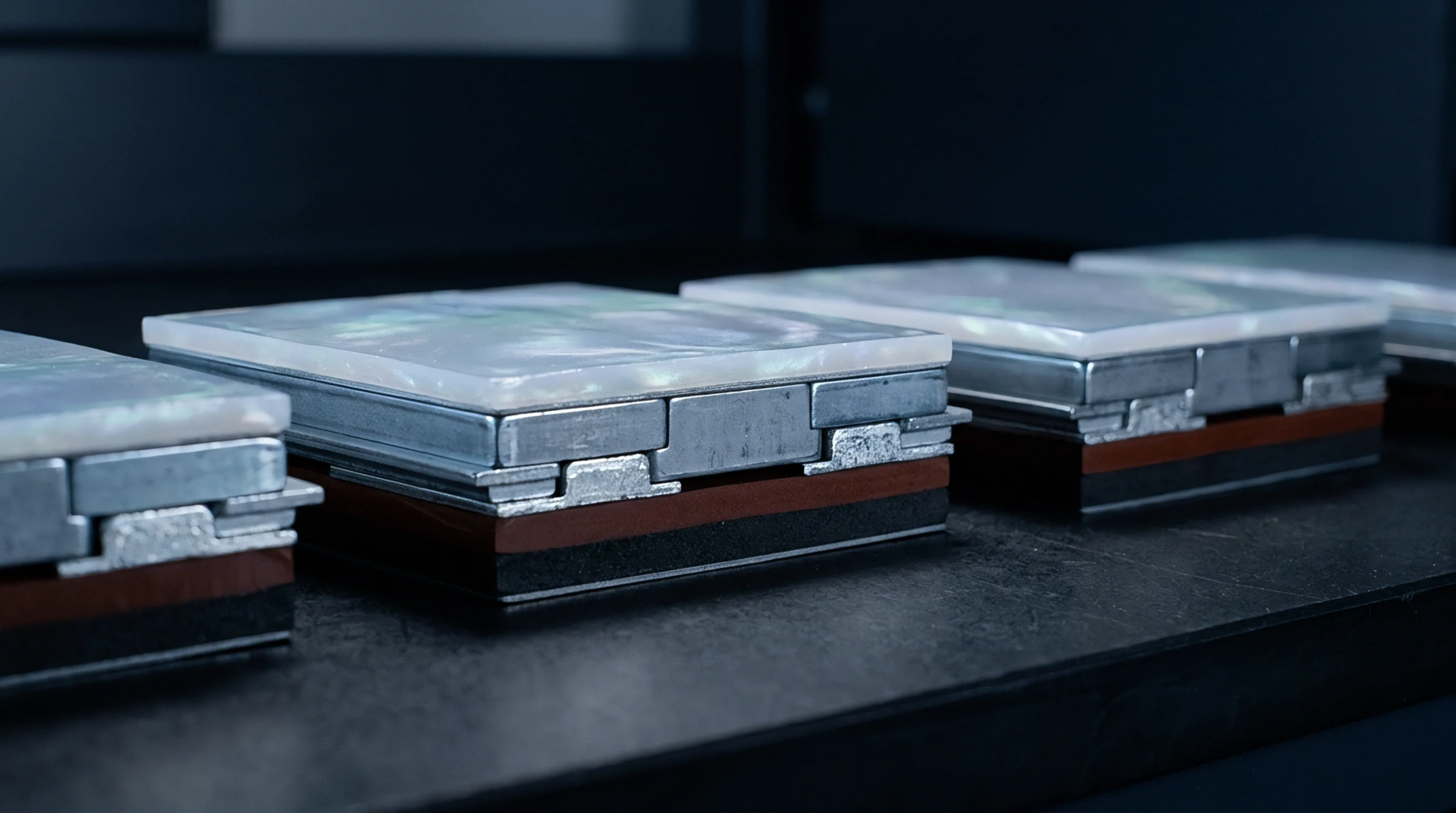
Meaning
Elastomeric foam deflection functions as a mechanical buffer between pouch or prismatic cells to manage the volumetric expansion that occurs during charging. This microcellular polyurethane compression provides a predictable, non-linear force response that absorbs the swelling while maintaining a steady pressure on the cell faces. Utilizing this material is essential for extending cell life and preventing damage to the module frame.
Pad Performance
Mechanical compression pads must operate within a specific stress-strain window to be effective. As the battery cells expand, the foam cells collapse, which prevents the build-up of excessive pressure on the rigid outer casing. This microcellular polyurethane compression maintains the required force to prevent delamination of the active materials inside the cells.
Without this elastic feedback, cells can lose surface contact and suffer from rapid capacity decline.
Swelling Absorption
Density and cell structure of the polyurethane dictate how the material responds under prolonged loads. High-temperature conditions can accelerate the compression set of the foam, which reduces its ability to rebound during discharge. This material behavior is tracked during aging tests to ensure long-term mechanical reliability.
Material Selection
Sourcing teams select these compression pads based on their long-term spring-back capabilities and thermal conductivity. Specifying microcellular polyurethane compression pads involves balancing the initial thickness against the maximum swelling force expected at the end of cell life. This choice directly influences the volume allocated to passive safety components within the battery module.