Unresolved Supply Chain Bottlenecks in Hard Carbon Precursor Scaling and Synthetic Anode Pricing
Hard carbon precursor economics remain constrained by low pyrolysis yields and high calcination power costs, delaying sodium-ion cost parity with synthetic graphite LFP cells.

Pyrolysis
Precursor chemistry sets the final disordered microstructure of hard carbon anodes. While graphitic carbons undergo planar ordering above 2500 degrees Celsius, non-graphitizable carbons keep a random arrangement of cross-linked aromatic domains even when heated to 3000 degrees Celsius. That structural disorder creates the interstitial spaces and nanopores needed for sodium-ion insertion and storage.
Sourcing evaluations grade precursors on chemical purity, carbon yield, volatile matter content, and cross-linking capability. Bio-based feedstocks like coconut shells, agricultural residues, lignin, and refined sucrose compete head-to-head with fossil inputs including coal tar pitch, petroleum pitch, and synthetic polymers.
Thermal decomposition begins with devolatilization between 300 degrees Celsius and 600 degrees Celsius under an inert nitrogen or argon purge. During initial heating, heteroatoms such as oxygen, hydrogen, nitrogen, and sulfur drive off as gases ~ primarily carbon monoxide, carbon dioxide, methane, and water vapor. Heating rates during devolatilization control open porosity: rapid ramping triggers violent gas release that expands particle surfaces and creates high specific surface areas.
That extra surface area increases irreversible capacity loss on the first charge cycle through extensive solid electrolyte interphase formation.
Even under extreme thermal treatment, hard carbon retains its disordered atomic framework.
Second-stage calcination runs between 1000 degrees Celsius and 1400 degrees Celsius. This temperature window grows and aligns small sp2-hybridized carbon crystallites into short-range turbostratic domains without collapsing closed nanopores. Interlayer d002 spacing in hard carbon ranges from 0.36 nanometers to 0.40 nanometers ~ noticeably wider than the 0.335 nanometers typical of ideal graphite.
The wider spacing allows reversible sodium insertion without inducing severe lattice strain. Calcination above 1500 degrees Celsius forces microstructural ordering, shrinking d002 spacing and closing internal pores, which sharply cuts reversible sodium capacity.
| Precursor Type | Devolatilization Temp (°C) | Final Calcination Temp (°C) | Interlayer Spacing d002 (nm) | BET Surface Area (m²/g) | Carbon Yield (%) |
|---|---|---|---|---|---|
| Coconut Shell Bio-char | 450 – 550 | 1250 – 1350 | 0.375 – 0.385 | 2.5 – 5.0 | 28 – 34 |
| Kraft Lignin Extract | 350 – 500 | 1100 – 1300 | 0.368 – 0.378 | 6.0 – 12.0 | 35 – 42 |
| Refined Sucrose Monomer | 300 – 450 | 1150 – 1250 | 0.380 – 0.390 | 1.5 – 3.5 | 20 – 26 |
| Coal Tar Heavy Pitch | 400 – 600 | 1300 – 1400 | 0.360 – 0.370 | 1.0 – 3.0 | 55 – 68 |
| Polyacrylonitrile (PAN) Resin | 250 – 400 | 1200 – 1300 | 0.370 – 0.380 | 3.0 – 7.0 | 40 – 50 |
Feedstock selection establishes an initial impurity profile that carries into the finished carbon. Plant-derived precursors contain natural inorganic species like potassium, sodium, calcium, silica, and iron. In an active cell, these metallic impurities act as local current concentrators, accelerating side reactions, electrolyte degradation, and gas evolution during cycling.
Washing raw feedstocks with dilute hydrochloric or hydrofluoric acid extracts these minerals before final heat treatment. Synthetic polymers and pitches carry less mineral ash, though high-temperature devolatilization releases polycyclic aromatic hydrocarbon emissions that require treatment.
Optimizing precursors requires balancing open porosity against tap density. Bio-derived feedstocks generally yield hard carbons with irregular shapes and low tap densities between 0.6 grams per cubic centimeter and 0.9 grams per cubic centimeter. Low tap density drops the volumetric energy density of finished electrodes, forcing manufacturers toward thicker coatings or higher compaction pressures during cell assembly.
Pitch precursors achieve higher tap densities up to 1.2 grams per cubic centimeter due to liquid mesophase transitions during early heating, though that liquid phase cuts into the volume of closed nanopores reserved for sodium storage.
Hard carbon synthesized from purified coconut shell precursor at 1300 degrees Celsius achieves an initial coulombic efficiency of 88.4 percent under a 0.1C current rate in half-cell sodium testing.
Chemical pre-treatment alters structural cross-linking before carbonization. Soaking raw biomass in phosphoric acid, zinc chloride, or sodium hydroxide introduces oxygenated functional groups and cross-linking bridges. These linkages prevent liquid-phase coalescence during thermal processing, locking in a disordered carbon network.
Reagent concentrations, soak times, and washing protocols govern the ratio between open surface pores and closed internal voids. Over-activating the material produces excess open micropores, raising Brunauer-Emmett-Teller surface area past 20 square meters per gram and dropping initial coulombic efficiency below commercial targets.
Variances between precursor batches often trace back to seasonal timber moisture fluctuations rather than uncalibrated kiln thermal profiles.

Furnace
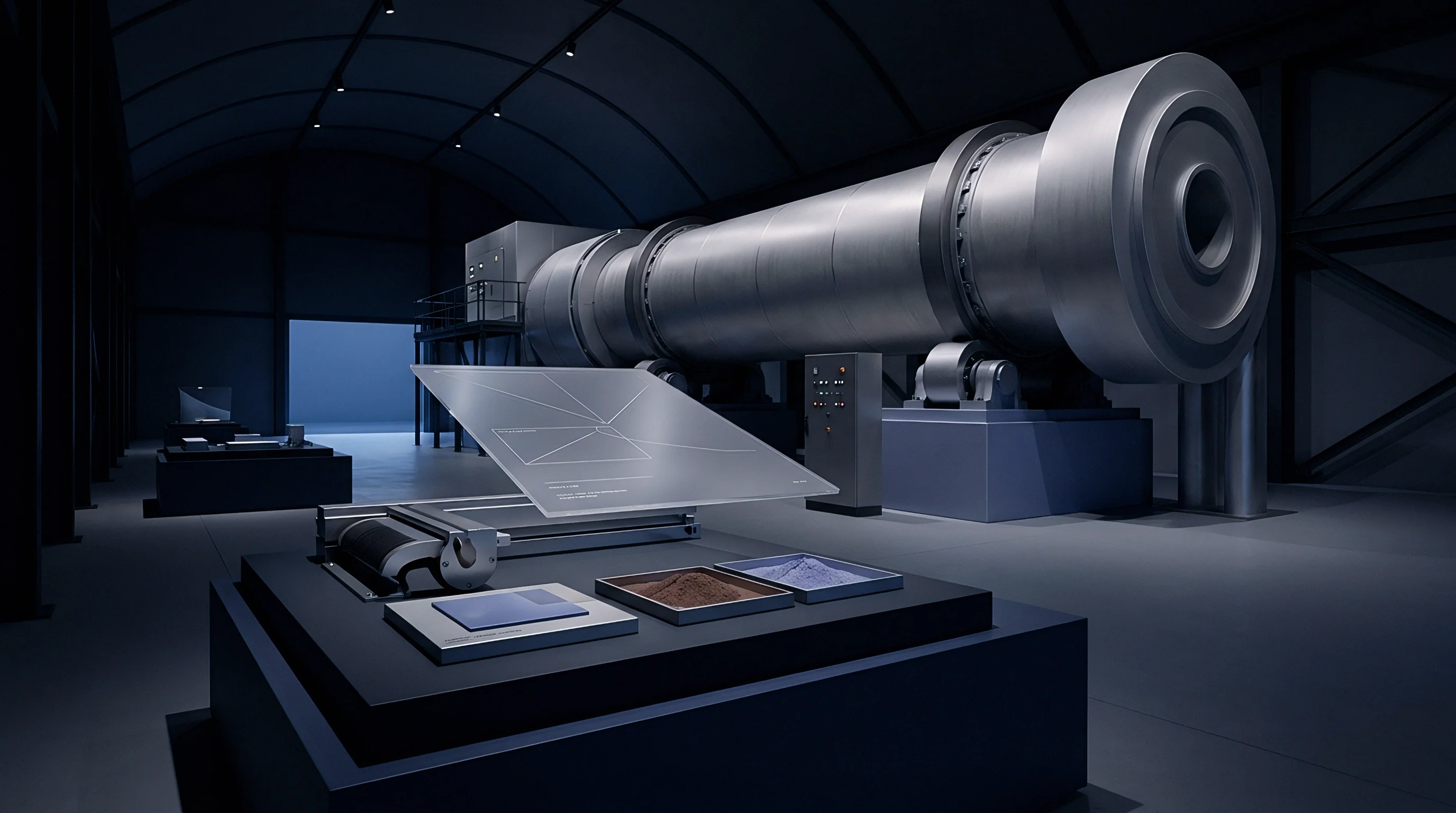
Thermal equipment design bounds global precursor conversion capacity and dictates unit economics for both hard carbon and synthetic graphite anodes. Synthetic graphite production requires ultra-high-temperature graphitization at 2800 degrees Celsius to 3000 degrees Celsius inside specialized electrical resistance furnaces. Hard carbon synthesis runs at lower thermal bands ~ between 1100 degrees Celsius and 1400 degrees Celsius ~ but demands long dwell times under strict oxygen-free gas purges to preserve target surface chemistry.
The choice between legacy Acheson batch furnaces and modern continuous Lengthwise Graphitization lines decides energy efficiency, thermal uniformity, and throughput scalability.
Acheson batch furnaces rely on a central graphite electrode surrounded by petroleum coke and a conductive packing medium. Electrical current passes straight through the charge, using resistive heating to reach graphitization temperatures over several days. Heating cycles span seven to ten days, followed by two full weeks of passive cooling before unloading.
Energy consumption averages 4000 to 5000 kilowatt-hours per metric ton of output. Significant heat leaks out through uninsulated furnace walls, and uneven thermal distribution leaves quality gradients between core material and material near outer walls.
High-temperature graphitization demands substantial electrical power, shaping overall processing economics.
Lengthwise Graphitization furnaces string carbon rods or specialized crucibles into a continuous electrical circuit, driving current end-to-end through the charge. Thermal insulation wraps the moving column, cutting radiative heat loss. Energy consumption drops to 2800 to 3500 kilowatt-hours per metric ton of graphitized powder.
Automated process controls maintain precise current density and travel speed, ensuring uniform thermal history across the production lot. Continuous operation eliminates batch-to-batch structural variance, though capital expenditures run three to four times higher than equivalent Acheson installations.
On continuous rotary calcination lines in Shandong, temperature gradient drift exceeded 40 degrees Celsius across the hot zone.
- Verify kiln atmospheric seal integrity by monitoring ambient oxygen concentrations downstream of the primary nitrogen injection manifold.
- Calibrate multi-point thermocouple arrays against calibrated optical pyrometers across the entire 1100 to 1400 degrees Celsius heating profile.
- Measure exhaust gas backpressure to prevent air ingress through discharge rotary valves during precursor feeding.
- Sample calcined material at two-hour intervals to check Raman ID to IG intensity ratios across the production run.
- Inspect internal refractory brick lining for chemical erosion caused by volatilized inorganic compounds releasing from biomass precursors.
Atmospheric control during hard carbon calcination prevents carbon gasification and surface etching. Thermal systems inject high-purity nitrogen or argon under positive pressure to displace oxygen. Oxygen contamination above twenty parts per million at temperatures past 800 degrees Celsius etches particle surfaces, generating parasitic carboxyl, hydroxyl, and carbonyl groups.
These functional groups react irreversibly with alkali ions and organic electrolyte solvents, accelerating gas generation inside sealed cells and consuming active ions.
Standard supply agreements specifying atmospheric purity below ten parts per million oxygen during high-temperature calcination shift financial liability for surface oxidation losses back to the furnace operator.
Off-gas management systems recover process heat and handle volatile emissions from carbonization. Biomass devolatilization releases organic tars, bio-oils, and non-condensable flammable gases. Modern facilities route these streams into secondary combustion chambers running at 1100 degrees Celsius, using the combustion heat to generate steam or pre-heat raw feedstocks.
Inadequate off-gas extraction allows tar to condense inside exhaust ducts, creating fire risks and causing pressure swings in the primary heating zone.
Power grid allocation limits determine factory expansion choices. Anode precursor calcination and synthetic graphite graphitization facilities require high-voltage infrastructure and consistent power delivery. Regional power curtailments, seasonal hydroelectric fluctuations, and carbon emissions tariffs directly alter operational costs.
Plants operating on coal-heavy grids face rising carbon adjustment fees under international trade rules, prompting suppliers to relocate energy-intensive furnaces near renewable power assets.
Running a pilot calcination trial with uncalibrated oxygen sensors resulted in twenty-four metric tons of oxidized precursor scrap.
Coke
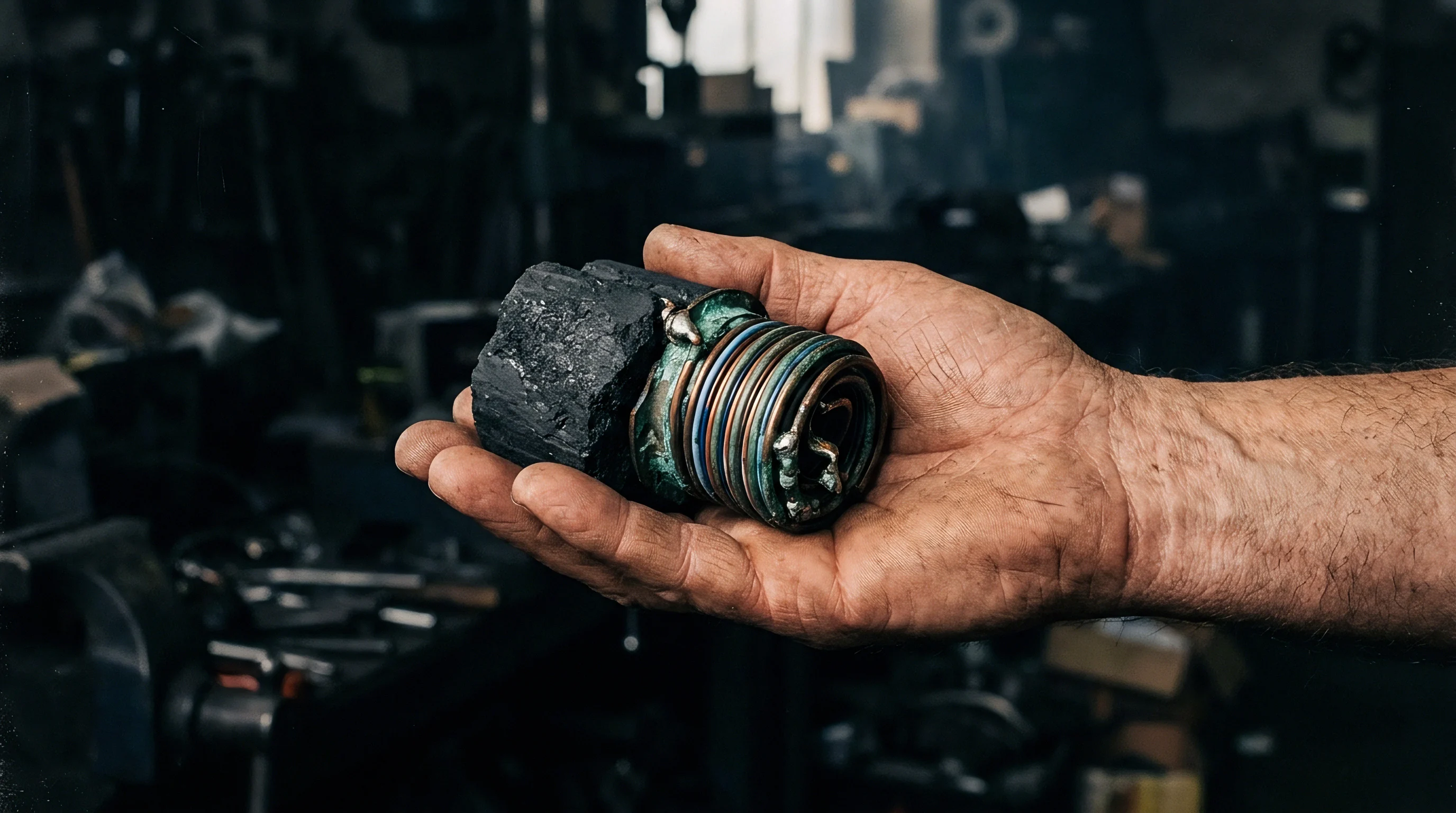
Petroleum needle coke is the primary raw feedstock for synthetic graphite anode production. It forms through delayed coking of aromatic heavy oil fractions from refining, such as fluid catalytic cracking decant oil or coal tar pitch distillate. Needle coke quality depends on microcrystalline orientation, sulfur content, ash level, and coefficient of thermal expansion.
High-grade needle coke features an anisotropic, needle-like domain structure that aligns during thermal graphitization, yielding synthetic graphite with high electrical conductivity and fast lithium-ion intercalation kinetics.
Initial precursor purity directly establishes the practical energy density of the finished material.
Sulfur and nitrogen levels in raw coke dictate thermal puffing behavior during graphitization. As coke heats past 1500 degrees Celsius, bound sulfur and nitrogen vaporize rapidly, generating internal gas pressures that crack carbon microstructures. This uncontrolled expansion increases porosity and lowers particle density.
Producers mitigate puffing by adding chemical inhibitors like iron oxide or by selecting low-sulfur decant oil feeds under 0.5 percent sulfur by weight. Low-sulfur needle coke commands a clear price premium over standard calcined petroleum coke due to limited global sweet crude refining capacity.
What Dictates Needle Coke Allocation between Electrodes and Steel?
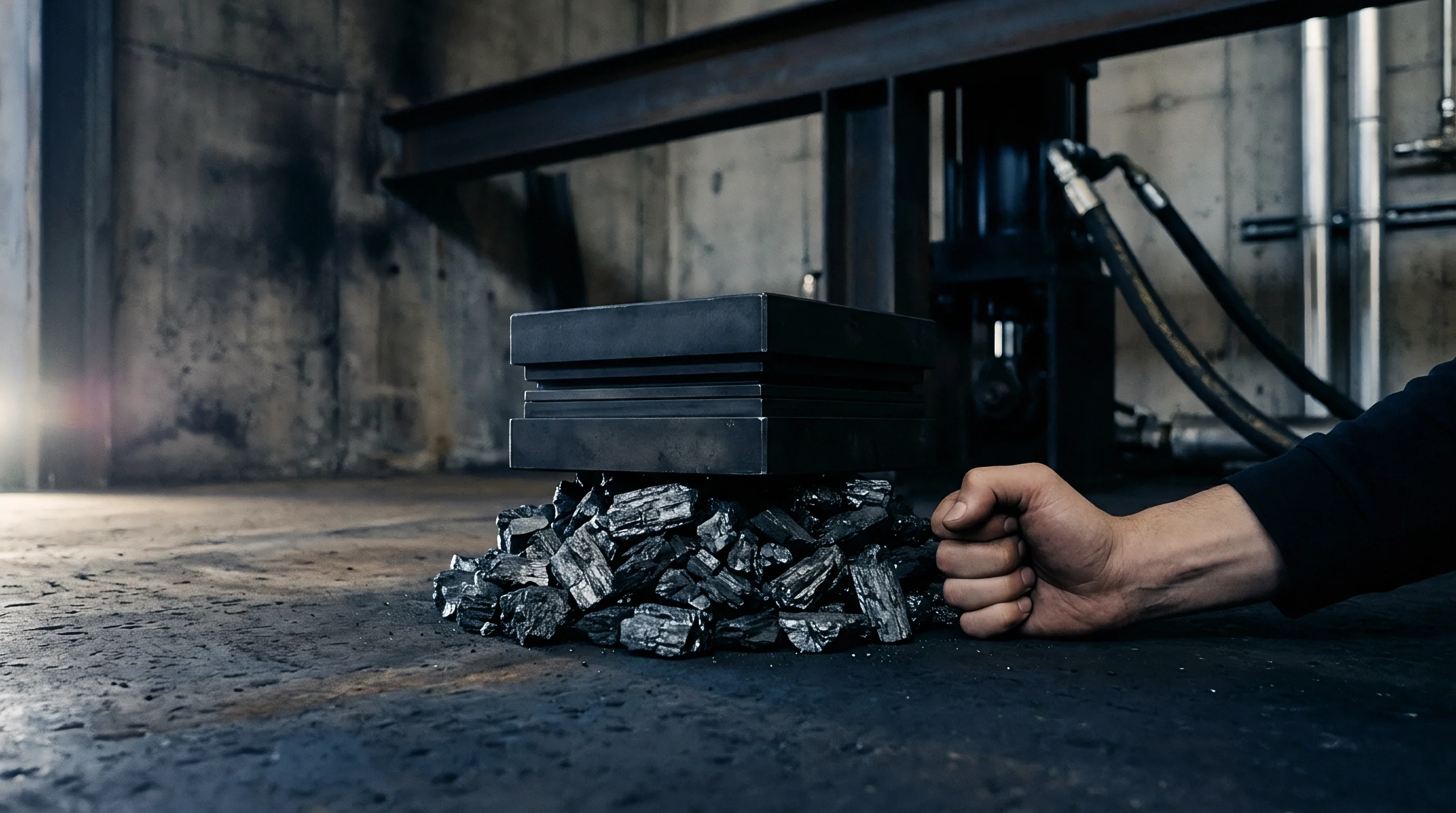
Synthetic graphite anode producers compete directly with electric arc furnace steelmakers for premium needle coke. Graphitized electrodes used in steelmaking require needle coke with ultra-low thermal expansion coefficients to survive extreme thermal shocks in the furnace. When global steel output surges, needle coke prices jump, compressing margins for battery anode manufacturers.
Anode producers frequently blend high-grade needle coke with lower-cost calcined petroleum coke to control raw material costs, though the practice degrades electrode rate capability and cycle life retention.
Coke quality fluctuates across individual refinery batches depending on baseline crude slates.
Incoming needle coke consignments undergo routine testing to track trace vanadium levels.
| Furnace Architecture | Power Consumption (kWh/t) | Residence Dwell Time (Hours) | Graphitization Degree (%) | Material Tap Density (g/cm³) |
|---|---|---|---|---|
| Standard Acheson Batch | 4200 – 4800 | 48 – 72 | 92.0 – 94.5 | 1.15 – 1.25 |
| High-Efficiency Acheson | 3600 – 4100 | 36 – 48 | 93.5 – 95.5 | 1.20 – 1.28 |
| Continuous LWG System | 2900 – 3400 | 4 – 8 | 95.0 – 97.5 | 1.25 – 1.35 |
| Ultra-Fast Continuous Rotary | 3100 – 3600 | 1 – 3 | 91.0 – 93.5 | 1.10 – 1.20 |
Particle sizing and mechanical shaping happen before graphitization. Raw calcined needle coke goes through impact milling, jet milling, and air classification to yield spherical particles of controlled size. Spherical shapes improve particle packing, lower slurry viscosity, and reduce specific surface area.
Spheroidization generates substantial volumes of fine carbon dust below three micrometers in diameter. These fines cannot go straight into battery-grade anodes without re-agglomeration using pitch binders, which adds processing steps and extra heat treatments.
- Feedstock Chemical Profiling verifies sulfur content below 0.4 weight percent and ash content below 0.05 weight percent before accepting shipment lots.
- Thermal Expansion Verification measures coefficient of thermal expansion values below 1.1 x 10^-6 per degree Celsius on calcined core samples.
- Quinoline Insoluble Auditing quantifies heavy aromatic resin fractions in raw pitch feedstocks to ensure proper mesophase domain growth.
- Particle Yield Ratio Checks track mass ratios of battery-grade spherical product against generation rates of low-value carbon fines.
- Trace Element Analysis measures iron, vanadium, and nickel concentrations using inductively coupled plasma optical emission spectroscopy.
Surface modification of synthetic graphite particles balances electrochemical performance against processing cost. Coated synthetic graphite uses an amorphous carbon shell applied through pitch coating followed by low-temperature carbonization between 1000 degrees Celsius and 1200 degrees Celsius. This shell seals surface defects, isolates high-energy edge planes from direct electrolyte exposure, and cuts initial irreversible capacity loss.
Pitch selection for coatings demands strict control over quinoline insoluble content to ensure uniform layer thickness across all particles.
Contracts carrying explicit sulfur ceilings below three thousand parts per million eliminate post-calcination desulfurization penalties at the graphitization plant.
Slurry
Electrode slurry formulation and dispersion rheology connect raw material physical properties to factory coating yields. Hard carbon particles present particle shapes, surface energy profiles, and water absorption characteristics that differ significantly from graphite. The low tap density and porous structure of hard carbon require specialized binder packages, tailored mixing steps, and modified solvent ratios to yield stable slurries that coat smoothly at high web speeds.
Selecting the binder chemistry governs how stably the active mass adheres to current collectors.
Aqueous binders combining sodium carboxymethyl cellulose and styrene-butadiene rubber latex form the baseline formulation for carbon anodes. Carboxymethyl cellulose acts as a thickener and rheology modifier, while styrene-butadiene rubber provides elastic bonding between active carbon particles and the copper foil collector. Hard carbon materials ~ especially bio-derived grades with high surface areas ~ absorb water from aqueous solvents.
This absorption alters the liquid volume fraction of the slurry, causing sudden viscosity spikes and shear-thinning instability during pumping and slot-die coating.
Polyacrylic acid binders offer alternative cross-linking mechanisms for hard carbon anodes. Polyacrylic acid forms strong hydrogen bonds with residual oxygen groups on hard carbon surfaces, producing stronger mechanical adhesion than standard carboxymethyl cellulose networks. This extra bonding helps prevent electrode cracking and delamination during calendering and cycling.
Polyacrylic acid systems need tight pH control during mixing: acidic conditions accelerate gellation, while basic conditions neutralize the binder and reduce electrode cohesion.
Excess binder addition stabilizes particle dispersion during coating but reduces active material mass fraction and restricts ionic diffusion channels.
Calendering limits dictate maximum volumetric energy density for hard carbon electrodes. Graphitic anode coatings compress to dry densities of 1.5 grams per cubic centimeter to 1.75 grams per cubic centimeter without crushing graphite flakes. Hard carbon particles resist plastic deformation under rolls due to their rigid, disordered framework.
Compacting hard carbon coatings beyond 1.1 grams per cubic centimeter to 1.3 grams per cubic centimeter fractures internal carbon particles, exposing pristine uncoated surface to electrolyte and causing heavy irreversible capacity loss during formation.
Specific surface area governs the degree of parasitic electrolyte oxidation on the carbon face.
Irreversible sodium loss during initial charge formation remains a primary technical hurdle for commercial hard carbon adoption. Hard carbon shows an initial coulombic efficiency between 80 percent and 88 percent in sodium-ion cells, compared to 92 percent to 95 percent for synthetic graphite in lithium-ion cells. This loss comes from sodium ions trapped in deep structural defects and extensive solid electrolyte interphase formation across open pores.
Mitigation strategies center on pre-sodiation ~ using sodium metal powders or organometallic sodium complexes ~ and sacrificial cathode additives during assembly.
Pre-sodiation adds substantial processing complexity and cost to cell lines. Applying stabilized sodium metal powder to wet or dry anode coatings requires specialized dry rooms held below a minus 40 degrees Celsius dewpoint to prevent violent reactions with air moisture. Chemical pre-sodiation of hard carbon powders before mixing alters surface energy, often triggering premature binder coagulation and agglomeration in the slurry tank.
Whether chemical pre-sodiation reagents can be applied during slurry mixing without triggering premature gellation of aqueous polyacrylic acid binders remains open to industrial validation.
Yield
Mass loss and yield degradation compound through every phase of hard carbon processing. Raw biomass feedstocks carry heavy moisture, volatile organics, and inorganic mineral matter, resulting in low mass conversion rates to battery-grade carbon. Sourcing evaluations grade precursor economics on net mass yield from raw material to purified, classified, calcined carbon powder, taking into account chemical leaching and energy inputs required per kilogram of usable product.
Cumulative yield losses across synthesis steps directly elevate overall landed material costs.
Acid leaching protocols extract inorganic mineral contaminants but introduce heavy mass loss and wastewater overheads. Raw bio-precursors contain up to 15 percent inorganic ash by weight ~ mostly silica, potassium oxide, calcium oxide, and iron compounds. Washing with hot hydrochloric acid dissolves these oxides, dropping ash content below 0.05 percent by weight.
The process produces acidic liquid waste containing dissolved metal ions, requiring neutralization, filtration, and zero-liquid-discharge water treatment assets that add capital and operating costs.
Thermal carbonization mass yields range from 20 percent to 35 percent for bio-derived inputs. Raw hardwood, agricultural residues, and sucrose lose 65 percent to 80 percent of dry mass as water, carbon dioxide, methane, and bio-tars during low-temperature devolatilization. Coal tar pitch and synthetic resins yield higher carbon ratios between 50 percent and 70 percent, though synthetic polymers cost significantly more per metric ton.
Sourcing calculations must reflect the true mass ratio of raw feedstock required to yield one metric ton of finished hard carbon.
Cell-level initial capacity shifts by 4.2 percent when switching from hardwood bio-pitch to sucrose-derived hard carbon.
Milling and particle classification generate significant non-conforming fractions. Target particle distributions with d50 values between 8 micrometers and 12 micrometers require multi-stage impact milling and air classification. Over-milling generates fines under 2 micrometers, which sharply increase BET surface area and degrade initial coulombic efficiency.
Undersized particles must be separated and recycled or sold into low-value secondary applications, keeping net material utilization between 70 percent and 85 percent of calcined intermediate stock.
- Excessive thermal ramp rates during devolatilization cause violent gas evolution, exploding carbon structures and generating excessive carbon micro-fines.
- Incomplete acid leaching leaves mineral ash deposits that act as local short-circuit sites and catalyze electrolyte degradation reactions.
- Uncontrolled air ingress into cooling calcination kilns oxidizes hot carbon surfaces, converting structural material into carbon dioxide gas.
- Inadequate air classifier fan speed control permits large, oversized particles into final product streams, causing slurry coating defects.
- Non-uniform liquid-phase mixing of pitch additives creates localized agglomerates that fail to yield closed nanoporous structures during high-temperature treatment.
Residual inorganic ash accelerates parasitic degradation, shortening long-term cycle life.
Batch-to-batch consistency audits depend on strict sampling across incoming precursor shipments. Variations in feedstock origin, timber species mixes, or harvest seasons shift the initial oxygen-to-carbon ratio of biomass. These chemical shifts alter devolatilization behavior and structural cross-linking, changing d002 spacing and pore volume distribution in the finished carbon.
Cell manufacturers enforce tight process control limits on tap density, BET surface area, particle size, and initial coulombic efficiency across delivered shipments.
Inorganic ash residues in unwashed bio-precursors cause local current concentration and accelerate gas evolution inside sealed pouch cells.
Rigorous chemical leaching prior to carbonization yields higher initial coulombic efficiency than post-pyrolysis surface etching.
Tariff
Landed cost modeling for battery-grade carbon incorporates precursor supply economics, thermal energy pricing, ocean shipping logistics, and international trade duties. Synthetic graphite spot prices fell significantly after continuous graphitization capacity expanded in Inner Mongolia and Sichuan. Hard carbon materials, produced in lower volumes with complex multi-step processing, face tough cost competition from mature, low-cost synthetic graphite anode suppliers in energy storage markets.
Regional energy tariffs heavily influence where processing facilities are constructed.
Low synthetic graphite prices set an effective ceiling on alternative anode market valuations.
Trade policy measures directly alter supply chain geography and component economics. Section 301 tariffs implemented by the United States levy import duties on Chinese-origin artificial and natural graphite powders. The European Union Carbon Border Adjustment Mechanism measures embedded greenhouse gas emissions in imported raw materials and chemical components, applying financial penalties to carbon materials produced on fossil-heavy power grids.
These rules compel battery cell manufacturers to source local precursors and build regional thermal processing infrastructure.
| Anode Active Material | Material Price ($/t) | Initial Coulombic Efficiency (%) | Anode Cost ($/kWh Cell) | Landed Cell Cost ($/kWh) |
|---|---|---|---|---|
| Tier-1 Synthetic Graphite | 3800 – 4500 | 93.5 – 95.0 | 4.20 – 5.10 | 68.50 – 74.20 |
| Tier-2 Synthetic Graphite | 2800 – 3400 | 91.5 – 93.0 | 3.10 – 3.80 | 64.10 – 69.80 |
| Standard Coconut Hard Carbon | 7500 – 9500 | 84.0 – 87.5 | 8.50 – 11.20 | 76.40 – 84.10 |
| High-Density Pitch Hard Carbon | 6000 – 7800 | 86.0 – 89.0 | 6.80 – 9.10 | 72.10 – 79.50 |
| Pre-sodiated Hard Carbon | 11000 – 14000 | 91.0 – 94.0 | 13.20 – 17.50 | 83.50 – 92.80 |
Dangerous goods shipping regulations govern cross-border transit of uncalcined carbon intermediates and specific precursor chemicals. Fine bio-char powders and pitch intermediates carry self-heating risk classifications under maritime codes, requiring moisture-proof containers, inert gas blankets, and hazardous materials certifications. Transoceanic freight rates, port congestion surcharges, and customs delays add cost buffers that erode the price advantage of low-cost regional production hubs.
Precursor supply agreements are structured around energy-indexed pricing tiers rather than spot market benchmarks.
Cell-level cost parity between sodium-ion and lithium-iron-phosphate chemistries depends on hard carbon price trajectories. Sodium-ion cells save on cathode costs by substituting sodium salts, iron, manganese, and aluminum current collectors for lithium, nickel, and cobalt. High hard carbon procurement costs currently offset those cathode savings, leaving sodium-ion cells at a net cost-per-kilowatt-hour disadvantage against mass-produced LFP cells using cheap synthetic graphite.
Scaling continuous hard carbon calcination lines and securing local bio-waste streams represent the key steps to reaching landed cost parity across commercial sectors.
Tight purity controls at the precursor stage determine final cell assembly yields.
Long-term commercial supply contracts use price indexing tied to regional industrial power tariffs and heavy decant oil benchmarks. Indexing active material prices to underlying thermal energy and petrochemical feedstocks insulates cell manufacturing budgets from speculative commodity spikes. Supplier qualification requires twelve to eighteen months of electrochemical validation before an alternative precursor source enters commercial cell production.