Meaning
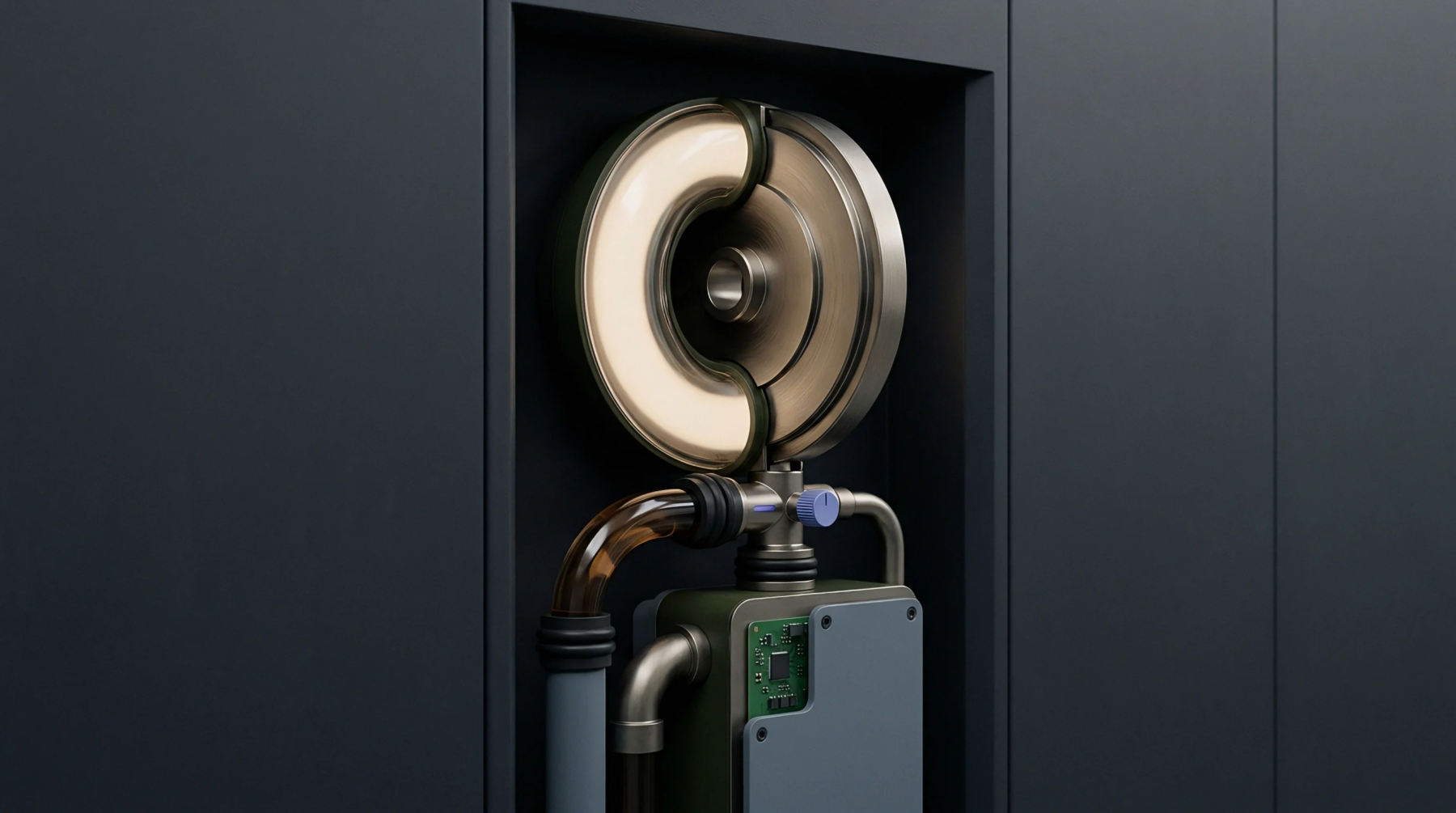
Instruments used to measure total heat flux, particularly under high-temperature conditions and intensive radiative environments, require durable sensor designs. The Schmidt Boelter Radiometer is a specialized sensor that utilizes a thermopile structure to measure both convective and radiative heat transfer on a surface. It features a water-cooled body and a sensor element coated with a highly absorptive paint to ensure that it registers all incoming thermal radiation.
This device is the industry standard for fire research, furnace calibration, and aerospace thermal testing where heat fluxes exceed fifty kilowatts per square meter.
Working Principle
Thermo-electric voltage is generated when heat flows through the thin ceramic coating of the sensor. The Schmidt Boelter Radiometer measures the temperature difference between the front face and the rear water-cooled base of a copper or metal alloy block. This temperature gradient is directly proportional to the applied heat flux, allowing for linear voltage outputs.
Because the base is actively cooled, the instrument can operate continuously in high-temperature streams without overheating or drifting.
Radiometer Calibration
Accurate performance of this device requires routine calibration against a known radiant heat source. This procedure determines the unique calibration factor of the sensor, which translates millivolt outputs into heat flux values. High-temperature testing labs must regularly verify this calibration factor to account for any degradation of the absorptive black paint on the sensor surface.
This ensures the precision of data collected during safety evaluations.
Industrial Installation
Mounting the radiometer securely in the test chamber wall is necessary to keep the sensor face flush with the surface. If the sensor is misaligned, it can alter the boundary layer flow, leading to inaccurate convective heat transfer measurements. This setup requires careful routing of water cooling lines and signal cables to avoid mechanical stress.