Meaning
Sharp, raised metallic edges projecting outward from current collector foil margins following mechanical shearing, rotary knife slitting, or laser cutting operations define slitting burrs. This quality parameter measures the vertical and horizontal deviation of deformed copper or aluminum foil edges beyond the baseline foil thickness. Dimensional metrology quantifies these edge defects under ISO standards and internal manufacturing quality plans using optical cross-sectional microscopy or non-contact optical profilometry.
The concept governs foil edge topography post-cutting, terminating where general foil tears, web edge curling, or broad-face surface particulate contamination is evaluated.
Burr Formation Mechanics
Mechanical shearing of metal foils involves a rapid sequence of elastic deformation, plastic flow, localized crack initiation, and final mechanical fracture. Worn slitting knives, improper blade overlap clearances, or dull rotary cutting tools increase plastic drawing along the cutting line, creating pronounced slitting burrs that curl away from the sheared edge. High burr heights concentrate mechanical stress along the perimeter of the electrode during subsequent calendering operations, creating localized micro-tears in the current collector.
During cell assembly, these sharp metallic protrusions press directly against thin polyolefin separator films. Under continuous dynamic pack vibration or cyclic expansion, the burr tip acts as a microscopic wedge, piercing the polymer separator and creating an immediate or latent low-resistance electrical bridge to the opposing electrode.
Electrode Manufacturing Boundaries
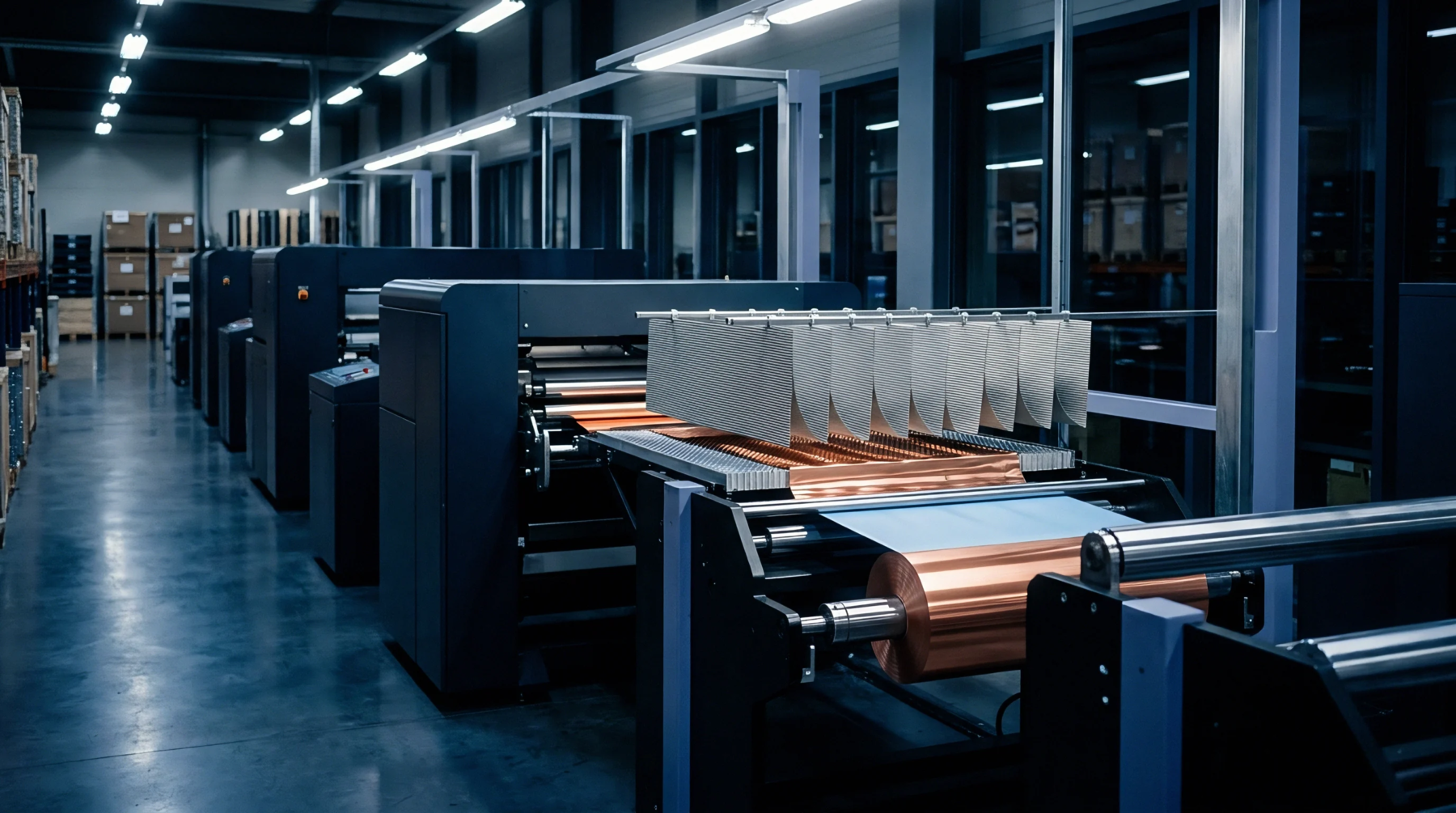
Gigafactory quality specifications enforce strict micron-level ceilings on permissible burr dimensions, typically capping vertical burr height below ten to fifteen micrometers depending on separator thickness. Laser slitting systems circumvent mechanical knife wear by vaporizing the foil along the cut line, yet improper laser parameter tuning can produce melted dross droplets that pose equivalent puncture hazards. Slitting lines integrate automated edge-brushing rollers and non-contact vacuum extraction hoods to mechanically flatten or remove loose metallic debris before the web reaches the rewinding reel.
Quality control engineers routinely audit shear blade clearance and run-out tolerances, replacing carbide cutting rings before edge deterioration accelerates. Electrodes exhibiting edge burrs exceeding specification boundaries are rejected to eliminate catastrophic short-circuit liabilities in downstream cell winding.
Cross-Sectional Metrology Inspection
Verification of edge quality requires systematic extraction of electrode specimens from the beginning, middle, and end of each slit master coil. Technicians mount cut foil samples in metallographic epoxy resin, polishing the transverse cross-section to expose the true cutting profile under high-magnification optical or scanning electron microscopes. Metrology software measures burr height vertically from the planar foil surface to the highest metallic apex, alongside burr width and fracture angle.
Inline quality systems increasingly apply high-speed line-scan cameras equipped with directional grazing illumination to detect burrs continuously on moving webs via optical reflection contrast. Data from these offline audits and online monitors govern preventative blade maintenance intervals across the production plant.