Powder Metallurgy Steels for Precise Battery Foil Slitting Applications
Powder metallurgy tool steels eliminate coarse carbide pull-out to hold sub-three-micron foil burrs across millions of cuts in battery slitting lines.
Flaw
Current collectors carry electrical energy through layers measuring six micrometers in rolled-annealed copper and twelve micrometers in aluminum. Splitting wide parent rolls into narrow ribbons demands mechanical rotary shear operations running at line velocities exceeding two hundred meters per minute. A defective cut exposes raw foil edges to asymmetric stress, mechanical tearing, and microscopic metallic protrusions.
Burrs project directly into adjacent separator membranes across jelly rolls and prismatic winding cores. When battery cells experience cyclic volume expansion during lithiation, protruding metal horns induce localized mechanical stress concentrations on ceramic-coated separators. Separator puncture initiates localized dendrite accumulation, progressive micro-short circuits, and thermal runaway events during rapid charging cycles.
A burr height exceeding ten percent of base foil thickness guarantees localized separator compression failure under twenty megapascals of operating pack clamping pressure.
Cathode coatings present distinct failure mechanisms along the cut line. Cathode slurries containing lithium iron phosphate or nickel-manganese-cobalt compounds exhibit brittle fracture characteristics during blade penetration. Chipped tooling edges induce active material flaking, loose particle shedding, and delamination along cut margins.
Particulate debris migrates inside the casing, creating conductive bridges between current collectors.
Foil Deformation Zones along the Cut Margin
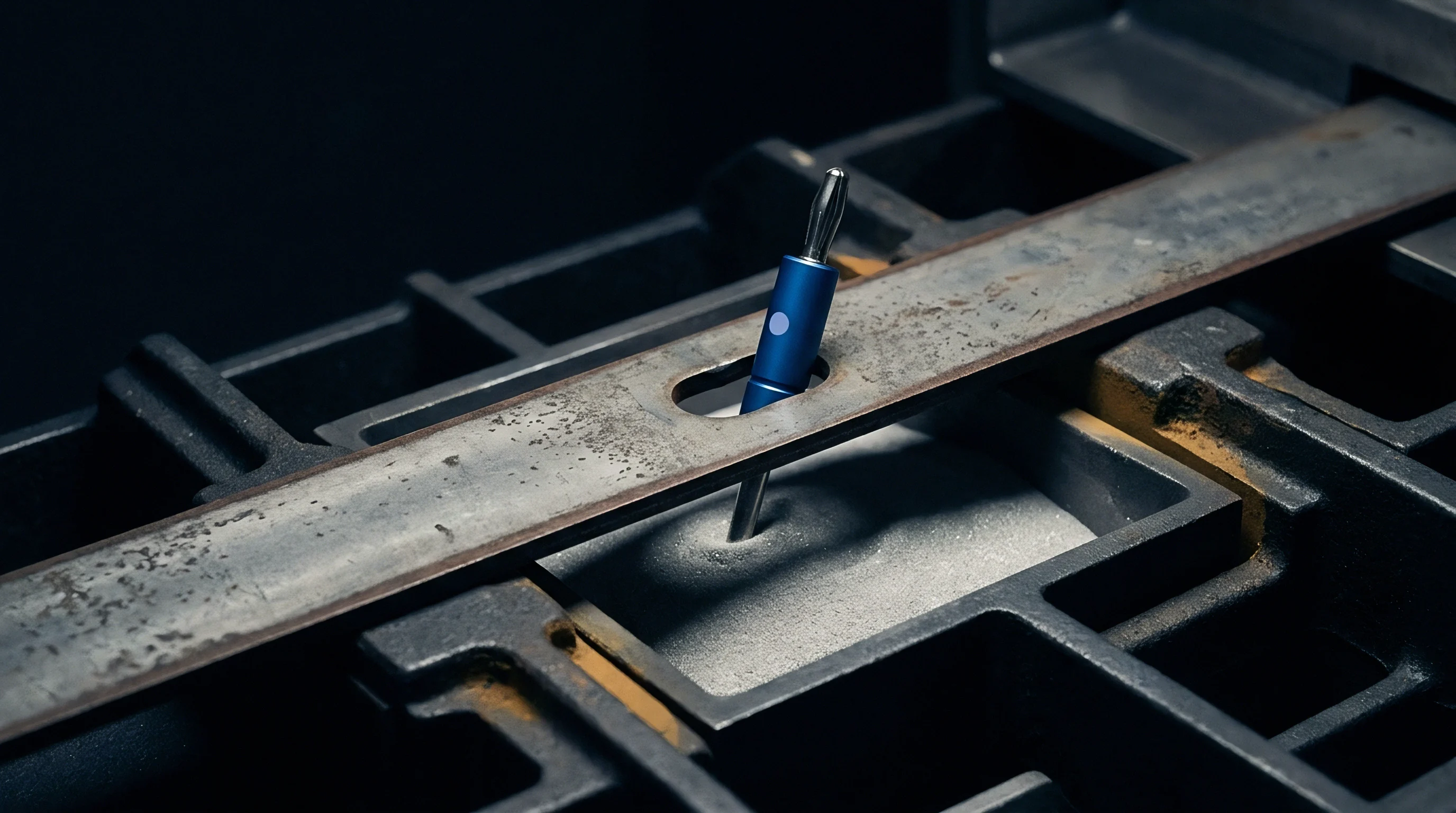
Shearing metal foils involves sequential mechanical stages between overlapping rotary blades. Initial penetration produces plastic deformation across the upper corner of the strip. Tool penetration continues until tensile strain exceeds ultimate material ductility, initiating controlled crack propagation toward the opposing blade tip.
Clean separations yield four distinct zones across the foil cross-section: rollover depth, burnish width, fracture plane, and bottom burr projection. Excessive blade clearance expands rollover radius and elongates burr height through ductile necking. Inadequate clearance creates secondary burnishing bands, rapid blade overheating, and abrasive transfer from active materials.
| Foil Type | Nominal Gauge (µm) | Max Burr Allowed (µm) | Max Rollover Width (µm) | Particle Shedding Limit |
|---|---|---|---|---|
| Anode Rolled Copper | 6.0 | 1.2 | 2.5 | Zero loose flakes per linear meter |
| Anode Electrodeposited Copper | 4.5 | 0.8 | 1.8 | Zero loose flakes per linear meter |
| Cathode Aluminum 1060 | 12.0 | 2.0 | 4.0 | Under three particles above 5µm per meter |
| Cathode Aluminum 1235 | 10.0 | 1.5 | 3.5 | Under two particles above 5µm per meter |
Burrs on electrodeposited copper exhibit heightened brittleness compared to rolled varieties. Crystalline structures in deposited metal encourage rapid micro-cracking when shearing tools lose sharpness. Maintaining burr dimensions beneath two micrometers protects against field-level cell isolation decay.
Tooling wear compounds geometric deviations during continuous line operations. Microscopic notches on dull blades pinch copper foil between opposing lateral surfaces, stretching the edge into jagged flags. Production scrap rates climb rapidly when uncontrolled edge flags trigger inline laser inspection rejections, forcing entire slitted coils into scrap bins.

Grain
Carbide distribution governs edge retention in rotary slitting knives. Ingot metallurgy alloys solidify slowly inside conventional casting molds, producing severe segregation of heavy alloying elements. Niobium, tungsten, molybdenum, and vanadium cluster into coarse, irregular carbide stringers measuring upwards of thirty micrometers across the microstructure.
These massive carbide blocks create mechanical liabilities on fine shearing tools. When sharpening operations hone a blade tip down to a cutting radius beneath one micrometer, coarse carbides span across the sharp boundary. Brittleness causes these monolithic particles to dislodge from the surrounding iron matrix under cyclic mechanical loading, leaving microscopic hollows that tear thin foil sheets.
Blade edge geometry cannot remain finer than the coarsest carbide particle embedded within the steel matrix.
Gas atomization processes resolve structural segregation through rapid droplet solidification. High-pressure nitrogen gas streams break molten alloy streams into tiny spherical droplets, cooling the metal at rates exceeding one thousand degrees Celsius per second. Rapid thermal transfer halts solute segregation, locking uniform chemical distributions into individual metallic powders before solid-state compaction.
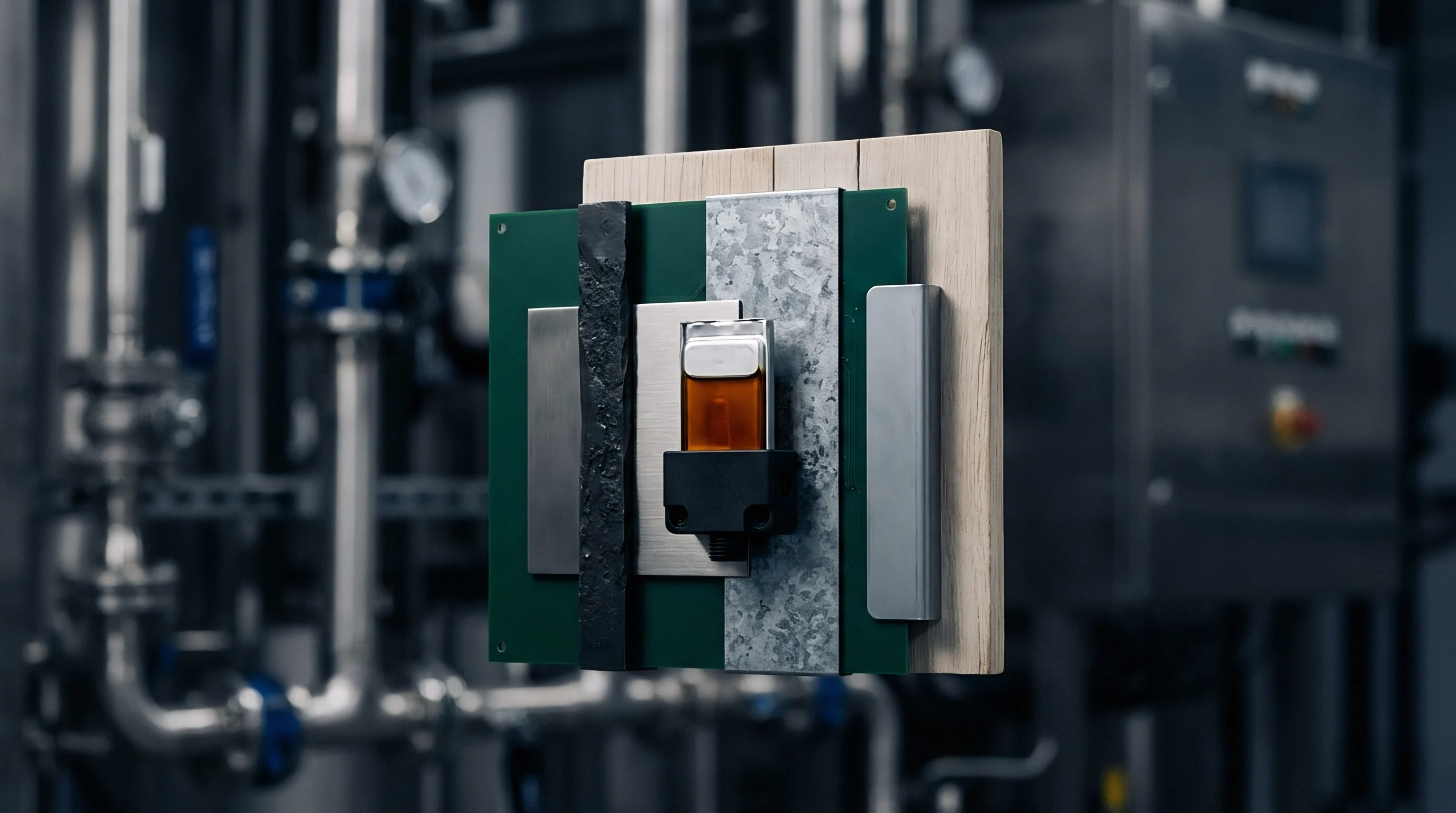
Why Select Powder Metallurgy over Conventional D2?
Comparative metallographic cross-sections demonstrate dramatic differences in primary particle size distributions. Conventional D2 tool steel contains large, angular chromium carbides reaching twenty-five micrometers in length. Powder metallurgy cold-work steels disperse spherical vanadium and chromium carbides measuring strictly under two micrometers throughout an ultra-fine martensitic matrix.
- Homogeneous Carbide Distribution suppresses brittle spalling along honed knife peripheries during multi-million-cut production shifts. Uniform microstructure permits predictable wear progression rather than catastrophic chipping.
- High Transverse Rupture Strength prevents sudden lateral fracturing when lateral axial shimming forces press opposed rotary knives tightly together. PM grades maintain fracture toughness values exceeding three thousand megapascals under severe cantilever loading.
- Uniform Isotropic Shrinkage stabilizes thermal expansion behavior during vacuum heat treatment and triple tempering cycles. Final concentricity stays predictable across blade diameters reaching one hundred fifty millimeters.
- Superior Grindability Ratios allow diamond sharpening wheels to generate mirror edge finishes with surface roughness values below Ra 0.05 micrometers. Carbide pull-out vanishes entirely during final lapping operations.
Vanadium carbides within PM grades reach hardness levels around 2800 Vickers. This hard phase provides exceptional resistance against abrasive wear caused by hard cathode particles such as lithium nickel cobalt aluminum oxides. Martensite matrices tempered to 60 Rockwell C securely anchor these micro-carbides against hydrodynamic shear forces.
| Alloy Grade | Carbon (%) | Vanadium (%) | Hardness (HRC) | Mean Carbide Size (µm) | Compressive Strength (MPa) |
|---|---|---|---|---|---|
| Conventional D2 | 1.55 | 0.80 | 58 – 60 | 15.0 – 25.0 | 2200 |
| CPM 10V | 2.45 | 9.75 | 62 – 64 | 1.0 – 2.5 | 3100 |
| Vanadis 4 Extra | 1.40 | 3.70 | 60 – 62 | 1.0 – 2.0 | 3250 |
| CPM Rex 121 | 3.40 | 9.50 | 67 – 69 | 1.5 – 3.0 | 3700 |
| Tungsten Carbide C2 | N/A | N/A | 72 – 76 | 0.8 – 1.5 | 4500 |
CPM Rex 121 pushes chemical saturation to extreme levels, delivering exceptional hardness through cobalt-enhanced matrices and extensive vanadium carbide precipitation. Tooling engineers weigh this extreme hardness against brittle fracture sensitivity on high-vibration slitting lines. Vanadis 4 Extra strikes a balance by pairing fine micro-carbides with superior transverse ductility, resisting fracture when mechanical shocks arise from tension surges.
Fine microstructure guarantees uniform wear profiles during long production campaigns.

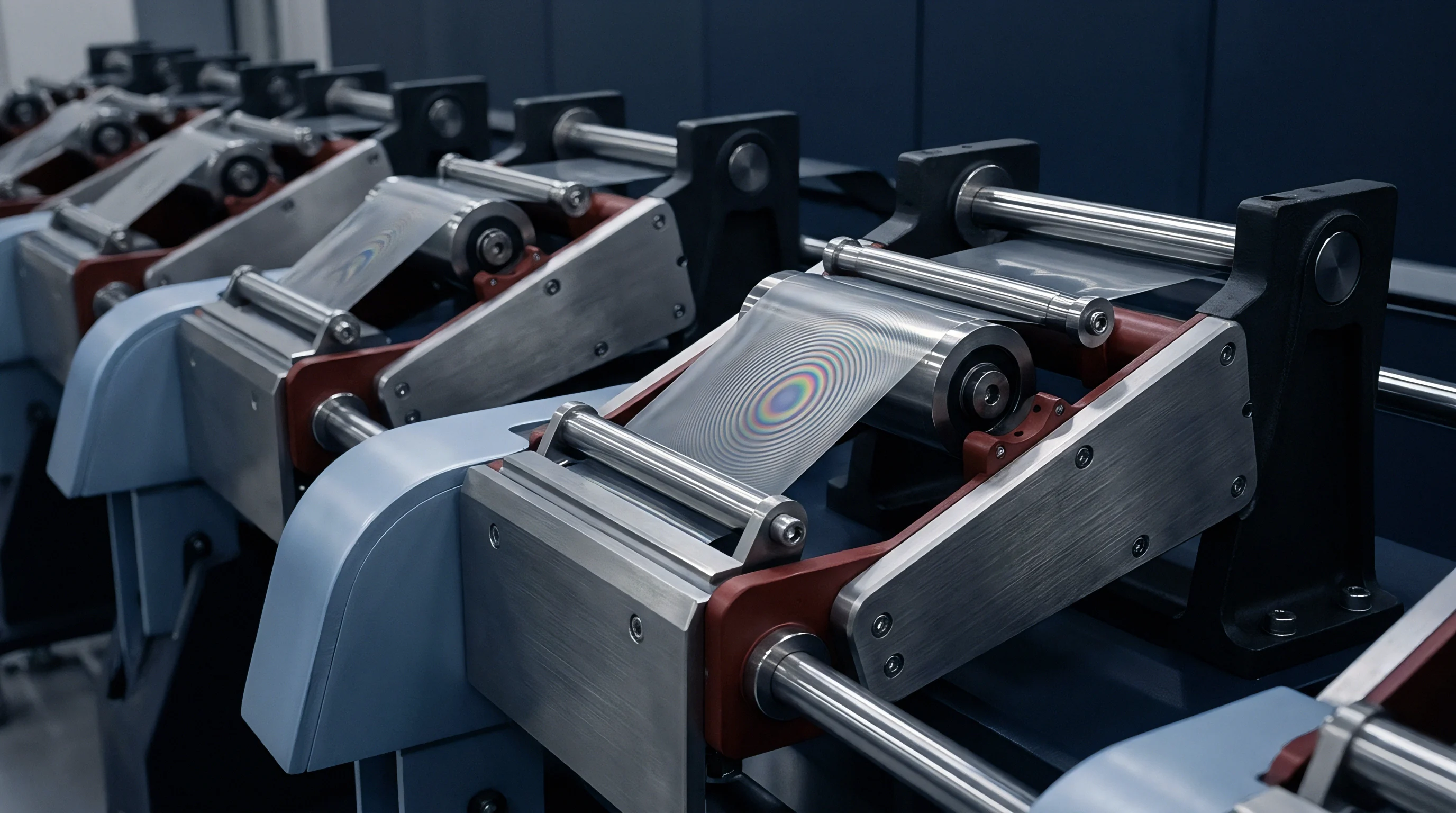
Edge
Rotary slitting setups depend on precise spatial alignment between upper male knives and lower female collars. Edge geometry defines contact pressure, foil tension distribution, and the angle of instantaneous shear fracture. Precision ground holders maintain cant angles between zero point zero five and zero point one degrees to ensure stable contact without excessive friction.
Zero blade clearance represents the target operating condition for sub-ten-micrometer foils. Any positive horizontal gap exceeding five percent of foil thickness allows thin copper to fold into the tooling clearance rather than sever cleanly. Operators apply spring-loaded pneumatic side loads to maintain constant lateral contact pressure across variable thermal conditions.
Standard procurement contracts assign all burr size disputes directly to machine runout limits if radial eccentricity exceeds one micrometer.
Blade overlap depth controls the duration of plastic strain. Overlap settings between zero point one and zero point three millimeters optimize cutting dynamics on six-micrometer anode foils. Excessive penetration forces foil ribbon into wedge distortion, curling edge strips into tight helices that buckle during subsequent downstream rewinding operations.
Will Dynamic Runout Destroy Blade Sharpness?
Rotary shafts introduce mechanical errors that distort cutting interfaces at high line speeds. Spindle bearings, arbor spacers, and knife clamping surfaces accumulate runout errors during assembly sequences. When cumulative radial or axial runout exceeds two micrometers, cutting clearances oscillate wildly throughout every spindle rotation.
- Axial Runout Oscillation drives cyclic collisions between upper and lower blade shoulders, accelerating mechanical edge dulling. Lateral wandering also creates rhythmic variations in burr heights along slitted foil ribbons.
- Radial Eccentricity Errors alter overlap depth continuously, shifting edge fractures back and forth between sharp cutting and dull tearing modes. Localized tension variations induce foil wrinkles along cut borders.
- Thermal Expansion Gradients expand knife diameters as friction warms tooling assemblies during high-speed production shifts. Overlap increases slowly, escalating drag friction and driving localized blade micro-welding against bare copper.
Machined spacer rings require parallel tolerances held within zero point five micrometers across their faces. Dust particles or dried slurry remnants trapped between spacers induce severe angular tilts on blade faces. Precision cleaning procedures before arbor assembly eliminate stack-up runout issues before the slitter starts.
Suppliers frequently argue that edge wear stems entirely from uncleaned abrasive dust rather than premature alloy spalling.
Grind
Thermal damage during sharpening ruins the tempered structure of high-vanadium powder metallurgy steels. High-energy grinding wheels generate extreme frictional heat within tiny contact zones. Inadequate coolant flows induce localized re-hardening, creating untempered martensite and brittle white layers that crack immediately upon contact with thin metal foils.
Vitrified diamond and cubic boron nitride wheels preserve surface integrity during final finishing stages. Controlled dressing frequencies prevent wheel loading and minimize frictional heat generation. Multiple light passes with down-feed increments below two micrometers prevent thermal tensile stress formation across delicate cutting edges.
- Mount the annealed or hardened blade onto an ultra-precision hydrostatic spindle system to ensure rotation accuracy under zero point two micrometers.
- Dress vitrified resin-bonded diamond wheels using rotary diamond dressing discs to maintain flat profiles and sharp abrasive grain exposure.
- Flood the tool contact zone with refrigerated, high-lubricity synthetic grinding fluids directed through custom laminar-flow nozzles.
- Perform rough stock removal passes at down-feed rates below five micrometers per pass, monitoring spindle motor loads for early signs of wheel loading.
- Execute final finish spark-out passes without down-feed to eliminate residual surface stress and achieve a uniform Ra 0.04 micrometer finish.
- Inspect ground edges under five-hundred-times magnification optical interferometers to confirm zero carbide micro-chipping along the primary cutting radius.
Honing finishes the final cutting boundary. Pure ground edges display micro-serrations caused by individual grinding grit scratches intersecting the cutting plane. Controlled brushing with sub-micron diamond pastes smooths these jagged notches, creating a uniform, continuous edge radius measuring between one and two micrometers.
This controlled hone reinforces cutting margins against sudden micro-chipping. Sharp blade edges lacking a honed radius suffer brittle chipping within the first five hundred meters of cut length. Stabilized edges distribute shear loads across a cohesive band of supported powder metallurgy carbides, extending reliable cutting life across several hundred thousand meters of electrode web.
Whether sub-micron honing delivers measurable edge life extensions on ultra-thin coated substrates remains an open metallurgical debate across commercial battery lines.

Scrap
Tool steel decisions govern continuous line yield, regrinding budgets, and electrode scrap rates. Conventional D2 knives carry low acquisition prices, costing roughly forty dollars per rotary blade. CPM 10V blades cost approximately one hundred fifty dollars, while solid tungsten carbide options easily exceed four hundred dollars per ring.
Upfront tooling costs dissolve when evaluated against machine downtime expenses. Swapping a complete set of rotary slitting knives on a multi-lane secondary slitter consumes four to six hours of cleanroom technician labor. Production lines sitting idle forfeit tens of thousands of square meters of slitted electrode capacity per shift.
A slitter running at four percent yield loss generates enough scrap value within two shifts to pay for an entire arbor of powder metallurgy tooling.
Regrind economics dictate lifecycle operating costs. Conventional D2 blades dull rapidly, requiring regrinding every fifty thousand linear meters of foil slitting. Powder metallurgy steels run between three hundred thousand and six hundred thousand meters before edge degradation forces tool changes.
Tungsten carbide delivers millions of meters per cycle, but brittle fracture risks during web jams introduce high catastrophic replacement costs.
| Tool Material | Initial Tool Cost ($/unit) | Linear Meters Between Regrinds | Total Regrinds Allowed | Line Downtime Hours (Annual) | Total Cost of Ownership ($/lane) |
|---|---|---|---|---|---|
| Conventional D2 | 45 | 45,000 | 12 | 160 | 18,400 |
| Vanadis 4 Extra | 135 | 280,000 | 10 | 38 | 5,200 |
| CPM 10V | 160 | 450,000 | 8 | 24 | 3,900 |
| CPM Rex 121 | 240 | 650,000 | 6 | 18 | 3,450 |
| Sub-Micron Tungsten Carbide | 420 | 1,800,000 | 4 | 12 | 4,100 |
Regrinding capacity sets physical tool life boundaries. Sharpening shops remove roughly twenty to fifty micrometers of material during each reconditioning pass to eliminate micro-cracks and work-hardened zones. Lower collar diameters shrink with every regrind, demanding adjustments to bottom arbor drive speeds to preserve matched surface velocities between opposing knives.
Material defects that induce foil edge burrs shift compliance ownership across manufacturing agreements. Purchase contracts containing section 4.2 defect indemnity terms enforce supplier liability for pack teardown costs whenever edge burrs above two micrometers generate internal battery cell short circuits.