Meaning
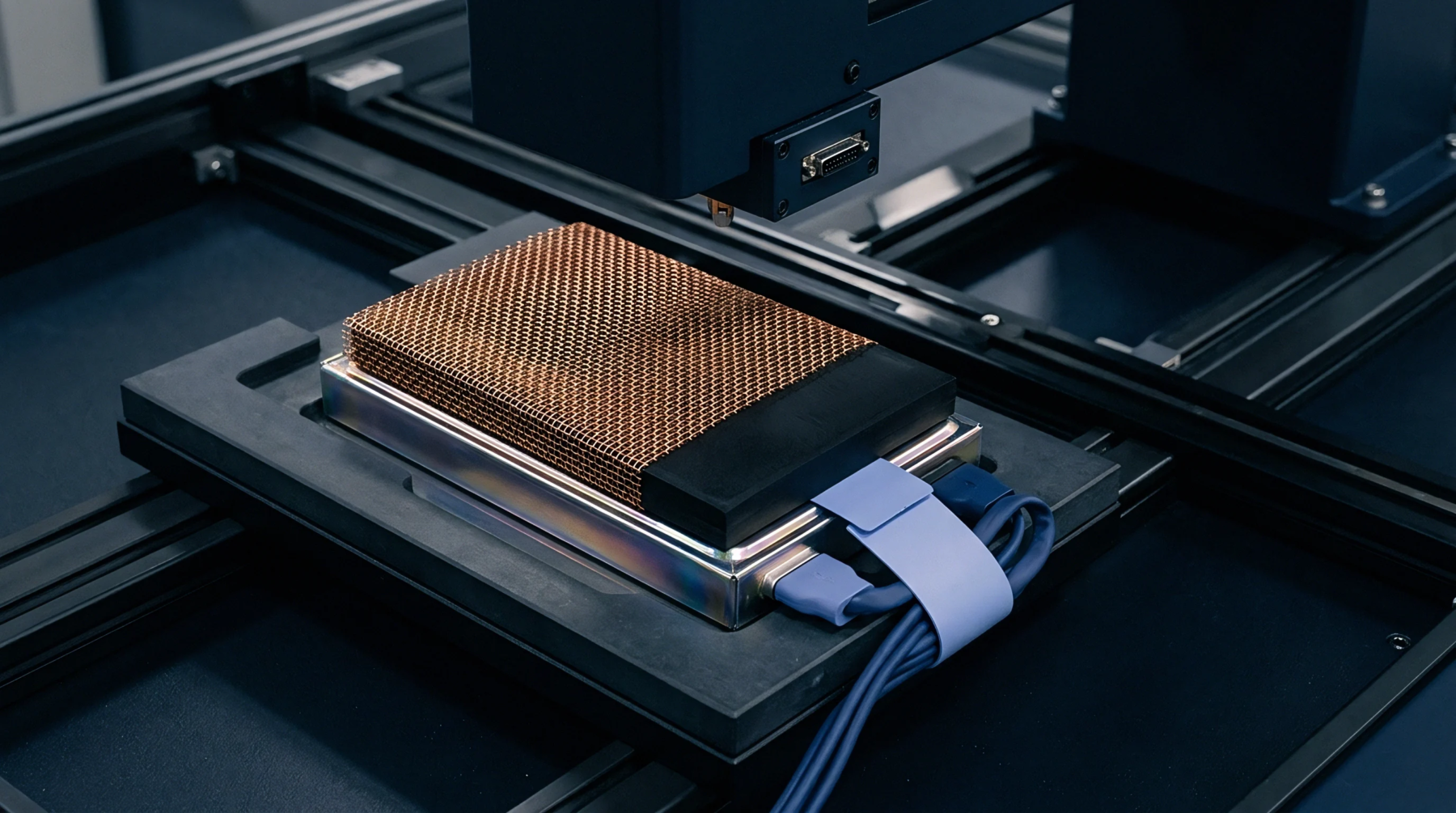
Mechanical compression represents the structural integrity assessment applied to lithium-ion battery cells in a fully discharged state. A t6 crush test forces the prismatic or cylindrical housing to deform by a specified percentage of its diameter to monitor for thermal runaway or short circuit behavior. Engineers perform this procedure to verify that internal separators maintain electrical isolation during severe deformation.
Physical Validation
Energy storage systems undergo deformation across the short axis to replicate extreme impact forces during vehicle collisions. The t6 crush test requires a rigid plate to apply constant force at a controlled rate until the cell case fractures or reaches a predetermined displacement threshold. Constant monitoring of voltage drop and surface temperature provides the data needed to evaluate electrolyte stability and venting performance.
Safety Verification
Internal component separation remains the primary objective when evaluating these hardware samples. Short circuits within the wound or stacked electrodes indicate a failure in structural layout under high pressure. The t6 crush test confirms if the current collector design prevents hazardous internal contact when the housing loses geometric integrity.
Procurement Requirement
Manufacturers provide evidence of successful performance under these conditions to satisfy regulatory safety protocols for stationary and mobile applications. Verification of the t6 crush test ensures that a battery module prevents fire propagation when physical damage compromises the enclosure. Independent laboratories certify these outcomes to ensure that the design reaches the threshold of acceptable risk during catastrophic mechanical failure.