UN 38.3 Test Summary Verification Requirements for Air Freight Clearance
Air freight clearance for lithium batteries demands a fully compliant UN 38.3 test summary matching cell serials, state of charge, and IATA packing rules.


Paperwork
Sub-section 38.3.5 of the United Nations Manual of Tests and Criteria sets the baseline requirements for documenting lithium cell and battery safety qualification. Air freight clearance depends on producing a verified UN 38.3 Test Summary (TS), which cell manufacturers and distributors throughout the supply chain must supply on request. Airlines, ground handling agents, and freight forwarders review this record before accepting dangerous goods shipments tendered under Packing Instructions 965 through 970 of the International Air Transport Association Dangerous Goods Regulations.

Mandatory Ten Elements for Regulatory Acceptance
The standard defines a ten-point record that every test summary must include to demonstrate compliance. If any required field is missing, acceptance personnel can refuse cargo tender at the terminal gate. These elements establish direct traceability between the tested specimen, the manufacturing site, the testing laboratory, and the physical production shipment presented for air transport.
| Element Number | Required Field Name | Regulatory Scope and Verification Criteria |
|---|---|---|
| 1 | Manufacturer Identification | Name, address, telephone number, email, and website of the cell or battery manufacturer. |
| 2 | Testing Facility Details | Name, address, telephone, email, and website of the accredited testing laboratory. |
| 3 | Test Report ID | Unique test report identifier number matching laboratory records. |
| 4 | Report Date | Date of test report issuance, confirming validity prior to production lot manufacturing. |
| 5 | Product Description | Detailed description including cell or battery type, chemistry, mass, and watt-hour or lithium content. |
| 6 | Model Numbers | List of specific model numbers, part numbers, or family series covered by the summary. |
| 7 | Test Evaluations Completed | Explicit listing of T.1 through T.8 tests passed, including pass dates and amendments. |
| 8 | Assembly Test Standard | Reference to test requirements for assembled batteries, specifying compliance with 38.3.3 (f) or (g) where applicable. |
| 9 | UN Manual Revision | Reference to the specific edition and amendment of the UN Manual of Tests and Criteria used for qualification. |
| 10 | Authorized Signature | Name and title of the authorized signatory, providing direct corporate accountability for data accuracy. |

Carrier Acceptance Workflows at Airport Terminals
Freight forwarders and airline cargo acceptance desks cross-check incoming dangerous goods declarations against published safety records before clearing shipments for flight. When forwarders receive lithium battery consignments booked under Section IA or IB of Packing Instruction 965, clerks check the shipper declaration directly against the test summary. Any discrepancy between cell weight or watt-hour ratings on the air waybill and the values on the test summary results in an immediate hold.
Dangerous goods acceptance checklists require agents to confirm that the test summary cites the correct UN Manual edition. Freight presented under outdated revisions risks immediate turn-away at hub facilities. Under standard freight forwarding agreement clause DG-104, all terminal demurrage and re-inspection expenses transfer to the shipper of record whenever test summaries fail carrier document checks.


Dock
Cargo facilities at major hubs serve as initial checkpoints where physical packaging is audited against accompanying declarations. Aviation rules enforce strict operational controls on lithium batteries because of in-flight thermal runaway risks. Ground crews examine outer box condition, state of charge declarations, and packaging markings against carrier-specific rules before freight moves to the ramp.
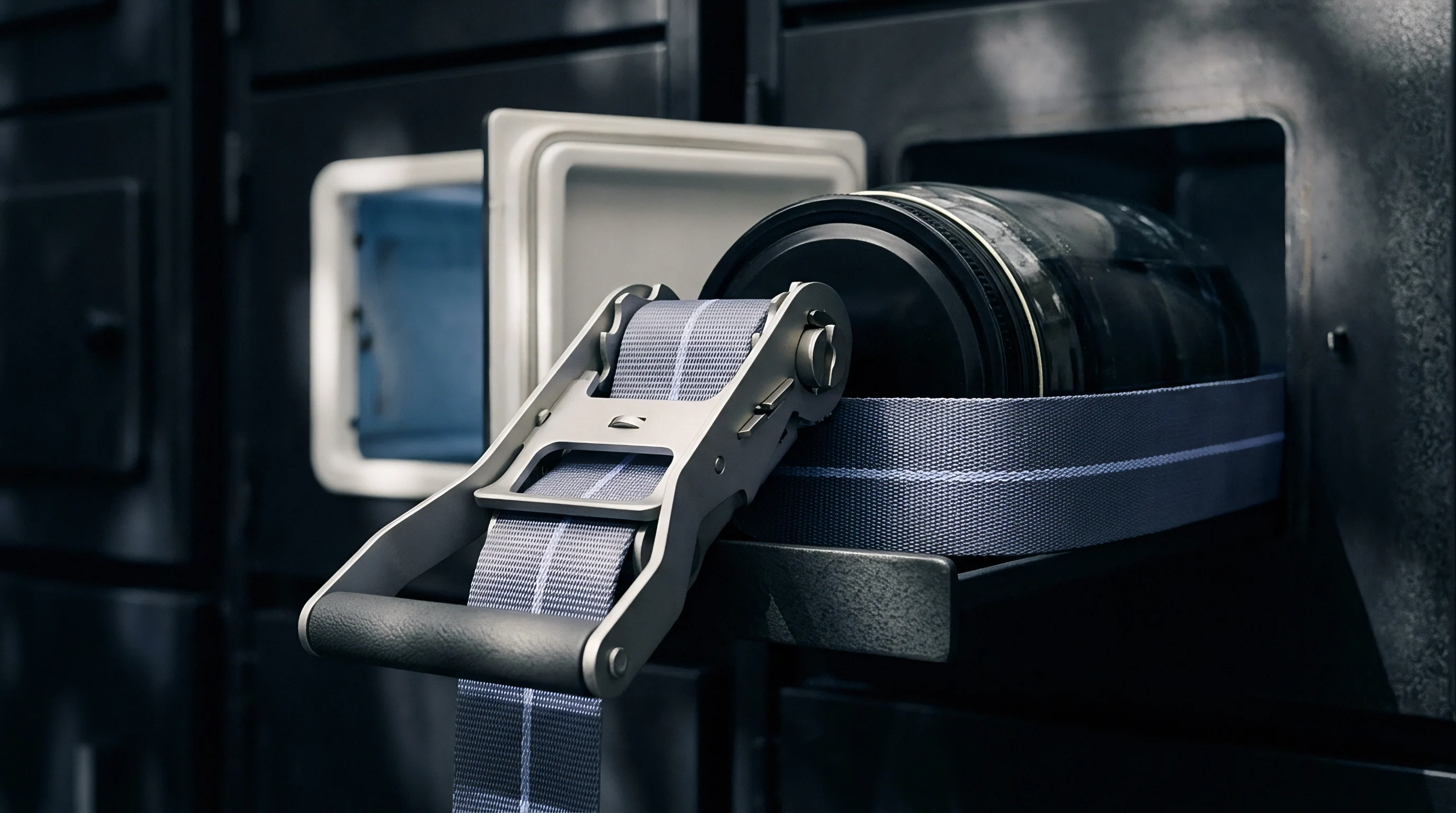
Ground Handling Inspection and Physical Package Cross-Checking
Acceptance staff check outer packaging markings to verify that UN specification codes match the gross weight entered on the air waybill. Dangerous goods inspectors also audit tendered crates on the terminal floor, confirming that packages of lithium ion cells ~ shipped alone or packed with equipment ~ meet stacking standards and show no carton deformation.
A charge state exceeding thirty percent on standalone lithium ion cells triggers immediate tender rejection at airport acceptance gates under IATA PI 965.
Packages tendered under IATA PI 965 Section IB require both a Class 9 Lithium Battery hazard label and the UN lithium battery mark showing the applicable UN number and emergency response phone number. Crews also inspect cartons for moisture, crushing, or broken tape seals that could leave internal cells vulnerable to shifting during flight.
- State of Charge Noncompliance Standalone lithium ion cells tendered above thirty percent rated capacity violate civil aviation safety rules and face impoundment.
- Discrepant Model Identifiers Cell part numbers printed on inner carton labels that fail to match the exact designation on the test summary trigger immediate quarantine.
- Uncertified Outer Packaging Non-UN specification fiberboard boxes used for Section IA shipments cause automatic clearance rejection at cargo docks.
- Missing Emergency Response Data Outer box marks lacking valid telephone numbers for real-time technical response prevent hazardous cargo flight loading.

Carrier Specific Variations and Special Provisions
Individual air carriers enforce rules that go beyond standard ICAO technical instructions, publishing operator variations in the IATA Dangerous Goods Regulations that restrict allowances on specific routes and aircraft. Under variation FX-05, FedEx prohibits standalone lithium ion batteries under Section IB without prior account pre-approval. Cathay Pacific variation CX-02 requires approval protocols for every lithium battery consignment moving through its network.
Forwarders must also account for state variations such as US Department of Transportation rules under 49 CFR 173.185, which restrict passenger aircraft from carrying standalone cells regardless of packing section. A single missing signatory field on an outbound dossier can ground a shipment, generate daily storage fees, and forfeit the booked flight allocation.


Criterion
Section 38.3 of the UN Manual specifies eight separate environmental, mechanical, and electrical evaluations. Each test assesses specific failure modes encountered during transport, from rapid depressurization in cargo holds to severe handling impacts. Cell designs must clear every required test in the sequence before receiving commercial transport qualification.

Which Cell Attributes Trigger Rejection at Cargo Gate?
State of charge readings above thirty percent at tender trigger immediate noncompliance flags from acceptance agents. When packages show crushed corners or fluid weeping, inspectors hold the cargo under hazardous condition provisions. Test reports must show pass results across all applicable sub-tests for the specific cell chemistry and geometry.
| Test Identifier | Environmental / Mechanical Stress Type | Test Execution Parameters and Conditions | Mandatory Pass Criteria |
|---|---|---|---|
| T.1 Altitude Simulation | Low Atmospheric Pressure | Absolute pressure of 11.6 kPa or less at 20°C for a minimum duration of 6 hours. | No mass loss, no leakage, no venting, no disassembly, no rupture, no fire, open circuit voltage within 10% of pre-test state. |
| T.2 Thermal Test | Temperature Cycling | Storage at 72°C for 6 hours, followed by -40°C for 6 hours, repeated across 10 thermal cycles. | No mass loss, no leakage, no venting, no disassembly, no rupture, no fire, open circuit voltage maintained within 10%. |
| T.3 Vibration | Sinusoidal Mechanical Oscillations | Logarithmic sweep from 7 Hz to 200 Hz back to 7 Hz in 15 minutes, applied across 3 mutually perpendicular axes for 3 hours per axis. | No mass loss, no leakage, no venting, no disassembly, no rupture, no fire, stable electrical continuity. |
| T.4 Shock | Mechanical Impact Acceleration | Half-sine shock pulse of 150 gn peak acceleration and 6 ms duration (or 50 gn / 11 ms for large cells) applied 3 times per direction across 6 directions. | No mass loss, no leakage, no venting, no disassembly, no rupture, no fire, voltage retention within established tolerance. |
| T.5 External Short Circuit | Electrical Thermal Runaway Stress | External resistance applied under 0.1 ohms at 57°C ambient temperature until cell casing cools back to 57°C plus 1 hour continuous observation. | Case temperature remains below 170°C, no disassembly, no rupture, no fire within 6 hours of test completion. |
| T.6 Impact / Crush | Physical Cell Destruction Resilience | 9.1 kg mass dropped from 61 cm onto a 15.8 mm bar placed across cell, or crush force of 13 kN applied via hydraulic press. | External casing temperature remains below 170°C, no disassembly, no fire within 6 hours of mechanical stress application. |
| T.7 Overcharge | Electrical Overcharge Endurance | Charge current twice manufacturer rated continuous current applied for 24 hours at maximum rated charge voltage. | No disassembly and no fire observed within 7 days of test termination (applies to rechargeable batteries only). |
| T.8 Forced Discharge | Extreme Reverse Polarity Stress | Forced discharge at 12V DC power supply driving maximum rated continuous current for specified test interval. | No disassembly and no fire observed within 7 days of reverse current application (applies to primary and secondary cells). |
Sub-section 38.3.2.2 forfeits prior test validity whenever a battery design alters its mass by more than twenty percent or changes its cathode chemistry formulation.
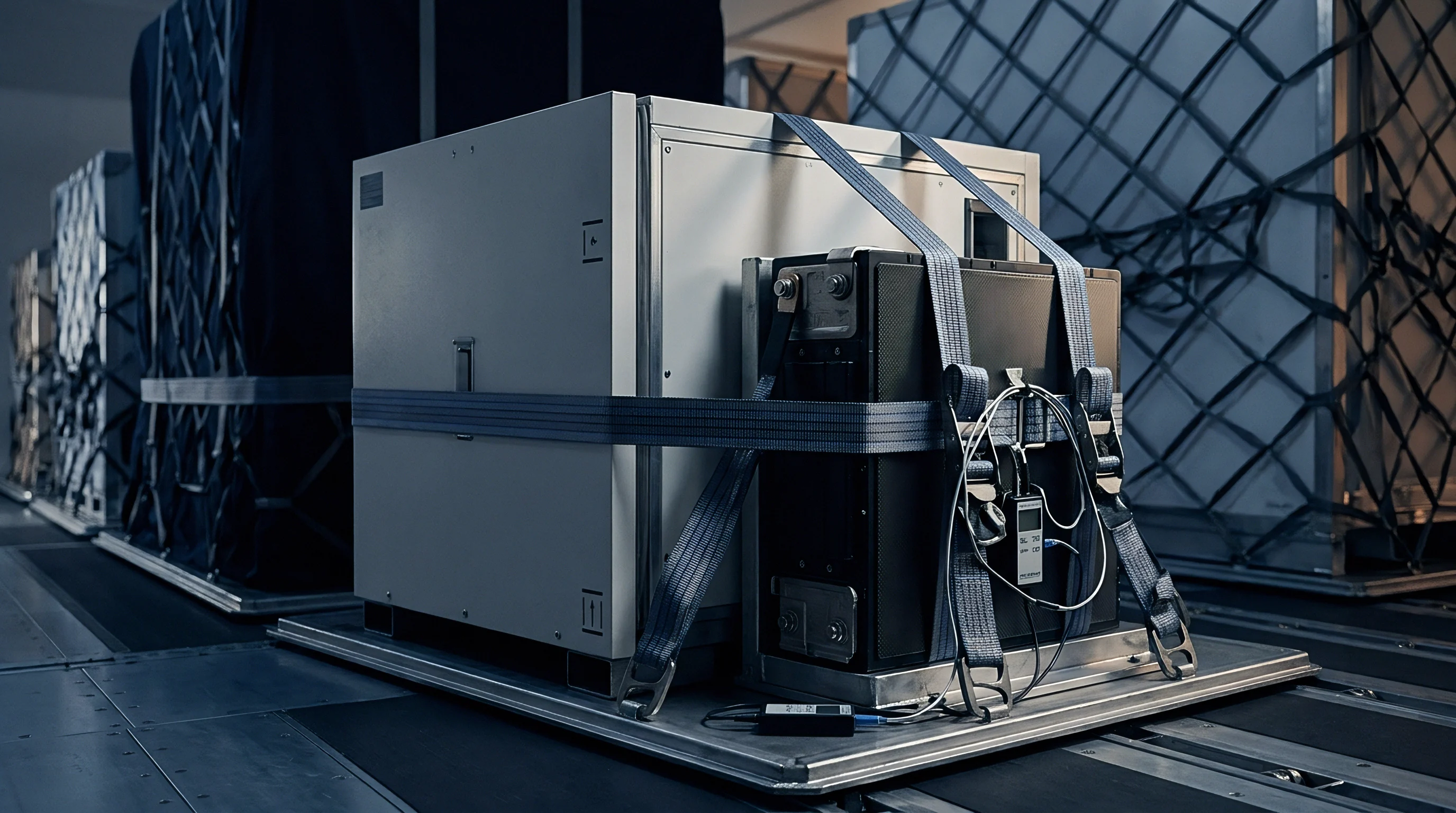
Test Eight Parameters across Cell and Pack Designations
Forced discharge evaluations apply only to component cells, subjecting them to reverse current up to the maximum rated continuous charge limit. Small prismatic and cylindrical cells receive T.6 crush testing, while heavy pouch designs and larger pack assemblies follow mechanical drop procedures under the revised UN guidelines.
Any change to a cell’s internal construction or active mass requires complete T.1 ~ T.8 re-qualification. Triggers include shifts greater than twenty percent in active cathode material, altered electrode coating thickness, or total cell mass changes. Component cell testing does not substitute for independent pack-level qualification.


Discrepancy
Mismatches between test summaries and physical shipments create direct legal exposure for importers of record. Forged summary sheets, altered report references, and certificates from unaccredited testing sources continue to surface in global supply lines. Auditing dangerous goods documentation requires thorough technical checks before clearing cargo for tender.
Audit Procedures for Test Report Authenticity
Auditors begin by checking the listed testing facility against accreditation body directories to verify active ISO/IEC 17025 status covering battery safety methods. The unique test report ID on the summary is then verified through the laboratory’s public database or by contacting its quality management group directly.
- Validate Laboratory Accreditation Scope Query international accreditation body databases to confirm that the testing facility holds ISO 17025 authorization for UN 38.3 test execution.
- Cross-Check Report Identification Identifiers Match the specific test report number printed on the summary against official laboratory registers to detect falsified document generation.
- Verify Product Attribute Consistency Compare listed cell dimensions, gross mass, capacity, and chemical formulation against physical cell datasheets and incoming shipment packing lists.
- Confirm UN Manual Revision Applicability Check that the testing report specifies a UN Manual edition aligned with current international hazardous materials transport regulations.
- Authenticate Signatory Authority Cross-reference the name and title of the authorized document signatory against corporate executive registers or official testing laboratory officer listings.
Laboratory credentials lacking explicit national accreditation scope for dangerous goods testing signal an invalid compliance file.

Laboratory Accreditation Chains and Signatory Validation
Test facilities must maintain ISO 17025 accreditation through recognized ILAC signatories to issue valid compliance certificates. Audit checks flag documentation from self-certified testing entities that operate without independent oversight. Reports missing formal accreditation stamps fail carrier audits at transshipment points.
Suffix variations in cell model numbers between the tested design and physical inventory cause immediate customs delays. When audits reveal chemistry discrepancies ~ such as a summary citing Nickel Manganese Cobalt while the cartons contain Lithium Iron Phosphate ~ forwarders stop the booking. The industry continues to debate whether digital cryptographic signatures on test summaries will permanently eliminate counterfeit dangerous goods documentation across international air freight lanes.

Check
Receiving staff at destination facilities inspect incoming cell lots before releasing inventory into stock. Storage fees mount quickly during customs or carrier holds. Inbound documentation checks confirm that physical cargo matches dangerous goods declarations, customs entries, and UN 38.3 test files.
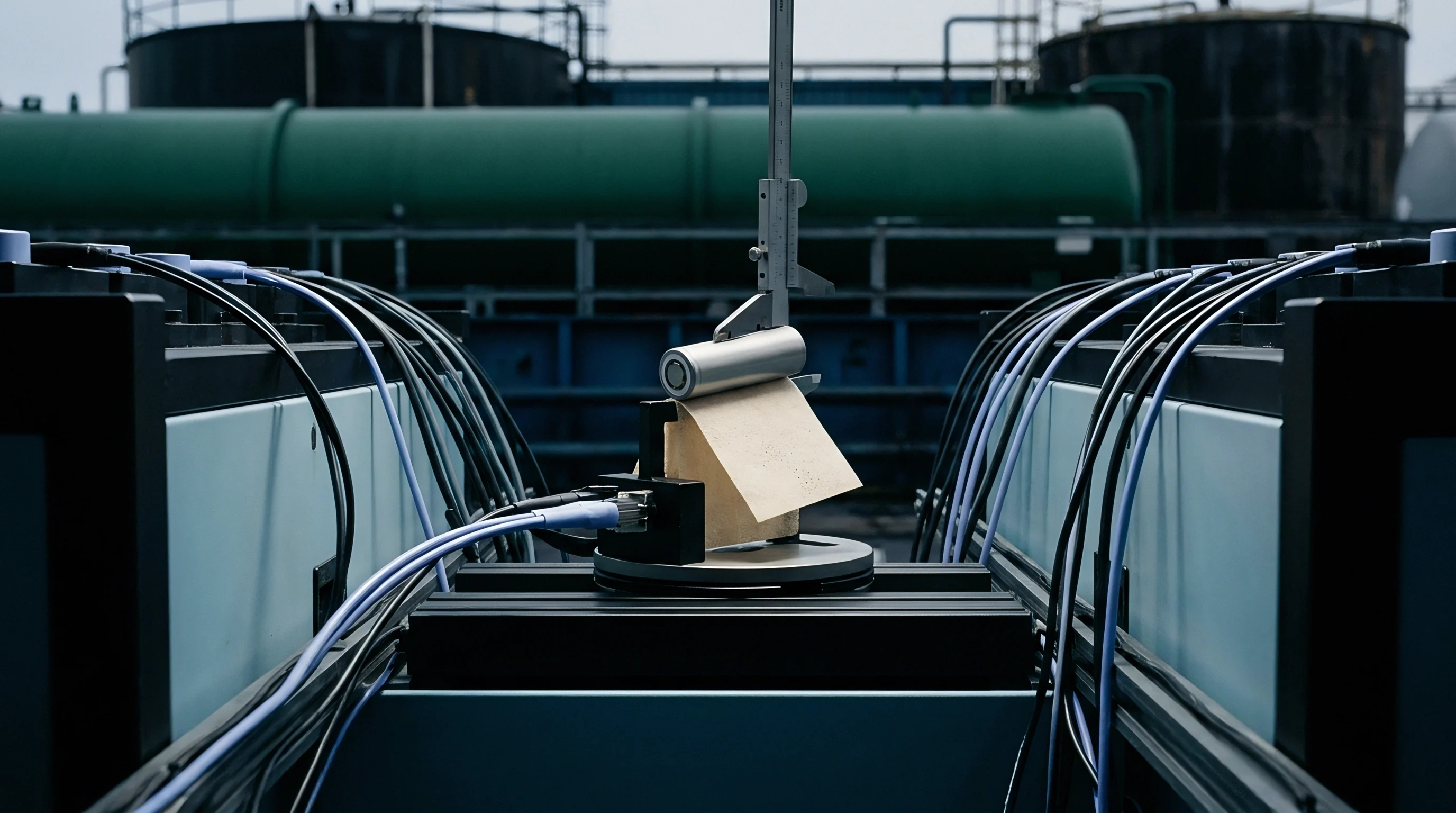
Verification Steps for Inbound Shipment Dossiers
Cross-checking cell lot numbers against factory test certificates ensures that production runs correspond to the tested design. Quality teams draw carton samples to trace individual cell serial numbers back to specific factory lots. Missing documentation creates immediate bottlenecks at airport release docks.
- Retrieve inbound air waybill, dangerous goods declaration, safety data sheet, and UN 38.3 test summary.
- Inspect outer packaging markings for UN specification markings, net battery mass, and packing instruction compliance.
- Verify that cell serial numbers on inner package labels match production lot numbers referenced in factory inspection records.
- Check open circuit cell voltage across a sample lot to confirm state of charge remains under thirty percent.
- Confirm that test summary document details match the safety data sheet Section 14 transport information.
- Archive verified compliance documentation in local database for minimum two-year regulatory retention period.

Worked Cost Model for Held Air Cargo Lots
Consider a ten-pallet consignment of 20,000 lithium ion cells held at an origin gateway for missing signatory verification. Terminal demurrage accrues daily per pallet position alongside mandatory airline dangerous goods storage fees. Resolving the hold requires additional administrative intervention and laboratory document re-issuance.
| Expense Category | Daily Rate / Fee Structure | Five-Day Hold Total (USD) | Ten-Day Hold Total (USD) |
|---|---|---|---|
| Terminal Demurrage | $85 per pallet position per day | $4,250 | $8,500 |
| Hazardous Storage Surcharge | $120 per pallet position per day | $6,000 | $12,000 |
| Forwarder Administrative Fee | $450 flat fee per incident | $450 | $450 |
| Laboratory Expedite Verification | $850 flat search and reissue fee | $850 | $850 |
| Re-booking Premium Fee | 15% freight rate charge penalty | $1,800 | $1,800 |
| Total Financial Exposure | Cumulative Financial Burden | $13,350 | $23,600 |
Forwarding agents hold shipments on terminal tarmac floors when test summary signatories fail online database validation checks.
A ten-day regulatory hold creates over twenty-three thousand dollars in unplanned logistics costs on a single consignment. When manufacturing date codes on arriving cells precede the completion date listed on the test summary, the entire compliance dossier fails review.
Liability
Purchase contracts define compliance obligations among cell manufacturers, pack assemblers, and dangerous goods shippers. Civil aviation authorities hold the shipper of record strictly accountable for tendering hazardous shipments supported by flawed or incomplete documentation, backed by statutory civil and criminal penalties.

Contractual Allocation of Dangerous Goods Compliance Risk
Commercial agreements generally include indemnity provisions holding suppliers liable for losses stemming from defective safety paperwork. Master service agreements between buyers and cell producers establish explicit warranties that all units carry a valid UN 38.3 test summary. These contracts require suppliers to reimburse buyers for terminal storage, re-booking fees, and administrative fines triggered by noncompliant documentation.
Importers of record face direct enforcement exposure under local aviation regulations. In the United States, Federal Aviation Administration rules under 49 CFR Part 107 provide for civil penalties exceeding $85,000 per violation for tendering noncompliant lithium battery consignments. European civil aviation authorities apply comparable financial sanctions across European Union airspace.

Enforcement Mechanisms and Civil Aviation Penalties
Regulators levy heavy fines when undeclared or improperly documented dangerous goods enter air transport networks. Major airlines maintain internal noncompliance lists, barring repeat offenders from booking cargo capacity across their routes. In addition, standard cargo insurance policies exclude claims for damage or hull loss arising from shipments moved under invalid safety certificates.
Procurement agreements incorporate explicit document audit requirements to protect landed costs. Sourcing terms require suppliers to submit verified UN 38.3 test summaries alongside pre-shipment inspection certificates before buyers release final balance payments. Auditing this paperwork prior to airport tender keeps distribution pipelines clear of costly regulatory holds.