
Full Cell Voltage Boundary Calibration to Prevent Crystalline Lithium Silicide Nucleation
Upper full cell voltage cutoff calibration limits local anode lithiation potential above 50 mV vs Li/Li+ to prevent crystalline silicon phase breakdown.
Upper full cell voltage cutoff calibration limits local anode lithiation potential above 50 mV vs Li/Li+ to prevent crystalline silicon phase breakdown.

Prismatic cell lifetime depends on balancing initial mechanical preload pressure between 0.2 and 0.4 MPa to suppress lithium plating while accommodating end-of-life swell within structural limits.

Sufficient stack pre-load retention and ceramic coating friction prevent wetted polyolefin separator sliding and tab shear in lubricated cell stacks.

Non-equilibrium phase partitioning in multi-component alloy anodes is predicted using coupled phase-field flux equations to bound interfacial diffusion speeds.

Dynamic module pressure retention requires continuous dynamic strain compensation to prevent lithium metal anode degradation and structural pack housing fatigue.

Industrial electricity tariffs dictate over fifty percent of synthetic graphite production costs, driving price compression down toward natural graphite parity.

Hydrostatic pressure elevates lithium chemical potential and raises nucleation energy barriers, suppressing destructive phase fracture in encapsulated silicon anode powders.

Non-linear mechanical stress shifts Butler-Volmer kinetics in high-silicon anodes, lowering nucleation barriers and driving local lithium plating under stack pressure.

Early cycle analytics fail to predict nonlinear battery degradation knees when sacrificial additives mask microstructural stress accumulation.

Restricting silicon anode lithiation potential above fifty millivolts prevents crystalline phase formation and expands cycle life.

Resolving flat LFP voltage plateaus depends on temperature-corrected differential voltage curves to eliminate state-of-charge drift and warranty risk.
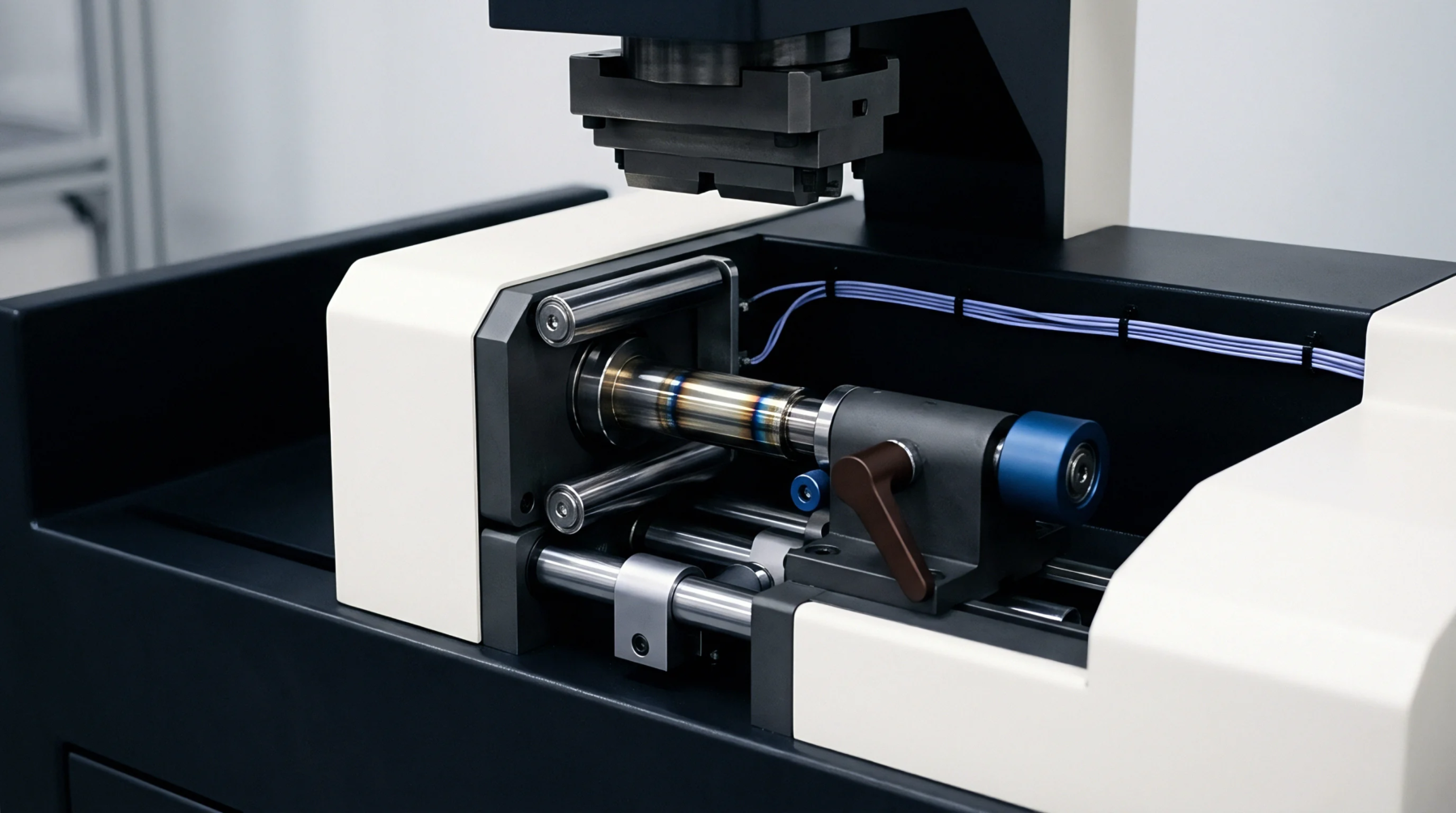
Optimizing module heat dissipation demands matching thermal interface wet-out and structural clamping spring rates to compensate for cyclic cell expansion.

Silicon anode lithiation requires voltage cutoff management above 50 mV vs Li/Li+ to prevent c-Li15Si4 crystallization and severe mechanical capacity loss.

Solid-state prismatic expansion demands dynamic stack compression and strict header weld strain limits to prevent interfacial delamination and capacity fade.

Structural warranty seams rely on precise pressure limits and micro-strain sensor telemetry to separate cell expansion defects from pack structural loading.
Immediate AC-IR screening and differential capacity testing reveal hidden transit degradation and cell capacity variance in sodium ion shipments.
Expertise is a utility, not a secret. sentiention™ publishes its working knowledge as open reference: intelligence layer covering the materials it sources, the markets it enters, and the reference that serves both.