Recycled Cathode Precursor Physical Characterization Techniques
Physical characterization of recycled cathode precursors requires screening tap density, internal porosity, and particle friability to prevent calcination failures.
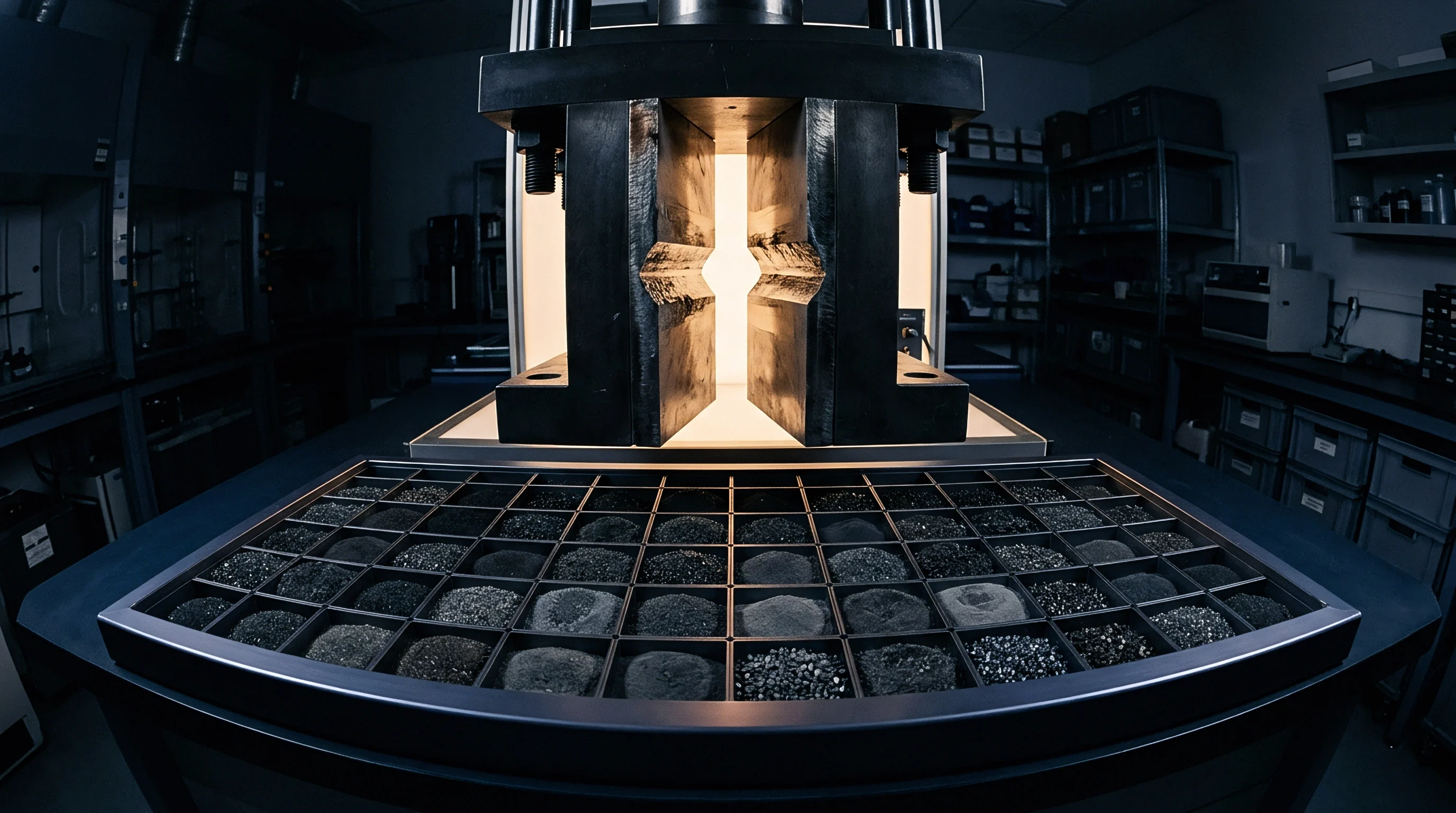

Morphology
Mixed nickel-manganese-cobalt hydroxides recovered from hydrometallurgical recycling lines show marked geometric differences from materials synthesized from virgin metal salts. Precipitation directly from recycled black mass leach liquors often introduces nucleation instabilities through trace sodium, magnesium, or residual extractants such as Di-(2-ethylhexyl) phosphoric acid. These chemical disturbances alter individual crystallite facet growth rates, producing irregular secondary particles rather than smooth, uniform spheres.
This particle geometry governs tap density, powder flowability, and solid-state reaction kinetics during downstream lithiation and calcination into active cathode material.
Laser diffraction particle size analysis provides the primary screening gate for incoming precursor lots. Measurement requires dispersing precursor powder in deionized water or isopropyl alcohol using low-power ultrasonic agitation to break up soft agglomerates without fracturing primary crystallites. The cumulative volume distribution gives critical metrics: median diameter, the fine fraction under three micrometers, and the coarse tail over thirty micrometers.
Recycled precursors generally display a wider size span than virgin materials, calculated by dividing the difference between the ninetieth and tenth percentile diameters by the median diameter. While a broad size distribution reduces interparticle void space, an excessive fine fraction creates non-uniform reaction zones during lithiation, leaving unreacted core material or causing localized lithium toxicity within the crystal lattice.
Tap density serves as a bulk proxy for particle sphericity and volumetric packing capability. Measurement involves vibrating a graduated cylinder filled with a known mass of precursor powder for three thousand taps under standard testing protocols. Virgin nickel-rich precursor hydroxides consistently reach tap densities between 2.0 and 2.2 grams per cubic centimeter, whereas recycled precursors with irregular, potato-like shapes or internal porosity often plateau between 1.6 and 1.8 grams per cubic centimeter.
This lower tap density depresses the volumetric energy density of the finished cathode and demands higher binder loading during electrode slurry preparation.
| Physical Parameter | Virgin pCAM Target Range | Recycled pCAM Observed Range | Primary Measurement Standard |
|---|---|---|---|
| Tap Density (g/cm³) | 2.05 – 2.25 | 1.55 – 1.85 | ASTM B527 / ISO 3953 |
| Particle Size Span | 0.75 – 0.95 | 1.15 – 1.60 | ISO 13320 (Laser Diffraction) |
| Sphericity Index (Aspect Ratio) | 0.88 – 0.95 | 0.70 – 0.82 | Automated Dynamic Image Analysis |
| Fines Content (< 3 µm Vol %) | < 1.5% | 3.8% – 7.2% | Laser Diffraction with Sonication |
Dynamic image analysis complements laser diffraction by measuring particle aspect ratio, roundness, and surface roughness across tens of thousands of grains. High-resolution cameras capture silhouette projections as particles pass through a liquid or air flow cell. Precursor streams with high proportions of elongated or fused dumbbell particles cause shear-induced clogging in automated hoppers and pneumatic lines.
When particle roundness deviates by more than ten percent, operators must adjust the lithiation ratio, adding extra lithium carbonate or hydroxide during high-temperature roasting to avoid phase-segregated impurities in the cathode matrix.
Accepting precursor lots with uncorrected geometric irregularities forces cell manufacturers to extend calcination residence times by up to fifteen percent, raising kiln energy costs and reducing factory output.
Porosity
Internal void distribution dictates how deeply molten lithium salts penetrate during high-temperature cathode synthesis. Hydrometallurgical routes that bypass full elemental isolation produce precursor hydroxides with complex internal channel networks. Brunauer-Emmett-Teller nitrogen adsorption measures total specific surface area, while Barrett-Joyner-Halenda analysis provides pore volume and pore size distributions across the mesopore range.
Higher surface area improves reactivity with lithium sources, but highly porous secondary particles trap residual moisture, washing solvents, and unprecipitated sulfate salts deep within their structure.
Precursor lots with specific surface areas above fifteen square meters per gram retain up to three times more residual sulfate impurities following standard belt-filter washing cycles.
Specific surface area values for standard commercial precursors typically fall between five and ten square meters per gram. Recycled precursor hydroxides precipitated under unstable pH or temperature regimes routinely exceed twenty square meters per gram. These porous networks act as sponge-like traps for sodium ions and sulfate radicals.
During calcination, localized sulfur impurities react with lithium to form inert lithium sulfate phases that insulate primary grains, elevate initial cell impedance, and lower usable discharge capacity.
Residual Salt Entrapment Mechanisms
The internal channels in recycled hydroxide secondary particles resist washing during industrial solid-liquid separation. Vacuum belt filters remove surface moisture and soluble salts, but capillary forces retain liquid within sub-micron pores. Subsequent thermal drying evaporates the liquid, precipitating solid sodium sulfate and ammonium sulfate directly onto internal pore walls.
- Capillary Occlusion traps entrained liquid inside sub-micron pore channels, preventing displacement during belt-filter washing.
- Salt Crystallization occurs during thermal drying as dissolved sodium and sulfate ions concentrate and crystallize inside internal cavities.
- Lithium Scavenging takes place during calcination when entrained sulfate radicals react with lithium inputs to form electrochemically inactive lithium sulfate.
- Gas Phase Outgassing occurs as trapped organic solvent residues decompose at elevated temperatures, generating internal pressure spikes that crack secondary particle structures.
Mercury intrusion porosimetry extends characterization into the macropore domain, mapping interparticle voids and intraparticle pores from three nanometers up to several hundred micrometers. Forcing mercury into the porous matrix under controlled pressure allows the technique to separate internal bulk density from skeletal density. Recycled materials with high macroporosity require precise compaction control during electrode calendering to prevent secondary particles from crushing into fines.
While elevated particle porosity can improve lithium diffusion rates during calcination, entrained sulfate levels above zero point three percent by weight render the resulting cathode active material unusable in commercial automotive cells.

Hardness
Mechanical robustness governs how precursor particles withstand stress during pneumatic conveyance, high-shear mixing, and physical blending with lithium salts. Secondary precursor particles consist of densely packed primary crystallites bound by intercrystalline forces established during coprecipitation. Recycled stocks often exhibit friability caused by non-uniform crystallite orientation and micro-strains from impurity ions embedded in the crystal lattice.
Evaluating single-particle crushing strength requires micro-compression testing with flat-tipped diamond indenters.
Single-particle strength testing places secondary particles between a flat substrate and a precision indenter, applying a continuous force ramp until structural breakdown occurs. Compressive strength is calculated from the critical failure force divided by particle cross-sectional area. Primary crystallite cohesion dictates overall stability: virgin precursors typically exhibit single-particle rupture strengths between twenty and forty megapascals, whereas recycled particles with high internal void fractions often fracture below ten megapascals, creating fines during dry ball milling or conical mixing.
| Precursor Type | Single-Particle Fracture Force (mN) | Compressive Strength (MPa) | Green Powder Compact Density (g/cm³) |
|---|---|---|---|
| Virgin Ni-Rich Hydroxide (NCM 811) | 18.5 – 24.0 | 28.2 – 35.6 | 2.85 – 3.05 |
| Recycled Hydromet Hydroxide (NCM 811) | 7.2 – 12.5 | 11.4 – 18.9 | 2.35 – 2.60 |
| Recycled Direct Re-synthesized pCAM | 14.0 – 19.8 | 21.0 – 29.5 | 2.65 – 2.85 |
| Virgin Cobalt-Free High-Mn Hydroxide | 22.0 – 29.0 | 33.0 – 42.0 | 2.70 – 2.90 |
Powder compaction testing evaluates how precursor bulk beds increase in density under applied uniaxial pressure. A hydraulic press compresses a measured mass of precursor inside a hardened steel die up to two hundred megapascals. The recorded displacement profile generates a compaction curve detailing elastic deformation, plastic rearrangement, and brittle fracture thresholds.
Recycled precursor powders subject to premature brittle fracture pack into low-permeability cakes that obstruct water vapor escape during initial calcination ramps.
Secondary particles that fracture under low mixing shear generate fine debris that accelerates localized sintering and causes uneven lithium distribution in high-temperature kilns.
Nanoindentation on cross-sectioned and polished precursor particles isolates the elastic modulus and hardness of individual primary crystallites from the structural behavior of the aggregate. Mounting precursor grains in epoxy resin followed by broad argon ion beam polishing produces smooth, damage-free surfaces for sub-micron mechanical testing. Hardness variations across a single secondary particle point to compositional heterogeneity, with nickel-rich zones displaying different mechanical compliance than manganese-rich or cobalt-rich domains.
A precursor bed that crushes under low mixing shear will segregate during thermal processing and yield inconsistent cell capacities.

Fracture
Internal structural defects formed during hydrometallurgical precipitation propagate into macro-cracks during thermal treatment. High-resolution Focused Ion Beam Scanning Electron Microscopy (FIB-SEM) enables characterization of internal particle cross-sections without introducing mechanical preparation artifacts. Cross-sectional imaging exposes sub-surface voids, radial crack structures, and density gradients hidden during standard surface examination.
Recycled precursor particles frequently contain hollow cores caused by rapid initial nucleation followed by slower crystal growth in batch reactors.
Quantitative cross-sectional analysis measures the internal void area ratio relative to total particle cross-section. Virgin precursor lines maintain internal void ratios below two percent, whereas recycled materials from poorly controlled precipitation reactors routinely exceed eight percent. These structural gaps act as stress concentrators during calcination.
As lithium ions diffuse into the precursor structure, phase transformations induce anisotropic volume changes that fracture hollow particles into irregular shell fragments.
When Do Internal Voids Degrade Precursor Reactivity?
Internal voids degrade precursor reactivity when their average diameter exceeds five hundred nanometers, creating physical gaps that prevent solid-state lithium ion transport across the interior of the secondary particle.
Acoustic emission monitoring during powder compaction provides real-time detection of micro-fracturing events. Piezoelectric sensors attached to the compaction die capture high-frequency stress waves released as crystalline grain boundaries fail. Analyzing the amplitude and frequency spectrum of these acoustic signals distinguishes early particle rearrangement from destructive grain fracturing, helping establish safe pressure limits for dry powder handling.
The following numbered protocol outlines the analytical sequence for quantitative FIB-SEM internal defect assessment:
- Embed five grams of precursor powder in low-viscosity epoxy resin under vacuum to ensure complete pore infiltration.
- Grind and polish the cured epoxy block using diamond suspensions down to one-quarter micrometer grit size.
- Apply a six-nanometer conductive platinum coating using a magnetron sputter coater to eliminate surface charging.
- Transfer the sample to a FIB-SEM system and select thirty random secondary particles with diameters within five percent of the batch D50 value.
- Mill broad cross-sectional trenches across particle midplanes using a thirty-kilovolt gallium ion beam.
- Capture high-resolution backscattered electron images of each cross-section at a minimum magnification of ten thousand times.
- Apply threshold segmentation algorithms to quantify internal void area percentage, crack lengths, and primary grain boundary orientation.
Standard delivery contracts mandate that internal particle void area ratios shall not exceed three point five percent across a representative fifty-particle FIB-SEM cross-sectional sample.
Is the structural integrity of recycled precursor grains sufficient to prevent high-temperature thermal shock fracture during rapid ramp calcination profiles?

Sieve
Quality verification at receiving relies on physical separation techniques to isolate foreign contaminants, unprecipitated metal aggregates, and oversize grit. Recycled precursor shipments carry higher risks of macro-impurities than virgin supply chains. Mechanical sieve analysis with electroformed nickel mesh screens separates bulk lots into distinct particle size fractions, identifying oversized contamination that disrupts slurry processing and coating lines.
Dry sieving using air-jet acoustic screening equipment measures the mass fraction retained on screens ranging from forty-five to one hundred and fifty micrometers. Recycled precursors containing hard calcined scrap, metallic shredder debris, or fused aggregate masses leave high residual fractions on forty-five micrometer sieves. Fine screen fractions under twenty micrometers are collected to quantify dust generation and handling losses during pneumatic unloading.
| Physical Inspection Parameter | Contract Baseline Limit | Rejection Threshold | Commercial Price Adjustment |
|---|---|---|---|
| 45 µm Wet Sieve Residue | < 0.01 wt % | > 0.05 wt % | 1.5% lot price deduction per 0.01% excess |
| Magnetic Foreign Matter (> 100 µm) | Zero tolerance | > 1 particle / 10 kg | Immediate lot rejection and return at seller expense |
| Moisture Content (Karl Fischer) | < 1.0 wt % | > 2.5 wt % | Deduction equal to water weight plus drying surcharge |
| Bulk Density Variance from Spec | ± 5.0 % | > ± 12.0 % | 0.5% price penalty per 1.0% density deviation |
Wet sieving protocols flush precursor powders through stainless steel meshes using deionized water with non-ionic surfactants to prevent particle agglomeration. Slurry passing through the screen is dried and weighed, while retained mass undergoes energy-dispersive X-ray spectroscopy to identify contamination sources. Typical impurities retained in recycled precursor shipments include un-leached shredder foil fragments, silica grit from refractory furnace linings, and insoluble cross-linked polymer residues from battery separator breakdown.
Incoming inspection protocols combine automated physical screening with rapid bulk density testing to clear delivered lots for silo storage.
- Automated Air-Jet Sieving isolates particle fractions down to twenty micrometers without mechanical attrition or mesh blinding.
- High-Intensity Magnetic Separation captures sub-millimeter ferrous impurities from bulk powder beds prior to storage transfer.
- Karl Fischer Coulometric Titration quantifies absorbed surface moisture and internal pore water content across elevated temperature steps.
- Helium Pycnometry measures true skeletal density to identify internal closed porosity variations across incoming batch lots.
Contracts for recycled precursor supply define explicit quality boundaries: if the retained residue on a forty-five micrometer wet sieve exceeds zero point zero five percent by weight, the buyer retains the contractual right to reject the entire batch shipment or apply a mandatory price deduction covering additional wet-milling process costs.