State of Charge Estimation Algorithms under Iron Phosphate Hysteresis Dynamics
Augmenting filter state vectors with differential hysteresis operators resolves LFP voltage plateau ambiguity and eliminates conservative 15% capacity buffering.


Lattice
Lithium iron phosphate operates through a two-phase first-order transition between triphylite and heterosite during charge and discharge. As lithium ions extract from the olivine structure, iron cations oxidize from divalent to trivalent states, shrinking the unit cell volume by roughly 6.81 percent. The resulting mechanical coherency strain along orthorhombic lattice planes shifts chemical potential away from static equilibrium.
Interfacial energy barriers pin phase boundary migration, preventing the material from following the same energetic path during charge and discharge. Consequently, open circuit potential at a given state of charge settles at different values depending on the direction and magnitude of prior current.
Static potential separation between upper charging and lower discharging branches ranges from 20 millivolts to 60 millivolts across the 20 percent to 80 percent state of charge window at 25 degrees Celsius. This offset persists even during open-circuit relaxation periods exceeding forty-eight hours. Without tracking prior charge history, the static equilibrium profile is mathematically indeterminate.
A standard single-valued look-up table generates state errors above 12 percent across the flat plateau whenever current direction switches without reaching full boundary saturation.
A 40-millivolt open-circuit hysteresis band across the central plateau translates to a 28 percent state estimation error under uncompensated look-up tables at 25 degrees Celsius.
Temperature alters both the open-circuit envelope width and the kinetic relaxation rates governing phase transition. Sub-zero operation widens the voltage gap while dropping the solid-state diffusion coefficient of lithium below 10 to the power of minus fourteen square centimeters per second. The dominant mechanism shifts from uniform phase boundary propagation to localized particle-by-particle staging, deepening path-dependent hysteresis memory across the electrode stack.

Where Does Phase Boundary Pinning Distort Cell Potential?
Electrode-level heterogeneity amplifies the thermodynamic offsets seen at individual crystal facets. Commercial pouch and prismatic cells hold millions of active material grains bound with conductive carbon and polymer binders. Charge inflow and outflow distribute unevenly across particle sizes ranging from 50 nanometers to 2 micrometers.
Smaller particles complete their structural transition at lower overpotentials, leaving larger particles lagging in intermediate states.
Partial cycling creates localized concentration gradients through the electrode thickness. When an electric vehicle alternates between acceleration discharge pulses and regenerative braking charge pulses, active particles undergo incomplete phase transformations. These nested trajectories create multi-tiered inner hysteresis loops inside the main cell envelope, decoupling terminal potential from the actual stored lithium inventory.
| Operating Temperature | Open Circuit Hysteresis Gap | Plateau Voltage Slope | Solid State Diffusion Rate | Equilibrium Relaxation Time |
|---|---|---|---|---|
| Minus 20 Degrees Celsius | 78 Millivolts | 0.12 Millivolts per Percent SOC | 2.1e-15 cm2 per Second | 120 Hours |
| Zero Degrees Celsius | 52 Millivolts | 0.18 Millivolts per Percent SOC | 8.4e-15 cm2 per Second | 48 Hours |
| 25 Degrees Celsius | 38 Millivolts | 0.22 Millivolts per Percent SOC | 4.6e-14 cm2 per Second | 18 Hours |
| 45 Degrees Celsius | 24 Millivolts | 0.29 Millivolts per Percent SOC | 1.8e-13 cm2 per Second | 6 Hours |
Cathode particle cracking and non-uniform solid electrolyte interphase growth worsen potential dispersion over battery life. Repeated lattice expansion and contraction generate intergranular stresses that break conductive paths between active particles and the aluminum collector foil. Isolated particles retain trapped lithium, introducing unrecoverable offsets that distort macro terminal voltage measurements.


Loop
Tracking multi-branched phase trajectories requires a continuous phenomenological model within embedded vehicle software. Coulomb counting tracks charge in the short term but accumulates sensor bias and integration drift. Reconciling integrated current against terminal voltage requires an analytical operator that maps non-monotonic memory states without overwhelming microcontroller memory.
Differential hysteresis formulations treat non-equilibrium potential as an extra dynamic state variable. The governing differential equation scales the voltage transition rate based on instantaneous current sign, current magnitude, and distance from the bounding envelope curve. One common approach couples a modified Dahl mechanical friction formulation with equivalent circuit resistance-capacitance networks:
State evolution follows a continuous form where the time derivative of hysteresis voltage depends on current magnitude, empirical tuning coefficients, and the potential difference relative to the saturation envelope. When current direction flips, the state variable leaves its boundary and moves across the interior domain along an exponential path toward the opposite limit.

Mathematical Operators for State Reconstruction
Discrete mathematical models balance parameterization complexity against microcontroller execution overhead. Hysteresis modeling frameworks generally fall into three structural archetypes:
- Preisach Operator Formulations discretize the electrode into collections of parallel elementary relay operators with distributed switching thresholds. The model tracks complex memory wipe-out behavior during nested charge cycles, requiring substantial lookup memory for historical turning points.
- Differential Dahl Equations define dynamic voltage transitions through continuous first-order differential equations with fractional decay constants. The algorithm runs on low-power microcontrollers using minimal floating-point calculations, though it sacrifices partial loop closure accuracy under high-frequency pulsing.
- Zero-State Polynomial Operators approximate interior trajectories using empirical scaling factors applied directly to baseline open-circuit curves. While computational burden drops to negligible levels, this introduces steady-state tracking errors when operation remains trapped inside narrow mid-plateau windows.
Parameter identification for these operators relies on characterization across fractional charge sweeps. Test protocols subject cells to incremental charge and discharge steps separated by extended relaxation periods, extracting the outer envelope boundaries and interior transition curves at multiple state increments.
A thermal shift of ten degrees Celsius alters differential transition rates by roughly 35 percent, demanding active parameter scheduling inside embedded look-up tables.
Dynamic loop models must capture the asymmetric kinetics seen during charge-to-discharge reversals compared to discharge-to-charge reversals. Discharge paths show faster initial potential decay because of concentration polarization dynamics at the negative electrode. Model formulations handle this asymmetry by assigning directional parameter coefficients based on current polarity flags.
| Model Formulation | Execution Cycles per Step | Memory Footprint | Peak State Error | Minor Loop Tracking Quality |
|---|---|---|---|---|
| Static Dual-Lookup Table | 120 Instructions | 1.2 Kilobytes | 14.5 Percent | Poor |
| Modified Dahl Differential | 450 Instructions | 3.8 Kilobytes | 3.2 Percent | Moderate |
| Discrete Preisach Operator | 3,800 Instructions | 32.0 Kilobytes | 1.4 Percent | High |
| Continuous Krasnoselskii-Pokrovskii | 5,200 Instructions | 48.5 Kilobytes | 1.1 Percent | Superior |
| Performance metrics evaluated on ARM Cortex-M4 floating-point target hardware executing at 80 megahertz under standardized urban driving profile current loads. | ||||
The core trade-off comes down to whether empirical differential models can remain stable across ten years of operational aging without periodic parameter recalibration.


Filter
State estimation algorithms fuse differential hysteresis operators into closed-loop recursive filters to cap cumulative Coulomb counting errors. Extended Kalman Filters, Unscented Kalman Filters, and Particle Filters expand their state vectors to include internal hysteresis voltage alongside overall state of charge and polarization overpotentials. This expands the covariance matrix, enabling the measurement update equation to correct stored energy estimates and active hysteresis coordinates at the same time.
The state vector typically uses a four-dimensional formulation: bulk state of charge, primary RC polarization voltage, secondary long-term diffusion overpotential, and instantaneous hysteresis voltage. The measurement equation ties terminal cell voltage to the sum of nominal open-circuit baseline potential, internal ohmic drop, polarization overpotentials, and dynamic hysteresis.

What Governs State Observability across the Voltage Plateau?
Observability degrades across the central plateau region, where the partial derivative of open circuit voltage with respect to state of charge drops below 0.2 millivolts per percent. Across this flat span from 30 percent to 70 percent state of charge, terminal voltage shifts reflect ohmic drops and dynamic hysteresis transitions rather than changes in stored lithium inventory. The Kalman gain matrix automatically shifts weight away from voltage innovation and onto current integration.
- The algorithm samples current, voltage, and cell surface temperature across synchronized analog channels at intervals between 10 milliseconds and 100 milliseconds.
- The time update step projects state vectors and error covariance forward using discrete equivalent circuit equations and the differential hysteresis transition operator.
- The measurement update calculates voltage innovation by subtracting predicted terminal voltage from physical sensor measurements.
- Adaptive noise covariance scaling adjusts the measurement noise matrix based on the calculated local slope of the open circuit potential curve.
- State correction vectors update the state of charge register, polarization overpotentials, and internal hysteresis status within physical bounds.
Sensor inaccuracies degrade estimator convergence inside the flat plateau domain. Current transducer zero-point drift introduces persistent integration errors that Kalman innovation steps cannot resolve without a meaningful voltage slope. Using high-precision fluxgate current sensors or periodic zero-current calibration routines helps prevent integrator divergence.
Field estimators maintain reliable state bounds by trusting current integration during plateau operation and reserving voltage-based state correction for boundary transitions.
Dual-rate observer topologies decouple fast electrical dynamics from slow electrochemical drift. A high-frequency inner filter tracks ohmic drops and fast polarization voltages at 100-hertz sampling rates. A secondary outer filter updates state of charge, capacity fade, and hysteresis parameters at sub-hertz rates, cutting microcontroller load while preserving long-term numerical stability.
Unscented Kalman Filters use deterministic sigma points to propagate non-linear probability distributions through the hysteresis transformation without calculating analytical Jacobian matrices. This avoids linearization instabilities common in Extended Kalman Filters during sudden current reversals, which create abrupt slope discontinuities in the differential hysteresis equations.


Crate
Incoming inspection protocols verify cell-to-cell parameter uniformity before pack integration. Lithium iron phosphate cells arriving from factory production lots show variations in active material loading, electrolyte volume, and internal winding pressure that alter individual hysteresis loops. Sourcing teams enforce qualification procedures on automated test channels to validate open circuit potential profiles against supplier datasheet claims.
Quality assurance sequences extract the outer hysteresis envelope and internal transition rates through precise galvanostatic cycling. Test channels execute C-rate sweeps at tightly controlled ambient temperatures inside environmental chambers. Sourcing specifications require test matrices covering multiple discharge rates and temperatures to accurately populate embedded look-up tables.

Incoming Inspection and Characterization Protocols
Verification workflows isolate thermodynamic potential shifts from kinetic overpotential contributions during incoming batch qualification:
- Low-Rate Galvanostatic Titration cycles cells at continuous rates of C over 25 or C over 50 between full charge and discharge limits. Low current minimizes overpotentials, producing continuous upper and lower envelope curves for baseline parameterization.
- Pulsed Galvanostatic Intermittent Titration applies 5 percent state of charge energy increments followed by four-hour open-circuit relaxation periods. The resulting relaxed voltage points establish static hysteresis boundaries across discrete state intervals.
- Dynamic Reversal Characterization injects alternating charge and discharge current pulses at 10 percent state of charge increments. The measured voltage responses fit the differential transition rate constants governing minor loop traversal.
- Temperature Matrix Characterization repeats titration and reversal procedures at minus 10, zero, 25, and 45 degrees Celsius. The multi-dimensional parameter surfaces generated feed the temperature-compensated firmware estimation tables.
Data integrity checks screen incoming cell batches for manufacturing anomalies and degradation. Significant divergence in the hysteresis gap signals non-uniform electrode coating thickness or irregular separator porosity across production lots. Sourcing engineers reject lots displaying hysteresis gap variations greater than 15 percent relative to the qualified golden sample baseline.
| Inspection Parameter | Golden Sample Baseline | Incoming Batch Tolerance | Rejection Action Threshold |
|---|---|---|---|
| Galvanostatic Capacity at 0.5C | 280.0 Ampere-Hours | Plus or Minus 1.5 Percent | Below 274.0 Ampere-Hours |
| Outer Hysteresis Gap at 50% SOC | 36.5 Millivolts | Plus or Minus 4.0 Millivolts | Above 42.0 Millivolts |
| Relaxation Decay Rate at 25C | 1.2 Millivolts per Hour | Plus or Minus 0.3 Millivolts per Hour | Above 1.8 Millivolts per Hour |
| Direct Current Internal Resistance | 0.42 Milliohms | Plus or Minus 0.05 Milliohms | Above 0.50 Milliohms |
Elevated voltage dispersion across incoming batches often stems from uneven slurry coating quality on the factory floor rather than transient storage relaxation artifacts.
Ledger
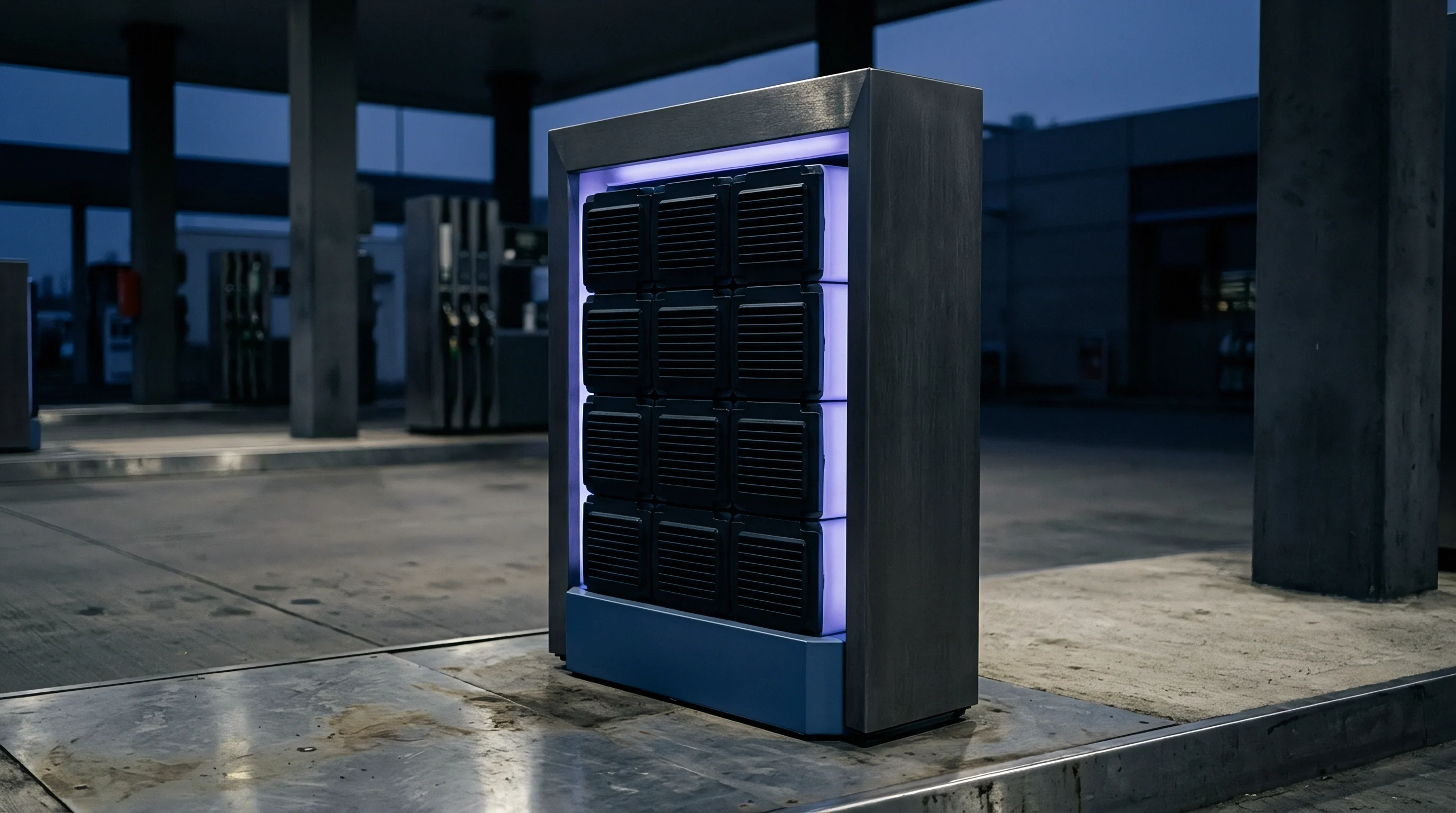
Inaccuracies in state of charge estimation lead directly to financial liabilities and pack over-engineering. Integrators unable to resolve the 40-millivolt hysteresis band across the central plateau set conservative operating windows. Restricting pack utilization to between 15 percent and 85 percent state of charge hedges against sudden cell depletion, forfeiting 30 percent of nominal nameplate capacity.
Reclaiming that stranded capacity requires better algorithmic accuracy rather than purchasing larger cell volumes. An energy storage system deploying 100 megawatt-hours of nameplate capacity forfeits roughly four million dollars in capital investment when firmware inaccuracies force a 10 percent operating margin buffer. Deploying differential hysteresis tracking algorithms narrows that safety buffer from 15 percent down to 5 percent at each operational boundary.
Delivery contracts enforcing IEC 62620 capacity guarantees hold cell suppliers financially liable for uncompensated state of charge divergence exceeding five percent during field operation.
Warranty risks escalate when inaccurate state estimation algorithms miscalculate available power limits at low temperatures. Vehicles accelerating under high current near depleted state boundaries risk driving individual cell terminal potentials below the 2.0-volt damage threshold, triggering copper dissolution and catastrophic internal short circuits.
Warranty exposure multiplies across distributed energy storage fleets when poor estimation models induce false pack balancing commands. Passive balancing circuits bleed energy through resistive shunts based on erroneous voltage comparisons taken across non-relaxed plateau states. This parasitic loss wastes energy, adds thermal stress, and degrades round-trip efficiency over years of commercial operation.
Procuring cells without robust hysteresis characterization dossiers forces integrators to maintain inflated warranty reserves to absorb premature pack replacement costs throughout the service life.