Determining Intellectual Property Boundaries in Contract Battery Manufacturing
Physical tool registration, firmware source code escrow, and regulatory applicant control establish the only legally enforceable pack manufacturing IP boundaries.

Origin
Contract battery manufacturing turns on a precise physical seam: where customer design files end and plant tooling takes over. Plants routinely treat production engineering, electrolyte fill sequences, and thermal-bonding schedules as their own proprietary know-how. A buyer who delivers an enclosure CAD model alongside a nominal capacity target often finds the factory claiming the internal tab interconnects, ultrasonic welding recipes, and BMS register definitions.
Holding onto both the technical files and the legal title requires dividing the pack architecture into auditable contractual deliverables before releasing any tooling deposits.
Battery builds split across three IP tiers: background rights brought into the plant, foreground work generated during development, and the shop-floor methods the supplier intends to keep. Boilerplate commercial agreements without explicit carve-outs hand the pack-level manufacturing records straight to the builder. The customer walks away with title to the plastic or aluminum shell, but forfeits the module interconnect array, flex-circuit routing, wire-bond pull tolerances, and thermal control routines.
That leaves the buyer tied to one line; moving to a second source becomes prohibitive once it requires re-tooling and new filings under UN 38.3 and IEC 62133.
A contract that leaves manufacturing data unpartitioned assigns the production rights of the internal interconnects directly to the assembly plant.

Baseline Ownership Schedules
The engineering services agreement sets the initial asset split. These assets divide along distinct operational lines during quoting, and the boundaries need to show up directly on the assembly drawings.
- Enclosure Shell Tooling assets include injection mold cavities, stamped sheet-metal dies, and cast aluminum structural housings funded through customer non-recurring engineering line items. The customer holds clear legal title and right of possession once invoices are settled.
- Module Interconnect Topology assets comprise stamped nickel or copper busbar layouts, ultrasonic weld tab formations, and cell-spacing containment webs. Title remains disputed unless explicitly assigned as work-for-hire tied to customer pack specifications.
- Process Automation Fixtures assets govern pick-and-place gantry code, vacuum electrolyte dispensing cycles, and AOI inspection vision libraries. Contract manufacturers hold baseline ownership under standard process exclusions.
- Firmware Object Registers assets cover low-level battery management system bootloaders, analog front-end chip configurations, coulomb-counting state-of-charge algorithms, and communication stack drivers. Pack builders retain default ownership whenever off-the-shelf reference boards form the core controller.
Ownership negotiations require checking what technical baseline the vendor actually brings to the project. If an assembler treats ultrasonic weld energy curves as protected trade secrets, the manufacturing package is effectively locked. Transferring the build to another line then costs months of re-qualifying the joints.
Avoiding that lock-in means treating pack-specific recipes as assigned work product paid for under non-recurring engineering fees.
Transferring standard automation parameters risks exposing general plant capabilities to competing customers, whereas withholding them leaves the buyer unable to replicate the process elsewhere.

Seam
The dividing line between buyer IP and supplier retention sits along physical and digital seams in the pack. Most confusion surfaces right at the cell-to-pack interface, where prismatic, pouch, and cylindrical layouts create different boundary conditions. For 21700 or 46800 cylindrical arrays, the steel can and core chemistry are merchant IP owned by the cell maker.
Proprietary engineering only starts at the cell holder lattice, where thermal barriers, adhesive tracks, and current-collection ribbons meet.
Pouch cells create tougher boundary issues because structural support depends on compression hardware and breathing allowances. Maintaining 20 kPa to 50 kPa of uniform pressure prevents electrode delamination and impedance climb over life. If the contract assembler designs the elastomeric foam pads and end-plate springs, that supplier controls the mechanical IP holding the cells together.
Moving the design elsewhere then voids pack-level warranties unless the buyer owns the compression tooling and tolerance stack outright.
| Battery Format | Physical Interface Seam | Production Variable | Default IP Holder | Target Assignment |
|---|---|---|---|---|
| Cylindrical 21700 | Wire-bond current collectors | Bond wedge ultrasonic energy (Joules) | Contract Manufacturer | Customer Owned Derivative |
| Pouch Polymer | Module compression chassis | Stack-up spring pressure (35 kPa nominal) | Contract Manufacturer | Customer Specification IP |
| Prismatic Aluminum | Laser-welded top busbars | Weld penetration depth (0.8 mm ± 0.05 mm) | Contract Manufacturer | Open Joint Geometry IP |
| Integrated Structural | Thermal interface gap filler | Dispense pattern, curing rheology | Joint Development | Customer Exclusive License |
Format Mechanical Allocations
Specifying the interface architecture requires strict boundary lines on the drawings. The structural housing has to be isolated from the process fixtures that handle it during assembly.
With prismatic cells, laser-welding rigid aluminum busbars to terminal posts triggers frequent disputes. The factory dials in wobble patterns, beam focus, and shield gas rates to limit spatter and avoid cooking the terminal seals. If the contract leaves process data unassigned, the supplier keeps those weld schedules as proprietary trade secrets.
The customer owns the busbar dimensions in the CAD model, but cannot reproduce equivalent bond strength at another plant because the laser parameters stayed behind.
Structural adhesive joints present the same problem. EV and industrial packs bond cell casings directly to cold plates using polyurethane or epoxy. Bead paths, cross-sectional profiles, surface primers, and cure cycles constitute valuable process IP.
If the factory automates the dispense path to eliminate air voids, whoever owns that bead profile controls the pack’s thermal dissipation performance.
Without explicit interface boundaries, buyers fund non-recurring tooling only to end up with bare metal stampings and no joining data to put them together.
Firmware
Battery management systems are the most contested technical asset in contract assembly. The architecture splits into board schematics, low-level board support packages, application logic, and estimation algorithms. Assemblers frequently pitch turnkey BMS platforms to speed up development.
Using that off-the-shelf hardware, however, leaves system-level ownership with the supplier, preventing the customer from auditing cell-health routines, qualifying alternative cells, or adjusting protection thresholds without explicit permission.
Embedded telemetry handles core operational tracking: state-of-charge, state-of-health, and cell balancing rely on mathematical models tuned to the degradation curves of specific cells. When an assembler writes this firmware, it often retains the underlying models and issues only a limited runtime license. Shifting production elsewhere prompts the vendor to revoke that license, cutting off the code required to run end-of-line functional tests.
A royalty-free firmware license fails operationally when the contract omits the source code, compiler toolchains, and proprietary calibration lookup tables.

Control Stack Stratification
Separating BMS firmware into defined layers during development keeps ownership boundaries unambiguous.
- Hardware Schematics and Bill of Materials ~ Physical circuit layouts, component selection, layer stack-ups, and PCB routing must transfer to the customer upon functional verification.
- Hardware Abstraction Layer ~ Low-level microcontroller drivers, ADC sampling code, and peripheral buses typically rely on silicon vendor libraries and remain subject to open-source or commercial non-exclusive licenses.
- Application Layer Protection Logic ~ Cutoff logic for overvoltage, undervoltage, overcurrent, and temperature limits must be designated as customer work-for-hire to preserve control over safety documentation.
- State Estimation Algorithms ~ Kalman filters, equivalent circuit models, and capacity-fade counters represent core analytical assets requiring outright assignment or irrevocable, perpetual worldwide licenses.
Disputes often hinge on microcontroller register maps. Assemblers will provide compiled hex files while holding back human-readable register definitions, CAN database files, or calibration matrices. Without the DBC file and baseline lookup values, the customer cannot build secondary test benches or integrate the battery into host systems.
Setting uncompiled source, build scripts, board support packages, and calibration tables as contractual acceptance deliverables resolves this issue up front.
Releasing source code risks exposing underlying driver routines developed through years of internal research, yet withholding it prevents the buyer from maintaining or qualifying the firmware independently.


Tooling
Tooling and fixture ownership grounds IP enforcement in physical equipment. Agreements typically state that the customer owns tooling funded through non-recurring engineering charges, but neglect to define what a tool actually is. Lines mix custom molds with generic jigs, specialized fixtures, and semi-automated stations.
A vendor might readily release housing injection molds while holding back weld jigs, wire-bond clamps, and leak chambers under the classification of standard plant equipment.
Dedicated fixtures govern build repeatability. In pouch cell stacking, vacuum pick heads and z-fold tension rollers control electrode alignment within ±0.2 mm. If those guides are classified as vendor assets, the buyer cannot pull the line during a supply dispute.
Owning the part drawings provides little leverage when the tooling needed to align, press, and clamp the cells remains locked on the supplier’s floor.

Capital Equipment versus Custom Tooling
Distinguishing plant capital equipment from custom tooling requires an itemized checklist during contract negotiation.
- Cell Holder Injection Molds classify as dedicated tooling assets. Multi-cavity molds running polybutylene terephthalate or polycarbonate belong entirely to the customer who funded the cavity machining and EDM tooling.
- End-of-Line Tester Fixtures show divided ownership. The instrumentation chassis, DC load banks, and source-measure units remain factory capital, whereas bed-of-nails pogo cassettes and pack-specific wiring harnesses belong to the customer under funded development terms.
- Ultrasonic Horns and Anvils represent consumable, custom-profiled items. Titanium or hardened-steel horns cut with specific knurling patterns to grip tab foils constitute dedicated tooling paid under line-item schedules.
- Module Clamping Fixtures act as direct process-defining hardware. Pneumatic or servo-driven cages that hold cell stacks to exact dimensions during busbar joining belong to the customer, even when mounted inside plant workstations.
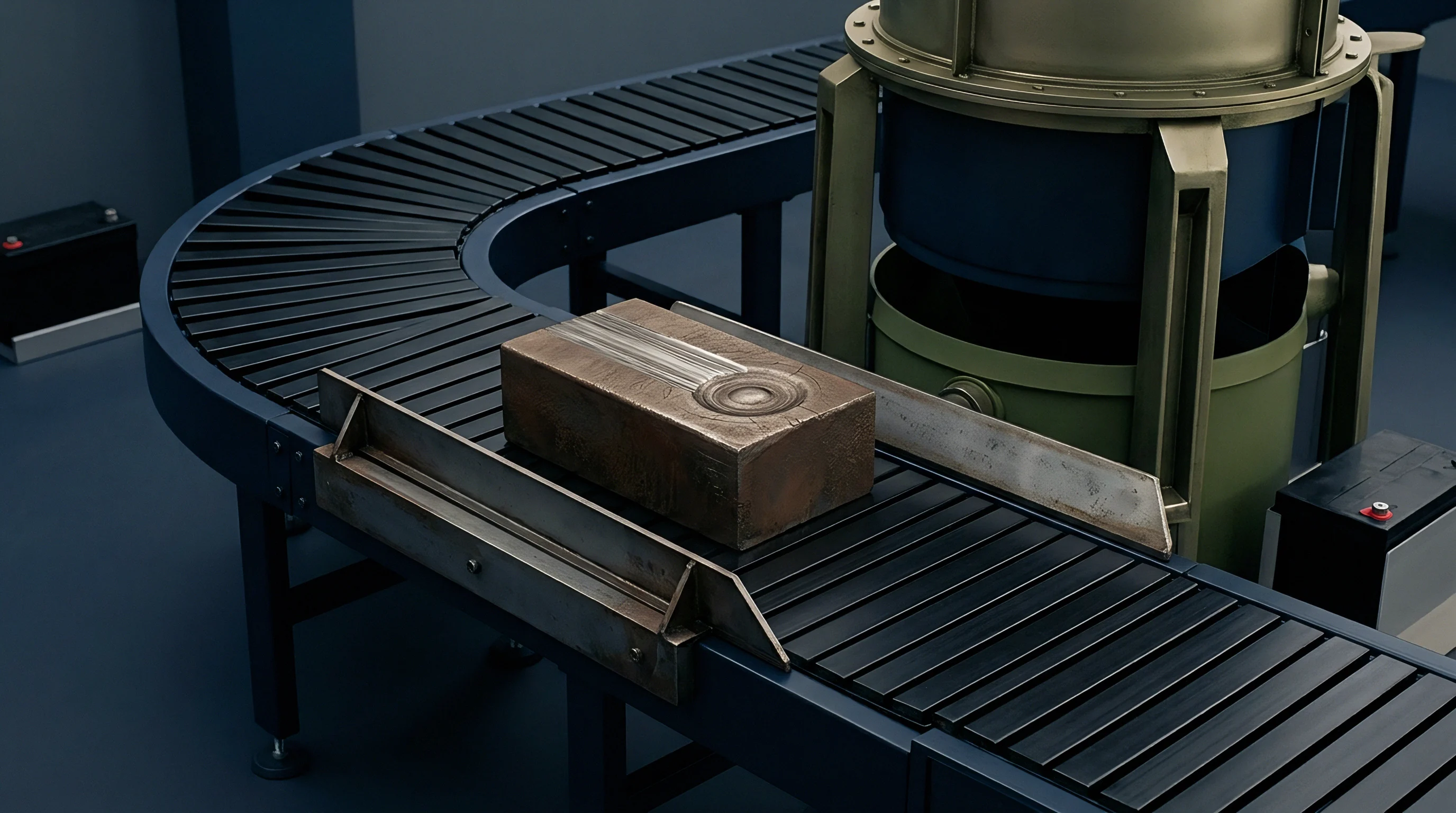
Extraction rights depend on serial tagging and physical registration. Plants in many jurisdictions automatically claim untagged hardware as company property, exposing customer tooling to commercial liens, insolvency proceedings, or tax seizures. Contracts must require metal asset tags riveted to tool bases, showing the buyer’s name, serial identifier, and explicit ownership.
Regular on-site audits ensure plates remain in place and prevent the tooling from running production runs for third parties.
A tooling agreement lacking clear removal procedures leaves hardware stuck in the factory behind formal disputes and inventory liens.


Qualification
Certification data represents a critical, often overlooked IP asset in contract builds. A finished pack requires qualification under global standards: UN 38.3 for transport, IEC 62133-2 for portable electronics, UL 2054 for household packs, and UL 1973 or UL 9540A for stationary storage. Generating these compliance dossiers costs between $30,000 and $120,000 and takes months of environmental, shock, and vibration testing.
Legal title to test logs, raw laboratory records, and agency project files dictates whether the buyer can actually sell into target markets.
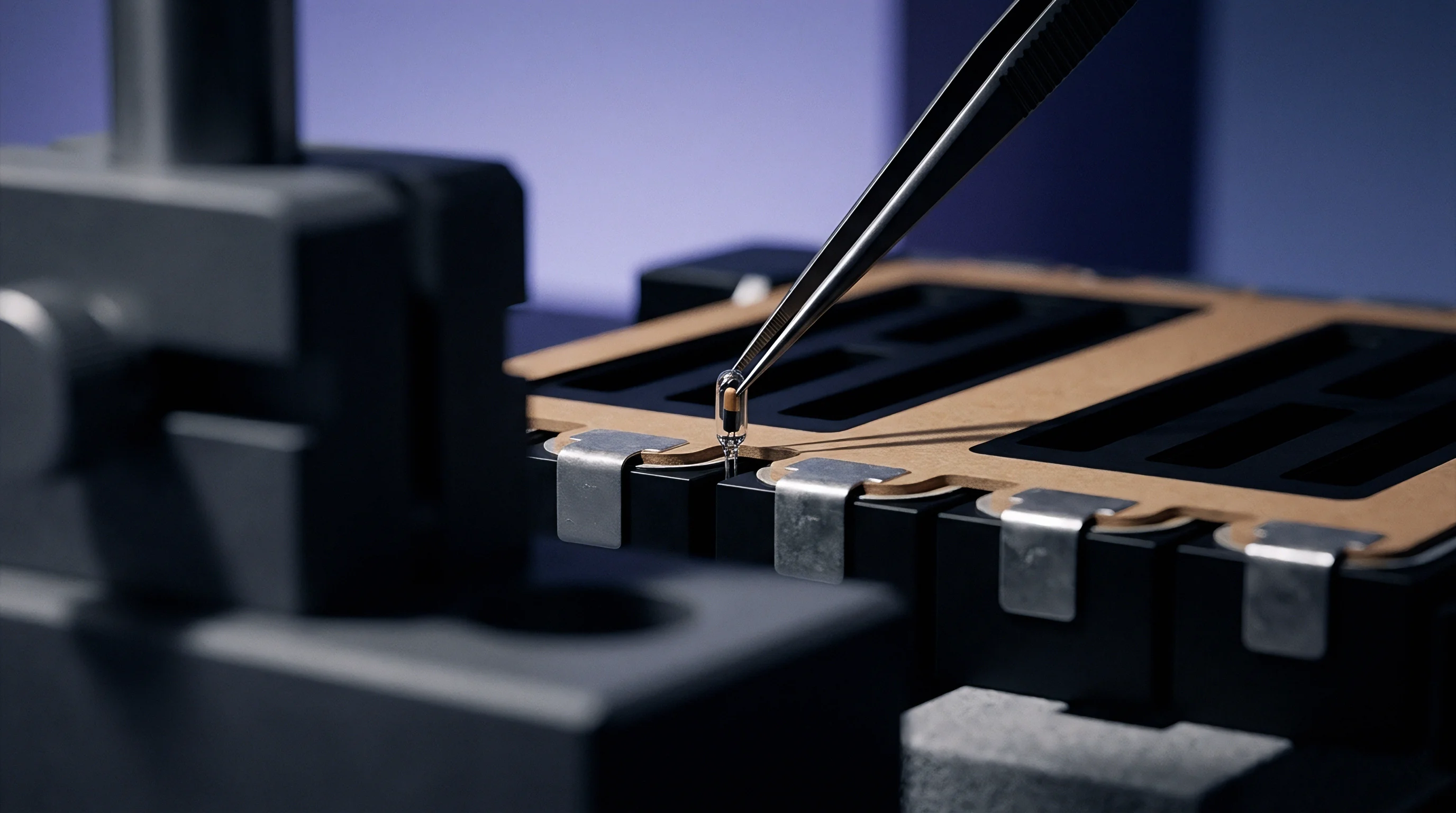
Testing laboratories issue certificates to whichever entity files as the applicant. When an assembler handles regulatory testing without contract language protecting ownership, the plant ends up listed as the certificate holder. The customer appears only as a brand on the packaging.
The assembler then holds exclusive authority to approve engineering change orders, relocate production, or release compliance paperwork. If the relationship breaks down, revoking the authorization letter blocks the buyer from clearing customs or distributing replacement packs.
A regulatory certificate registered under a supplier name grants that vendor absolute commercial control over export clearance and market continuity.
Regulatory Documentation Allocation
Securing regulatory files requires assigning test data and filings systematically across target standards.
| Compliance Standard | Primary Documentation Deliverable | Critical IP Risk | Contractual Assignment Rule |
|---|---|---|---|
| UN 38.3 Transport | Test Summary Report (TSR) | Vendor locks transit permissions | Customer listed as applicant and owner |
| IEC 62133-2 CB Scheme | CB Test Report and Certificate | Component-change blocking rights | Customer owns full lab raw test trace |
| UL 2054 Household | Factory Inspection Report records | Quarterly audit control dependency | Joint listing with primary file ownership |
| UL 9540A Thermal Runaway | Large-scale fire test raw telemetry | Fire safety data withheld from buyer | Unrestricted customer ownership of datasets |
Who Controls the Factory Quality File?
Line qualification involves building out the Production Part Approval Process, standard operating procedures, and capability indices. The plant usually writes the control plan, FMEA, and gauge R&R studies. While the plant retains its general assembly know-how, the pack-specific tolerances, inspection intervals, and acceptance limits belong in the buyer’s dossier.
The customer needs these capability distributions to demonstrate process control during customer and regulatory audits.
Quality records underpin long-term production yield. Inspection criteria covering optical weld porosity checks or automated helium mass spectrometry for aluminum cell enclosures prove design and process stability. If an agreement lets the supplier treat these records as confidential plant data, the customer cannot prove manufacturing equivalence when qualifying a replacement line.
Contracts need to state that verification plans, control limits, and historical trend data remain fully accessible and transferable to the buyer.
Capability metrics and inspection logs provide the core proof of reliability; omitting them from the customer file deprives the brand of baseline compliance control.


Extraction
Line transfers put contractual IP clauses to the test. Relocating a build demands retrieving drawings, tooling, firmware binaries, calibration rigs, and process sheets. Without a defined offboarding protocol in the master agreement, an incumbent plant can drag out negotiations, citing trade secret protections over basic line settings until the buyer burns through its production runway.
A structured transfer package bridges that operational gap. The contract should list the contents of the manufacturing package with delivery dates linked to escrow releases or milestone sign-offs. If an assembler withholds wire-bond loop heights, terminal torque values, or vacuum bakeout dwell times, the replacement plant faces months of empirical trial-and-error, blown schedules, and scrap.

Worked Cost Model: Line Transfer and Secondary Bring-Up
The financial toll of unassigned process parameters shows up clearly during line bring-up. Consider an industrial program using 48 prismatic lithium iron phosphate cells (3.2 V, 100 Ah) in a 16S3P layout, producing a 15.36 kWh module. Volume runs at 2,000 packs per month.
The incumbent builder claims ownership of the laser weld schedules, module clamping curves, and automated end-of-line test routines.
Logistics considerations force a transition to a new manufacturing partner. Because process settings remain locked with the original plant, the new facility has to qualify the process and recertify from scratch. The rework and line downtime generate specific costs:
- Laser Welding Process Development ~ Establishing multi-axis laser weld parameters for copper busbars on aluminum terminals takes 3 weeks of beam-profiling, metallographic cross-sections, and tensile pull tests. Engineering time and acoustic microscopy total $34,000.
- Scrapped Trial Cell Inventory ~ Developing weld profiles and compression fixtures consumes 320 test cells at a landed cost of $42 each, producing $13,440 in scrap.
- End-of-Line Test Automation Engineering ~ Reverse-engineering the CAN test routines, safety interlocks, and BMS flashing sequences requires 160 hours at an integration rate of $185 per hour, coming to $29,600.
- Regulatory Re-Testing and Dossier Updates ~ Submitting samples for UN 38.3 re-qualification and IEC 62133-2 updates incurs $26,000 in lab fees and takes 8 weeks.
- Production Delay Yield Penalties ~ The 8-week qualification delay stops output of 4,000 packs, generating $115,000 across plant reservation fees, inventory holding costs, and missed-delivery penalties.
Re-engineering the missing manufacturing IP totals $218,040, excluding commercial penalties and lost revenue from the shutdown. Specifying transfer deliverables and handoff schedules in the primary contract keeps buyers from paying that cost twice.
Pre-Emptive Escrow Strategies
Technical escrow provides practical enforcement for IP transfers. Depositing source code, Gerber artwork, wiring schedules, and standard operating procedures with an escrow agent guarantees buyer access under set conditions: termination, insolvency, or sustained quality defaults. The escrow agent inspects deposits semi-annually to verify that stored packages build to the exact checksum running on the production line.
Escrow arrangements can cover physical process records as well as code. Storing current laser weld sheets, oven thermal profiles, and torque tool calibrations protects against vendor lock-in. When a transition event occurs, the verified parameters release directly to the customer’s engineering team, allowing bring-up at a secondary plant without waiting out a protracted dispute.
Section 14.3 of the Master Services Agreement dictates that all process specifications, calibration recipes, and assembly instructions must transfer directly to the client within ten calendar days of written termination notice, thereby eliminating vendor-retained operational holds.