Fatigue Fracture Limits under Transverse Impact Loading in Consolidated Alloys
Dynamic strain rates lower consolidated alloy fatigue limits under transverse impact, requiring strict micro-void controls during hot isostatic pressing.
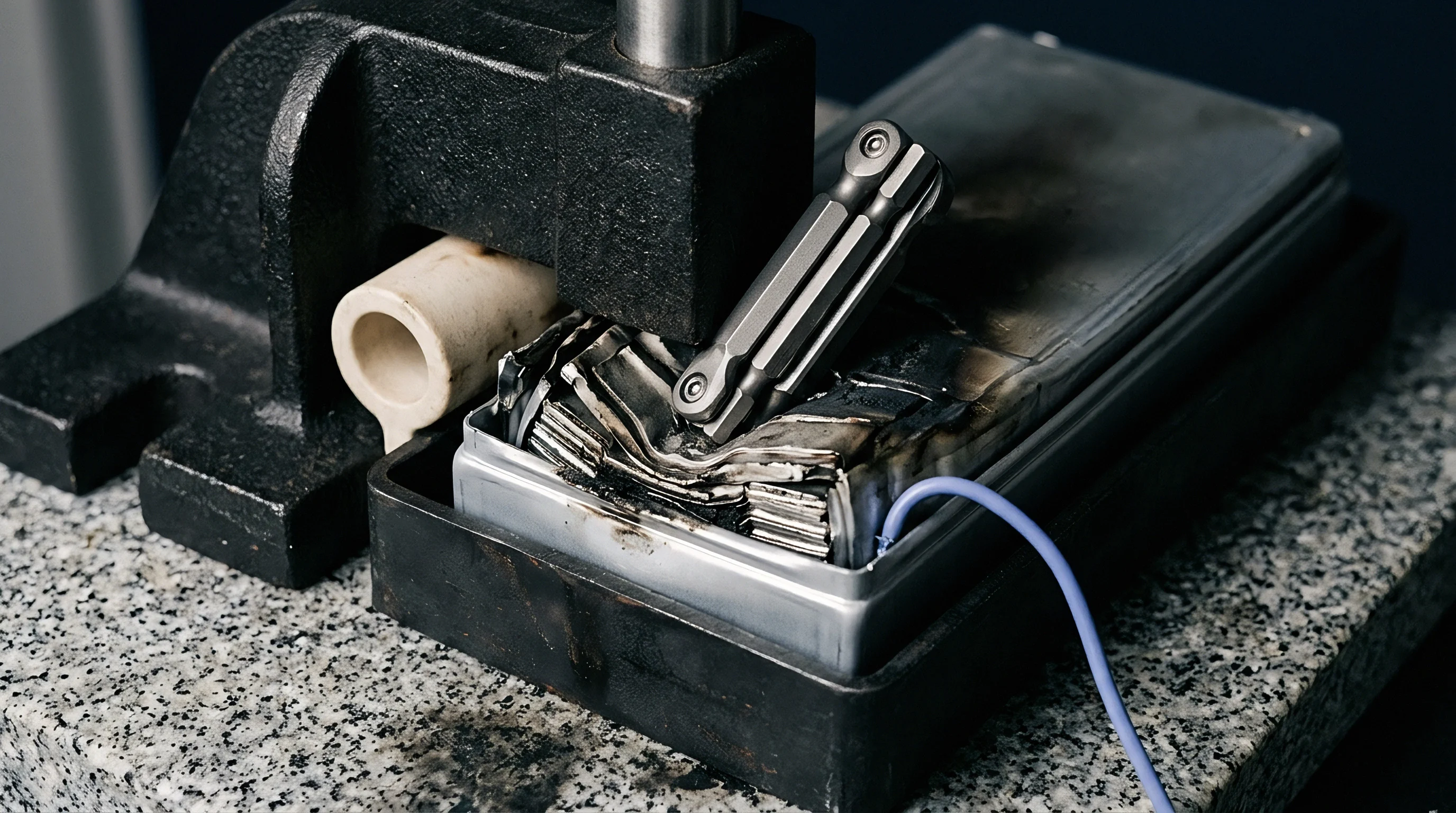
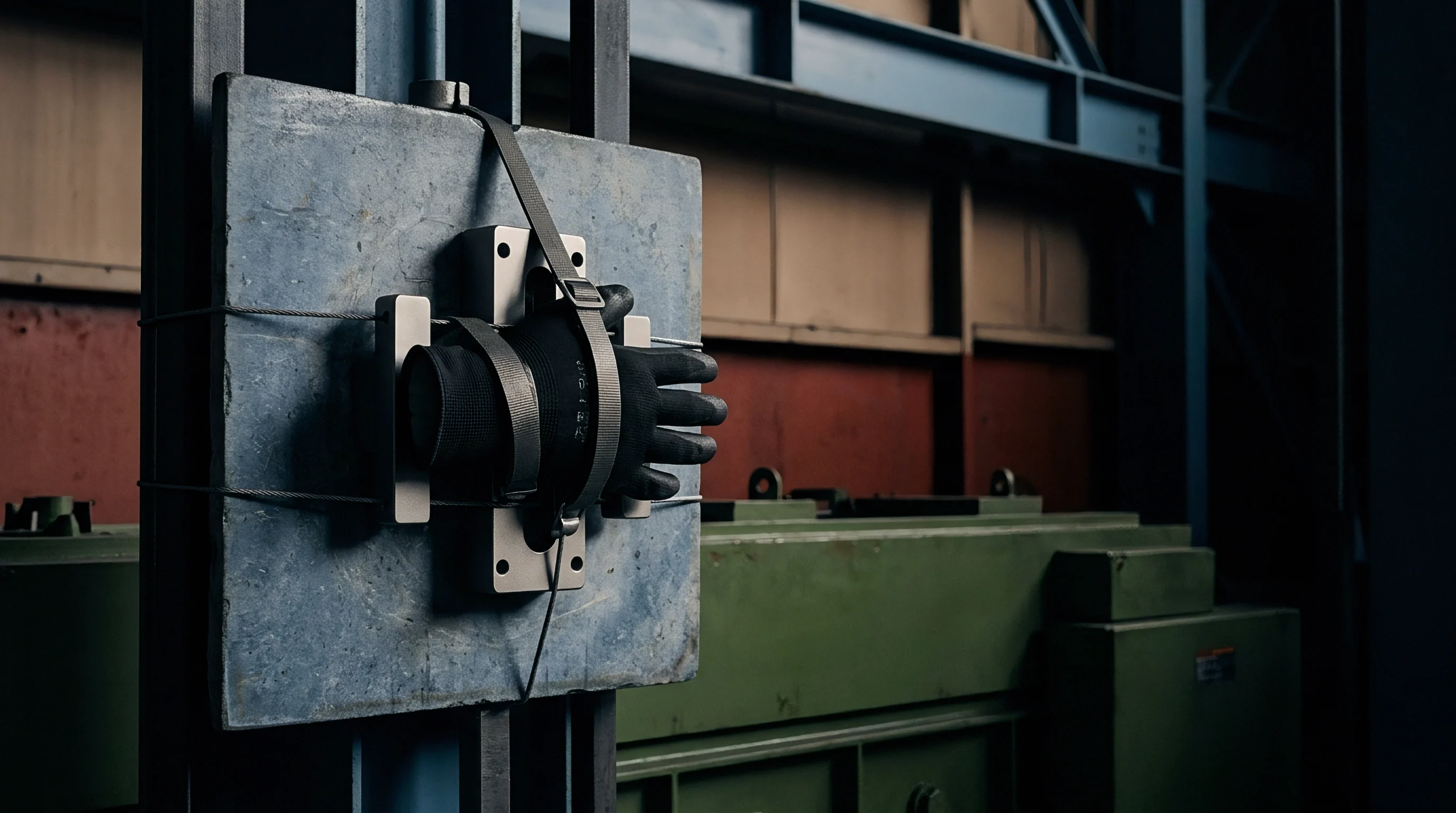
Strike
Transverse velocity impacts against consolidated alloy plates generate high-amplitude compression pulses that propagate rapidly through the material thickness. Structural battery pack enclosures, bottom armor plates, and extruded side sills in electric vehicles routinely sustain perpendicular dynamic loads from road debris, mechanical shock tests, and minor chassis floor strikes. The response of powder-metallurgy consolidated alloys, including hot isostatically pressed aluminum and titanium matrix formulations, differs significantly from conventional wrought stock under these localized dynamic events.

Dynamic Strain Propagation under Perpendicular Collision
Impulse duration governs whether structural deformation remains elastic or initiates local plastic shearing across consolidated metal matrices. High-velocity impact events create strain rates ranging from 102 to 5 × 10³ s−1, altering dynamic yield strength and crack initiation energy thresholds. Dynamic stress waves reflect off internal interfaces, creating tensile wave reverberations that concentrate mechanical energy across particle consolidation boundaries.
Under ambient testing conditions, rapid plastic deformation limits stress relaxation while shear bands initiate crack propagation as local strain peaks. Consolidated alloys containing microscopic density variations exhibit elevated localized strain energy density, accelerating the onset of micro-cleavage along inter-particle contact points.
Peak strain rates exceeding 1500 per second collapse yield limits in consolidated aluminum alloys by 35 percent under ambient impact.
Designing underbody battery tray protection plates requires calculating dynamic strain rate sensitivity factors alongside standard static tensile limits. When transverse impact kinetic energy converts into plastic work, internal lattice disconnections accumulate rapidly. Miscalculating dynamic yield limits during transverse collision modeling causes unanticipated structural floor splitting during pack drop qualification tests, triggering total tray fracture and uncontrolled cell containment loss.


Defect
Consolidated alloy plates exhibit localized microstructural variations caused by incomplete particle bonding and trapped gas inclusions during hot pressing. Sintering voids, inter-particle oxide skins, and density gradients act as internal stress risers under repeated dynamic loadings. The mechanical performance of powder-consolidated aluminum alloys under perpendicular shock depends directly on controlling these microstructural imperfections.

Microstructural Imperfections and Fast Fracture Paths
Sintered powder contact zones create stress concentration sites when subjected to combined high-rate flexure and cyclic bending forces. Micro-cracks initiate preferentially at inter-particle boundaries where residual gas voids remain after compaction. Under dynamic impact loading, these pre-existing internal flaws bypass the typical crack nucleation stage, converting the material response straight into rapid propagation.
As micro-voids coalesce under stress and brittle phases lower impact resistance, repeated dynamic impulse loads cause micro-fractures to link along sintering lines, forming macro-cracks that compromise structural battery enclosures.
| Material System | Density (% Theoretical) | Void Volume Fraction (%) | Fracture Toughness K1c (MPa·m^0.5) | Cyclic Transverse Limit (MPa at 10^6 cycles) |
|---|---|---|---|---|
| HIP AA6061 Powder Alloy | 99.4 | 0.12 | 28.5 | 145 |
| Spark Plasma Sintered AA7075 | 98.8 | 0.35 | 22.1 | 110 |
| Hot Extruded Al-SiC Composite | 99.6 | 0.08 | 19.4 | 165 |
| Selective Laser Melted AlSi10Mg | 99.1 | 0.22 | 24.0 | 125 |

Porosity Distributions across Sintering Boundaries
Internal void volume fractions exceeding 0.15 percent concentrate plastic strain around unbonded metal grain boundaries. Mechanical testing of consolidated structures reveals that spherical gas pores cause lower stress concentration than irregular, angular voids left by incomplete vacuum degassing during powder preparation.
ISO 12405-3 impact compliance fails when internal cavity volume fraction exceeds 0.2 percent across high-bending zones.
Because pores concentrate local stress fields, the distribution of microstructural flaws dictates whether a consolidated structural tray sustains localized plastic denting or suffers full fracture under dynamic shock loading.
- Boundary pore coalescence accelerates micro-crack coalescence along powder particle boundaries under localized shear waves.
- Secondary oxide films lower inter-granular fracture toughness across consolidation interfaces during repeated dynamic deflection.
- Inter-particle cleavage propagates along un-sintered neck boundaries during multi-axis transverse bending shocks.
- Brittle intermetallic precipitation concentrates local tensile stress fields around embedded ceramic reinforcement particles.
Residual boundary voids stem from inadequate hot isostatic pressing dwell time rather than raw atomized powder size variance.


Strain
Cyclic flexural deformation combined with high-frequency physical impacts shifts fatigue thresholds below nominal static yield limits. Structural tray underbodies support static pack weights while simultaneously enduring chassis torsional oscillations and occasional perpendicular strikes from road obstacles. Analyzing the interaction between continuous low-amplitude fatigue cycles and high-magnitude dynamic shock loading is essential for predicting tray service lifespan.
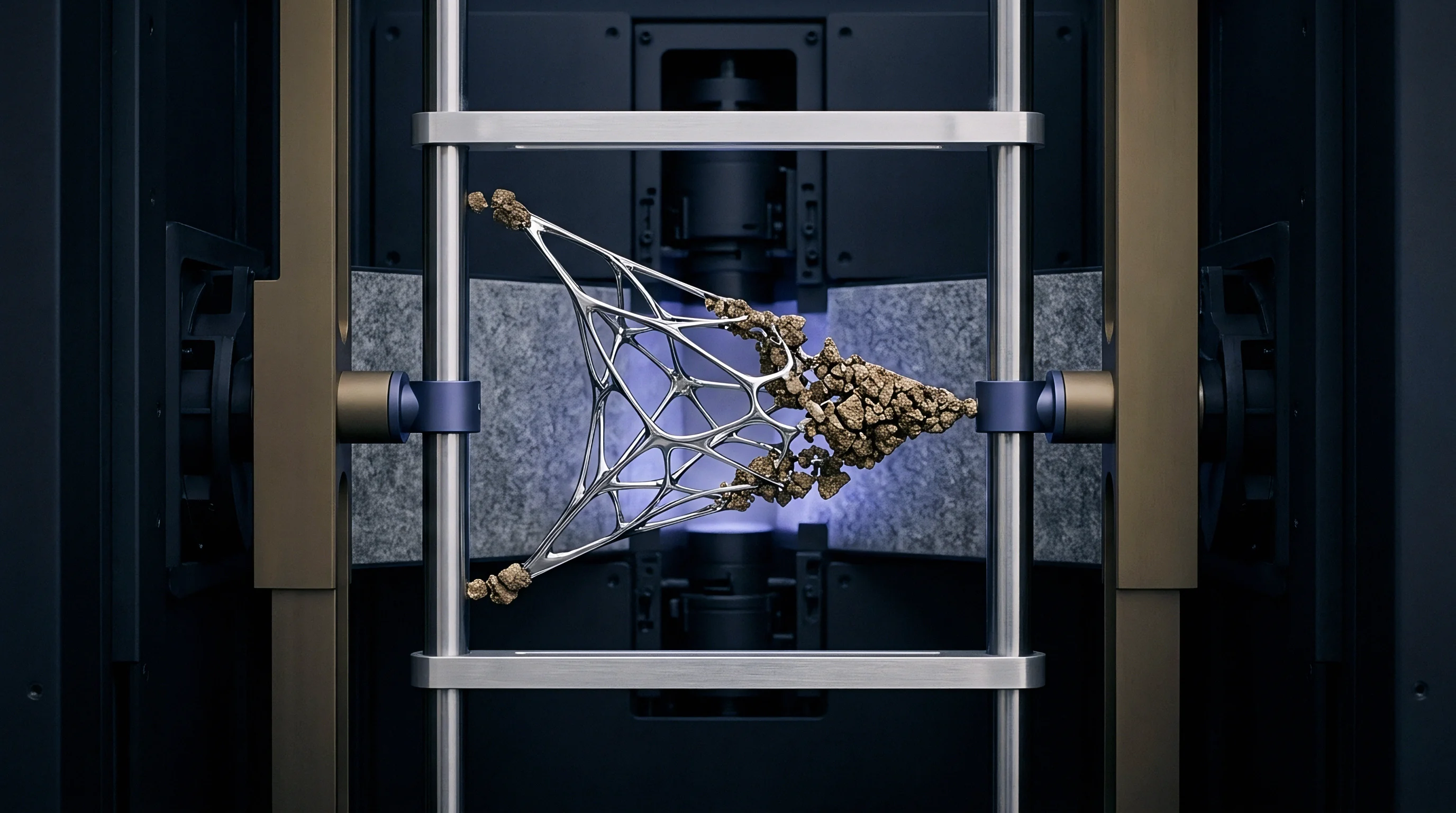
What Modifies Fatigue Fracture Boundaries under Repeated Transverse Dynamic Shocks?
Accumulated structural damage in consolidated battery trays follows a multi-stage process where low-amplitude vibration cycles degrade internal cohesive strength prior to heavy perpendicular strikes. Stress amplitude, loading frequency, and consolidation density interact non-linearly to dictate macro-crack nucleation.
Evaluating a representative consolidated AA6061 powder metal bottom protective tray illustrates this structural damage accumulation. Assume a tray span of 450 mm, width of 300 mm, and uniform thickness of 4.0 mm ± 0.08 mm. The alloy possesses a theoretical density of 99.3 percent, yield stress of 310 MPa, fracture toughness K1c of 26.0 MPa·m0.5, and a static fatigue limit of 140 MPa at 107 cycles.
The operational profile subjects the structure to continuous road vibration producing 65 MPa flexural stress at 15 Hz, interrupted every 500 operating hours by a 15 Joule transverse impact delivering a dynamic bending pulse of 210 MPa.
Under continuous road vibration alone, crack initiation occurs after approximately 4.2 × 10⁶ cycles based on standard S-N curves, as flexural load drives propagation and yield limits constrain strain. However, introducing the periodic 15 Joule transverse dynamic impact alters the internal damage rate. Each impact event generates a localized plastic strain spike of 0.18 percent at the outer surface, inducing micro-cracks with an initial depth a0 = 0.05 mm.
Applying Paris Law parameters (C = 1.2 × 10⁻¹¹ m/cycle, m = 3.2) to evaluate subsequent cycle propagation yields an accelerated crack growth rate da/dN. The stress intensity factor range ΔK under the background vibration flexure (65 MPa) for a surface flaw of depth a is calculated using:
ΔK = 1.12 · Δσ · √(π · a)
At initial crack depth a0 = 0.05 mm, ΔK equals 1.44 MPa·m0.5. After 100,000 background vibration cycles, the crack grows to a1 = 0.082 mm. The subsequent transverse impact pulse of 210 MPa raises the temporary stress intensity factor Kmax to 10.3 MPa·m0.5.
Because Kmax remains below K1c (26.0 MPa·m0.5), immediate fast fracture does not occur during the first strike. However, the localized plastic zone ahead of the crack tip expands by 12 micrometers, lowering the effective threshold stress intensity factor for subsequent low-amplitude vibration cycles.
Iterating this dual-load sequence shows that critical crack depth acrit (calculated at 4.2 mm, exceeding plate thickness) is reached after only 1.1 × 10⁶ vibration cycles when combined with 11 periodic impact events. Miner’s cumulative damage sum reaches 1.0 significantly earlier than predicted by linear damage accumulation models.
Dynamic modulus degradation precedes macro-crack initiation in consolidated structural plates under repeated impact.
This worked calculation establishes that high-amplitude transverse impacts reduce the remaining cyclic fatigue life of consolidated alloys by over 70 percent compared to pure vibration profiles. Structural designers must account for this non-linear damage accumulation when specifying tray panel thickness and consolidation quality standards.
The exact rate at which multi-axial high-rate shear stresses accelerate fatigue crack initiation within sub-surface powder consolidation boundaries remains open to dispute among structural analysts.
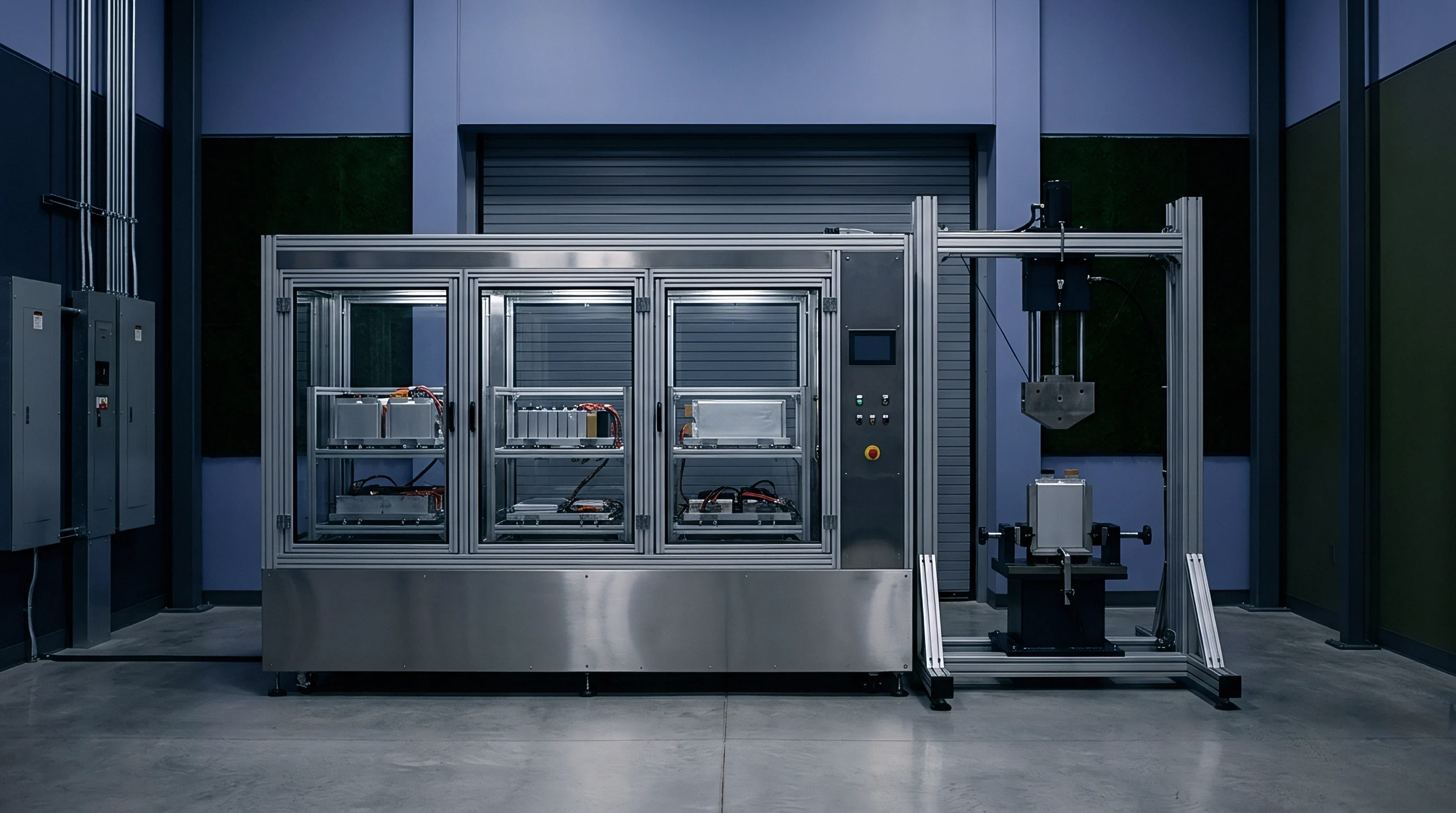

Gauge
Quantifying structural integrity under dynamic impact requires instrumented drop towers paired with post-test non-destructive evaluation. Standard Izod and Charpy pendulum tests fail to replicate the complex stress state experienced by consolidated alloy enclosure panels subjected to combined fatigue bending and transverse impacts. Specialized test fixtures provide precise measurement of shock impulse profiles and dynamic fracture limits.

Instrumented Impact Fatigue Qualification Testing
Laboratory test rigs utilize piezo-electric load cells and high-speed laser vibrometers to record real-time plate deflections during dynamic impact sequences. Evaluating fatigue fracture boundaries requires pre-cycling consolidated alloy test coupons under controlled flexural loads prior to delivering high-velocity transverse strikes.
- Secure the consolidated alloy coupon inside the rigid perimeter clamp using a calibrated torque wrench set to 25 Newton meters.
- Align the drop-weight projectile over the center transverse axis using dual laser displacement positioning sensors.
- Pre-condition the test specimen with 10000 cycles of sinusoidal bending at 70 percent of nominal yield strength.
- Release the 10 kilogram impulse tup from a calibrated drop height of 1.2 meters to impart a transverse mechanical shock.
- Scrutinize the impact zone using high-frequency ultrasonic attenuation scanning to detect sub-surface micro-cracks.
Non-destructive acoustic evaluation tracks microstructural damage accumulation before macro-cracks become visible on the alloy surface, capturing how thermal shocks aggravate surface defects and cracks follow sintering boundary voids.
Ultrasonic wave speed drops measurably once internal micro-cracks aggregate across consolidation boundaries.
Integrating high-speed digital image correlation during transverse dynamic testing maps full-field strain gradients across the coupon surface. Capturing strain localization during the initial 50 microseconds of impact reveals exact fracture initiation zones relative to internal consolidation flaws.
UN 38.3 Revision 7 Section 38.3.4.4 mandates zero structural enclosure cracking following dynamic shock pulses, forcing pack designers to reject consolidated alloy lots showing ultrasonic velocity drops greater than two percent.


Margin
Commercial procurement agreements for consolidated powder alloy components balance initial tooling non-recurring engineering costs against strict microstructural defect limits. Powder metallurgy manufacturing offers near-net-shape production for complex battery enclosure geometries, but material density consistency dictates overall dynamic strength. Specifying clear qualification criteria protects pack integrators from absorbing downstream structural failures.
Tooling Amortization and Quality Specifications
Hot isostatic press die tooling represents significant upfront expenditure that must be amortized over production volumes without sacrificing compaction uniformness. Variations in compaction pressure across large tray dimensions create localized low-density zones that lower impact fatigue resistance.
| Processing Route | Tooling NRE (USD) | Density Target (%) | Unit Landed Cost (USD) | Dynamic Safety Factor | Compliance Ownership Boundary |
|---|---|---|---|---|---|
| Hot Isostatic Pressing (HIP) | 120,000 | 99.5 ± 0.1 | 185.00 | 2.2 | Raw Material Consolidation Mill |
| Spark Plasma Sintering (SPS) | 85,000 | 98.9 ± 0.3 | 142.00 | 1.7 | Sintering Subcontractor |
| Direct Powder Extrusion | 45,000 | 99.2 ± 0.2 | 118.00 | 1.9 | Extrusion Tooling Vendor |
| Additive Laser Powder Bed | 15,000 | 99.1 ± 0.4 | 310.00 | 1.5 | Print House & Machining Shop |

Commercial Risk Boundaries in Sourcing Consolidated Alloys
Defining explicit quality acceptance criteria in purchasing contracts protects pack integrators from absorbing downstream warranty liabilities caused by material fatigue. Supplier technical documentation must specify guaranteed minimum density levels across high-stress tray radii.
Because tooling pressure governs density uniformity and landed cost increases with hot pressing, transverse impulse can trigger shear yielding. Establishing non-destructive inspection sampling plans at incoming quality control prevents defective consolidated alloy stock from entering final pack assembly.
- Hot isostatic pressing thermal hold limits specifying minimum dwell duration at maximum compaction pressure to guarantee complete particle fusion.
- Atomized raw powder gas purity criteria capping interstitial oxygen contamination below 250 parts per million prior to compaction.
- Ultrasonic wave attenuation rejection thresholds establishing non-destructive testing pass limits for sub-surface micro-void concentrations.
- Fillet radius machining standards forcing stress-relieving radii along high-flexure transverse tray corners to prevent fatigue crack initiation.
Higher compaction pressure during alloy powder consolidation consistently yields superior resistance against dynamic impact fatigue in battery enclosure plates.