Multiaxial Traction Separation Modeling for Environmental Crack Growth in Structural Cells
Multiaxial cohesive modeling predicts battery structural bond fracture under mixed-mode loads and environmental fluid degradation.

Kinematics
Structural cell integration in high-energy battery enclosures transfers mechanical loads directly through cell casings to outer tray housings. In cell-to-pack and cell-to-chassis designs, battery cells act as structural shear webs. Mechanical forces propagate through thin adhesive bondlines that experience coupled normal and tangential displacement fields during chassis deformation.
Mechanical Loads across Battery Interfaces
In cell-to-pack and cell-to-chassis structural architectures, external frame forces interact with cyclic internal pouch breathing during charge-discharge sequences. Vehicle cornering and torsional chassis flexing apply severe in-plane shear forces across structural adhesive layers. Simultaneously, cyclic lithium intercalation induces reversible thickness changes ranging from 2 percent to 8 percent in pouch and prismatic cells.
This volumetric expansion creates out-of-plane normal compressive stresses during initial constrained pack assembly, turning into tensile peel stresses when chassis twisting acts upon degraded bond edges.
Deformation field equations for structural cell joints must accommodate displacement jumps across zero-thickness cohesive interfaces. The displacement jump vector across an adhesive interphase includes normal displacement alongside two orthogonal in-plane sliding displacements. Multiaxial traction separation modeling maps these three spatial components directly to normal and shear stresses acting on the bonding plane.
Yield drops immediately.

Traction Vector Component Decomposition
Mechanical field equations model relative displacement jumps across structural adhesive layers using normal and tangential coordinates. The traction vector acting on the cohesive surface contains three discrete spatial stress values:
Traction vector components resolve into an out-of-plane normal traction component and two orthogonal shear traction components. Under pure Mode I loading, separation occurs normal to the cell wall interface. Under Mode II and Mode III loading, in-plane sliding and anti-plane tear motions drive shear stress development along the adhesive layer.
Real chassis distortion combines all three modes simultaneously, requiring coupled traction separation formulations to predict localized damage initiation.
| Adhesive Polymer Base | Normal Stiffness (MPa/mm) | Shear Stiffness (MPa/mm) | Peak Normal Traction (MPa) | Peak Shear Traction (MPa) | Mode I Toughness (J/m²) | Mode II Toughness (J/m²) |
|---|---|---|---|---|---|---|
| Structural Polyurethane (Two-Part) | 450 ± 35 | 180 ± 20 | 18.5 ± 1.2 | 14.0 ± 1.0 | 1200 ± 85 | 2400 ± 150 |
| Toughened Structural Epoxy | 1200 ± 80 | 520 ± 40 | 32.0 ± 2.1 | 26.5 ± 1.8 | 850 ± 60 | 1650 ± 110 |
| Structural Acrylic | 780 ± 50 | 310 ± 25 | 24.0 ± 1.5 | 19.5 ± 1.4 | 980 ± 70 | 1900 ± 130 |
| Silicone Structural Elastomer | 85 ± 8 | 32 ± 4 | 3.8 ± 0.3 | 3.1 ± 0.2 | 2100 ± 140 | 3200 ± 210 |
Cell casing rigidity alters the local stress distribution across the adhesive joint. Thin-walled aluminum prismatic casings experience localized shell bending near cell corners under swelling pressures. This localized curvature forces the cohesive bondline into sharp Mode I peel concentrations right at the perimeter of the bonded area.
Determining whether micro-void initiation at cell corners transitions into catastrophic planar delamination under high-g shock impact remains an active area of structural battery research.


Formulation
Mathematical representation of interfacial fracturing relies on traction-separation constitutive models that specify stress as a continuous function of displacement jump. Constitutive laws bridge continuum finite element models of cell casings and pack housings with localized surface fracture phenomena.
Thicker adhesive bondlines reduce shear stiffness concentration at cell corners while increasing susceptibility to environmental moisture ingress along the perimeter.
Constitutive Equations for Mixed Mode Fracture
Numerical adhesive modeling pairs linear elastic stiffness prior to damage initiation with progressive softening regimes defined by energy release rates. Bilinear traction-separation relations remain common due to numerical convergence stability in finite element solvers. The linear elastic domain scales stress through an uncoupled stiffness matrix until the traction state satisfies a damage initiation criterion.
Quadratic nominal stress criteria accurately predict damage initiation under combined normal and shear stress states. Damage initiates when the sum of squared ratios between actual tractions and peak cohesive strengths equals unity. Once damage initiates, a scalar damage variable evolves from zero to one, reducing both normal and shear stiffness components monotonically.
Energy-based damage evolution governs complete element failure. Total strain energy dissipated during separation equals the critical fracture energy. The Benzeggagh-Kenane criterion captures mixed-mode fracture energy variation by expressing critical energy release rate as a function of mode mixity ratio, defined by the proportion of shear energy dissipation relative to total fracture energy.
What Dictates Mode Mixedness in Cell Structural Adhesive Separation?
Relative stiffness ratios between structural pack housing skins and lithium-ion pouch enclosures shift stress states from pure opening modes toward shear dominated failure. Cell module geometry enforces asymmetric restraint conditions across the battery tray. External bending of the vehicle floor structure generates in-plane shear forces inside the horizontal bonding planes, while internal cell gas generation applies uniform normal tension against the structural side plates.
Cracks propagate rapidly.
Numerical implementation of multiaxial cohesive zone models requires explicit consideration of irreversible plastic displacement components during cyclic loading. Pure elastic softening formulations overpredict crack closure forces during load reversal. Including damaged plastic offset displacements within the cohesive constitutive law prevents unphysical stiffness recovery when vehicle chassis vibration reverses torsional stress directions.
Setting adhesive cohesive stiffness high enough to avoid numerical penalty compliance shifts strain localization into adjacent structural components without increasing joint strength.
Degradation
Exposure to harsh chemical and atmospheric environments breaks molecular bonds within structural adhesives while attacking metallic substrate oxide layers. Structural battery enclosures encounter aggressive fluids, including leaked liquid electrolyte solutions, ambient moisture condensation, and atmospheric road salt spray.

Electrolyte Hydrolysis and Moisture Diffusion Kinetics
Leaked organic solvents carrying dissolved fluorinated salts react with ambient humidity at bond boundaries to generate corrosive chemical species. Lithium hexafluorophosphate breaks down in the presence of trace water to form hydrofluoric acid. Hydrofluoric acid attacks the protective aluminum oxide film on cell casings, initiating pitting corrosion and hydrolyzing silane coupling agents at the adhesive interface.
Traction drops to zero.
Moisture diffusion follows Fickian kinetics through the bulk adhesive polymer, accompanied by non-Fickian transport along interface pathways. Water molecules plasticize structural polyurethanes and epoxies, lowering glass transition temperatures by up to 25 degrees Celsius. Chemical hydrolysis cleaves main polymer chains, permanently degrading peak cohesive strength and Mode I critical fracture energy.
Compliance with UN 38.3 vibration criteria requires bondline cohesive integrity after 200 thermal shock cycles from minus 40 degrees Celsius to 75 degrees Celsius.
Environmentally Assisted Subcritical Crack Kinetics
Sustained mechanical stress lowers the activation energy required for chemical bonds to sever in the presence of aggressive fluid species. Subcritical crack growth occurs at strain energy release rates significantly below the dry critical fracture toughness of the adhesive joint.
Environmental damage scalar values modify classical traction-separation equations by scaling peak cohesive tractions and energy release rates as functions of local moisture concentration and chemical exposure time:
- Hydrolytic Polymeric Chain Scission breaks backbone ester and ether linkages in polyurethane adhesives, reducing peak normal traction capacity by up to 50 percent under humid conditions.
- Interphasial Oxide Layer Conversion transforms passivated aluminum oxide into hydrated aluminum hydroxide, weakening mechanical interlocking at cell casing surfaces.
- Solvent-Induced Plasticizer Leaching extracts unreacted additives from structural epoxies, causing localized shrinkage stresses and micro-void nucleation along bond lines.
- Stress Corrosion Cracking at Cathodic Sites accelerates aluminum substrate pitting under galvanic coupling between carbon-filled conductive adhesives and cell cans.
Ignoring environmental softening parameters in structural finite element simulations leads to overestimating pack fatigue life by orders of magnitude under hot and humid operating conditions.

Bond
Manufacturing surfaces require precise surface chemistry and roughness profiles to guarantee mechanical locking and chemical adhesion across operational lifespans. Unconditioned cell casings carry residual drawing oils, paraffin waxes, and loose oxide layers from cell manufacturing operations.

Surface Energy Optimization and Inline Plasma Parameters
Atmospheric arc treatment cleans residual oils off aluminum cell casings while depositing hydroxyl and carbonyl functional groups. Treatment speed, nozzle distance, and plasma power determine resultant surface wetting properties. Process monitoring relies on water contact angle measurements, where contact angles below 30 degrees indicate acceptable surface cleanlines for structural bonding.
Stiffness degrades nonlinearly.
Contamination limits on incoming cell casings must stay below 5 milligrams per square meter of total organic carbon. Exceeding this threshold prevents structural adhesives from forming covalent bonds with metal surface oxides, resulting in interfacial adhesive failure rather than preferred cohesive fracture within the bulk polymer layer.
| Substrate Material | Surface Condition | Water Contact Angle (degrees) | Polar Surface Energy (mN/m) | Total Surface Energy (mN/m) | Target Failure Mode |
|---|---|---|---|---|---|
| AA3003-H14 Aluminum Cell Can | As-Received Mill Finish | 72 ± 6 | 4.2 ± 0.8 | 32.1 ± 1.5 | Interfacial Adhesive |
| AA3003-H14 Aluminum Cell Can | Atmospheric Plasma Treated | 18 ± 3 | 28.5 ± 1.8 | 54.2 ± 2.1 | Cohesive Bulk |
| PET Insulation Film (Cell Wrap) | Untreated Surface | 84 ± 5 | 2.1 ± 0.4 | 29.8 ± 1.2 | Interfacial Adhesive |
| PET Insulation Film (Cell Wrap) | Corona Discharge Treated | 26 ± 4 | 22.4 ± 1.4 | 48.6 ± 1.9 | Cohesive Bulk |
| Structural Composite Battery Tray | Abraded and Solved Wiped | 31 ± 4 | 18.1 ± 1.2 | 45.3 ± 1.8 | Cohesive Bulk |
Adhesive Bead Geometry and Cure Window Metrics
Automated dispense heads enforce target cross-sectional areas and wet squeeze-out profiles across incoming prismatic cell faces. Dimensional tolerances on dispense bead height must remain within plus or minus 0.2 millimeters to prevent air entrapment during cell insertion into structural pack frames.
Under 85 degrees Celsius and 85 percent relative humidity for 1,000 hours, structural polyurethane shear strength drops by 42 percent compared to baseline room-temperature dry controls.
Moisture enters the bond.
Controlling process parameters requires strict sequence execution during pack assembly:
- Pass cell casings through inline laser surface cleaning station to remove organic residues and native oxide layers.
- Measure surface wetting energy via automated inline contact angle inspection head across four corner locations per cell.
- Apply two-part structural polyurethane adhesive using volumetric gear pumps maintaining dynamic mix ratio within 1.5 percent of nominal formulation.
- Robotically position cell blocks into battery tray within 4 minutes of dispense to prevent open-time skinning of the adhesive bead.
- Apply controlled clamping force of 0.35 MPa for 12 minutes to establish target bondline thickness of 0.8 millimeters across all cell faces.
- Verify thermal cure completion using non-contact ultrasonic wave attenuation sensors before releasing structural clamping fixtures.
Suppliers frequently attribute bond failures to unexpected surface contamination on incoming cell lots rather than admitting thermal drift inside their inline dispensing head heaters.
Sampling
Deriving accurate traction-separation constitutive parameters requires physical testing of standardized fracture specimens exposed to controlled environmental conditioning. Material properties extracted from pure tensile dogbone coupons fail to capture the mixed-mode interface fracture dynamics of thin adhesive bonds.

Multiaxial Test Rig Setup for Fracture Characterization
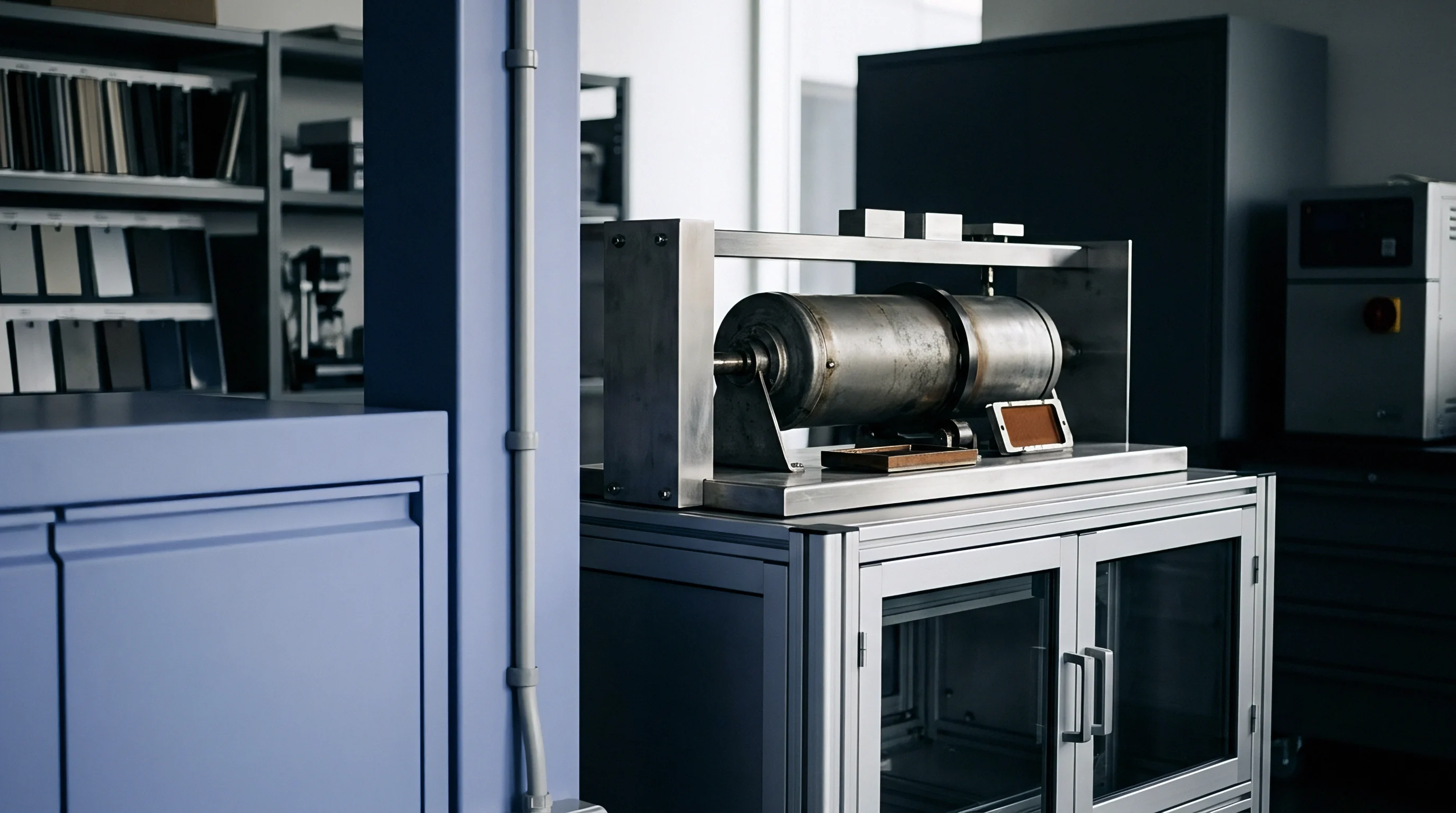
Laboratory double cantilever beam fixtures measure mode-one critical energy release rates while end-notched flexure arrangements isolate mode-two shear values. Mixed-mode bending test frames combine opening and sliding displacements at fixed ratios, generating data points required to map Benzeggagh-Kenane fracture envelopes across varying mode mixities.
Fatigue life shrinks.
Specimen geometry must match actual production substrate thicknesses. Using thick rigid aluminum test bars overpredicts joint fracture toughness by suppressing plastic deformation modes that occur inside thin-walled production cell casings.
Electrolyte leakage hydrolyzes silane coupling agents at the aluminum casing interface and converts cohesive structural joint failure into interfacial adhesive debonding.
Accelerated Environmental Aging Protocols
Test coupons undergo elevated temperature and relative humidity exposure inside environmental chambers to compress multi-year field degradation into short evaluation windows. Typical test cycles expose loaded joint specimens to 85 degrees Celsius and 85 percent relative humidity for 1,000 consecutive hours.
Corrosion accelerates damage.
Submersion in electrolyte solvent baths containing organic carbonate mixtures and dissolved salts evaluates chemical resistance against internal battery leaks. Mechanical testing after chemical exposure measures residual traction-separation parameters for structural finite element risk analysis.
- Documented Mode-Specific Toughness Curves derived across mode mixity ratios from pure Mode I opening to pure Mode II shear under dry baseline conditions.
- Hydrolytic Degradation Shift Factors expressing cohesive strength decay as mathematical functions of absorbed moisture concentration.
- Cyclic Fatigue Power Law Exponents governing subcritical crack growth rates under combined mechanical strain and environmental exposure.
- Substrate Oxide Interfacial Shear Metrics before and after atmospheric plasma conditioning to validate manufacturing quality windows.
Standard automotive engineering specifications demand that adhesive suppliers provide multiaxial cohesive zone parameter sets validated across three distinct environmental exposure levels before design sign-off.
Ledger
Commercial contracts in cell-to-pack program integrations must assign financial liability for structural bond integrity between cell vendors and pack integrators. When structural cell bonding performs the dual role of mechanical retention and chassis stiffening, structural joint failures cause immediate field recall liabilities.
Commercial Allocation of Structural Model Risk and Warranty Seams
Program execution requires explicit boundaries detailing whether structural failure stems from cell casing coating defects or integrator adhesive application errors. Cell suppliers guarantee casing surface cleanliness, oil residue limits, and oxide coating thickness tolerances. Battery pack integrators take financial ownership of adhesive mixing, dispense volume control, open time compliance, and cure environment parameters.
The warranty seam shifts.
Contractual agreements define test verification methods for root-cause failure arbitration. If field failures demonstrate interfacial adhesive debonding at the aluminum casing face, financial liability defaults to the cell supplier for failing incoming surface energy specifications. If failure occurs cohesively within the adhesive mass, liability shifts to the pack integrator or adhesive chemical vendor.
Tooling Amortization and Bondline Scrap Arithmetic
High-volume automated dispensing infrastructure incurs capital expenditures that require strict scrap rate controls to maintain target unit pack costs. Processing automated adhesive dispensing lines involves substantial equipment capitalization alongside continuous inline quality control tooling.
Inspection gates halt production.
Consider a production facility manufacturing 50,000 structural cell-to-pack assemblies annually. Structural adhesive integration eliminates mechanical module frames, reducing structural bill-of-materials costs. Retaining strict quality control gates avoids mass scrap events caused by incorrect adhesive mix ratios or surface contamination.
| Cost and Performance Parameter | Semi-Structural Mechanical Module Assembly | Fully Structural Cohesive Adhesive Bonding | Variance Impact on 50,000 Unit Annual Volume |
|---|---|---|---|
| Capital Tooling NRE Costs | $1,200,000 | $2,850,000 | +$1,650,000 upfront automated dispense investment |
| Direct Structural Material Cost per Pack | $185.00 | $92.00 | -$4,650,000 annual bill of materials savings |
| Inline Inspection Hardware Investment | $150,000 | $680,000 | +$530,000 surface energy and vision check systems |
| Average Pack Assembly Line Cycle Time | 18.5 minutes | 8.2 minutes | +125% line throughput capacity gain |
| Line Yield Scrap Loss Rate | 0.6% | 2.4% | +$414,000 annual scrap cost at $4,600 per pack |
| Warranty Exposure Reserve per Pack | $32.00 | $78.00 | +$2,300,000 annual structural warranty reserve fund |
| Assumptions: 50,000 packs per year annual volume; base pack manufactured cost $4,600; structural adhesive cure time controlled by fast-reacting two-part polyurethane chemistry with inline plasma pre-treatment. Net annual savings of structural adhesive option equals $1,936,000 after accounting for tooling amortization and scrap differentials. | |||
Solvent swelling accelerates debonding.
Net cost advantages of structural adhesive cell integration rely entirely on maintaining line scrap rates below 3.0 percent. A scrap rate spike to 5.5 percent driven by uncalibrated plasma treatment heads completely erodes the bill-of-materials savings gained by removing mechanical cell containment brackets. Establishing physical quality gates for surface energy and dispense bead cross-sections converts variable structural bond risk into predictable manufacturing yield metrics.