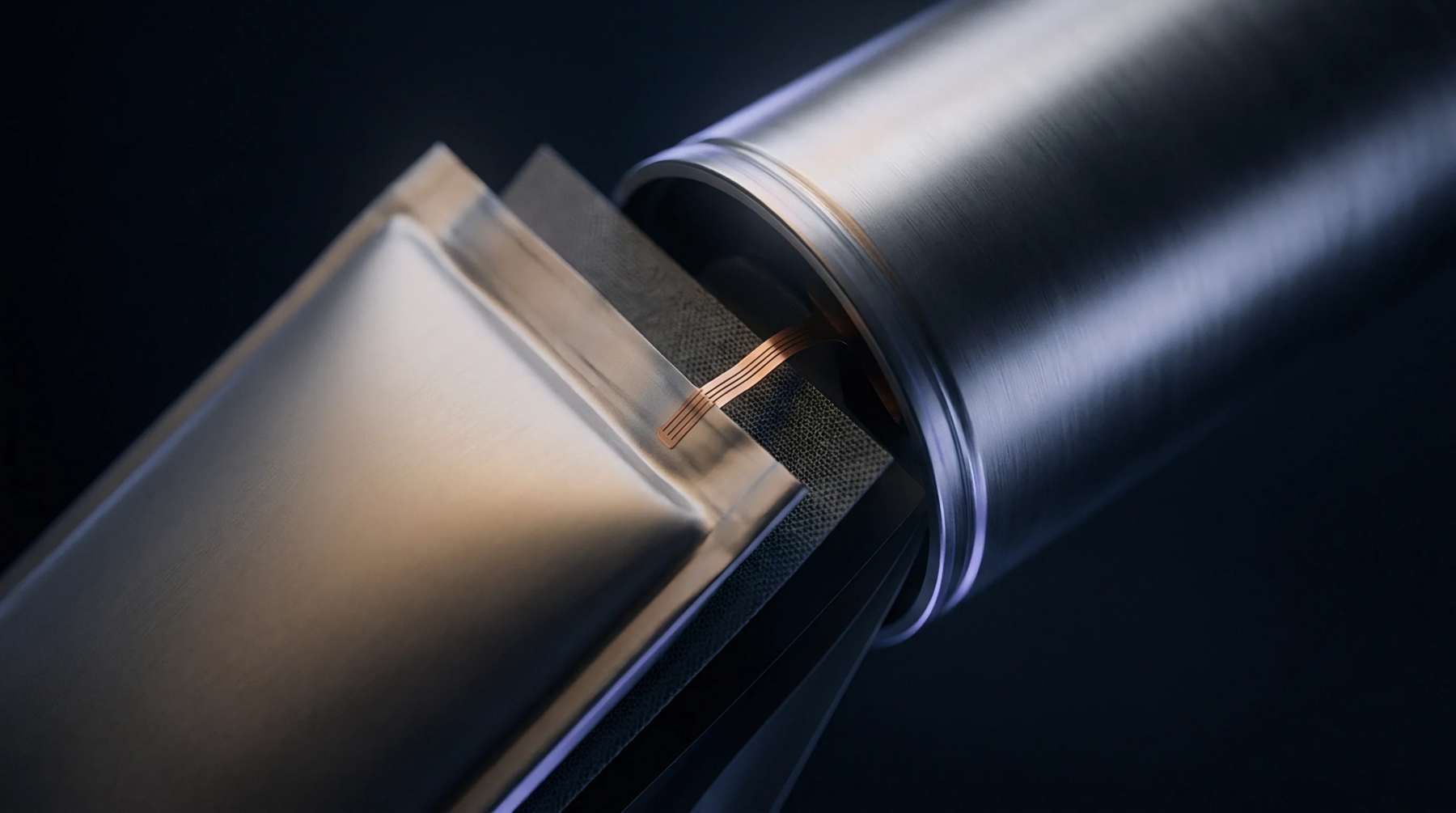
Meaning
Direct structural integration involves the elimination of intermediate modules within a high voltage battery assembly. A cell-to-pack architecture arranges individual prismatic or cylindrical cells directly into a structural casing. This construction removes frames or secondary housings to maximize available volumetric space for active electrochemical materials.
The arrangement relies upon adhesive bonding and thermal interface fillers to provide mechanical stability and conductive cooling paths. Engineers utilize this method to improve energy density by reducing the mass of non-active components like busbars and side plates. Such systems govern the thermal management strategy by linking individual cell cooling surfaces directly to the base plate of the unit.
The methodology applies exclusively to high capacity lithium ion designs that utilize rigid casing formats.
Manufacturing Efficiency
Advanced bonding techniques allow the removal of heavy internal fasteners during assembly. Each cell-to-pack installation requires precision robotics to apply adhesives at specific force levels to ensure alignment across the full array. Factory throughput increases when robotic lines skip the assembly of individual modules before populating the final casing.
These systems reduce the overall part count by replacing screws or bolts with chemical adhesives that maintain electrical isolation. Operators measure the resulting mass reduction to quantify the gain in gravimetric efficiency compared to traditional designs. Testing procedures verify that the bond lines survive vibration cycles without losing physical contact between the heat sink and the cells.
The absence of internal barriers permits a higher ratio of active volume per unit of weight. Precise application of structural glues determines the integrity of the finished enclosure under impact.
Thermal Management
Direct thermal transfer occurs through the contact surface between the electrochemical vessel and the cooling plate. Heat dissipation improves because the cell-to-pack configuration minimizes the thermal resistance path between the active chemistry and the external liquid loop. Standard module configurations introduce gaps that hinder heat flow, yet this design forces contact across the entire bottom plane.
Internal temperature gradients decrease throughout the pack during high current discharge events because the cooling system manages every cell at the same rate. Engineers calibrate the flow of coolant to handle the total dissipation of the block as a single unit rather than treating each bank separately. This shift allows for more aggressive discharge profiles without triggering voltage limits based on heat accumulation.
Reliable cooling depends on the uniformity of the interface material applied across the base during the initial build.
Structural Rigidity
Final casing design provides the primary crash protection for the internal array. This cell-to-pack approach necessitates that the battery shell performs as a load-bearing member of the vehicle frame. Designers incorporate stiffness requirements into the base plate to prevent deflection that would otherwise damage the delicate electrical interfaces.
Each component within the housing works to distribute kinetic energy during a collision to prevent direct puncture of the cell walls. High strength alloys for the external frame protect the internal chemistry from exterior environmental hazards and mechanical stress. The assembly resists torsional forces by locking the cells into a solid block through the adhesive network.
A cohesive unit of this nature provides a predictable response to physical impacts in comparison to loose module arrangements. The architecture defines the mechanical limit of the pack through the thickness and material choice of the outer shell.