Meaning
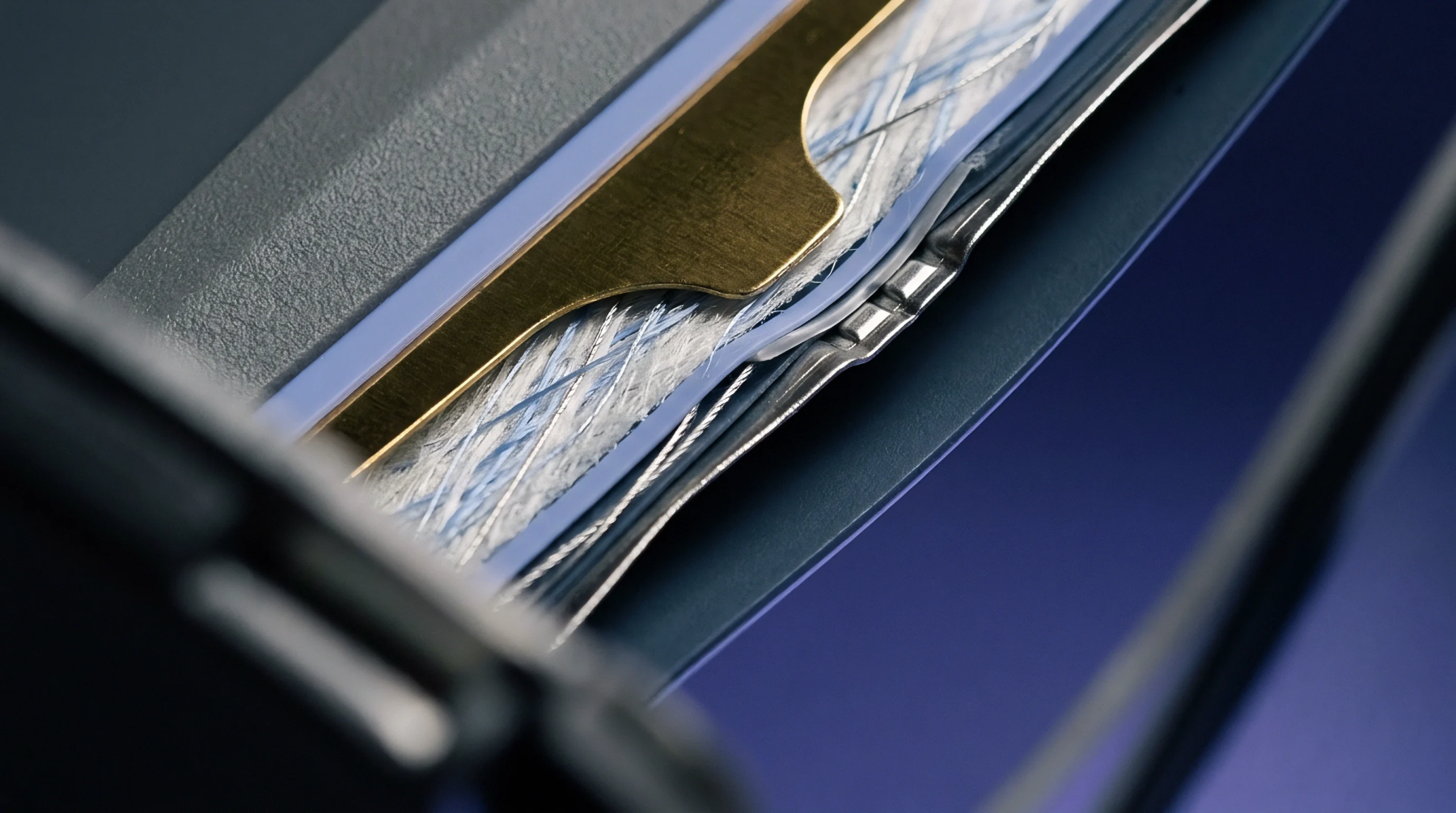
Fracture mechanics testing uses a double cantilever beam specimen to evaluate adhesive bonding strength and interlaminar fracture toughness under tensile loading. Two parallel arms extend from a solid base block, allowing pins or loading blocks to apply perpendicular forces that drive an opening crack along a pre-cracked midplane. Mechanics laboratories record applied load and displacement values continuously during displacement-controlled loading to generate resistance curves.
Engineers apply beam theory equations alongside compliance calibration methods to calculate the critical strain energy release rate.
Crack Propagation
Stable crack growth proceeds along the bonded interface as displacement increases under fixed displacement rates. Operators monitor load relaxation peaks and valleys to identify onset values where the crack advances past the initial notch tip. High-speed recording equipment tracks front progression relative to applied displacement to capture arrest toughness values under cyclic or dynamic loading conditions.
Interface Resistance
Resistance curves display rising toughness trends as fiber bridging or plastic deformation develops behind the advancing crack tip. Initial fracture resistance values correspond to crack initiation from sharp starter notches within adhesive layers or composite laminates. Subsequent steady-state propagation values reflect energy dissipation mechanisms operating within the specific material system under evaluation.
Adhesion Failure
Sourcing teams utilize interlaminar fracture toughness metrics to qualify structural adhesives and composite laminates for demanding aerospace or automotive applications. Low initiation values indicate poor interfacial bonding or inadequate surface preparation before curing processes take place. Procurement contracts specify minimum strain energy release rate thresholds to prevent delamination failures during high-stress operational service.