Quantifying Charge Transfer Resistance at Plated Busbar Contacts under Environmental Acceleration
Measuring busbar contact impedance growth under thermal acceleration isolates oxide film thickening from joint preload relaxation.


Plating
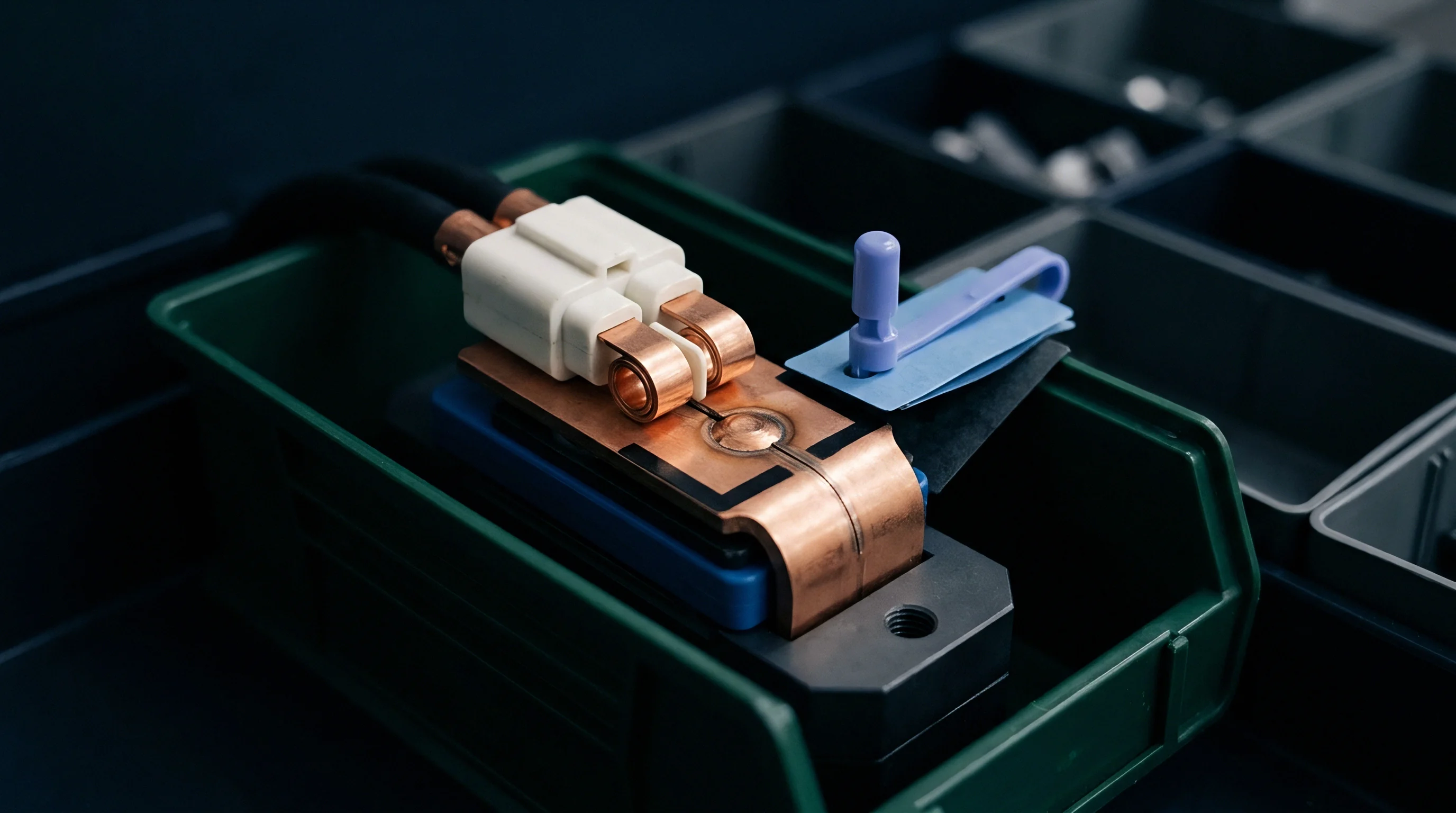
Copper and aluminum busbars rely on noble or passivating metallic coatings to suppress oxidation and maintain low electrical resistance across bolted or clamped joints. Raw substrate metals oxidize rapidly when exposed to atmospheric oxygen and humidity, generating resistive surface films that impede electron transport. Plating copper with nickel, silver, or tin replaces native copper oxides with controlled metallic interphases engineered for electrical stability and environmental resistance.
Oxide films double contact resistance. At microscopic scales, solid metal surfaces are rough, featuring peaks and valleys known as asperities. Mechanical contact between two busbar conductors occurs exclusively at these discrete asperity junctions rather than across the nominal geometric surface area.
Electrical current streamlines compress through these narrow microscopic bridges, generating constriction resistance. When ambient oxygen or chemical contaminants react with the plating metal, an insulating film grows over the conductive asperities, introducing an interfacial film resistance that operates in series with mechanical constriction.
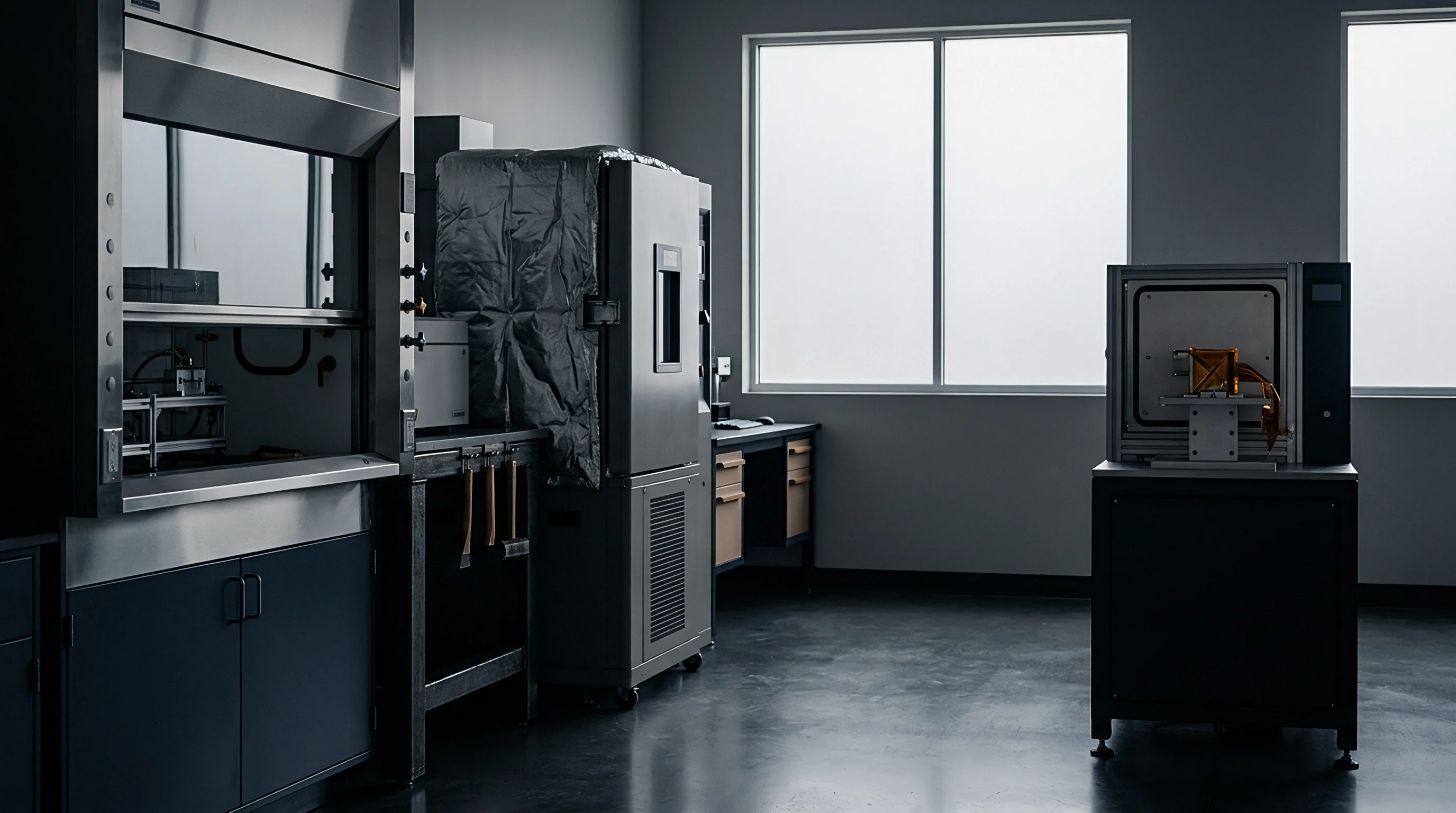
Interfacial Constriction and Surface Metallurgy
Electrochemical conduction across non-welded metallic interfaces occurs through discrete microscopic contact points where asperities pierce surface oxide films. Application of clamping force deforms these asperities elastoplastically, breaking brittle oxide skins and establishing direct metal-to-metal bridges known as a-spots. Asperities deform under clamping load.
The total real contact area scales directly with joint clamping force and inversely with the softer material yield hardness.
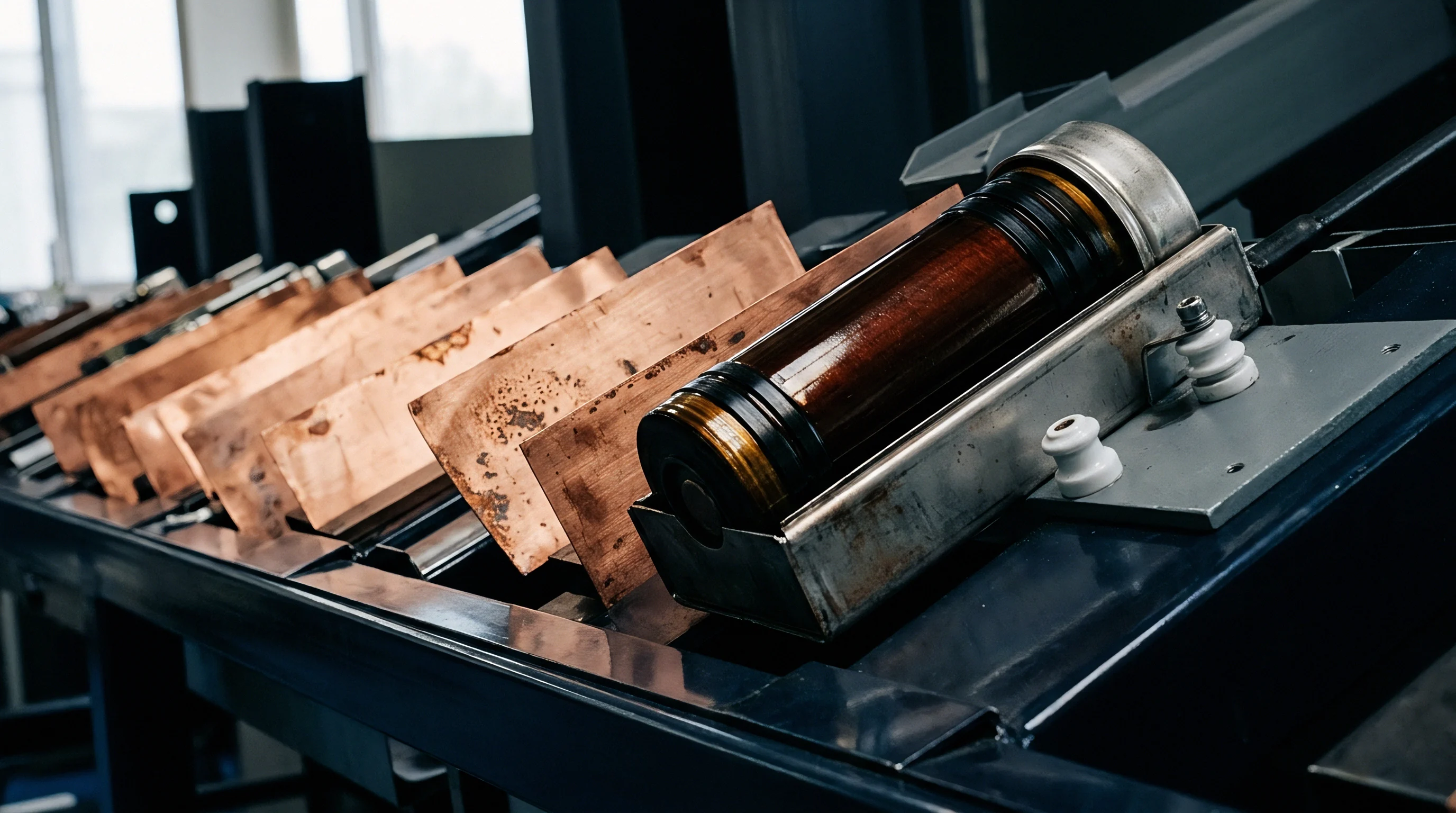
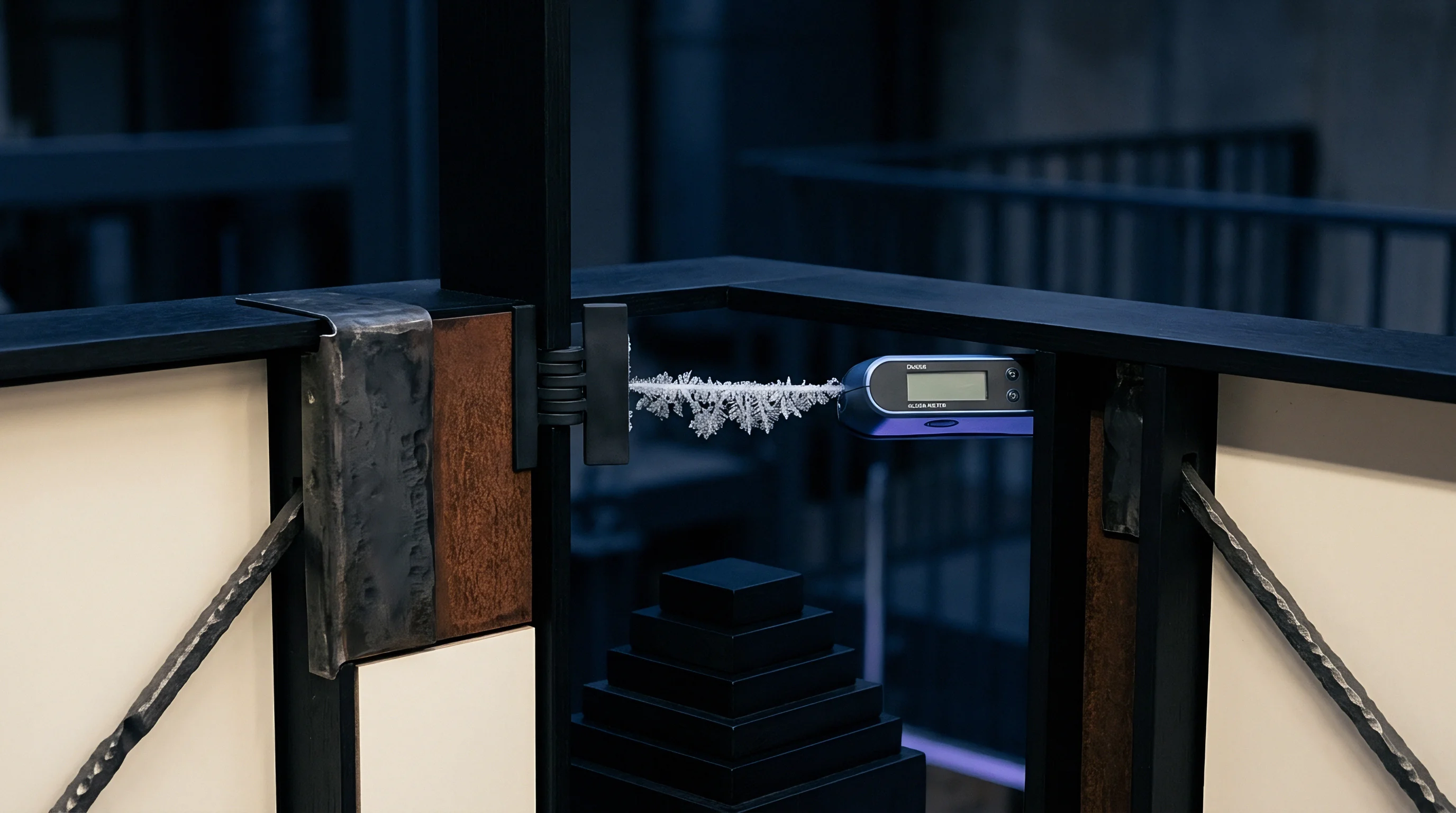
Silver plating provides low initial contact resistance due to the high electrical conductivity of silver and the relatively soft, conductive nature of silver oxide. Silver migration creates short circuits. Silver coatings under continuous direct current bias in humid environments undergo electrochemical migration, forming dendritic filaments that bridge electrical clearances.
Nickel plating exhibits superior hardness and chemical passivity, forming a thin, dense oxide layer that halts atmospheric degradation while introducing higher initial contact resistance than silver. Tin plating offers a cost-effective alternative for aluminum busbar connections, establishing reliable metal-to-metal contacts as soft tin layers extrude under mechanical pressure. Tin whiskering shortens creepage paths.
Spontaneous growth of single-crystal tin filaments under compressive stress threatens electrical clearance dimensions in high-voltage battery enclosures.
| Plating Material System | Substrate Metal | Plating Hardness (HV) | Layer Thickness Range (µm) | Baseline Constriction Resistance (µΩ) | Dominant Oxidation Mechanism |
|---|---|---|---|---|---|
| Electroplated Silver (Ag) | C11000 Copper | 70 – 110 | 3.0 – 8.0 | 0.8 – 1.5 | Sulfide film formation and silver migration |
| Electroless Nickel (Ni-P) | C11000 Copper | 450 – 550 | 5.0 – 12.0 | 3.5 – 6.2 | Passivating nickel oxide layer growth |
| Matte Electroplated Tin (Sn) | EN AW-6061 Aluminum | 10 – 20 | 8.0 – 15.0 | 1.8 – 3.1 | Intermetallic compound growth and whisker stress |
| Hard Gold over Nickel (Au/Ni) | C11000 Copper | 140 – 200 | 0.8 – 2.5 (Au) / 5.0 (Ni) | 0.4 – 0.9 | Gold intermetallic diffusion at elevated temperature |

Electrochemical Kinetics at Dissimilar Metal Junctions
Current flow between dissimilar metals generates localized galvanic potential steps that drive ion transport when electrolyte film condensation occurs. Moisture condensation dissolves atmospheric sulfur dioxide, nitrogen oxides, and ionic salts, transforming microscopic surface water films into conductive aqueous electrolytes. Standard electrode potential differentials between substrate copper, structural fasteners, and interfacial plating metals establish active galvanic cells.
Gold intermetallic layers grow brittle. When gold plating over a nickel sublayer contacts tin or aluminum interfaces, solid-state interdiffusion at elevated temperatures generates brittle intermetallic phases such as gold-tin compounds. The rate of interfacial charge transfer across these altered metallic layers depends on electron transfer kinetics across the thin semiconductor-like oxide films separating conductive metallic domains.
Charge transfer resistance dominates overall interface impedance when environmental acceleration thickens these oxide barriers beyond electron tunneling distances.
Thicker silver coatings suppress substrate copper diffusion until junction temperatures cross eighty degrees Celsius.
Platers frequently contend that microscopic pinholes in thin nickel flash layers fall within acceptable commercial tolerances when substrate copper oxidation remains undetected during standard twenty-four-hour salt fog exposure.
Impedance
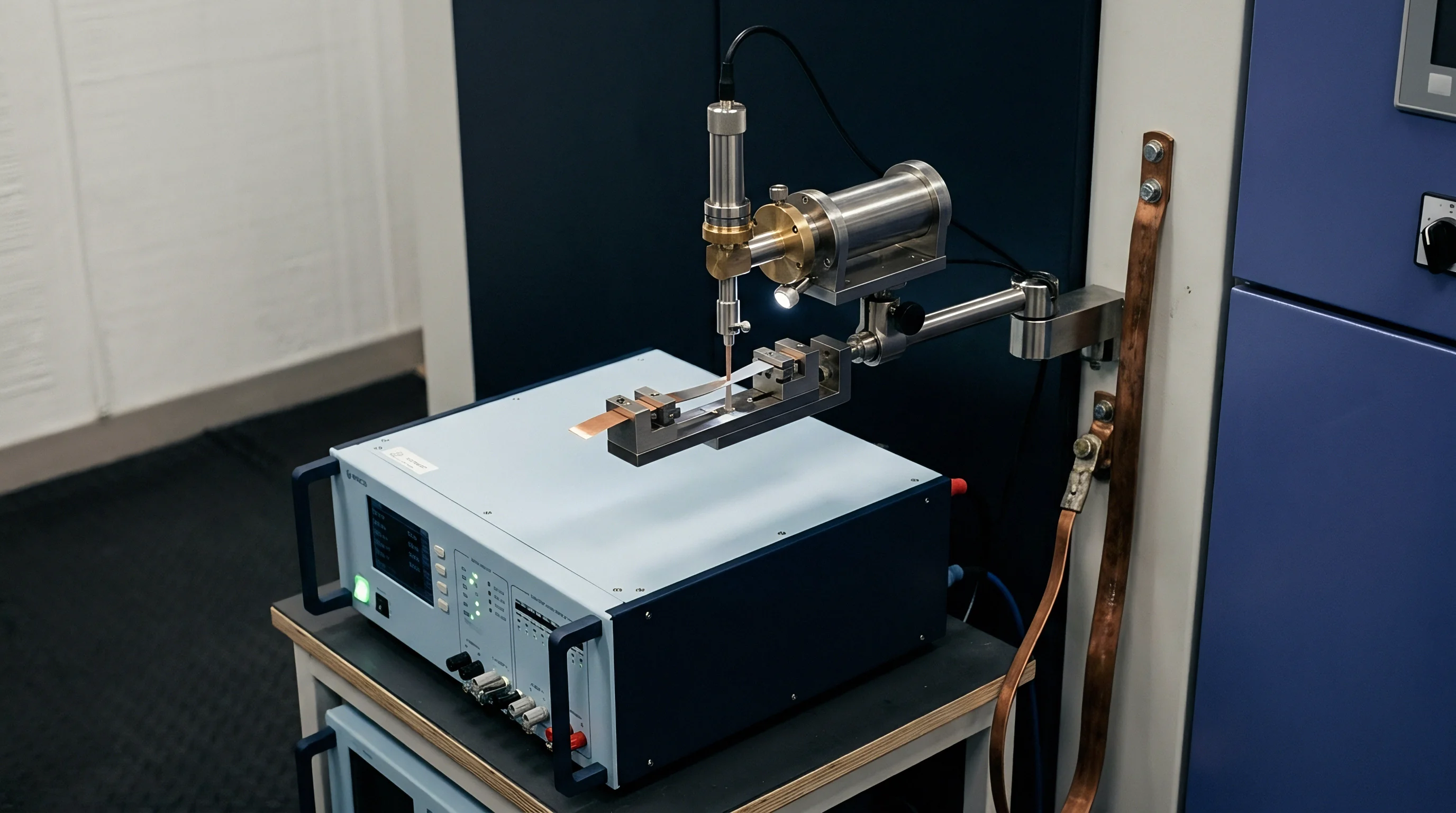
Disentangling bulk conductor resistance from interface reaction barriers requires high-frequency alternating current probes combined with steady direct current bias. Electrochemical Impedance Spectroscopy isolates pure ohmic constriction resistance from charge transfer resistance and double-layer capacitance at busbar contact boundaries. Applying a small-amplitude sinusoidal voltage perturbation across a bolted contact joint while measuring the phase shift and amplitude of the resulting current reveals frequency-dependent transport mechanisms.
Contact force dictates constriction area. At high excitation frequencies above ten kilohertz, inductive impedance from physical conductor geometry dominates the spectral response, while double-layer capacitance short-circuits interfacial reaction barriers. At lower frequencies below one hertz, interfacial charge transfer kinetics and ionic diffusion through porous oxide films govern total measured resistance.
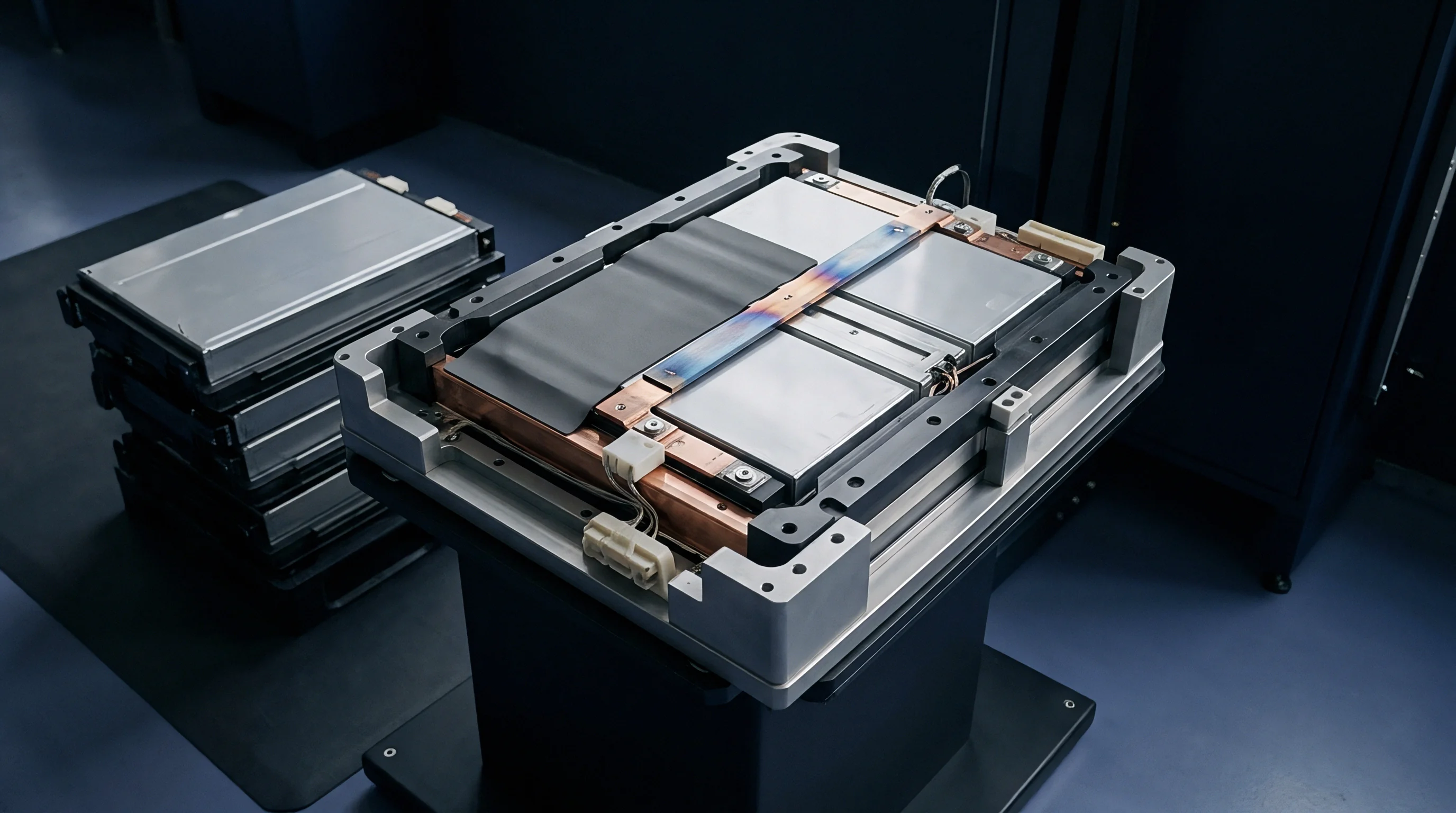
Deconstructing Electrochemical Impedance Spectra
Frequency response plots of busbar contact interfaces present distinct time constants corresponding to physical transport processes. The high-frequency real-axis intercept on a Nyquist representation yields the pure ohmic resistance, comprising bulk metallic conductor resistance and mechanical constriction resistance. A high-frequency semicircle corresponds to charge transfer resistance parallel to interface double-layer capacitance formed by adsorbed chemical species and thin surface oxides.
Nyquist arc radii expand as environmental exposure thickens surface oxide films. Deconvolution of complex impedance spectra relies on equivalent circuit fitting using modified Randles cell models. The equivalent circuit places bulk ohmic resistance in series with a parallel combination of interfacial charge transfer resistance and a constant phase element representing non-ideal double-layer capacitance resulting from microscopic surface roughness.

Direct Current Bias Effects on Interfacial Reaction Kinetics
High current magnitudes alter electron transfer dynamics across thin passivation films covering contact asperities. Continuous direct current bias generates asymmetric potential drops across oxide boundaries, modifying the activation energy barrier for ionic transport. Thermal cycling alters bolt torque.
High current densities induce localized Joule heating at microscopic contact spots, accelerating oxidation kinetics and altering local stress fields.
Consider a continuous battery module busbar joint carrying a rated current of four hundred amperes through silver-plated copper bars secured by stainless steel fasteners. Baseline electrical measurements establish an initial mechanical constriction resistance of one micro-ohm across clean silver-to-silver contact asperities. Under baseline conditions, continuous power loss across the joint equals point-six-four watts.
Subjecting this joint to elevated thermal and humidity conditioning increases interfacial charge transfer resistance to twelve micro-ohms due to sulfur contamination and thin silver sulfide film growth. Total joint resistance rises from one micro-ohm to thirteen micro-ohms. Operating at the same four hundred ampere continuous rating increases localized joint power dissipation to twenty-point-eight watts, establishing a thirty-two-fold increase in heat generation at the contact interface.
At ten kilohertz, interfacial charge transfer resistance across silver-nickel contact interfaces increases by forty percent after five hundred hours of damp heat exposure.
High current density through localized contact points accelerates local temperature rise, which further speeds interfacial film growth in a self-reinforcing degradation loop.
Acceleration
Environmental stress testing forces multi-year degradation mechanisms into manageable laboratory windows using elevated thermal and moisture stresses. Temperature, relative humidity, atmospheric pollutant concentrations, and mechanical vibration act as acceleration factors that speed chemical oxidation, galvanic corrosion, and interfacial wear. Validating busbar contact reliability requires mapping laboratory acceleration factors to real-world operational profiles without triggering artificial failure modes that never occur in field service.
Thermal acceleration obeys Arrhenius kinetics within defined temperature boundaries. Rate constants for interfacial oxide film thickening and solid-state intermetallic diffusion scale exponentially with absolute temperature. Moist heat acceleration incorporates vapor pressure kinetics using Peck acceleration models, where relative humidity exponent values quantify moisture-induced reaction rate increases.
Thermal and Moisture Degradation Kinetics
Exposure to elevated ambient temperatures accelerates atom diffusion across metallic boundary layers. In tin-plated copper busbars, elevated thermal stress drives rapid diffusion of substrate copper into the tin plating layer, consuming pure tin to form copper-tin intermetallic compounds. These intermetallic compounds possess lower electrical conductivity and higher hardness than parent metals, increasing constriction resistance and reducing mechanical compliance under thermal expansion stresses.
Fretting oxidation generates nonconductive debris. Atmospheric humidity acts as a catalyst for electrochemical oxidation. Damp heat testing at eighty-five degrees Celsius and eighty-five percent relative humidity accelerates oxidation at plating pinholes, driving localized galvanic pitting on aluminum substrates.
Condensation events dissolve trace environmental sulfur and chlorine gases, creating acidic surface micro-droplets that attack protective nickel and silver coatings.
Do Micro Vibrations Accelerate Plating Film Growth?
Mechanical oscillation between clamped busbars strips protective surface layers and exposes fresh substrate metal to oxidation. Vehicle motion, thermal expansion mismatches, and structural chassis flexing induce microscopic relative displacement between contacting busbar surfaces. This relative motion, termed micro-motion fretting, ranges from one micrometer to one hundred micrometers in displacement amplitude.
Salt fog accelerates galvanic decay. Relative sliding ruptures brittle surface oxides, grinding microscopic metallic particles from asperity peaks. These loose metallic particles oxidize rapidly in ambient air, forming non-conductive oxide debris that accumulates within joint contact areas.
Accumulation of fretting debris pushes contact surfaces apart, drastically reducing real metal-to-metal contact area and elevating charge transfer resistance.
- Clean sample joint surfaces with isopropyl alcohol to remove volatile manufacturing organic residues before initial zero-hour impedance measurement.
- Torque stainless steel fasteners to specification using calibrated transducers while recording joint compression distance.
- Mount assembly inside environmental chamber maintained at eighty-five degrees Celsius and eighty-five percent relative humidity under continuous four-point Kelvin monitoring.
- Extract dynamic resistance changes across specified time intervals to calculate kinetic rate constants.
| Acceleration Stress Profile | Test Standard Condition | Target Failure Mechanism | Acceleration Factor Model | Activation Energy Range (eV) |
|---|---|---|---|---|
| Continuous Damp Heat | 85°C / 85% RH (IEC 60068-2-67) | Galvanic corrosion and oxide film growth | Peck Model (n = 2.5 to 3.0) | 0.75 – 0.92 |
| High Temperature Storage | 105°C Dry Air (IEC 60068-2-2) | Intermetallic compound growth and diffusion | Arrhenius Model | 0.80 – 1.10 |
| Salt Fog Exposure | 5% NaCl Spray 35°C (ISO 9227) | Pitting corrosion and plating dissolution | Empirical Marine Exposure Factor | Not applicable |
| Thermal Shock Cycling | -40°C to +105°C (IEC 60068-2-14) | Joint relaxation and thermal fretting wear | Coffin-Manson Thermal Fatigue | 0.55 – 0.70 |
| Random Vibration Fretting | 10-2000 Hz, 3.1 G rms (IEC 60068-2-64) | Debris accumulation and mechanical wear | Power Spectral Density Scaling | Not applicable |
Dry air slows film growth. Quantifying the relationship between environmental acceleration and charge transfer resistance requires continuous real-time four-wire Kelvin resistance sensing during environmental exposure. Discrete off-line measurements introduce measurement artifacts caused by room-temperature relaxation and moisture evaporation from microscopic joint interfaces.
Compliance with IEC 61984 clause six point nineteen mandates that contact resistance variations after thermal cycling remain below five percent of initial baseline values.
Standard procurement specifications incorporating ISO 21207 test schedules alter component acceptance criteria by requiring zero base-metal exposure after two hundred hours of neutral salt spray.

Degradation
Oxide accumulation and intermetallic phase evolution structurally alter the microscopic contact spots that conduct current through bolted connections. Solid-state reaction kinetics between host substrates and thin plating films dictate long-term joint stability. Environmental acceleration speeds structural degradation by increasing atom mobility, driving phase transformations, and facilitating chemical dissolution of metallic protective layers.
Preload loss increases thermal impedance. Fastener stress relaxation under thermal cycling reduces applied clamping force, allowing joint contact surfaces to relax microscopically. Lower contact pressure reduces real metal contact area, restricting current transport pathways and forcing electron flow through high-resistance oxide layers.

Intermetallic Voiding and Oxide Film Penetration
Solid-state diffusion between plating layers and underlying busbar alloys generates brittle structural compounds at elevated temperatures. Copper-tin system diffusion forms two distinct intermetallic layers: epsilon-phase Cu3Sn adjacent to the copper substrate and eta-phase Cu6Sn5 adjacent to the tin plating. Diffusivity differentials between copper and tin atoms create vacancy flux balances that condense into microscopic voids at the substrate interface.
Interfacial resistance generates localized heating. Kirkendall void formation weakens mechanical adhesion of plating layers while increasing local current constriction. Thermal cycling induces mechanical stress concentrations around these sub-surface voids, initiating micro-cracks that propagate through protective coatings and expose raw substrate metal to ambient atmospheric corrosion.
- Kirkendall Void Formation Vacancy condensation at the interface between copper substrate and tin plating causes mechanical delamination under thermal cycling.
- Galvanic Pitting Corrosion Electrolytic condensation in humid marine environments drives sacrificial dissolution of aluminum busbar substrates at nickel contact boundaries.
- Fretting Oxide Accumulation Thermal expansion differentials drive cyclic micro-motion that grinds surface platings into non-conductive oxide debris.
| Degradation Mechanism | Metallurgical System | Dominant Kinetic Reaction Product | Growth Rate Constant at 85°C | Impact on Charge Transfer Resistance |
|---|---|---|---|---|
| Solid-State Diffusion | Tin over Copper (Sn/Cu) | Cu6Sn5 / Cu3Sn Intermetallics | 1.2 x 10^-16 m²/s | Linear increase in ohmic constriction |
| Atmospheric Sulfidation | Silver over Copper (Ag/Cu) | Silver Sulfide (Ag2S) | 3.5 x 10^-11 m/s | Exponential growth of charge transfer barrier |
| Passivation Layer Growth | Nickel over Copper (Ni/Cu) | Nickel Oxide (NiO) | 4.1 x 10^-18 m²/s | Asymptotic resistance saturation |
| Galvanic Substrate Pitting | Nickel over Aluminum (Ni/Al) | Aluminum Hydroxide (Al(OH)3) | Controlled by moisture film chemistry | Catastrophic loss of active contact area |
Joint relaxation shifts pressure distribution. Continuous localized current concentration through remaining unoxidized contact spots elevates local temperatures above bulk conductor ratings. This localized thermal escalation accelerates chemical reaction rates, establishing a positive feedback loop that terminates in severe electrical overheating.
Oxide film growth converts conductive metallic contact points into capacitive barriers that generate localized thermal hot spots.
Underestimating interfacial resistance growth in high-current battery pack joints leads to localized thermal runaway risks and costly field recall liabilities.
Clamping
Fastener preload retention defines the physical real estate available for charge transport over thousands of thermal expansion cycles. Joint hardware elasticity must absorb differential thermal expansion between steel bolts, copper or aluminum conductors, and spring elements without exceeding material yield limits. Loss of mechanical clamping force directly reduces real contact area, amplifying the effect of environmental oxide film accumulation on charge transfer resistance.
Environmental stress accelerates surface oxidation. Disc spring washers, commonly termed Belleville washers, maintain sustained mechanical preload across variable thermal environments. Matching washer deflection characteristics to expected thermal expansion differentials prevents joint loosening during cold storage and plastic deformation during high-temperature operation.

Mechanical Preload Maintenance and Contact Pressure Dynamics
Maintaining constant mechanical force on joint interfaces prevents microscopic separation during rapid thermal excursions. Torque-angle tightening procedures establish consistent bolt stretch, mitigating friction variation uncertainty inherent to torque-only assembly methods. Applying specialized contact pastes containing micro-encapsulated metal particles or oxidation inhibitors seals joint margins against moisture ingress while preserving metallic conduction paths.
- Belleville Washer Selection Choose disc springs designed for thermal expansion compensation to maintain nominal bolt load across operating temperature spans.
- Plating Thickness Verification Specify X-ray fluorescence testing on incoming lots to ensure plating barrier layers meet minimum thickness specifications.
- Joint Surface Roughness Limit surface roughness parameters to prevent localized stress concentration and excessive plating rupture during initial assembly.
Industry testing has yet to establish whether real-time impedance spectroscopy can reliably isolate contact resistance drift from active cell degradation inside sealed commercial battery modules.