Quantifying Micro Short Risk Transfer Mechanisms across Cross Border Cell Shipment Contract Boundaries
Latent micro shorts from transport vibration transfer risk across contract boundaries unless verified via fourteen day K-value decay quarantine before title passes.


Pinhole
Metallic debris embedded inside a lithium-ion cell during manufacturing creates a localized breakdown pathway across thin polymer membranes. During electrode slitting, laser trimming of copper and aluminum current collector tabs, or ultrasonic welding of internal terminal leads, microscopic conductive particles tear free. These fragments, often ranging from five to fifty micrometers in equivalent spherical diameter, settle onto cathode active coatings or end up trapped between separator layers during winding or stacking.

Electrochemical Mechanisms of Latent Internal Shorting
Internal short circuits originate when conductive contaminants bridge the anode and cathode active layers. A burr or loose metallic particulate does not instantly force a high-current short circuit during initial assembly and formation. Instead, the polymer separator compresses around the particle under mechanical stack pressure.
Polyolefin separators, whether wet-process polyethylene or dry-process polypropylene, run between seven and twenty micrometers thick. If a twenty-micrometer copper sliver aligns perpendicular to the electrode plane, stack pressure eventually forces it through the separator matrix.
Cell voltage drives localized electrochemical dissolution and redeposition. Copper and iron debris resting at high potential near the cathode dissolve into the organic carbonate electrolyte as metallic cations. Driven by the electric field gradient, these dissolved ions migrate across the separator toward the graphite or silicon-composite anode.
Reaching the lower potential of the charged anode, the ions reduce back into metallic dendrites, building a conductive bridge across the separator pores. The resistance of this bridge dictates how the cell self-discharges. Micro-shorts typically start between one hundred ohms and ten kilohms, bleeding stored charge without immediately driving the cell into catastrophic thermal runaway.
Cell swelling under elevated storage temperatures forces latent metallic particulates directly into polyolefin separator matrices.
Cell voltage drops rapidly once this leakage path forms.
Copper debris can also shift position over time.
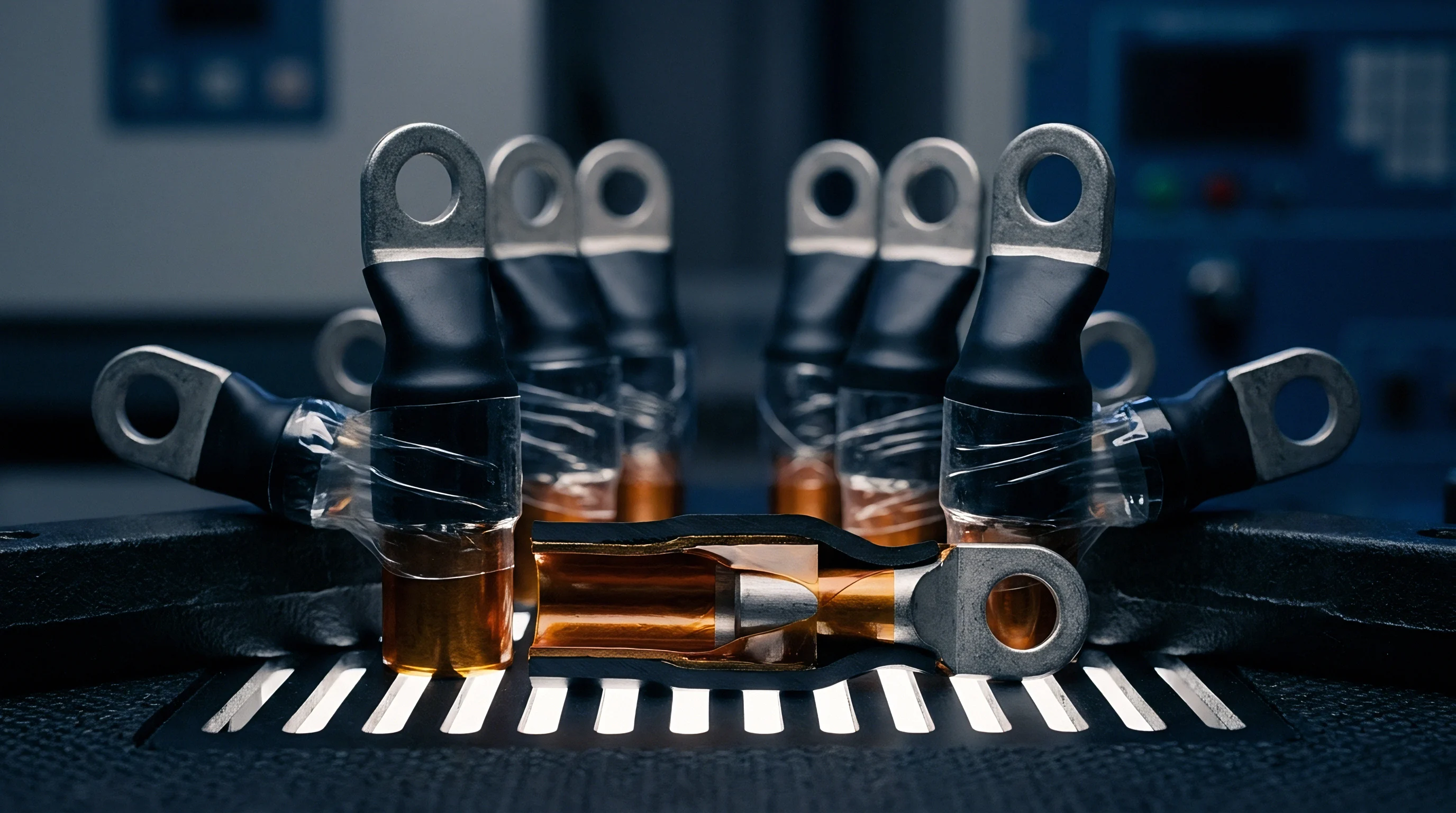
Particle Migration under Transport Dynamics
Subtle mechanical oscillations during ocean container transit push microscopic copper slivers through soft polyolefin layers. Mechanical shocks during port container handling generate transient acceleration peaks up to three Gs along the cell’s vertical axis, overcoming kinetic friction between the electrode coating and loose particulate. The particle then shifts into regions of higher stack pressure, like the curved radii of cylindrical cells or the folded edges of pouch formats.
Electrode expansion during storage exacerbates mechanical pressure. Cells packed at high states of charge undergo continuous chemical breakdown of the solid electrolyte interphase, generating gaseous byproducts and micro-swelling inside the active material matrix. Localized pressure at the tip of an embedded particulate increases accordingly, driving the metal deeper into the separator.
A cell certified defect-free at the factory gate can thus develop an active ohmic bridge while sealed inside a shipping crate midway across the ocean.
| Contaminant Type | Particle Size Range (µm) | Separator Puncture Mechanism | Self-Discharge Rate Range (mV/day) | Thermal Risk Level |
|---|---|---|---|---|
| Copper Slitting Burr | 10 to 45 | Direct mechanical compression and electrochemical dissolution | 0.8 to 4.5 | High |
| Iron Cutting Dust | 5 to 25 | Dissolution, ionic migration, and dendritic growth | 0.3 to 1.8 | Moderate |
| Aluminum Tab Flake | 15 to 60 | Passivating oxide breakdown under localized pressure | 0.1 to 0.6 | Low |
| Nickel Weld Spatter | 20 to 50 | Separator melt-through during tab attachment | 1.2 to 8.0 | Severe |
Uncontrolled particulate migration leaves distinct failure signatures before module integration. How the defect shows up depends on the particle’s composition and the mechanical design of the cell.
- Ferrous particulate contamination dissolves in the carbonate electrolyte under cathode potential, re-precipitating as sharp dendritic spikes across separator pores over long storage periods.
- Copper tab burrs penetrate thin polyolefin membranes under mechanical vibration, establishing low-resistance metal-to-metal bridges that bypass active mass insulation.
- Aluminum current collector fragments oxidize partially in electrolyte, creating erratic, high-resistance contact points that cause fluctuating open-circuit voltage decay readings.
- Lithium plating structures formed during low-temperature factory formation charges extend toward the cathode under continuous internal field pressure during transit.
Post-shipment self-discharge anomalies are often attributed to ambient freight temperature fluctuations rather than factory-introduced conductive contamination.


Transit
Long-distance freight subjects packed cell pallets to broad-spectrum harmonic vibration and ambient thermal shifts. Ocean transit exposes containers to persistent low-frequency excitation between one and fifty hertz over fourteen to thirty-five days. Air freight subjects cells to higher frequency vibration alongside rapid pressure drops in cargo holds.
Combined, these environmental loads act on the internal roll or stack assembly, turning minor manufacturing defects into operational hazards.

Vibration Spectra and Separator Compression
Container transport subjects cell rolls to continuous multi-axis accelerations between 0.5 G and 2.0 G. Standard random vibration profiles, such as those in UN 38.3 Annex 3 or ASTM D4169, reflect these conditions. Continuous micro-motion between adjacent electrode layers causes fretting wear on ceramic-coated separators. Coatings of alumina or titania bonded with polyvinylidene fluoride can delaminate under persistent shear, letting loose powder migrate away from high-pressure zones and leaving the bare polyolefin film exposed to rough electrode surfaces.
Mechanical stress concentrates around internal weld tabs and jellyroll ends. In cylindrical formats like 21700 or 46800 cells, top and bottom insulator disks keep current collector tabs off the outer steel canister. Continuous vertical vibration shifts the jellyroll against these disks.
If a disk was slightly misaligned during assembly, harmonic vibration during ocean transit can wear through the polymer shield until the cathode tab contacts the negative canister directly, creating a hard short that kills the cell on arrival.
Vibration during cross-border transit shifts loose internal debris toward high-stress electrode edge radii.
Under persistent vibration, the separator eventually yields.
Cargo movement accelerates this internal wear.

Thermal Cycling Driven Micro Structural Drift
Cross-dock temperature spikes induce differential expansion between the aluminum casing and wet electrode stacks. Marine containers sitting on unshaded port docks routinely see internal temperatures rise past sixty degrees Celsius before dropping to fifteen degrees at sea. Cell materials expand at different rates: aluminum cathode foil expands at roughly twenty-three microstrains per kelvin, graphite anodes expand more slowly, and polyolefin separators contract thermal-elastically above forty degrees Celsius.
Thermal contraction of separators under mechanical constraint increases stack tension. As the separator tightens over surface irregularities or particulate debris, its puncture resistance drops. For a standard twelve-micrometer ceramic-coated polyethylene separator, puncture strength falls by up to eighteen percent when temperature rises from twenty-five to fifty-five degrees Celsius.
Combined with higher electrolyte conductivity at elevated temperatures, this reduction converts latent micro-shorts into active discharge channels during transit.
Cell self-discharge follows Arrhenius kinetics during transit hold periods. Higher storage temperatures accelerate side reactions at electrode interfaces, elevating baseline voltage drops and masking the signal of mechanical micro-shorts. Temperature logs from freight transit provide essential baseline context for incoming voltage screening.
Cells packed inside tightly bound freight pallets retain heat for days after ambient container temperatures drop, sustaining higher degradation rates long after clearing port.
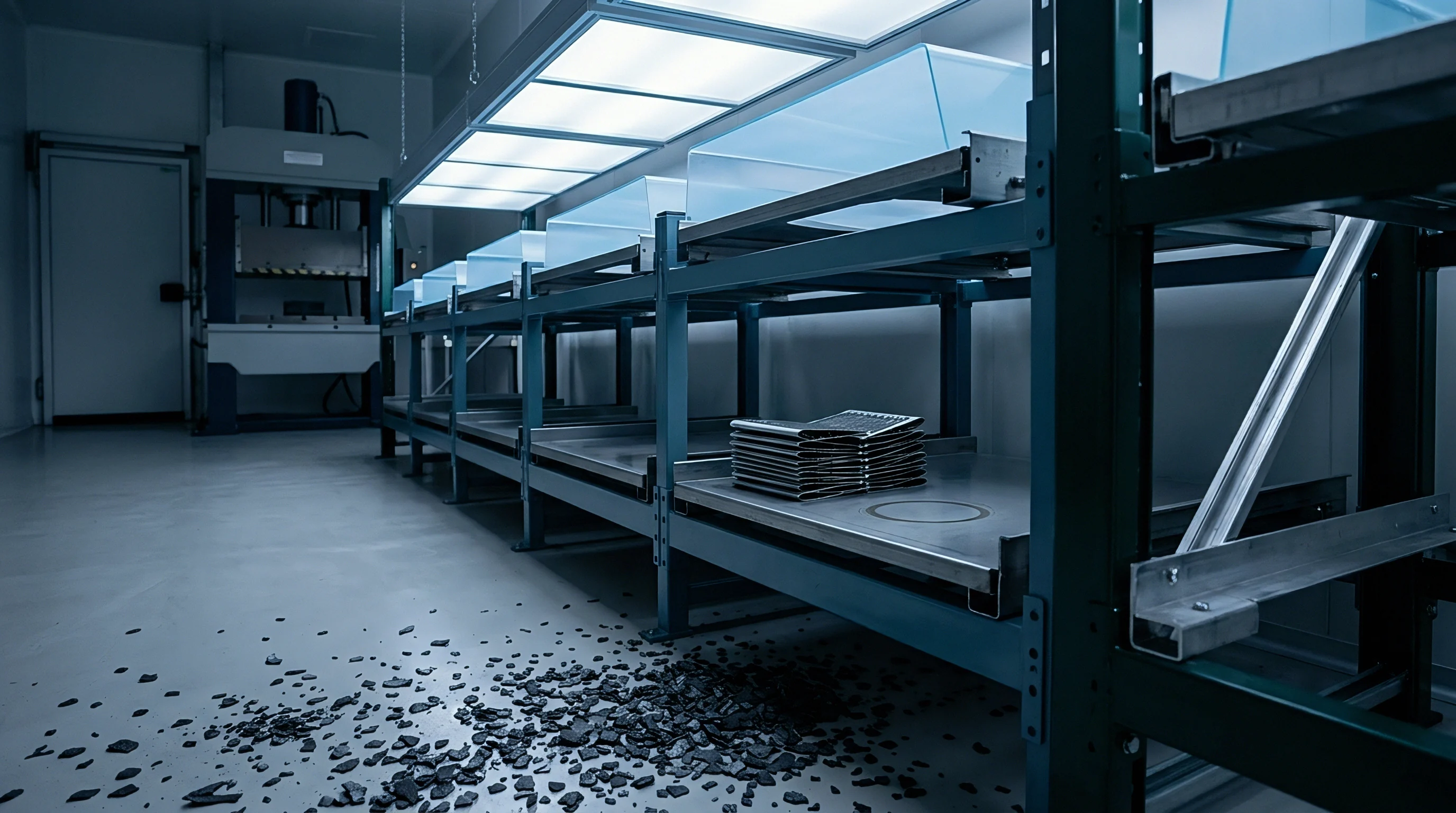

Sieve
Receiving facilities isolate incoming cell lots in climate-controlled bays to monitor open-circuit voltage decay. This quarantine serves as the primary defense against integrating defective cells into modules and packs. Without systematic screening at receipt, cells with micro-shorts slip into assembly lines, where self-discharge leads to capacity imbalances, premature pack fade, or thermal events during initial charging.

How Does K-Value Shift during Transit Quarantine?
Measuring open-circuit voltage drop over time establishes the baseline self-discharge rate for fresh cells. This rate is measured as the K-value, expressed in microvolts per hour or millivolts per day. K is calculated by dividing the drop between initial and final open-circuit voltage by the quarantine time in days.
Baseline K-values for fully formatted lithium iron phosphate cells typically fall between 0.1 and 0.4 millivolts per day at twenty-five degrees Celsius, while nickel manganese cobalt oxide cells show baseline values between 0.2 and 0.6 millivolts per day under the same conditions.
Micro-shorts distort this decay curve by adding ohmic leakage on top of normal thermodynamic self-discharge. Current draw depends directly on short resistance: a five-hundred-ohm short in a 3.2-volt cell draws a continuous 6.4 milliamperes. In a one-hundred-ampere-hour prismatic cell, that small leakage drops open-circuit voltage by more than 3.5 millivolts per day.
Tracking K-value deviations across a statistical sample separates acceptable cells from those with latent internal defects.
Standard UN 38.3 transport testing validates structural envelope integrity but fails to detect micro-short initiation driven by sub-micron particulate migration.
Impedance spikes can reveal these internal faults early.
Quarantine isolation protects downstream inventory.

Delta Voltage Screening and Impedance Spectroscopy
High-precision multimeters can resolve voltage changes down to five microvolts across a fourteen-day hold period. Testing requires tight thermal control within plus or minus 0.5 degrees Celsius, since the open-circuit voltage temperature coefficient for lithium chemistries spans 0.1 to 0.8 millivolts per kelvin. Ambient temperature swings easily mask minor micro-shorts or trigger false positives in sound cells.
| Quarantine Window (Days) | Thermal Tolerance (°C) | Baseline K-Value (mV/day) | Micro-Short Threshold (mV/day) | Defect Detection Yield (%) |
|---|---|---|---|---|
| 7 | ± 0.2 | 0.10 to 0.50 | 1.20 | 68.5 |
| 14 | ± 0.5 | 0.15 to 0.45 | 0.90 | 91.2 |
| 28 | ± 1.0 | 0.20 to 0.40 | 0.65 | 98.7 |
| 42 | ± 1.5 | 0.20 to 0.35 | 0.50 | 99.6 |
Consider an incoming screening protocol for a shipment of 50,000 prismatic cells with a target defect limit of 50 parts per million for internal shorts. Receiving verification applies a three-stage sequential verification procedure to validate cell lot stability prior to contract acceptance.
- Offload cell pallets directly into a climate-controlled quarantine warehouse held at twenty-three degrees Celsius for twenty-four hours to eliminate thermal gradients from transport.
- Measure and record initial open-circuit voltage and 1000-hertz AC internal resistance for every cell using calibrated automated probes.
- Hold the cell lot in static storage for fourteen consecutive days without electrical load or thermal disruption.
- Perform secondary open-circuit voltage measurements under identical environmental conditions and calculate individual cell K-values.
- Flag any cell with a K-value above 0.85 millivolts per day or an AC internal resistance shift greater than five percent for secondary electrochemical impedance spectroscopy analysis.
Electrochemical impedance spectroscopy distinguishes electrode interface degradation from ohmic micro-shorts. Real-axis intercept shifts on a high-frequency Nyquist plot indicate bulk electrolyte resistance changes, whereas a contraction of the mid-frequency charge transfer arc alongside linear voltage decay confirms an active internal short. Cells failing the K-value threshold are immediately tagged for quarantine.
Failing to enforce strict thermal controls during K-value testing causes false lot rejections, driving unnecessary commercial disputes over sound cell shipments.

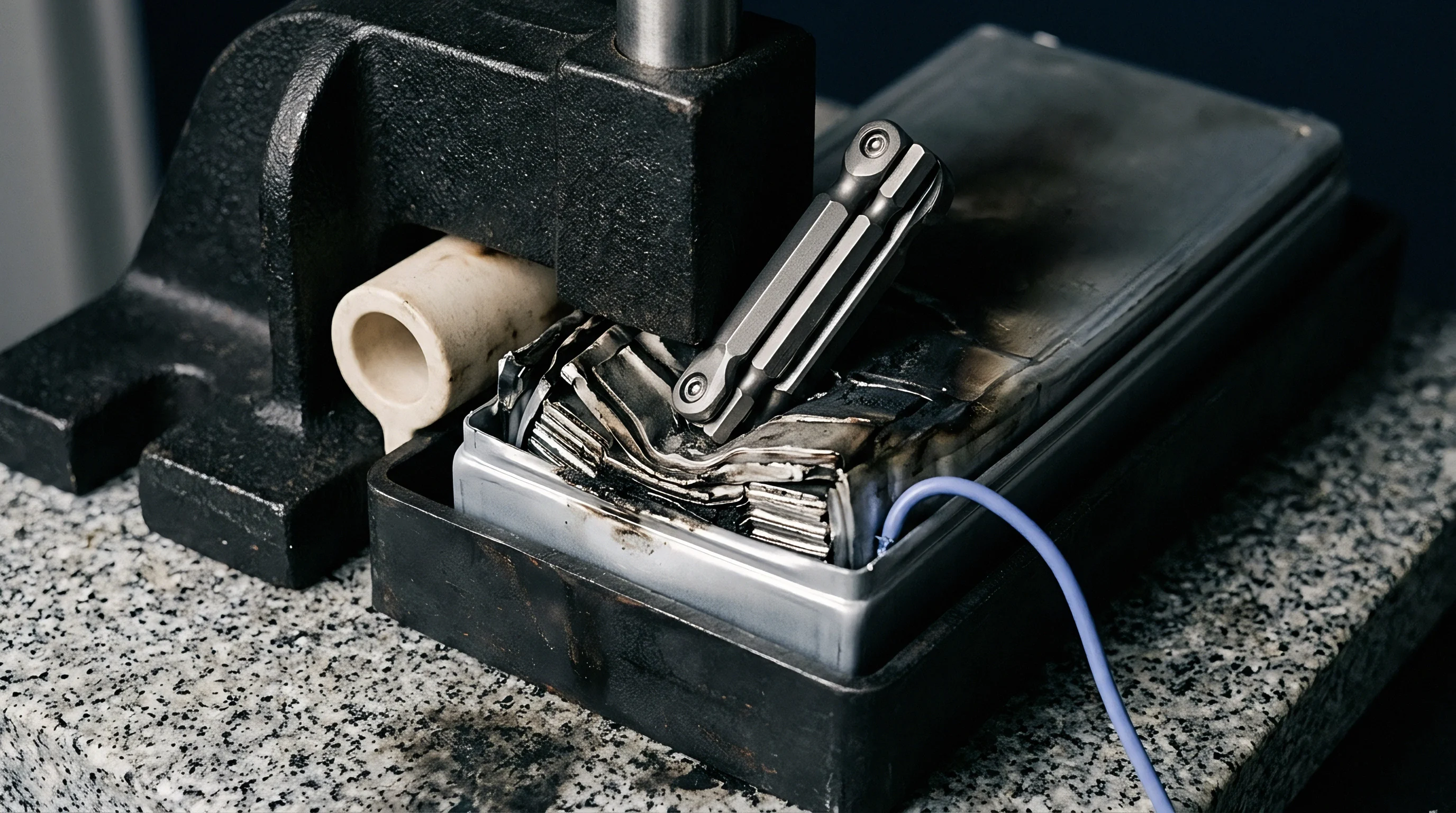
Boundary
International commercial shipping agreements split responsibility between cell manufacturers and battery pack aggregators at explicit handoff points. Selecting the appropriate International Commercial Terms (Incoterms 2020) defines where physical risk of loss transfers from seller to buyer. In cross-border cell procurement, the chosen Incoterm dictates whether transport-induced micro-shorts remain the supplier’s responsibility or fall on the pack assembler.
Incoterms Transfer Points and Latent Risk
Free on Board arrangements transfer risk of loss to the buyer the moment cell crates clear the ship rail at the export harbor. Under FOB terms, if mechanical vibration during ocean transit triggers internal particulate migration that causes micro-shorts, the buyer absorbs the loss. The cells passed factory gate controls, and the degradation occurred after risk transferred.
The buyer’s only recourse is filing a claim against marine cargo insurance, which routinely denies claims for latent manufacturing defects under standard inherent vice exclusions.
Delivered Duty Paid shifts risk transfer to the buyer’s warehouse gate. Under DDP terms, the seller retains physical risk through ocean transit, port discharge, customs clearance, and inland trucking. If transit vibration initiates micro-shorts, the damage occurs before legal delivery is complete.
The buyer discovers elevated K-values during incoming quarantine and can reject the non-conforming lot before title and risk pass.
A fourteen-day quarantine at twenty-five degrees Celsius detects ninety-two percent of self-discharge anomalies prior to pack integration.
Under DDP terms, title transfers at destination.
Under FOB terms, the buyer bears freight cost.
Inspection Timelines under CISG Provisions
Article 38 of the United Nations Convention on Contracts for the International Sale of Goods obligates the buyer to examine incoming goods within the shortest practical window. For standard commodities, a visual inspection upon unloading satisfies this requirement. Lithium-ion cells with latent micro-shorts require extended testing that conflicts with standard legal timelines: a fourteen-day to twenty-eight-day K-value quarantine far exceeds the three-day window typically presumed reasonable for physical freight inspection.
Article 39 of the CISG enforces a strict notice period, stripping the buyer of non-conformity claims if notice is not given within a reasonable time after discovery. Supply contracts for battery cells routinely override these statutory defaults by defining a dedicated latent defect discovery window, often extending the non-conformity notice period for micro-shorts up to ninety days post-delivery.
Standard bilateral agreements modify these statutory defaults through explicit incoming acceptance clauses, as demonstrated in specialized battery supply framework contracts:
“The parties agree that non-conformity resulting from internal self-discharge anomalies, elevated K-values, or latent micro-short circuits shall be deemed a latent defect under Section 8.4, and the Buyer shall retain the right to reject affected Cell Lots within sixty (60) calendar days following physical delivery at the Destination Facility, provided that Buyer maintains environmental storage logs during the Quarantine Period in accordance with Annex C.”
This clause overrides default statutory timelines, preserving the buyer’s right to reject defective cell lots following extended quarantine screening.

Remedy
Commercial contracts allocate costs when an incoming shipment exceeds predefined defect tolerances during screening. Clear mathematical metrics are required to trigger commercial remedies, lot rejections, or factory audits. When receiving tests reveal micro-shorts above agreed thresholds, explicit contractual language avoids lengthy legal stalemates between cross-border trading partners.

Batch Failure Allocation and Lot Quarantine Formulas
Statistical sampling under ANSI/ASQ Z1.4 determines whether an entire container lot undergoes mandatory return or scrap. Contracts define the Acceptable Quality Level and Lot Tolerance Percent Defective for micro-short defects. Because internal shorts represent a critical safety hazard capable of causing field fires, the AQL for micro-short defects is set at zero percent, with the Rejectable Quality Level typically capped at 0.01 percent.
Exceeding the threshold triggers lot rejection procedures. If a sample of 1,250 cells drawn from a container of 50,000 reveals two cells with K-values exceeding the critical limit, the entire container fails incoming inspection. Contract terms specify whether the seller pays to sort the lot at the buyer’s facility or covers return freight and immediate air-freight replacement.
| Defect Rate Threshold (%) | Statistical Action Trigger | Commercial Remedy Obligation | Financial Recovery Allocation | Supplier Audit Impact |
|---|---|---|---|---|
| Lot Acceptance | None; standard payment processing | 100% Invoice Amount Paid | Standard Audit Cycle | |
| 0.005 to 0.020 | Targeted Resampling | Seller pays for 100% cell re-screening | Retain 15% invoice balance pending sort | Written Corrective Action Plan |
| 0.020 to 0.100 | Lot Rejection | Immediate replacement lot dispatch via air | Full refund or replacement credit plus freight | Mandatory On-Site Line Audit |
| 0.100 | Master Contract Breach | Contract termination; full lot quarantine credit | Reimbursement of quarantine storage and scrap costs | Supplier Disqualification |
Defect rates can escalate quickly under poor storage.
Without clear terms, scrap costs stay with the buyer.
Ultimately, the contractual clause governs liability.
Warranty Seam Enforcement and Remedy Structures
Defective cell claims require clear evidentiary protocols linking field performance anomalies back to factory baseline records. A structured supply contract specifies decision rules for resolving disputes over quarantined lots showing elevated self-discharge rates.
- Quarantine storage validation requires continuous data-logger proof verifying that ambient warehouse temperatures remained strictly within fifteen to thirty degrees Celsius throughout the hold window.
- Third-party laboratory arbitration requires disputed cells to undergo destructive teardown analysis at an independent certified test facility if the supplier and buyer dispute K-value results.
- Root cause attribution metrics assign financial liability to the cell manufacturer if teardown analysis confirms metallic particulate contamination, separator breakdown, or tab burrs.
- Landed cost chargeback formulas enforce seller reimbursement covering import duties, customs clearance fees, ocean freight, inland transport, and warehouse quarantine labor upon lot rejection confirmation.
Financial remedies for rejected cell lots include direct chargeback mechanisms against open supplier invoices. If the buyer holds an open credit line or milestone payment balance, the supply agreement permits unilateral set-off of quarantine, testing, and disposal costs associated with defective shipments.
What specific evidentiary standard will international arbitration panels demand when a seller claims transport vibration exceeded UN 38.3 limits while a buyer proves incoming micro-shorts resulted from factory slitting burrs?