Thermoelectric Drift Compensation Algorithms for High Throughput Lithium Cell Resistance Sorting
Dynamic thermoelectric drift compensation decouples contact flash heating from internal resistance, securing microohm sorting accuracy on high takt lines.

Probe
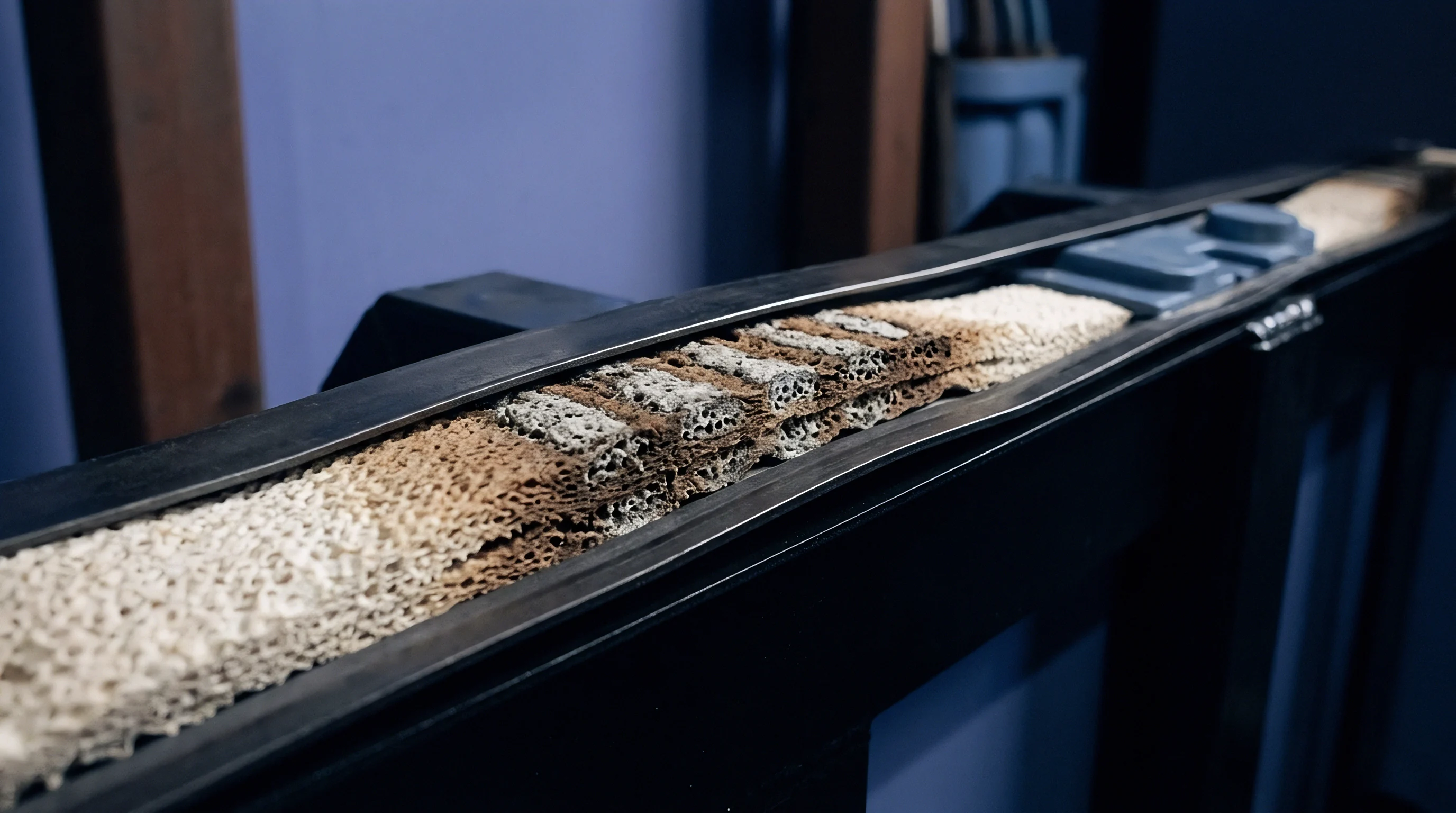
Pneumatic actuators driving coaxial Kelvin pins strike 21700 positive cap assemblies at ninety parts per minute. Each mechanical impact transfers kinetic energy into the contact interface while wiping away surface oxides. The mechanical stroke delivers between four and eight newtons of clamping force across a contact area smaller than 0.2 square millimeters, generating localized flash heating at microscopic asperities.
When a gold-plated beryllium copper sensing pin seats against an aluminum positive cap or a nickel-plated cold-rolled steel negative can, the assembly forms a pair of thermocouple junctions operating in series with the cell under test.
High-speed lines running continuous automated sorting cycles never leave mechanical dwell times long enough for tooling to reach thermal equilibrium with incoming cells. The sensing pin absorbs heat from sliding friction, ambient heat from nearby servo actuators, and the Peltier effect generated during high-current DC-IR pulses. The resulting temperature difference between the cell header and the internal voltmeter reference blocks induces a thermoelectric electromotive force set by the Seebeck coefficients of the contact metals.
In low-impedance cylindrical and prismatic cells, where internal resistance routinely falls below 15 milliohms for 21700 designs and below 0.5 milliohms for 4680 or heavy prismatic formats, this parasitic voltage degrades measurement fidelity. A temperature differential of two kelvins across a beryllium-copper-to-aluminum junction generates over 8 microvolts of electromotive force. During a five-ampere pulsed resistance measurement on a cell with 1.2 milliohms of true internal resistance, where the expected ohmic drop is 6 millivolts, a parasitic drift of 30 microvolts introduces an immediate 0.5 percent error into the sorting channel.
| Terminal Substrate Material | Contact Tip Plating | Relative Seebeck Coefficient (µV/K) | Contact Flash Rise at 6 N (K) | Induced Peak Thermo-EMF (µV) | Thermal Settling Time (ms) |
|---|---|---|---|---|---|
| Al 3003 Header (Cathode) | Au over BeCu | +18.4 | 2.8 | +51.5 | 42 |
| Nickel Plated Steel (Can) | Au over BeCu | -14.2 | 1.9 | -27.0 | 31 |
| Nickel Plated Steel (Can) | Hard Rhodium over BeCu | -8.6 | 2.4 | -20.6 | 28 |
| Pure Copper Tab (Anode) | Au over BeCu | +1.8 | 1.4 | +2.5 | 18 |
| Al 1050 Solid Post (Prismatic) | Solid Tungsten Carbide | +14.1 | 3.6 | +50.8 | 58 |
Automated sorters separate the current-carrying drive circuit from the voltage-sensing circuit in their metrology, but thermal conduction still treats both pins as parallel paths into the cell body. The outer drive barrel carries current pulses up to fifty amperes, dissipating resistive heat inside the spring mechanisms and tips. That heat conducts through the dielectric sleeve directly into the central sense pin, setting up a temperature gradient across the Kelvin probe before the tip even touches the cell cap.
- Peltier junction heating establishes an asymmetric thermal gradient across the positive and negative test terminals during unidirectional DC injection pulses, heating the anode contact while cooling the cathode contact.
- Oxide layer abrasion strips passivating films unevenly across successive actuations, altering electrical contact resistance and interfacial thermal conductance at the micro-wiping boundary.
- Spring relaxation fatigue degrades static clamping pressure over three hundred thousand operational cycles, widening the mechanical settling window and increasing frictional heating as the pin decelerates.
- Dielectric sleeve degradation permits conductive particulate buildup between drive and sense paths, creating secondary parasitic thermocouple loops inside the test head housing.
The resulting voltage drift spans multiple superimposed time constants. Mechanical impact produces an instantaneous transient lasting under five milliseconds, followed by a slower thermal conduction phase that extends past one hundred milliseconds. Because line cadence requires complete measurement and binning within six hundred milliseconds per cell, waiting for settling delays is impractical, leaving lines to test directly through the transient regime.
Clean contacts seat colder than oxidized surfaces.
Gradient
Thermal distributions across continuous sorting conveyors shift with factory ambient changes and prior process steps. Cells enter incoming sorting stations straight from formation water baths, aging racks, or secondary vacuum drying tunnels. A tray of cylindrical cells exposed to directional airflow can develop a four-kelvin surface temperature spread between its outer perimeter and central core.
When these cells move into the automated pick-and-place transfer rotary, the thermal mass of mechanical grippers introduces another boundary condition. Steel transport stars act as heat sinks on the cell sleeves while shop air warms exposed terminal faces. At the same time, the test fixture stays hot from pneumatic manifold coils, linear motor stators, and continuous electrical pulsing from previous test runs.
A four-kelvin thermal mismatch between probe tips and cell terminals introduces up to 74 microvolts of parasitic potential across aluminum cathode interfaces under standard atmospheric test conditions.
When a direct-current internal resistance routine injects twenty amperes for one hundred milliseconds, ohmic dissipation within the contact constriction resistance produces a localized heat pulse. Asperity temperatures spike during current flow and decay along a logarithmic curve after it stops. If the algorithm measures post-pulse voltage relaxation to compute polarization resistance without isolating this thermal decay, the calculated resistance reflects thermocouple cooling instead of electrochemical charge-transfer dynamics.
At eighty parts per minute, the available test window spans roughly four hundred milliseconds once pneumatic travel, clamping, and ejector indexing complete. Measuring true alternating-current internal resistance at 1 kHz requires fifteen to thirty complete sinusoidal cycles for adequate signal-to-noise ratios after phase-sensitive detection. Thermoelectric drift across this thirty-millisecond integration window introduces a moving DC baseline into the analog-to-digital converter, causing spectral leakage and distorting the real impedance component.
Uncompensated thermal variations across incoming batches skew sorting populations, grouping warmer cells with higher native resistance into lower-resistance bins and colder cells into higher ones. This creates module-level capacity and thermal imbalances once assembled into packs.
Kernel
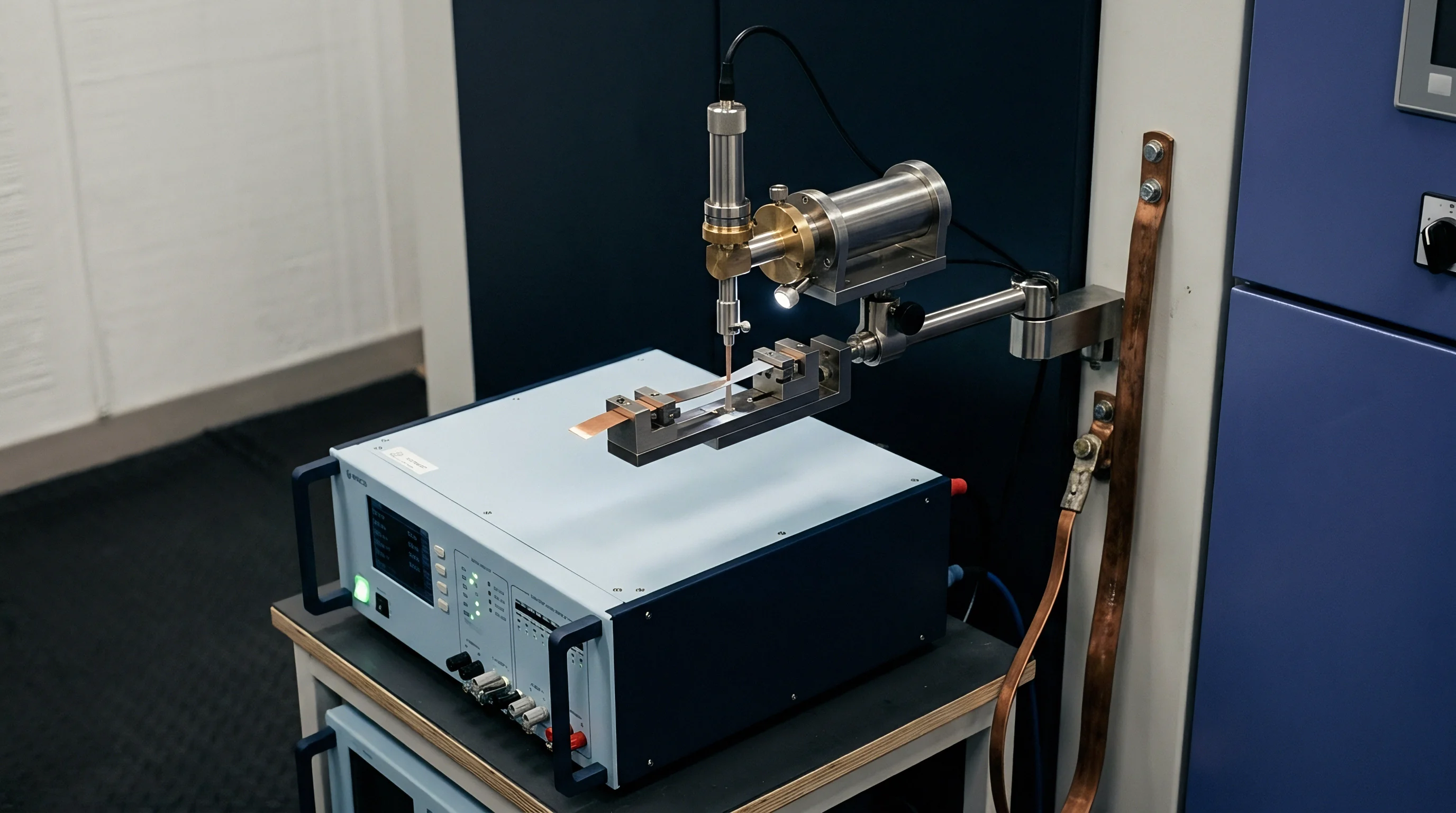
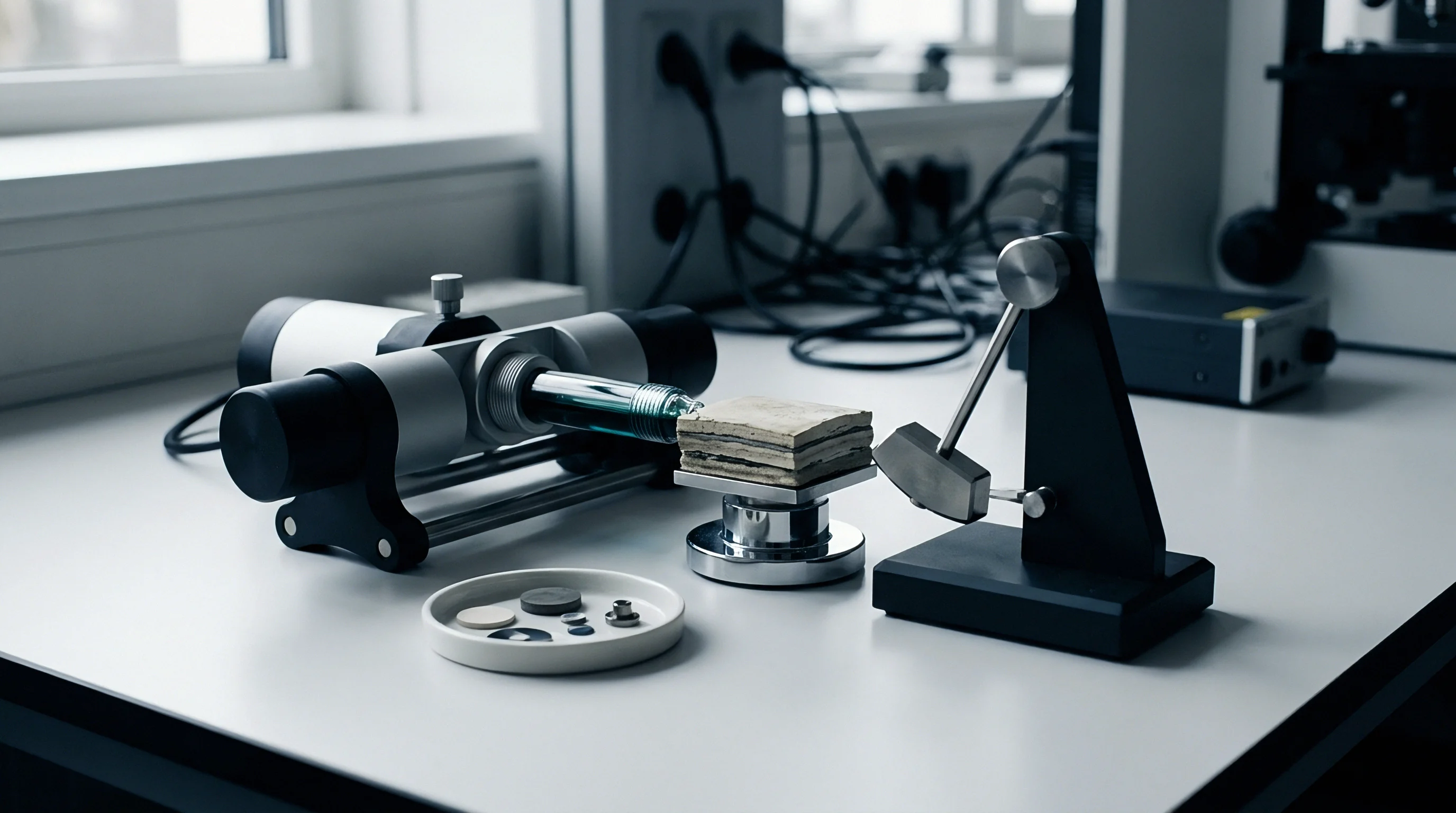
Algorithmic cancellation of thermoelectric drift is handled inside the digital signal processing firmware of high-speed battery impedance meters. The DSP runs signal conditioning stages to separate static open-circuit voltage, dynamic ohmic drop, electrochemical polarization transients, and thermal Seebeck EMF. Static offsets are easily removed with high-pass filtering, but fast sorting cycles introduce non-linear, time-varying baseline drift that passes right through conventional bandpass filters.
Is Dynamic Zeroing Feasible under High Speed Contact?
Interrupted current techniques provide the physical basis for real-time compensation. The algorithm applies a bipolar excitation profile ~ a positive current pulse immediately followed by an equal and opposite negative pulse. Because the ohmic drop reverses polarity with the excitation current while Seebeck voltage depends solely on the thermal gradient, subtracting the negative response from the positive response isolates ohmic resistance and cancels the thermal baseline.
In high-speed DC-IR sorting, where bipolar pulsing doubles electrical stress and exceeds takt time limits, modern engines use polynomial drift compensation. The measurement cycle samples open-circuit voltage during the first five milliseconds after contact closure before firing the current pulse, establishing the initial contact thermo-emf (V_zero). As soon as the pulse ends, the system samples the relaxation curve at five hundred kilohertz and fits terminal voltage to a multi-variable decay equation that separates double-layer capacitive discharge from thermoelectric heat conduction.
| Compensation Algorithm Class | Excitation Profile | Computation Latency (ms) | Residual Drift Error (µΩ) | Takt Feasibility at 100 PPM |
|---|---|---|---|---|
| Bipolar Pulse Subtraction | Dual ±10 A Pulses | 18.4 | ±1.2 | Marginal |
| Polynomial Baseline Extrapolation | Single +10 A Pulse | 4.2 | ±3.8 | Fully Feasible |
| Recursive Kalman Drift Filter | Single +10 A Pulse | 6.1 | ±1.9 | Fully Feasible |
| Moving Median Zero Tracking | Continuous 1 kHz AC | 2.1 | ±8.4 | Fully Feasible |
| Thermal Observer State-Space | Adaptive Pulse Profile | 12.5 | ±1.5 | Feasible with DSP |
Mathematical extraction under a recursive Kalman filter treats true internal resistance and junction thermoelectric potential as separate state variables. The observation equation frames terminal voltage as the sum of open-circuit voltage, current times resistance, and instantaneous Seebeck potential. By updating its covariance matrix using telemetry from thermistors embedded two millimeters behind the probe tip, the filter estimates the thermal gradient and subtracts calculated Seebeck voltage before outputting the final resistance.
DIN EN 61960-3 defines internal DC resistance verification through timed current pulses, which exposes sorting lines to uncompensated thermal offset accumulation if voltage sample points occur during thermal relaxation phases.
- The digital signal processor captures two thousand voltage and current samples at twenty-microsecond intervals during pre-excitation contact, establishing baseline open-circuit potential and initial thermo-emf slope.
- The programmable current sink initiates a calibrated ten-ampere excitation step with a rise time held under fifty microseconds to minimize inductive ringing across the fixture wiring.
- Analog-to-digital converters record the combined ohmic drop, electrochemical charge-transfer transient, and dynamic thermoelectric ramp across a sixty-millisecond measurement plateau.
- Firmware executes real-time polynomial regression over the final ten milliseconds of the pulse window to separate linear thermal drift from asymptotic double-layer polarization.
- The processor terminates the current pulse and records terminal voltage relaxation over twenty milliseconds, confirming that the extracted thermal drift vector matches the post-pulse cooling baseline.
- The sorting engine computes the compensated ohmic resistance value, checks variance against statistical process limits, and sends the sorting bin actuation trigger to the pneumatic sorting gate.
Integrating contact thermal modeling into DSP firmware eliminates the need for hardware stabilization breaks. Older sorters halted production every fifty cycles to seat test pins against an isothermal gold shorting block for recalibration. Algorithmic drift extraction runs continuously on every cycle, adjusting for shop floor warming across multi-shift operations without dropping line rate.
Averaging sixteen cycles of high-frequency alternating current is sometimes treated as a replacement for drift modeling, under the premise that thermal components cancel out across symmetrical sine waves.

Binning
Resistance sorting channels divide production lots into narrow performance bands for module matching. For high-nickel 21700 cells going into parallel-group architectures, bins can be as narrow as 0.2 milliohms. When sorting 4680 cylindrical cells or heavy automotive prismatic cells, where base internal resistance runs between 1.0 and 1.5 milliohms, sorting windows tighten to 0.05 milliohms (50 microohms) per bin.
An uncompensated thermoelectric drift of 25 microvolts during a ten-ampere test pulse generates a 2.5 microohm error. In a 50-microohm binning protocol, that variation consumes five percent of the total bin allowance. If thermal gradients shift over an eight-hour shift as sorting machinery warms up, identical cells tested at seven in the morning end up in different bins than those processed at two in the afternoon.
| Sorting Parameter | Raw Uncompensated Metrology | Static Baseline Subtraction | Dynamic Kalman Compensation |
|---|---|---|---|
| Bin Width Resolution (µΩ) | 100 | 50 | 20 |
| False Out-of-Spec Rejections (%) | 4.12 | 1.45 | 0.18 |
| Bin Misclassification Rate (%) | 8.60 | 3.10 | 0.42 |
| Shift-to-Shift Median Drift (µΩ) | 18.4 | 6.2 | 0.8 |
| Pack Internal Resistance Imbalance (%) | 6.8 | 3.4 | 1.1 |
In a factory processing two hundred thousand cylindrical cells a day, a three-percent false rejection rate caused by thermoelectric drift diverts six thousand good cells into downgrade or quarantine streams daily. Those units then require manual offline re-testing or sit depreciating in storage bays awaiting disposition.
On a line running 21700 cells at ninety parts per minute across two ten-hour shifts, daily volume reaches one hundred eight thousand cells. At a 2.5 percent false scrap rate and a production cost of one dollar and thirty cents per cell, uncompensated metrology risks misclassifying or downgrading three thousand five hundred dollars worth of product each day. Implementing dynamic drift compensation tightens measurement variance sigma by twelve percent, preventing cells from dropping into wrong adjacent bins.
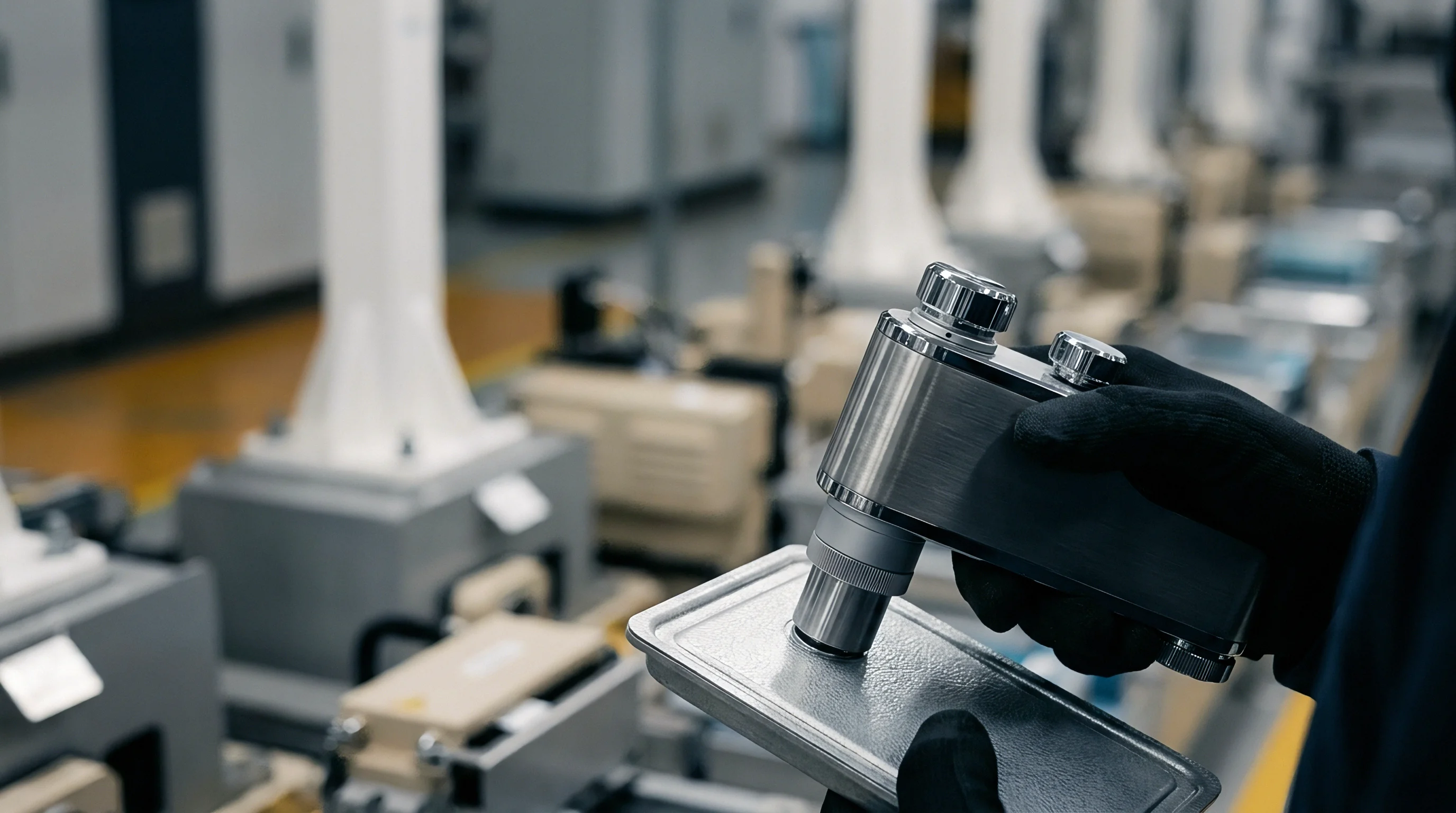
Thermal equilibrium between Kelvin probes and continuously processed cells does not occur on high-speed lines.
Module architectures with large parallel groups, like twelve-parallel or sixteen-parallel bricks, rely on matched branch resistance to balance current during discharge. Inserting a cell with an undetected 80-microohm elevation into a set of 1.20-milliohm cells forces an uneven current split. Under hard acceleration, lower-resistance paths take on extra current, driving localized thermal wear and causing capacity divergence over time.
The boundary where electronic drift compensation must yield to active probe refrigeration remains an open question, particularly when contact thermal imbalances exceed fifteen kelvins in high-power sorting environments.
Ledger
Responsibility boundaries break down when measurement disputes arise between cell producers and pack integrators. The cell manufacturer grades output at the factory gate using automated sorters. The pack assembler receives the lots, runs incoming audits on a stationary bench, and finds resistance distributions that do not match the manifest.
Whose Balance Sheet Absorbs False Rejections?
When an incoming audit flags a shipment because cell resistance reads twenty microohms higher than the factory manifest, the discrepancy often traces back to differing test metrology. The cell supplier graded on a high-speed line with dynamic Kalman drift compensation at eighty parts per minute. The pack facility ran static four-wire Kelvin checks on a manual bench where probes sat on terminals for two seconds, letting heat fully dissipate.
The two setups record different resistance values on the exact same cell.
Cell purchase agreements typically specify AC resistance at 1 kHz and DC resistance under set pulse profiles, but often omit probe contact velocity, clamping force, tip metallurgy, and the mathematical compensation used by instrument firmware. That omission leaves significant room for commercial dispute.
A contact resistance specification without an explicit thermal drift compensation clause leaves incoming inspection open to continuous dispute.
Sourcing teams drafting multi-gigawatt-hour cell contracts resolve this friction by embedding explicit metrology specifications into quality agreements. The schedules define nominal resistance limits and bin bounds while also setting the excitation waveform, pulse timing windows, allowed compensation algorithms, and temperature correction factors.
Equipment procurement contracts for sorting machinery must specify thermal drift limits for factory acceptance testing. A standard buy-off protocol requires running five hundred consecutive cycles on a calibrated reference resistor without pausing, verifying that probe-block heating does not drift reported resistance by more than two microohms. If the tool fails, the integrator must redesign probe cooling or refine firmware algorithms before final sign-off.
Delivery agreements increasingly include ISO 17025 calibration traceability clauses binding both parties to certified reference standards, moving disputes away from measurement methodology toward verifiable calibration baselines.