Quantifying Carbonate Solvent Diffusion through Polymeric Battery Enclosures
Solvent diffusion through polymer seals depletes linear carbonates, raising pack resistance and creating flammable headspace vapors that breach UN 38.3 limits.

Flux
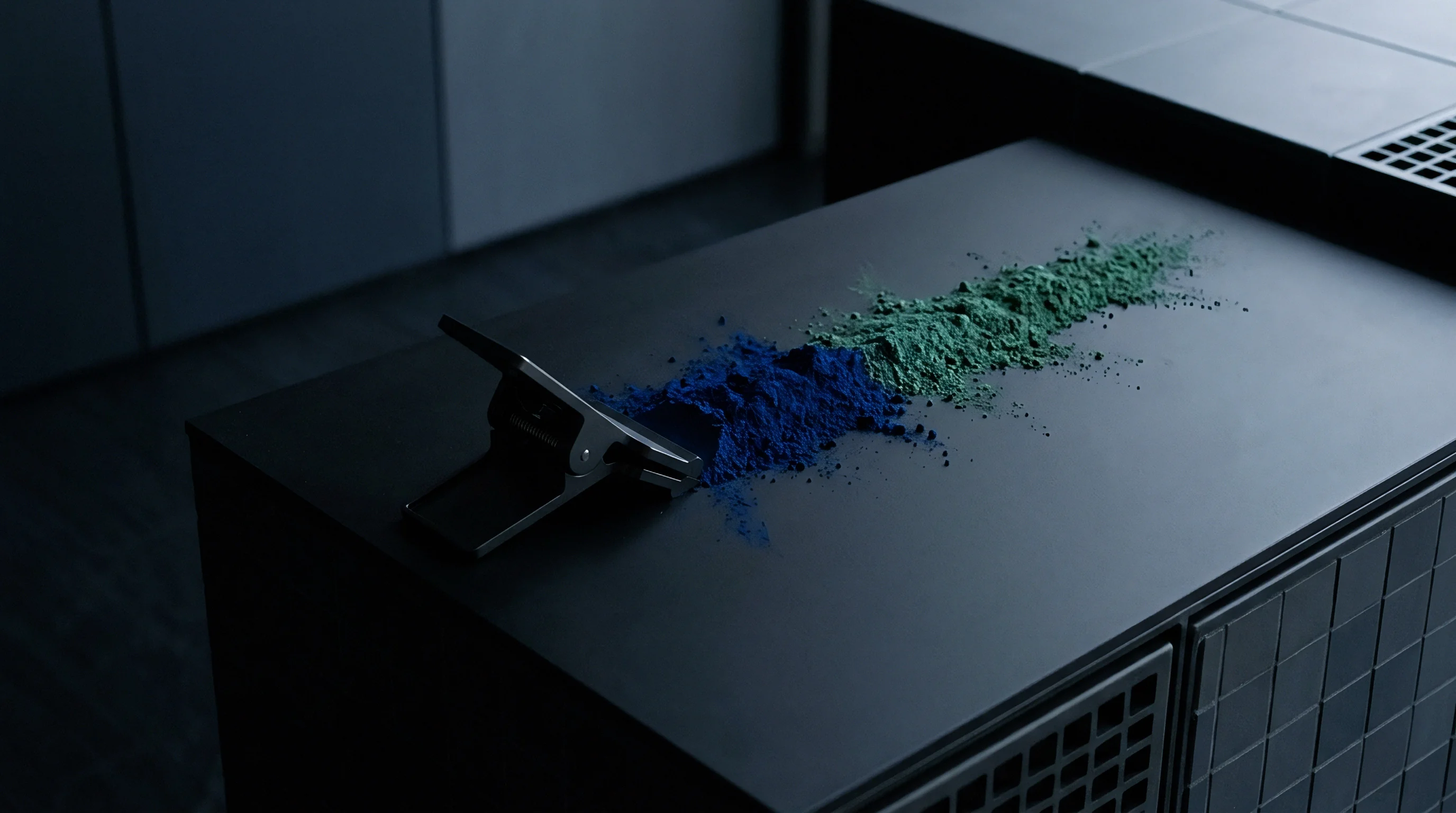
Under a forty-degree Celsius thermal soak, dimethyl carbonate escapes through an unbacked polypropylene edge at 1.4 grams per square meter per day. Volatile solvents inside a commercial cell exert real vapor pressure against whatever contains them. Liquid electrolyte coexists with a vapor space rich in alkyl carbonates; ethyl methyl carbonate and dimethyl carbonate generate substantial partial pressures at ordinary operating temperatures, while ethylene carbonate stays mostly liquid or crystalline below thirty-six degrees.
Once an enclosure relies on polymers ~ whether as a pouch-cell seal layer, a prismatic cell gasket, or an injection-molded housing ~ these organic species dissolve into the boundary and migrate outward along the activity gradient.
Pure dimethyl carbonate exhibits a transmission rate of 8.2 grams per square meter per day through sixty-micron cast polypropylene at forty degrees Celsius.

Thermodynamic Driving Forces in Volatile Solvents
Differences in vapor pressure establish sharp chemical potential gradients across the enclosure wall. At twenty-five degrees Celsius, dimethyl carbonate has a vapor pressure near 56 millimeters of mercury, ethyl methyl carbonate sits around 36 millimeters, and diethyl carbonate registers roughly 11 millimeters, while ethylene carbonate remains solid. Above a standard electrolyte with a 1:1:1 volumetric blend of ethylene carbonate, ethyl methyl carbonate, and dimethyl carbonate, the equilibrium vapor is over ninety percent linear species.
The polymer interface is therefore exposed primarily to low-molecular-weight linear esters rather than the cyclic carrier.
Steady-state permeation per unit area follows classical sorption-diffusion behavior. Transport is governed by the solvent’s solubility in the polymer and its diffusion coefficient through the macromolecular network, the product of the two defining permeability. With their lower boiling points and low viscosity, linear carbonates diffuse through non-polar polymers orders of magnitude faster than cyclic species.
Overall mass loss scales inversely with wall thickness and directly with exposed cross-sectional area.
| Polymer Substrate | Solvent Species | Solubility (g/cm³) | Diffusion Coefficient (cm²/s) | Permeation Rate (g/m²·day) |
|---|---|---|---|---|
| Cast Polypropylene (CPP) | Dimethyl Carbonate | 0.042 | 2.3 × 10⁻⁸ | 8.2 |
| Cast Polypropylene (CPP) | Ethyl Methyl Carbonate | 0.038 | 1.4 × 10⁻⁸ | 4.5 |
| Cast Polypropylene (CPP) | Diethyl Carbonate | 0.031 | 8.7 × 10⁻⁹ | 2.3 |
| High-Density Polyethylene (HDPE) | Dimethyl Carbonate | 0.029 | 1.1 × 10⁻⁸ | 2.7 |
| Polyamide 6 (PA6) | Dimethyl Carbonate | 0.015 | 3.2 × 10⁻¹⁰ | 0.04 |
| Polyphenylene Sulfide (PPS) | Dimethyl Carbonate | 0.003 | 1.8 × 10⁻¹¹ | 0.001 |
Linear versus Cyclic Transport Dynamics
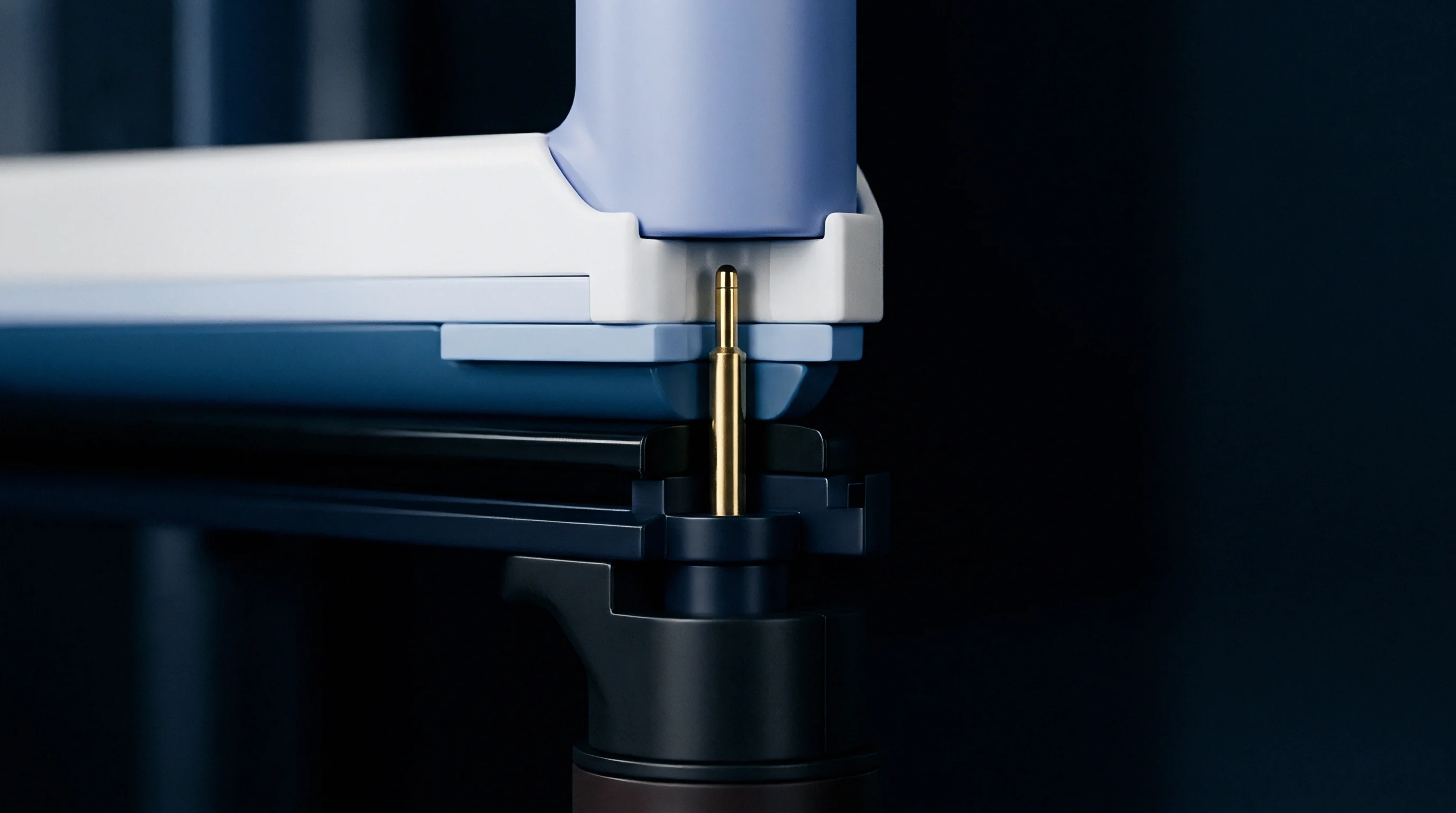
Linear molecules slip through polymer entanglements with minimal steric hindrance. Dimethyl carbonate has a molar volume of approximately 85 cubic centimeters per mole, against 101 cubic centimeters per mole for ethyl methyl carbonate and 122 cubic centimeters per mole for diethyl carbonate. That compact geometry allows dimethyl carbonate to hop quickly between transient free-volume voids in amorphous domains.
In contrast, cyclic carbonates like ethylene carbonate and propylene carbonate form rigid, highly polar five-membered rings with dipole moments exceeding 4.5 Debye, resulting in strong self-association and little affinity for non-polar matrices like polypropylene or polyethylene.
This preferential escape alters the bulk electrolyte over time. As linear components bleed through the enclosure wall, the remaining liquid becomes enriched in ethylene carbonate. Viscosity rises, lithium-ion transference numbers drop, and cell impedance climbs.
Low-temperature discharge suffers in particular, since the leftover solution freezes at higher temperatures. Pouch cells and unsealed plastic battery enclosures shed their lightest fractions first, gradually turning an optimized electrolyte into a sluggish mix.

Film
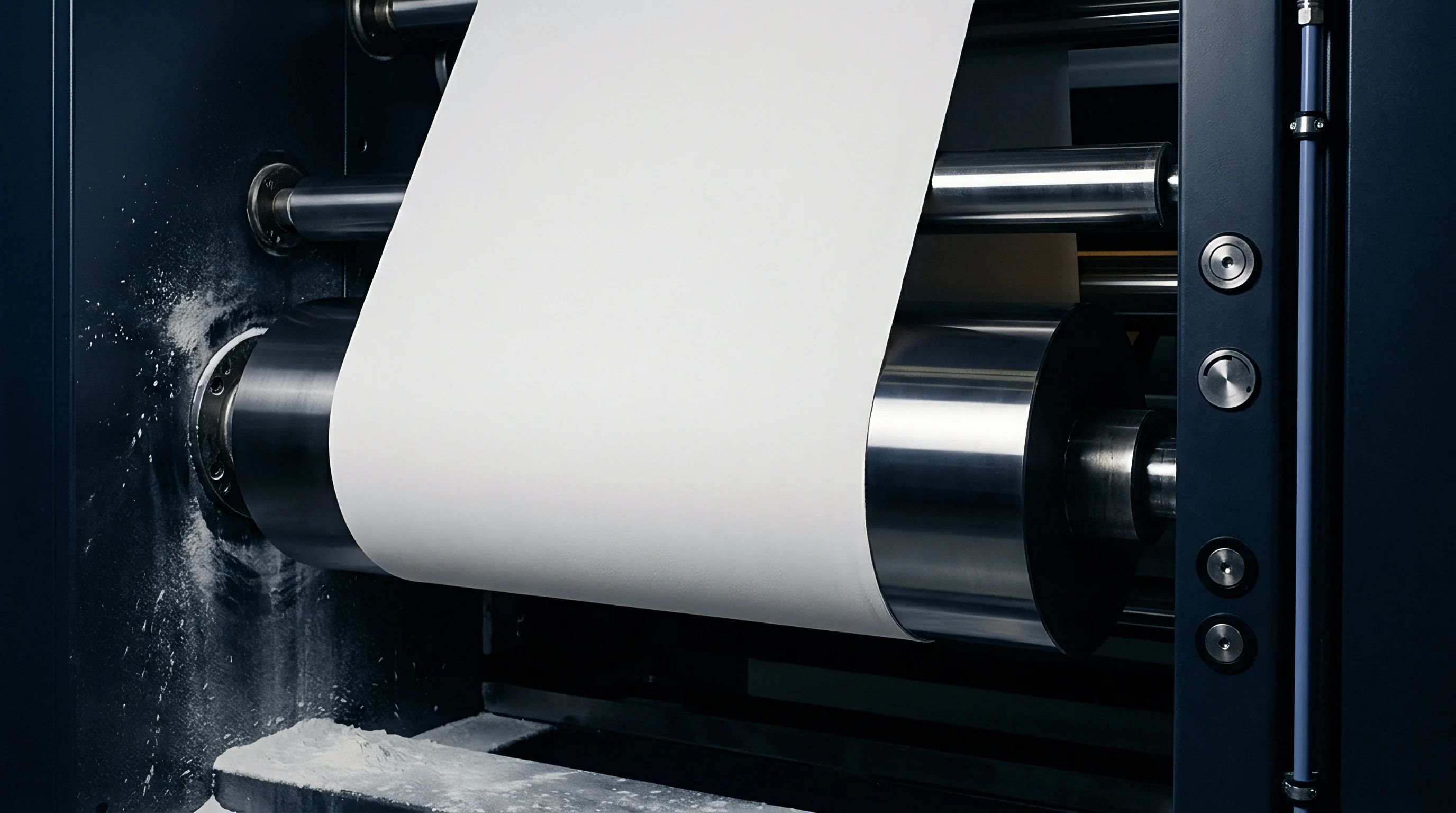
Direct contact with organic liquids alters the macromolecular structure of semi-crystalline polyolefins. Alkyl carbonates cause pronounced swelling in cast polypropylene, the standard internal heat-seal layer for pouch cell foil. Penetrating the amorphous zones between crystalline lamellae, the solvent separates polymer chains, softening the material and expanding its dimensions while crystalline regions remain impervious.
Swelling is self-accelerating: initial uptake dilates the free volume, raising the local diffusion coefficient and drawing in more solvent until thermodynamic equilibrium is reached.
Polar linear esters loosen polymer backbones faster than bulky ring structures can enter them.

Polymer Swelling and Matrix Plasticization
Solvent molecules disrupt interchain van der Waals forces within the amorphous phase, depressing the polymer’s glass transition temperature. Under continuous dimethyl carbonate exposure at fifty degrees Celsius, a sixty-micron cast polypropylene film shows a four to eight percent weight gain from swelling. The resulting loss of modulus undermines seal strength along the pouch perimeter, where polypropylene is fused to metal tabs or the facing aluminum foil.
- Matrix plasticization lowers seal creep resistance under sustained internal pressure.
- Seal delamination begins at the bonded interface as swollen polymer pulls away from conversion-coated aluminum foil.
- Free-volume dilation widens transport pathways, accelerating the loss of bulkier additives.
- Micro-void cavitation occurs during thermal cycling when solvent evaporates off the exterior seal edge faster than it can be replenished from within.

Barrier Selection across Core Resins
Engineering resins show starkly different resistance to alkyl carbonates. Polypropylene and polyethylene exclude moisture reliably but offer virtually no barrier against organic esters. Technical plastics with higher polarity ~ such as polyamide 6, polyamide 66, and polybutylene terephthalate ~ pack their chains more tightly and show less affinity for linear carbonates, reducing permeation rates by over an order of magnitude.
Highly crystalline polyphenylene sulfide resists organic solvents almost entirely, preventing dissolution and keeping steady-state transmission below 0.001 grams per square meter per day at typical operating temperatures.
Matching solubility parameters serves as a dependable screen when selecting resins for structural module housings, management enclosures, or sealing films. Dimethyl carbonate has a Hansen solubility parameter of 20.2 MPa^(1/2), which sits close to both polyolefins and polycarbonates. As a result, polycarbonates craze and crack rapidly in the presence of carbonate vapors.
Specifying flame-retardant polycarbonate blends for module covers often ends in severe environmental stress cracking around terminal seals, driven purely by fugitive solvent vapor.
Solvent odor around module bays is often attributed to trace surface wash residue rather than continuous migration through the seal perimeter.

Metrology
Quantifying fugitive solvent emissions requires instruments calibrated for volatile organic carbon rather than gross leak detection. Standard protocols developed for hermetic metal cans fail on polymer barriers. Helium mass spectrometry finds pinholes in laser-welded aluminum or steel prismatic cans, but it cannot measure solvent permeation; helium simply moves through pores by gaseous Knudsen diffusion without interacting with the resin, whereas alkyl carbonates dissolve into, plasticize, and diffuse through the polymer bulk over weeks and months.

What Governs Evacuation Rates in Sealed Cavities?
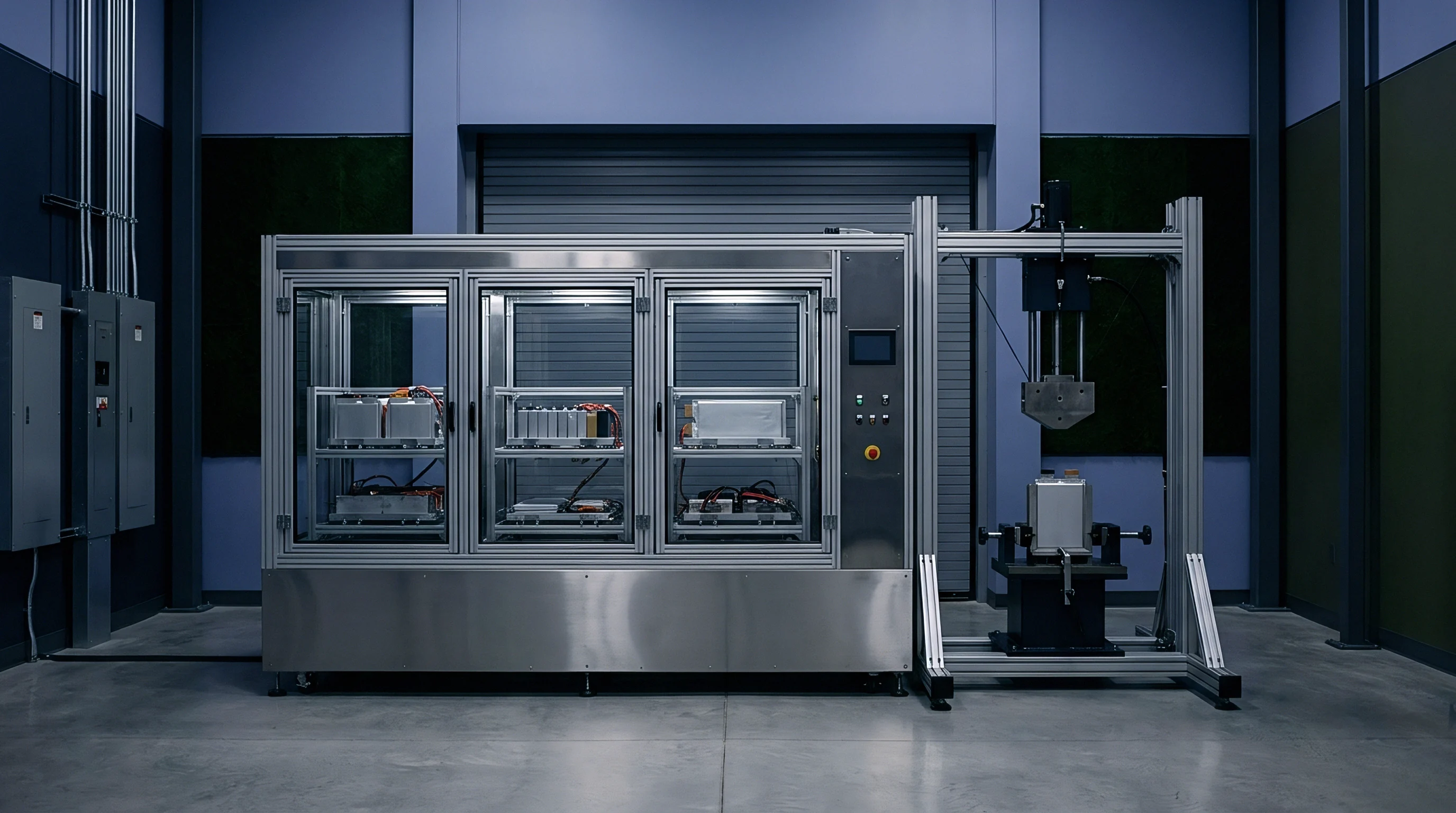
Chamber geometry and purge velocity dictate the boundary layer forming over the test specimen. Gravimetric measurement using modified wet cups under ASTM E96 or ASTM F1249 conditions remains the workhorse for screening barrier materials. Liquid electrolyte is sealed inside an aluminum cup by the test membrane and clamped with a fluoroelastomer O-ring.
The assemblies sit in an environmental chamber at forty degrees Celsius under dry nitrogen, with mass loss logged over 500 to 1,000 hours on a microgram balance.
- Dry the film specimen in a vacuum oven at sixty degrees Celsius for twenty-four hours to remove residual moisture.
- Inside an argon glove box, charge the stainless steel cup with fifteen milliliters of the target carbonate blend.
- Clamp the specimen over the cup mouth using a calibrated torque wrench, ensuring even gasket compression without pinching the edge.
- Transfer the assembly to an analytical microbalance sensitive to 0.01 milligrams and record the initial tare weight.
- Place the assembly in a thermal chamber swept with dry nitrogen at thirty liters per minute to prevent vapor saturation.
- Weigh the cup every seventy-two hours until the rate of mass loss stays linear across five consecutive readings.
Differential Pressure versus Concentration Gradients
Dynamic headspace sampling paired with gas chromatography-mass spectrometry provides the chemical selectivity gravimetric testing lacks. Sealing a cell or polymer part inside a stainless accumulation chamber and sweeping the effluent through a Tenax TA sorbent trap prevents boundary-layer stagnation. Subsequent thermal desorption and GC-MS separation distinguishes dimethyl carbonate, ethyl methyl carbonate, and diethyl carbonate peaks down to sub-part-per-billion levels, clearly separating bulk polymer permeation from gross seal leaks or weeping around terminals.
| Metrology Method | Target Analytes | Lower Detection Limit | Measurement Duration | Failure Discrimination |
|---|---|---|---|---|
| Gravimetric Cup (ASTM E96 Mod.) | Total solvent mass loss | 0.1 mg / week | 500 to 1,000 hours | No chemical selectivity |
| Dynamic Headspace GC-MS | Individual carbonates | 0.05 ppm | 2 to 24 hours | Isolates individual species |
| Fourier-Transform Infrared (FTIR) | Carbonyl band (C=O) | 1.0 ppm | Real-time continuous | Groups total esters |
| Photoionization Detection (PID) | Volatile organic carbon | 0.1 ppm | Real-time instantaneous | Zero species identification |
| Helium Mass Spectrometry | Helium tracer gas only | 1 × 10⁻¹⁰ mbar·L/s | 1 to 5 minutes | Measures mechanical voids only |
Whether sub-ppm photoionization field screening can isolate seal-path weeping from minor terminal gasket weeping across five-year field deployments remains an open question.
Combustion
Carbonate vapors carry flash points on par with low-molecular-weight hydrocarbons: dimethyl carbonate ignites at sixteen degrees Celsius, ethyl methyl carbonate at twenty-three degrees, and diethyl carbonate at twenty-four degrees. As these solvents diffuse out of cells into water-tight pack enclosures, vapor builds up in the internal headspace. Housings built to IP67 or IP69K ingress standards rely on dense elastomeric perimeter gaskets that keep moisture out while sealing fugitive organic vapors in.
Across months of storage or seasonal cycling, vapor concentrations inside can creep toward the lower explosive limit.
Compliance with UL 94 V-0 ratings becomes invalid when continuous solvent absorption drops the material oxygen index below twenty-eight percent.

Headspace Vapor Accumulation and Explosion Limits
Escaping alkyl vapors gradually concentrate within confined module cavities. In atmospheric air, dimethyl carbonate has a lower explosive limit of 4.22 percent by volume and an upper limit of 12.87 percent, while diethyl carbonate reaches flammability at just 1.40 percent. Standard semi-permeable ePTFE pressure-equalization vents relieve barometric pressure differentials, but their diffusion cross-section is far too small to vent heavy organic vapors before they accumulate in tightly packed automotive or industrial enclosures.
Internal switching gear creates ready ignition sources. Contactors, fuses, and solid-state relays operating in vapor-laden module air carry continuous ignition risk; an arc struck during contactor opening can ignite an atmosphere carrying only two percent solvent. The resulting explosion ruptures the housing, turning a slow diffusion issue into an open deflagration without a single cell undergoing thermal runaway.
Degradation of Flame Retardancy Standards
Solvent saturation degrades the flammability ratings of structural polymers. Cell holders, busbar carriers, and pack covers are typically specified in plastics compounded to meet UL 94 V-0 at working wall thicknesses. However, once flame-retardant polybutylene terephthalate or polyamide 66 absorbs three to five weight percent of alkyl carbonates, that uptake acts as internal fuel.
In a localized electrical fault, solvent boils out ahead of the flame front, sustaining combustion and causing the resin to fail vertical burn tests despite halogen-free or red-phosphorus additive packages.
Underestimating vapor buildup inside unvented IP67 housings risks uncontained deflagration during transit, with the attendant cargo carrier bans and regional safety recalls.

Allowance
Permissible mass loss specifications are tied directly to ten-year impedance targets. Teams qualifying pouch cells or plastic-cased modules have to set firm limits on solvent loss across the service life of the pack, since dryout accelerates capacity fade by starving active areas and consuming lithium inventory. A ten percent drop in electrolyte mass drives internal DC resistance up by more than forty percent, choking fast-charge acceptance and cutting into regenerative braking recovery in electric vehicle drivetrains.
A cell that loses three grams of volatile solvent loses its ionic highway long before it reaches its cycle life cutoff.

Mass Loss Budgets for Long Calendar Lifetimes
Allowable transmission rates come down to pack geometry and cell layout. Consider a sixty-ampere-hour pouch cell filled with forty-five grams of electrolyte, built with an active heat-seal perimeter of 0.8 meters and an exposed cast polypropylene edge eighty microns thick. That leaves an exposed polymer cross-section of 0.000064 square meters.
At a dimethyl carbonate transmission rate of 8.2 grams per square meter per day at forty degrees Celsius, baseline solvent loss runs about 0.00052 grams daily. Over ten years at an average of thirty degrees Celsius, total loss reaches roughly 1.2 grams ~ about 2.7 percent of initial solvent mass.
If seal overlap is under three millimeters, or if repeated fast charging pushes average pack temperatures near forty-five degrees Celsius, solvent loss can easily triple to 3.6 grams per cell. Exceeding eight percent inventory loss starves the core of the pouch stack of wet contact, promoting lithium plating across the graphite anode and precipitating premature capacity loss long before normal cycling limits are reached.
| Regulatory Standard | Test Clause | Condition Applied | Permissible Mass Loss Limit | Commercial Consequence of Exceedance |
|---|---|---|---|---|
| UN Manual of Tests (UN 38.3) | Test T.2 (Thermal Test) | 72°C to -40°C over 10 cycles | 0.1% max for cells > 5.0 g | Immediate revocation of transport airworthiness |
| UN Manual of Tests (UN 38.3) | Test T.1 (Altitude Simulation) | 11.6 kPa vacuum for 6 hours | 0.1% max for cells > 5.0 g | Air freight carrier cargo refusal |
| IEC 62660-2 | Clause 6.2 (Thermal Cycling) | 65°C to -40°C, 30 cycles | No observable leakage / 0.1% | Automotive production part rejection |
| SAE J2464 | Section 4.3 (Thermal Abuse) | Elevated thermal soak at 55°C | Mass loss logged for VOC hazard | Failure of pack system safety qualification |
| UL 1973 | Clause 18 (Gasket and Seal) | Accelerated aging at 85°C | Retention of 60% tensile strength | Stationary storage certification denial |
Transport Certification Boundaries and Test Tolerances
Transport regulations demand strict hermetic containment prior to shipment. Under UN 38.3 Dangerous Goods rules, cells must pass thermal cycling and pressure differentials without leakage. Test T.1 pulls an 11.6-kilopascals vacuum at twenty degrees Celsius for six hours, while Test T.2 cycles temperatures from seventy-two degrees down to minus forty degrees Celsius; a weight loss over 0.1 percent constitutes an outright failure.
Swollen polymeric seals are particularly vulnerable in Test T.2, where internal vapor pressure spikes just as the polymer softens, leading to sudden venting across the bond line.
Under IATA Dangerous Goods Regulations Packing Instruction 965, shippers must certify compliance with the UN Manual of Tests and Criteria. Should unquantified solvent diffusion push weight loss beyond the 0.1 percent threshold during type approval, the test summary is invalidated. Forwarders reject freight lacking valid paperwork, leaving inventory stranded at transit hubs and voiding cargo insurance policies.
Using Section 4.2 of the master purchase agreement to cap annual electrolyte mass loss at thirty milligrams per cell shifts dryout warranty liability directly to the cell packager.