Meaning
Ultrasonic or thermal sensing of adhesive interfaces identifies discontinuous regions or voids within structural joints. Incorporating robust bondline flaw detection prevents the assembly of cells with inadequate structural support or poor thermal pathways. This process isolates mechanical defects before final packaging.
Evaluation Methodology
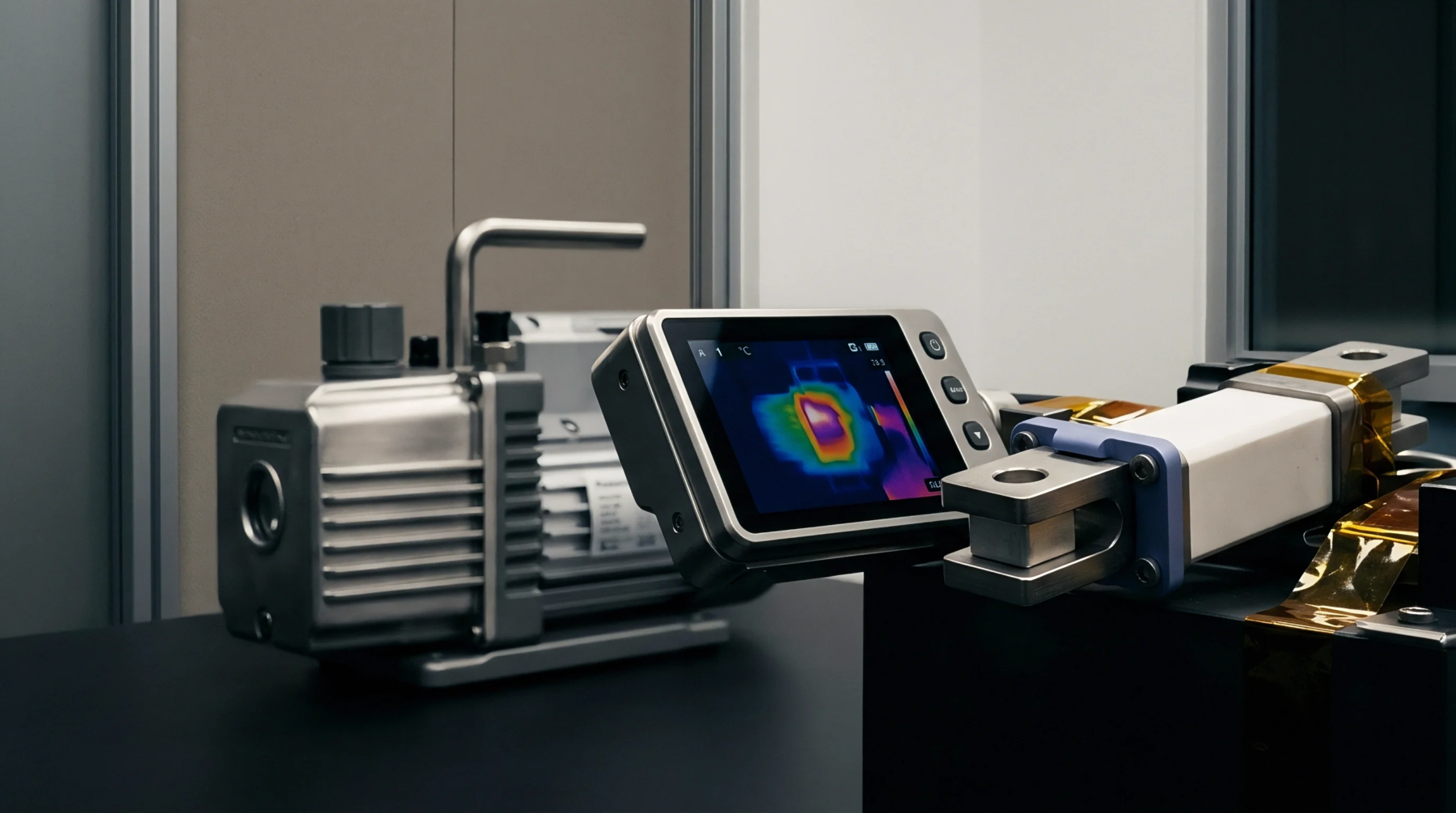
Pulsed thermography and ultrasonic echo monitoring capture the structural response of the joined layers to external energy inputs. When executing bondline flaw detection, inspectors analyze the return signal attenuation or surface thermal dissipation to identify hidden anomalies. Gaps or dry spots present high thermal resistance and show up as hot regions on the thermal sensor.
This clear contrast allows instant automated sorting of defective structural parts on the high volume assembly line.
Adhesion Fault
Mechanical separation of adhesive layers occurs when microscale gas pockets weaken the bonded surface area. Without effective bondline flaw detection, these microscale gaps expand under thermal cycling and vibrational stresses during vehicle operation. The resulting joint separation increases the risk of cell mechanical shift.
Quality Protocol
Sourcing agreements require non destructive test verification to validate that structural joining meets specified shear strength baselines. Implementing automated bondline flaw detection ensures that every module leaving the factory conforms to these safety requirements. This documentation protects battery pack manufacturers from expensive recalls and downstream liability claims.