Meaning
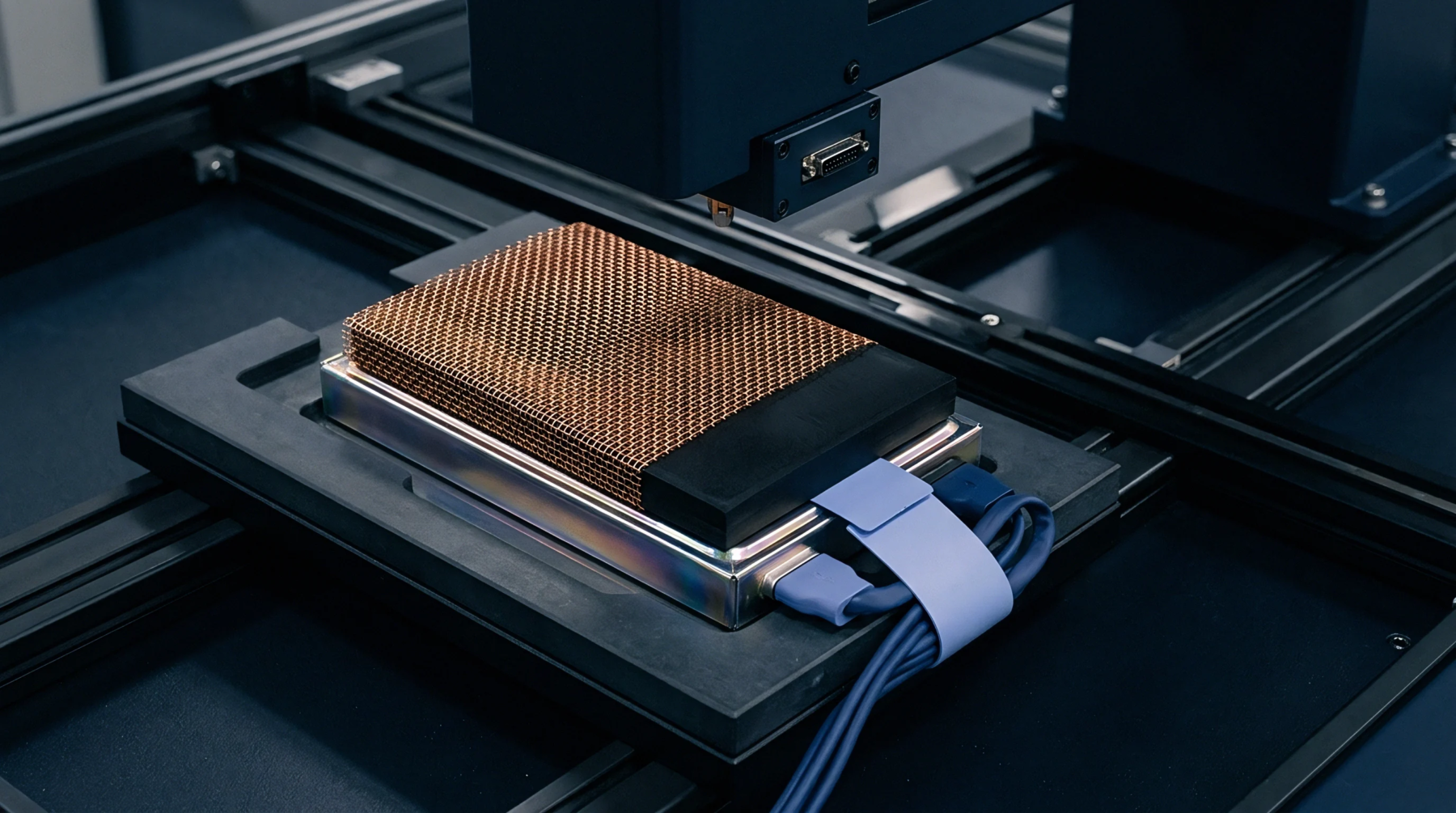
Mechanical motion within a prismatic battery casing defines cell breathing displacement. This phenomenon occurs when internal gas pressure and electrolyte movement force the enclosure walls to expand and contract during charge and discharge cycles. The magnitude of this movement dictates the required clearance between individual cells within a module.
Designers limit this motion to prevent structural stress on electrical interconnects.
Mechanical Variance
Volumetric shifts often strain the adhesive bonds securing cells to cooling plates. Engineers quantify cell breathing displacement using laser displacement sensors to map surface deformation under varying states of charge. High rates of expansion correlate with internal gas generation and thermal stress on the separator interface.
Controlling this movement keeps the internal resistance stable across the life of the battery.
Structural Constraint
Mechanical pressure plates regulate the expansion forces experienced by the cell stack. These components apply a constant force to the external faces of the battery casing to counter internal swelling. Effective compression mitigates the risk of delamination between active material layers inside the electrodes.
Excessive rigidity creates a back pressure that damages the jelly roll structure or casing seams.
Operational Consequence
Thermal management systems account for these dimensions to ensure consistent contact with heat sinks during extended operation. Frequent cycling increases the physical fatigue on the metallic housing, which eventually leads to fractures or seal degradation. Proper housing design allows for sufficient movement without sacrificing the integrity of the protective layer.
The total allowable displacement remains a primary factor in determining the energy density and cycle life of a production battery pack.