Meaning
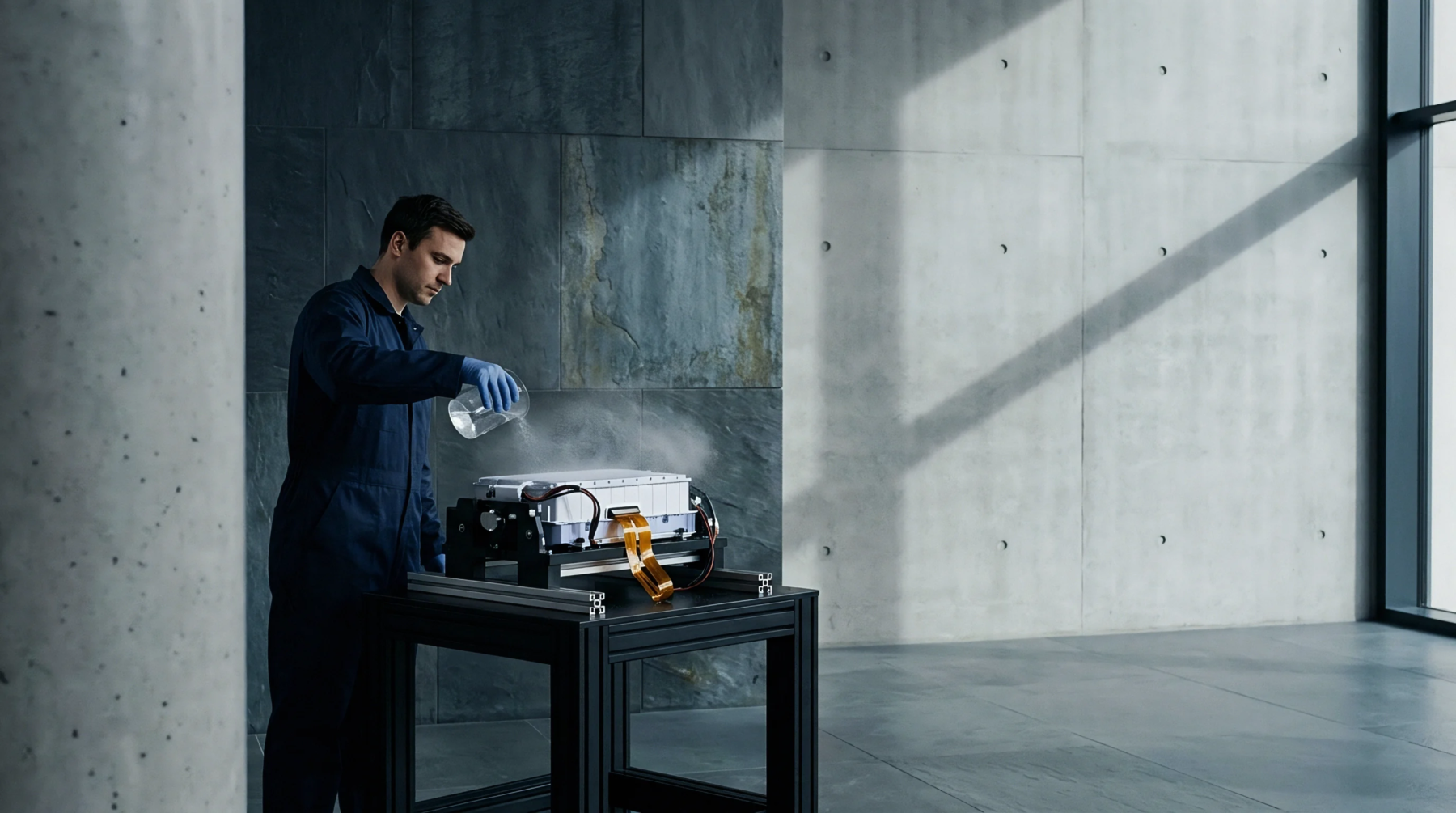
Controlled chemical stripping removes unwanted metallic coatings, oxides, or polymer layers from battery components by immersing substrates in specialized acidic or alkaline baths. Acidic solutions dissolve copper current collectors during recycling operations, while caustic formulations clean aluminum foils prior to active material coating. This reclamation process determines whether scrap electrodes yield high purity secondary raw materials or contaminated residues that lower downstream cell performance.
Chemical stripping halts immediately when the targeted base metal experiences passivation or dimensional degradation beyond predetermined micrometre tolerances. Procurement teams evaluate bath efficiency alongside waste neutralization costs because excessive chemical consumption reduces the commercial viability of salvaged metals.
Bath Kinetics
Electrochemical dissolution rates depend directly upon bath temperature, agitation intensity, and free acid concentration within the reactor vessel. Operators monitor metal ion accumulation regularly because saturation suppresses further stripping activity and increases sludge generation.
Waste Stream
Spent liquids require rigorous neutralization and heavy metal precipitation before discharge to satisfy regional environmental discharge limits. Facilities often invest in closed loop filtration units to recover expensive reagents, thereby lowering raw material expenses associated with fresh bath makeup.
Salvage Yield
Recovered foils achieve marketable purity grades only when pretreatment parameters prevent localized pitting across thin metallic substrates. Commercial buyers verify surface roughness and residual contamination levels using scanning electron microscopy prior to accepting recycled material for new cell manufacturing.