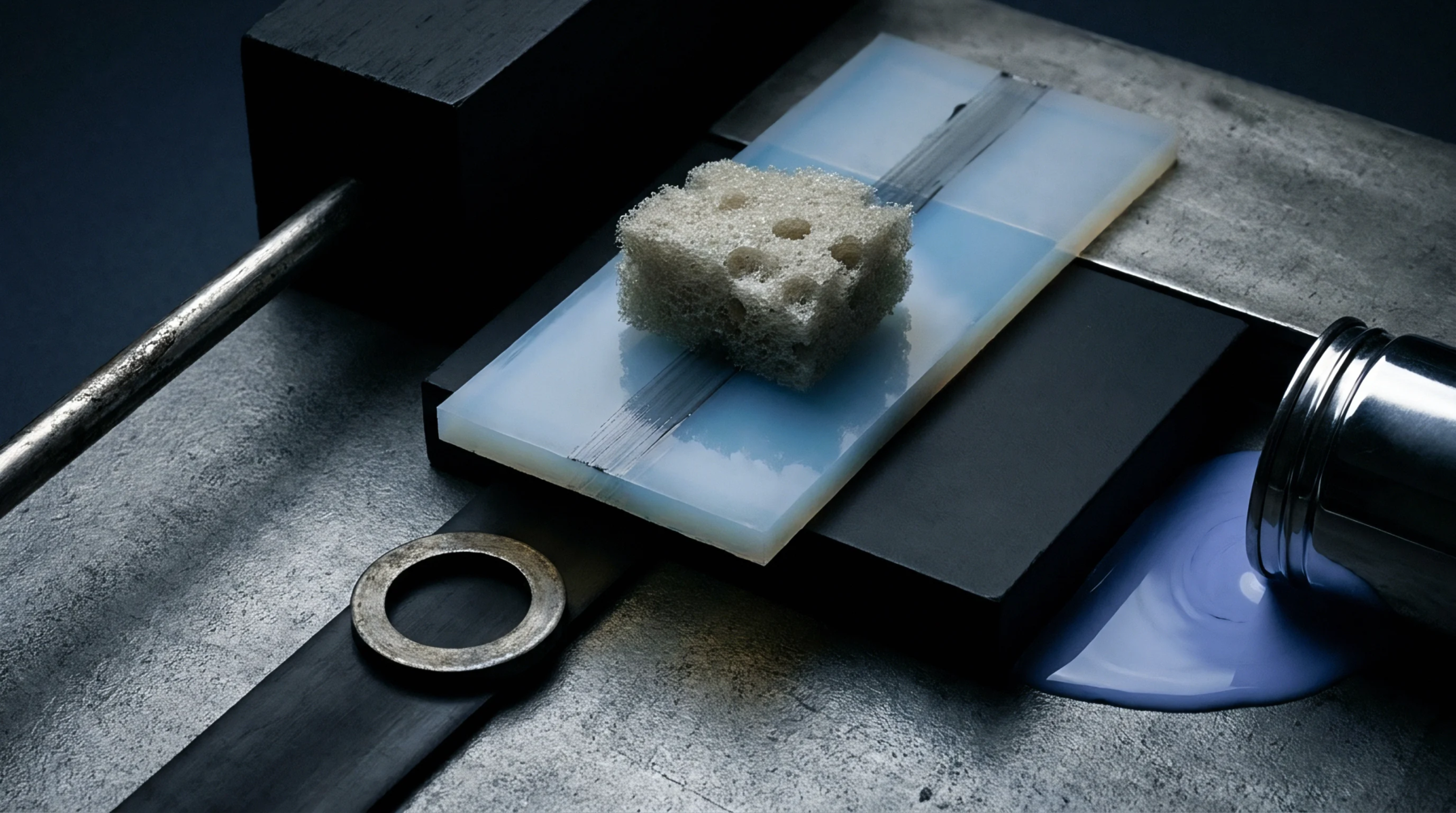
High Discharge Rate Electrolyte Salt Diffusion Limits in Micro-Porous Battery Electrodes
Electrolyte salt depletion inside micro-porous battery electrodes causes severe concentration overpotential, limiting high-rate discharge capacity.
Electrolyte salt depletion inside micro-porous battery electrodes causes severe concentration overpotential, limiting high-rate discharge capacity.
Cold fast charging high-loading anodes induces salt depletion and solid-phase precipitation, requiring coupled transport modeling to prevent lithium plating.

Local overpotential gradients drive localized anode plating in high-capacity prismatic cells, requiring edge-welded tab designs and precise voltage margins.
Charge transfer overpotential crossover marks the transition from kinetic to diffusion control, quantifiable via transient voltage relaxation fitting.

Sub-zero graphite charging is constrained by desolvation and pore diffusion limits that induce lithium plating when anode potential drops below zero volts.

Subzero charge drives graphite surface potential below 0V vs Li/Li+, causing metallic lithium plating that demands temperature-compensated derating.

LFP OCV relaxation requires multi-hour decay modeling and hysteresis tracking to prevent large SOC estimation errors across the flat voltage plateau.
Expertise is a utility, not a secret. sentiention™ publishes its working knowledge as open reference: intelligence layer covering the materials it sources, the markets it enters, and the reference that serves both.