Meaning
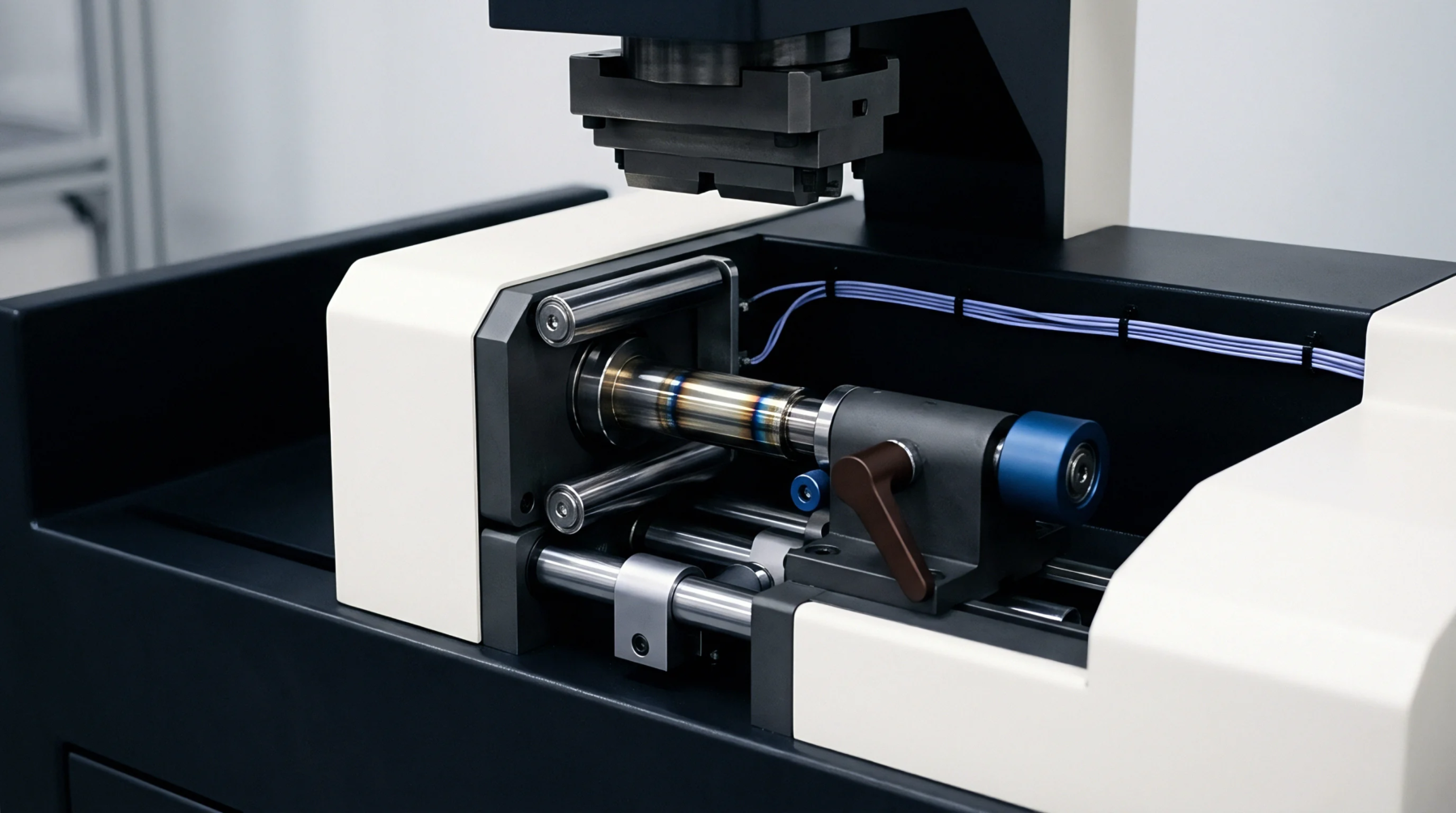
Electrochemical compression evaluation subjects battery cells to a fixed mechanical load throughout charge and discharge cycles to measure thickness variations. Laboratory instruments maintain this external clamp load while measuring displacement as the active materials swell and contract during lithium insertion and extraction. Standard constant force cell testing isolates the mechanical breathing of pouch and prismatic cells under controlled operating pressures.
Equipment pneumatic or spring actuators compensate for volume changes to prevent pressure spikes during high state of charge conditions. Data collected from this procedure establishes baseline expansion limits for engineering teams selecting compliant foam spacer pads. Test operators fix the applied force at values matching expected pack module clamping forces.
Continuous tracking of plate separation reveals both reversible cycling expansion and permanent irreversible growth caused by solid electrolyte interphase formation. The boundary of this procedure stops at active load control and does not cover fixed volume constraints where load increases dynamically.
Load Control
Actuation systems adjust plate position continuously to preserve the target force value throughout long term testing protocols. In constant force cell testing, closed loop feedback monitors force sensors and shifts the upper compression plate to prevent force build-up as electrodes swell. Spring mechanisms or servo motor controls maintain uniform pressure across the entire facial area of the cell.
Maintaining steady mechanical boundary conditions allows researchers to measure uninhibited volumetric expansion across hundreds of charge and discharge cycles. Unintended load fluctuations distort displacement measurements and introduce non-uniform pressure gradients across the electrode stack.
Cell Response
Active electrode materials expand during lithium insertion, pushing the containment plates outward against the calibrated spring mechanism. In constant force cell testing, measured displacement curves reflect structural changes within the graphite anode and nickel rich cathode microstructures. Unconstrained displacement exposes electrode delamination risks that fixed gap testing setups typically conceal under high internal stress.
Measurements record peak thickness at full state of charge and residual growth over extended cycling. Microstructural breathing patterns alter electrolyte distribution within separator pores.
Design Consequence
Module designers rely on continuous displacement measurements to size microcellular foam inserts and calculate total module expansion envelopes. Data from constant force cell testing defines the minimum physical clearance required between adjacent pouch cells within a rigid module enclosure. Structural engineers balance pack energy density against total expansion clearance based on long term cycling measurements.