Meaning
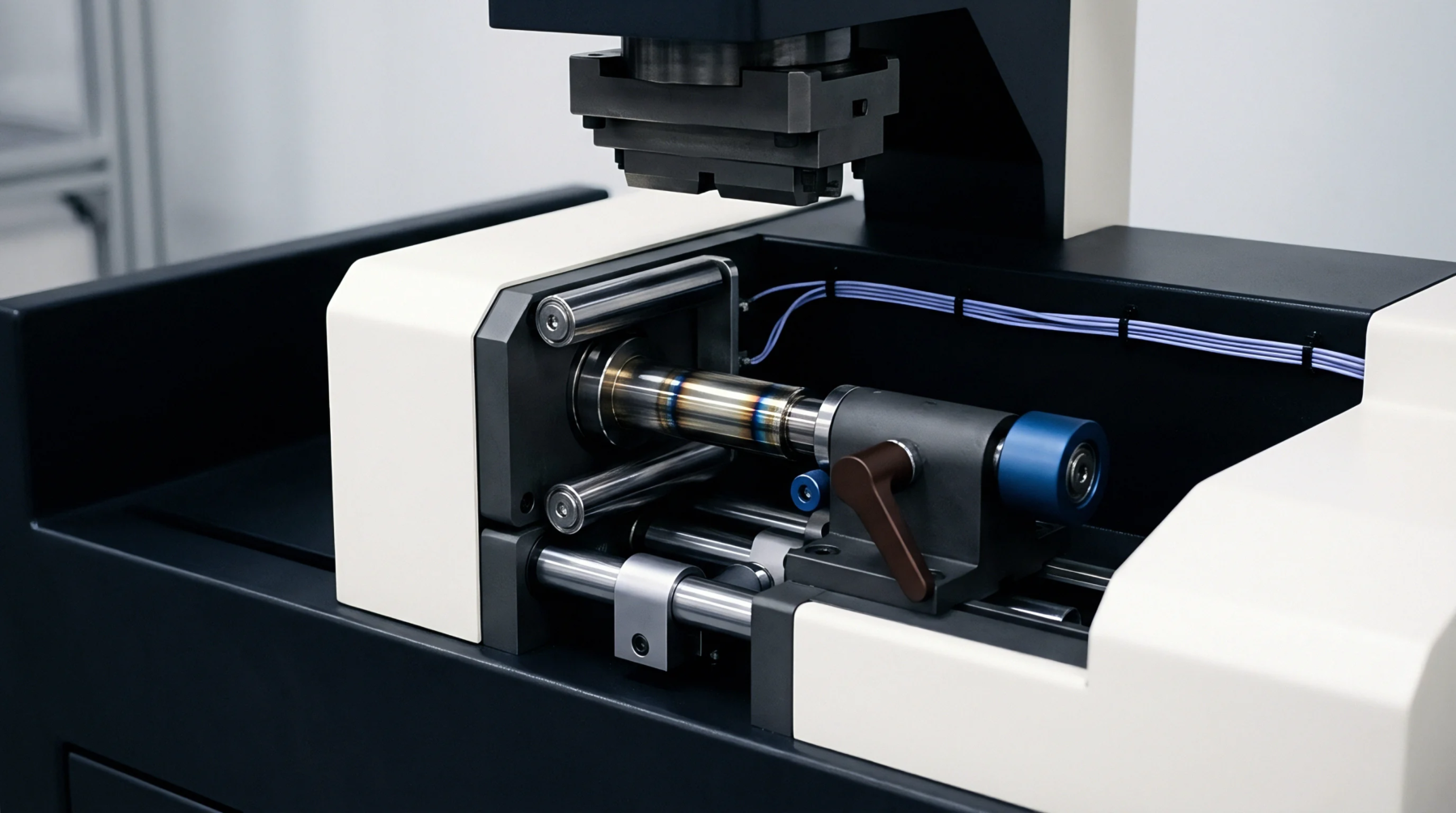
Rigid volume containment testing measures the stress generated by expanding battery cells held within an unyielding spatial boundary during charge cycles. Heavy steel fixtures and rigid load cells capture internal swelling forces as electrode materials take up lithium ions. Conducting fixed gap cell testing provides critical force data for designing module enclosures that must withstand internal swelling without structural distortion.
Load sensors record stress build up from initial assembly preload through maximum state of charge conditions. Data collected under rigid constraints reveals the upper boundary of mechanical pressure exerted on separator membranes and solid electrolyte interphases. Unlike free expansion protocols, constant volume setups replicate the mechanical confinement experienced by cells packed tightly inside rigid module frames.
This testing methodology applies strictly to rigid containment configurations and stops applying when physical gaps expand or structural walls deform.
Force Evolution
Mechanical pressure increases monotonically during charge cycles as active electrode materials expand against rigid containment walls. In fixed gap cell testing, peak force coincides with full lithiation of the anode matrix, generating severe internal compressive stress. Load cells record both reversible pressure oscillations from cycling and permanent pressure growth caused by solid electrolyte interphase buildup.
High internal pressure forces liquid electrolyte out of porous separator structures, altering ionic transport pathways inside the cell.
Separator Degradation
Continuous high pressure squeezing between rigid plates compresses porous polymeric separators beyond their elastic recovery limits. Under fixed gap cell testing conditions, excessive mechanical stress reduces pore volume and restricts lithium ion transport between electrodes. Localized pressure peaks can cause micro-shorts if surface asperities penetrate damaged separator materials.
Monitoring force growth prevents structural designs that exceed safe separator mechanical stress thresholds.
Module Sizing
Module structural frames must restrain expansion forces without exceeding material yield points or fastner shear ratings. Force measurements from fixed gap cell testing dictate structural end plate thickness and tie rod tension requirements for high density battery modules.